
Set-jetting is travelling to places known from films, series and streaming productions. It is one of those trends that perfectly shows how trip planning has changed: more and more often the inspiration is not a classic catalogue of attractions, but a scene, a frame, a series landscape or a place that stays in your head long after watching a film. In search engines, this trend also appears as set jetting, meaning screen-inspired travel.
In well-planned set-jetting, it is not only about taking a photo in a place from the screen. It is about combining cinematic curiosity with real discovery of a city, region, landscape and local history. A film or series gives the impulse, but the real journey tells the rest of the story.

Set-jetting
Set-jetting: travel in the footsteps of films and series.

Check out my YouTube channel and travel with me.
Follow the channel for videos, routes and practical travel inspiration.
Follow me here:
What’s up?
Enjoying my content?
Buy me a coffee at buycoffee.to/ondatravel and support the creation of more travel content.
Your support helps me create more practical guides, videos and travel inspiration.

Set-jetting — in short
Set-jetting is travelling in the footsteps of films, series and specific on-screen locations. It works best when you do not go just for the photo, but combine a famous scene with a real sightseeing plan, local context and places that make sense outside the frame as well.
What is set-jetting?

Set-jetting means travelling to places where films, series, television programmes or streaming productions were shot. The name combines “set”, meaning a film set, with “jet-setting”, meaning travelling. In practice, it means a screen-inspired trip. It can mean both travelling in the footsteps of films and travelling in the footsteps of series, especially when one production suddenly makes a specific city or landscape famous.
It can be a weekend in a city known from a popular series, a longer route through several film locations, a journey in the footsteps of a specific director or a trip to a region associated with a certain atmosphere: fantasy, science fiction, historical drama, crime story or adventure cinema.
Set-jetting is close to film tourism, but it has a more contemporary character. It is faster, more strongly connected with streaming, social media and trends that can explode after one season of a series. Someone watches a production, falls in love with the landscape, checks the location and starts planning a trip.
Why has set-jetting become popular?

Set-jetting is growing because the way we watch films and series has changed. Streaming platforms have made productions from different countries global. A series from Norway, Iceland, Spain, the United Kingdom or Italy can reach viewers around the world in just a few days. If a place looks powerful and memorable, it starts working like an advertisement for the destination.

GUIDE
Iceland
Plan your first Iceland trip: 4- and 7-day routes, the Golden Circle, South Coast, Reykjanes and Snæfellsnes, plus seasons, driving and safety tips.
The second reason is emotion. Classic tourism advertising shows attractions. A film or series shows a story. The viewer does not see only a beach, castle, street or fjord. They see a scene, a character, tension, light, music and atmosphere. That is why film locations can attract even people who had not previously planned such a trip.
The third reason is social media. Set-jetting gives a ready-made reason for reels, photos and comparisons: a film frame versus reality. For many people, travel is no longer just sightseeing, but entering a story they had previously watched.
The fourth reason is the ease of planning. More and more regions, cities, hotels and local tourism organisations create film routes, location maps and ready-made tours. Thanks to this, a film-inspired trip does not have to be a chaotic search for places from the internet. It can become a normal travel plan.
Who is set-jetting for?

Set-jetting is for people who like journeys with a story. You do not have to be a cinema fanatic or know every production detail. It is enough to like places that have an additional layer of meaning.
It is a good choice for people who want to combine sightseeing with a specific theme. Instead of simply going to a city, you can go to a city known from a series. Instead of doing a classic road trip, you can create a route through landscapes that appeared in films. Instead of looking for random attractions, you can build the trip around a story.
This trend fits well with city breaks, travel around Europe, road routes, off-season trips and destinations with strong landscapes: Iceland, Norway, Scotland, Croatia, Spain, Italy and Poland. Among ready-made routes, good matches include Iceland from Gdańsk for a weekend and Athens from Gdańsk for a weekend, because both destinations can be told through a film or series theme.
Set-jetting and film tourism — how are they different?

Set-jetting and film tourism are very close, but they do not mean exactly the same thing. Film tourism is a broader concept. It includes film locations, production studios, cinema museums, festivals, exhibitions, themed routes and places connected with film history. In English-language sources, you will also see the terms film tourism i screen tourism.
Set-jetting is more contemporary and more dynamic. It most often starts with a specific production that suddenly becomes popular. A viewer watches a series, remembers a place and then wants to see it in real life. It is screen-inspired travel, but often planned in the same way as a normal city break, road trip or nature trip.
It is best to treat set-jetting as a modern part of film tourism. It is a trend that can be connected with guides to Iceland, Norway, city breaks, sky phenomena and themed travel.
GUIDE
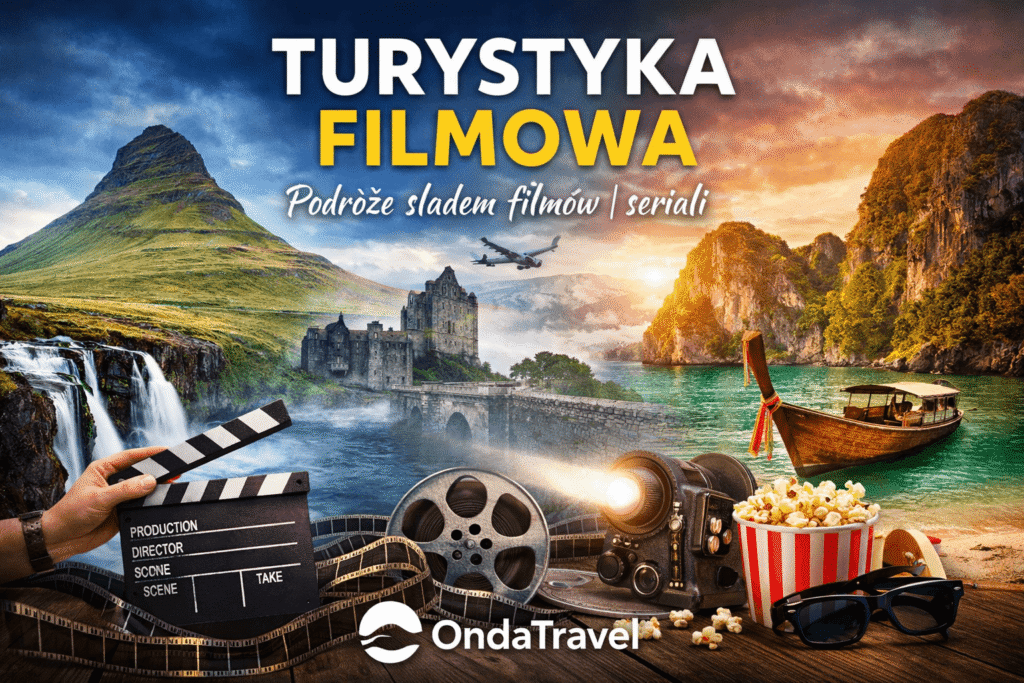
Film tourism
Film tourism by OndaTravel.pl: filming locations, travel ideas and practical guides to places known from films and series.
Best set-jetting destinations in Europe

Europe is one of the best continents for set-jetting. In a short time, you can move from a Gothic castle to a fjord, from a volcanic island to a medieval city, from a beach known from a series to a mountain valley from a fantasy film. This makes it possible to plan travel in the footsteps of films and series both as a short city break and as a larger themed route. Routes inspired by series such as Harry Potter i The Lord of the Ringswork in a similar way, where the landscape becomes part of a story known from the screen.
Croatia — Dubrovnik and “Game of Thrones”
Dubrovnik is one of the most recognisable examples of set-jetting in Europe. The Old Town, defensive walls and Fort Lovrijenac are associated by many viewers with King’s Landing from “Game of Thrones”. For fans of the series, a walk through Dubrovnik can feel like entering the world of Westeros, but the city also stands strong without the series context: with architecture, history, views and its location on the Adriatic. For many tourists, the trigger was precisely the production Game of Thrones.
It is best to come outside peak season. Spring and autumn are much better than the middle of summer, when crowds and heat can take away the pleasure of sightseeing.
Spain — Seville, Girona and fantasy series locations
Spain uses its film potential very well. Seville, Girona, Córdoba and the coast of northern Spain have appeared in productions that later attracted fans from around the world. The Real Alcázar in Seville is a good example of a place where a film pretext leads to real history, architecture and Andalusian culture.
It is a destination for people who want to combine film associations with classic city sightseeing, cuisine, southern European light and strong architecture.
Scotland — castles, the Highlands and the atmosphere of “Outlander”
Scotland is ideal for people who like cinematic travel with landscape in the background. Castles, moors, lochs, mist, stone towns and mountain roads create scenery that does not need much decoration. “Outlander” only strengthened what Scotland already had: an atmosphere of history, rawness and space.
Set-jetting in Scotland is best planned as a route, not as one point. Edinburgh, the area around Stirling, castles, the Highlands and smaller towns can be combined into a few-day trip without rushing.
Norway — “Succession”, fjords and cool luxury
Norway shows that set-jetting does not have to mean only medieval streets and castles. It can mean modern architecture, raw landscapes, ocean roads, fjords and hotels built into nature. After the series “Succession”, many people began to associate Norwegian landscapes with cool luxury, silence and minimalist aesthetics. In practice, it is worth combining this with the guide to the North and the island of Senja, if the film trail is meant to lead through fjords, light and raw landscapes.
It is a more expensive destination, but visually very strong. It connects well with trends such as coolcation, quietcation and noctourism: a cooler summer, less obvious Europe, northern lights, northern light and nature without rushing.

GUIDE
Coolcation: holidays without extreme heat
Coolcation means holidays in cooler destinations: Iceland, Norway, northern Europe, mountains and trips planned without extreme summer heat.
Italy — Sicily, Rome, Naples and a cinematic lifestyle
Italy has been one of Europe’s most important film countries for years. Rome, Venice, Tuscany, Naples, Sicily and the southern coasts have appeared in hundreds of productions. In recent years, an additional wave of interest came from series that showed Italian hotels, towns, beaches, terraces and lifestyle as part of an on-screen story.
Italy is good for people who want set-jetting to be less extreme and more aesthetic: with cuisine, architecture, walks, beach, art and city atmosphere.
Poland — “The Witcher”, “Wataha”, “Rojst” and film cities
Set-jetting does not have to mean an expensive trip abroad. Poland has more and more places that can be described through pop culture: castles, cities, mountains, the Bieszczady, Silesia, Kraków, Gdańsk and darker outdoor locations known from crime series. It is a very good direction for short routes, weekends and separate themed maps.
For OndaTravel, Poland can be a good supplement to larger clusters. A film pretext can be combined with a city break, a weekend route or a guide to less obvious places.
Iceland as a set-jetting destination

Iceland is one of the strongest set-jetting destinations in Europe, even if it is not always described with this exact word. It works like a natural film studio: it has glaciers, black beaches, waterfalls, lava fields, volcanic deserts, mountains, geothermal areas and landscapes that can easily stand in for another planet.
That is why Iceland has appeared in science fiction films, fantasy, adventure productions and series. It has been used as scenery that is raw, remote, extreme or otherworldly. It is a country where you do not need to build sets to create a sense of the end of the world.
For travellers, Iceland is an ideal example of a place where a film frame leads to a real adventure. You can travel there in the footsteps of specific productions, but you can also treat cinema as a pretext to see glaciers, waterfalls, black beaches, hot springs and northern light.
Why does Iceland work so well in films?
Because it looks different from most of Europe. A glacier, an empty road, a black beach, mist over a waterfall or a lava field create a landscape that is both realistic and unreal. For directors, this is a huge advantage. For travellers, it is a ready-made reason to see a cinematic landscape in real life.
Film locations in Iceland worth knowing
Film and series associations with Iceland include, among others, the southern waterfalls, the area around Vatnajökull, glaciers, black beaches, Lake Mývatn, Dimmuborgir, Grjótagjá, Þingvellir and the Snæfellsnes Peninsula. These are places that can be combined into a film-and-nature route.
However, you need to remember the most important rule: the screen shortens distances. What looks like one scene in a film may mean several hours of driving, changeable weather, wind, closed roads and the need for very good preparation in a real travel plan.
Norway as a set-jetting destination

Norway is the second natural destination for OndaTravel in this trend. It offers a completely different atmosphere from Iceland. It is less “cosmic” and more monumental, cool, elegant and spacious. Its cinematic quality lies in scale: fjords, vertical walls, hairpin roads, ocean roads, hotels embedded in nature and northern light.
Norway connects set-jetting well with coolcation, quietcation and noctourism. You can plan a trip not only for specific frames, but also for atmosphere: a cooler summer, less obvious luxury, nature without rushing, northern lights, railway routes and the raw landscape of the north.

GUIDE
Noctourism: travel after dark, northern lights and the night sky
Noctourism means travel planned after dark: northern lights, meteors, dark sky, night trains and places that come alive after sunset.
A good film-inspired plan for Norway may include Ålesund as a base, the fjords of western Norway, the area around Åndalsnes, the Atlantic Road, scenic routes and, in a longer version, also Tromsø, Senja, Narvik and Lofoten. It is not a cheap destination, but it has enormous visual and thematic potential.
OndaTravel film and series guides

Below you will find OndaTravel guides and pages that naturally develop the set-jetting topic: from film tourism and Nolan’s Icelandic locations to series locations that can be connected with a real travel plan. In the Polish context, it is also worth adding the phrase Odyssey and the name Christopher Nolan, because these are exactly the kinds of searches that can lead users to film locations in Iceland.
Films, series and real places
Films and series you can plan a trip around
Set-jetting does not end with the phrase “a place from a film”. The most interesting part is specific productions, specific locations and the moment when a series or cinema frame can be turned into a real travel plan. Below, I have collected the most important trails from OndaTravel.pl — from Iceland and Norway to European city breaks.
The Odyssey — Nolan and Icelandic locations
Nolan’s The Odyssey in Iceland is the strongest film trail on the blog: a specific production leads to Icelandic landscapes that can be treated as a ready-made travel framework. In this view, Iceland is not only a background, but part of the story — raw coasts, lava fields and monumental landscapes immediately build the atmosphere of road cinema.
Halo — Kvernufoss, Reykjanes and series Iceland
Halo in Iceland shows set-jetting in a very practical version. Kvernufoss and Reykjanes are both real points on an Iceland route and places that viewers may associate with the on-screen world of the series. It is a good example of how to combine a classic sightseeing plan with a pop-culture context.
King and Conqueror — Iceland as historical scenery
King and Conqueror uses the Icelandic landscape as a raw historical background. In a journey in the footsteps of the series, it is not only about recognising the frame, but about understanding why Iceland so effectively stands in for old battlefields, coasts and medieval spaces.
Game of Thrones — Gjáin Valley and the Icelandic interior
Gjáin Valley as a Game of Thrones location is a classic example of travelling in the footsteps of a series. Gjáin Valley works like a ready-made fantasy frame: waterfalls, greenery, rocks and hidden passages create a place that is not only a film-set curiosity, but a real point to include in an Iceland route.
Stranger Things — pop culture, fan theories and a travel trail
Stranger Things and the Eleven trail shows another side of set-jetting: sometimes a trip does not begin with an official filming location, but with a series mystery, fan theory or scene that sparks curiosity about a place. It is a more pop-cultural than classically touristic trail, and that is exactly why it fits this section.
Reynisfjara — black beach, films, series and music videos
Reynisfjara in pop culture is a place that looks like ready-made scenery: black sand, basalt columns, ocean and dramatic light. Even if you arrive without one specific production in mind, it is easy to understand why this beach appears so often in pop culture and visual materials about Iceland.
Lofoten — North of the Sun and the northern atmosphere of outdoor cinema
Lofoten and the film North of the Sun show that set-jetting can also work beyond classic blockbusters. The cinematic atmosphere of the north is built here by beaches, mountains, cold light and space, not decorations. It is a good destination for people who, after watching a film, want to feel the place in the field, not only tick a point off the map.
Dubrovnik — a series city break and frames from the city walls
Dubrovnik as a series city break shows well how set-jetting connects with a short trip. The walls, old town, stairs and viewpoints can be seen as normal attractions, but also as a space that many people associate with series frames and the fantasy atmosphere of a city on the Adriatic.
Oslo — Joachim Trier and everyday city frames
Oslo and the cinema of Joachim Trier is an example of less obvious set-jetting. It is not always about spectacular outdoor locations. Sometimes a film trail leads through streets, cafés, neighbourhoods, architecture and the everyday rhythm of a city that starts to feel different after watching the film.
Palermo — Sicily, series associations and urban chaos
Palermo and series trails of Sicily can be read as an example of a city that creates its own cinematic atmosphere: dense streets, markets, palaces, worn façades, light and southern energy. In set-jetting, such places often work not through one scene, but through an atmosphere known from cinema and series.
Nice and the French Riviera — cinema, light and an elegant city break
Nice and the cinematic atmosphere of the French Riviera fit set-jetting through the atmosphere of southern Europe: promenades, hotels, bays, old town and light that has attracted filmmakers for years. It does not have to be a trip to one scene — sometimes a destination that looks like a ready-made film set is enough.
Venice — Bond, Poirot, Spider-Man and film frames on the water
Venice as a city of film frames is one of the most obvious set-jetting cities in Europe. It can be read through the lens of Bond, the darker atmosphere of Poirot, film chases, bridges, canals and palaces. That is why Venice works well as a short city break in the footsteps of cinema, even if you do not build the route around one production.
Interstellar, Prometheus, Oblivion — Iceland as another planet
cinematic Iceland often works in cinema as a landscape from beyond Earth. Glaciers, wastelands, lava fields and waterfalls make it possible to build a science fiction atmosphere without artificial scenery. That is why Iceland guides are worth reading not only practically, but also through the lens of cinema that uses the island as “another planet”.
From inspiration to route — where to go next?
If you want to look for more places known from the screen, the best starting point is the section film tourism. That is where guides to locations, productions and routes come together — places where pop culture meets real travel planning.
Film tourism
Guides to places known from films and series — from Iceland to European screen locations.
See the hub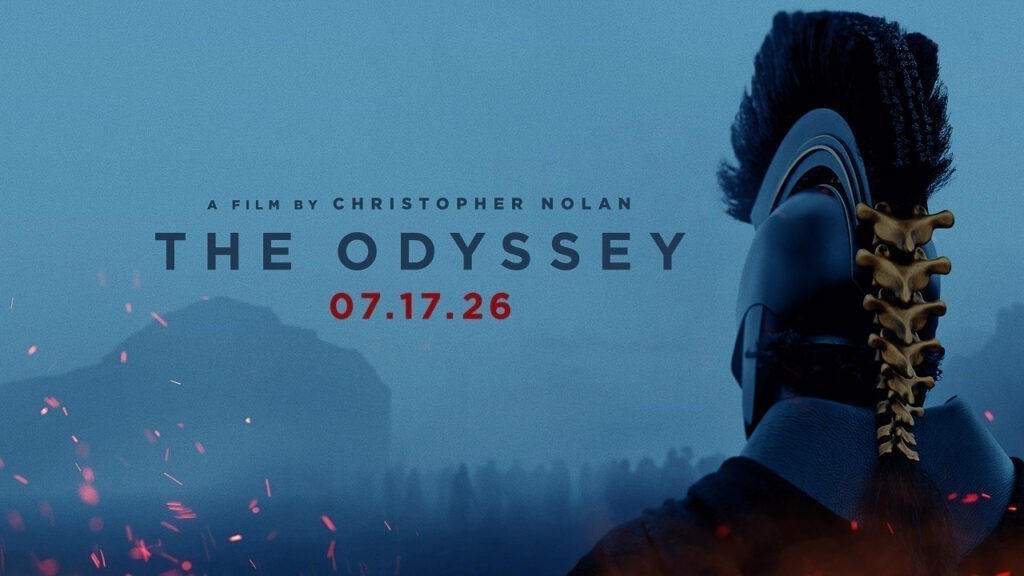
The Odyssey — Icelandic locations in Nolan’s films
Cinematic Iceland, Nolan, The Odyssey and landscapes that look like ready-made scenery.
Read the guide
Halo in Iceland — where was the series filmed?
Confirmed series locations in Iceland, including Kvernufoss and Reykjanes.
Check locations
King and Conqueror — where was the series filmed in Iceland?
Icelandic outdoor locations in the historical series and places that can be combined with a route through the south of the island.
See places
Gjáin Valley — a Game of Thrones location in Iceland
One of the most cinematic places in the Icelandic interior, ideal for travel in the footsteps of series.
See the valley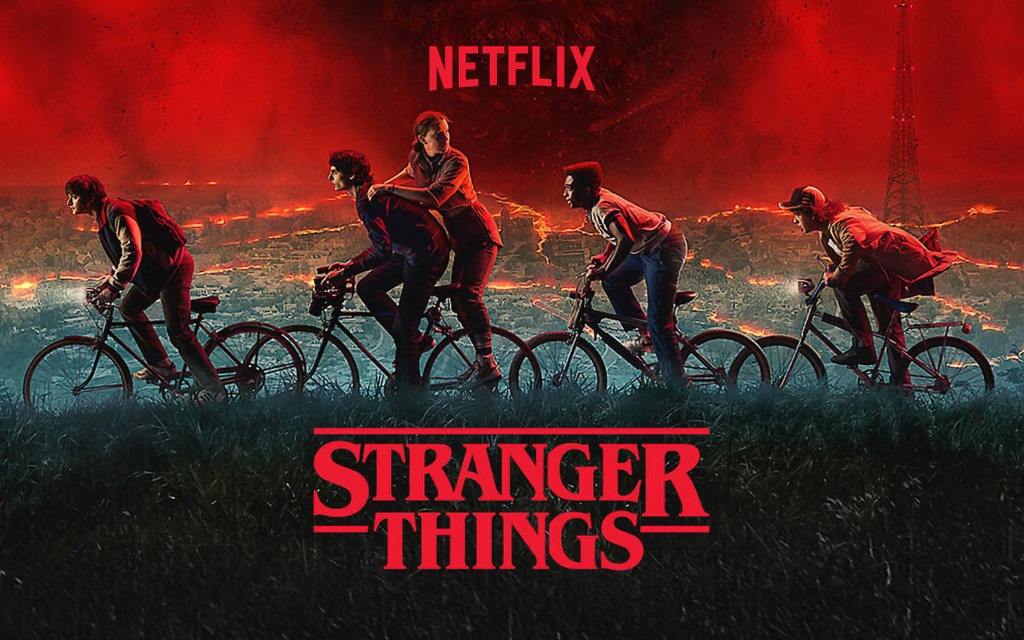
Where did Eleven end up in the Stranger Things 5 finale?
A series trail that shows well how pop culture can spark travel curiosity.
Read the articleHow to plan a trip in the footsteps of films and series?

Good set-jetting does not start with a list of scenes, but with the question: do you want to see a specific place, or feel the atmosphere of the production? If you care about a specific frame, the plan will be point-based. You check the exact location, access, opening hours, tickets and the best time of day for photos.
If you care about atmosphere, the plan should be broader. Then the film or series is only a pretext for getting to know the region. This is how it is worth planning Iceland, Norway, Scotland, Sicily or Croatia.
Step 1: check where the scenes were really filmed
Not every scene happens where the plot suggests. A film frame from Greenland may have been shot in Iceland. A planet in science fiction may have been a glacier. A castle from a series may be a combination of a real location and computer effects. Before travelling, check not only the place from the plot, but the real filming location.
Step 2: do not plan the route only around screenshots
The biggest mistake is travelling from frame to frame. Such a trip quickly becomes tiring. It is better to choose a few strong points and leave space for real experience: a walk, food, a viewpoint, museum, beach, hot springs, a local route or time without a camera.
Step 3: check the season and crowds
Film locations can be overloaded. Dubrovnik, Seville, popular places in Scotland or some routes in Iceland can be very crowded in season. If you care about photos and atmosphere, choose morning, late afternoon or months outside the holiday peak.
Step 4: check whether the place is public
Not all locations are accessible. Some scenes are filmed near private homes, hotels, protected areas or places with restrictions. You need to respect local residents and not turn someone’s everyday life into a tourist attraction.
Step 5: combine set-jetting with another trend
The most interesting trips happen when set-jetting is not the only theme. Iceland can be simultaneously a set-jetting, coolcation, glowcation and noctourism destination. Norway can combine set-jetting with quietcation, coolcation and northern lights travel.
Realism versus Instagram — what is not visible on screen?

Set-jetting has one trap: films and series show the world in the best possible frame. Reality can be beautiful, but less controlled. It may rain. It may be windy. There may be crowds. It may turn out that a famous scene was filmed at dawn for a few minutes, while for the rest of the day the place looks completely different.
In Iceland, the weather can change the plan within an hour. In Norway, a scenic route may be closed seasonally. In Croatia, film walls may be full of tourists. In Scotland, a castle may look rawer than on screen. In Italy, a hotel from a series may be beyond the budget of most travellers.
This does not mean that set-jetting disappoints. It simply needs to be planned sensibly. The best approach is: I am going to see a place that inspired a film, but I do not expect reality to look exactly like the editing, light and colour of the series.
Ready-made set-jetting ideas in Europe

Cinematic Iceland — glaciers, waterfalls and landscapes from another planet
This is an idea for people who like adventure cinema, science fiction, fantasy and raw nature. The route can lead through southern Iceland: Reykjavík, Þingvellir, Skógafoss, black beaches, the area around Vatnajökull and glacier landscapes. It is best combined with hot springs, waterfalls and the night sky.
Norway after “Succession” — fjords, architecture and cool luxury
This is a route for people who like modern style, nature and places less obvious than classic southern Europe. Norway after “Succession” is not only series points, but a whole atmosphere: rawness, space, design, road, silence and water.
Dubrovnik and Dalmatia — set-jetting classics
This is an option for people who want to combine a film theme with city sightseeing, the sea and architecture. Dubrovnik is rewarding, but it requires a good time of year. Outside the season, it gives a much better experience than in the holiday peak.
Cinematic Scotland — castles, Highlands and travel without rushing
This is a destination for people who like romantic rawness, history and road routes. Scotland is worth planning more slowly: fewer points per day, more time for landscape, towns and local atmosphere.
Poland in the footsteps of films and series
This is a good topic for shorter posts and domestic routes. You can prepare a separate map or series: film places in Poland, Poland in the footsteps of The Witcher, cinematic Bieszczady, Kraków and film frames, Silesia in crime series. For OndaTravel, it is a good way to build traffic from long-tail phrases.
Set-jetting and OndaTravel — how to connect the trend with existing guides?

On OndaTravel, set-jetting should be a bridge page. It should not live alone. Its function is to connect existing clusters: Iceland, Norway, film tourism, city breaks, noctourism, darecation, coolcation, glowcation and quietcation.
In practice, it is worth linking from this page to guides about Iceland, Norway, sky phenomena, film tourism and city breaks. In the other direction, it is worth adding natural links from existing film and Iceland posts to set-jetting.
Set-jetting connects well with other OndaTravel guides: travel in the footsteps of films and series, film tourism, Iceland, Norway and new travel styles.
What does an ideal 3-day set-jetting plan look like?

Day 1: the city and first locations
The first day should be light. Arrival, accommodation, a walk through the centre and one or two film locations. It is a good moment to enter the atmosphere without pressure to tick everything off.
Day 2: the main film route
The second day is the proper set-jetting part. It is worth choosing a few strong places, but no more than three or four. It is best if they are connected by a logical route. In Iceland, it could be the south coast. In Norway — a scenic road and fjords. In Scotland — castles and the Highlands. In Croatia — Dubrovnik plus the surrounding area.
Day 3: the real place beyond the screen
The third day should show that the place is more than a film set. A museum, local cuisine, beach, trek, geothermal pool, viewpoint or quiet neighbourhood without crowds. It is often this day that makes the trip stay in memory more than the film frame itself.
Most common mistakes in set-jetting
The first mistake is treating a film like a documentary. A film production chooses the best shots, changes light, mixes locations, uses effects and editing. The real place may look different.
The second mistake is an overly tight plan. If someone wants to see ten locations in one day, they will probably not see any of them properly.
The third mistake is not checking the season. Some places are most beautiful outside the holidays, others are inaccessible in winter, and still others require booking in advance.
The fourth mistake is ignoring local residents. Set-jetting can be burdensome for small communities. Not every place from a series is a tourist attraction. Sometimes it is someone’s home, street, shop or quiet neighbourhood.
The fifth mistake is having no alternative. Weather, renovation, a closed road or a cancelled ferry can ruin the plan. That is why it is worth having a plan B.
Is set-jetting a trend for 2026 and 2027?
Yes, because the trend fits into several larger changes in travel. People want trips that are more personal, thematic and easy to tell a story about. A “nice place” is no longer enough. Context matters more and more often: why am I going there, what do I associate it with, what story am I telling through this trip?
Set-jetting will also grow because new streaming productions constantly show new places. One season of a series can promote a hotel, neighbourhood, city or region. And the more platforms, global premieres and on-screen worlds there are, the more travel impulses appear.
For OndaTravel, this is a very good trend because it connects discovery content with existing topics: Iceland, Norway, aurora, city breaks, film tourism and themed travel.
Summary: set-jetting is not only a photo from a film location
The best set-jetting is not about standing exactly where the camera stood. It is about something more interesting: seeing how fiction meets a real place.
A film or series can be the beginning of a journey, but it should not be its only meaning. Dubrovnik is more than King’s Landing. Iceland is more than a planet from a science fiction film. Norway is more than a background for the characters of “Succession”. Scotland is more than a romantic frame from a series. Poland is more than a location from one production.
Set-jetting works best when the screen gives the impulse and the real journey tells the rest of the story.
FAQ — Set-jetting

This guide is part of a larger section about new travel styles. See also: Travel trends — the OndaTravel guide to Noctourism, Coolcation, Set-jetting, Glowcation, Quietcation and Darecation.

GUIDE
Travel trends: Noctourism, Coolcation, Set-jetting, Glowcation and Quietcation
Discover key travel trends: Noctourism, Coolcation, Set-jetting, Glowcation, Quietcation and Darecation. Choose your travel style.
What is set-jetting?
Set-jetting means travelling to places known from films, series and streaming productions. It can mean visiting specific film locations, following a route in the footsteps of characters or taking a trip inspired by the atmosphere of a given production.
Are set-jetting and film tourism the same thing?
Not exactly. Film tourism is a broader concept and also includes film studios, festivals, cinema museums and the history of production. Set-jetting is more contemporary and usually means travelling to places known from specific films or series.
Where is the best place to go for set-jetting in Europe?
The strongest destinations in Europe include Iceland, Norway, Croatia, Spain, Scotland, Italy and Poland. Each of them offers a different type of film-inspired journey: from glaciers and fjords to castles, cities, islands and road routes.
Is Iceland a good destination for set-jetting?
Yes. Iceland is one of the best film destinations in Europe because its landscapes often look like another planet. Glaciers, waterfalls, black beaches, lava fields and geothermal areas make Iceland fit science fiction, fantasy and adventure productions very well.
Does Norway fit set-jetting?
Yes. Norway fits set-jetting well thanks to fjords, scenic roads, northern light, modern architecture and landscapes known from films and series.
Can you do set-jetting in Poland?
Yes. Poland has many places connected with films and series. A film theme can be combined with a city break, a weekend in the mountains, a route through castles or sightseeing in cities known from historical and crime productions.
How to plan a trip in the footsteps of a film?
First check the real filming locations, then arrange the route according to distance and accessibility. Do not plan too many places in one day. Check tickets, opening hours, season, access and whether the location is publicly available.
Is set-jetting expensive?
It does not have to be. It can mean a luxury trip to a hotel known from a series, but it can just as easily be an inexpensive city break, a weekend in Poland or an independent route through several film points.
When is the best time to visit popular film locations?
It is best to go outside peak season. Spring and autumn are often better than July and August because there are fewer crowds, it is easier to take photos and sightseeing is more pleasant.
What should you watch out for with set-jetting?
You need to watch out for crowds, private properties, access restrictions, seasonal road closures and the difference between a film frame and reality. It is also worth respecting local residents, especially in small towns.
Will set-jetting be popular in 2026 and 2027?
Yes. Travel inspired by films and series will continue to grow because streaming platforms constantly promote new places, and travellers increasingly look for trips with a specific story and theme.


Hi, I’m Krystian “dziadzia przewodnik” from OndaTravel.pl!
The North is my greatest passion, but the world is far too beautiful to stay in just one climate. On my blog, I combine the raw landscapes of Iceland and Norway with the exotic energy of Thailand or Vietnam, showing you how to travel authentically — with passion and a camera in hand.
What will you find on OndaTravel.pl?
Visual storytelling: As a photographer and filmmaker, I don’t just describe places — I take you there with professional photos and video.
North expert: Ready-to-use road trip plans for Iceland and Norway, smart tips for budget travel, and my original Northern Lights Radar (locations and forecast).
Travel through the lens of cinema: I track down filming locations — from icy scenes in Interstellar to tropical frames from world cinema.
New direction: Exotic destinations: I love contrast, so the blog is featuring more and more practical knowledge about Vietnam and Thailand. I’ll show you how to find your way around Southeast Asia and come back with your best memories.
P.S. follow me here

