

Rocket Launch Today: Is There One and What Time?
In brief
Is There a Rocket Launch Today? The Short Answer
Launch schedules shift constantly, so the live list below matters more than any date announced in advance. Check whether a launch is set for today, the time in UTC and in your own zone, the mission status, and the stream link where one exists. A launch time can move even minutes before liftoff.
Table of contents
The main sections of this guide: the live countdown, how to read a launch schedule, where to watch a liftoff, what is visible from Europe, the missions of 2026/27 and the launch sites.

Check out my YouTube channel and travel with me.
Follow the channel for videos, routes and practical travel inspiration.
Follow me here:
What’s up?
Enjoying my content?
Buy me a coffee at buycoffee.to/ondatravel and support the creation of more travel content.
Your support helps me create more practical guides, videos and travel inspiration.

Contents
- Is There a Rocket Launch Today? The Short Answer
- Rocket Launches Today and in the Next 48 Hours
- What Time Is the Launch: UTC and Local Time
- What Go, TBC, TBD and Hold Mean
- Where to Watch the Launch Live
- Can You See a Rocket Launch from Europe?
- When a Launch Gets Postponed
- Rocket Launches Today – Frequently Asked Questions
- Read Also
Rocket Launches Today and in the Next 48 Hours

SDA Tranche 1 Transport Layer A
(05.10, 08:06 UTC)
NeonSat-2 to 6 & Others
(07.10, 03:23 UTC)
CRS SpX-35
(13.10, 10:33 UTC)
Data: RocketLaunch.Live. Stan na 2 October 2026, 20:00 czasu polskiego. Godziny startów mogą się zmienić.
Loading the launch schedule…
Source: RocketLaunch.Live. The list refreshes every 30 minutes.
Loading the map of upcoming launches…
A link to the full launch calendar follows the list.
What Time Is the Launch: UTC and Local Time
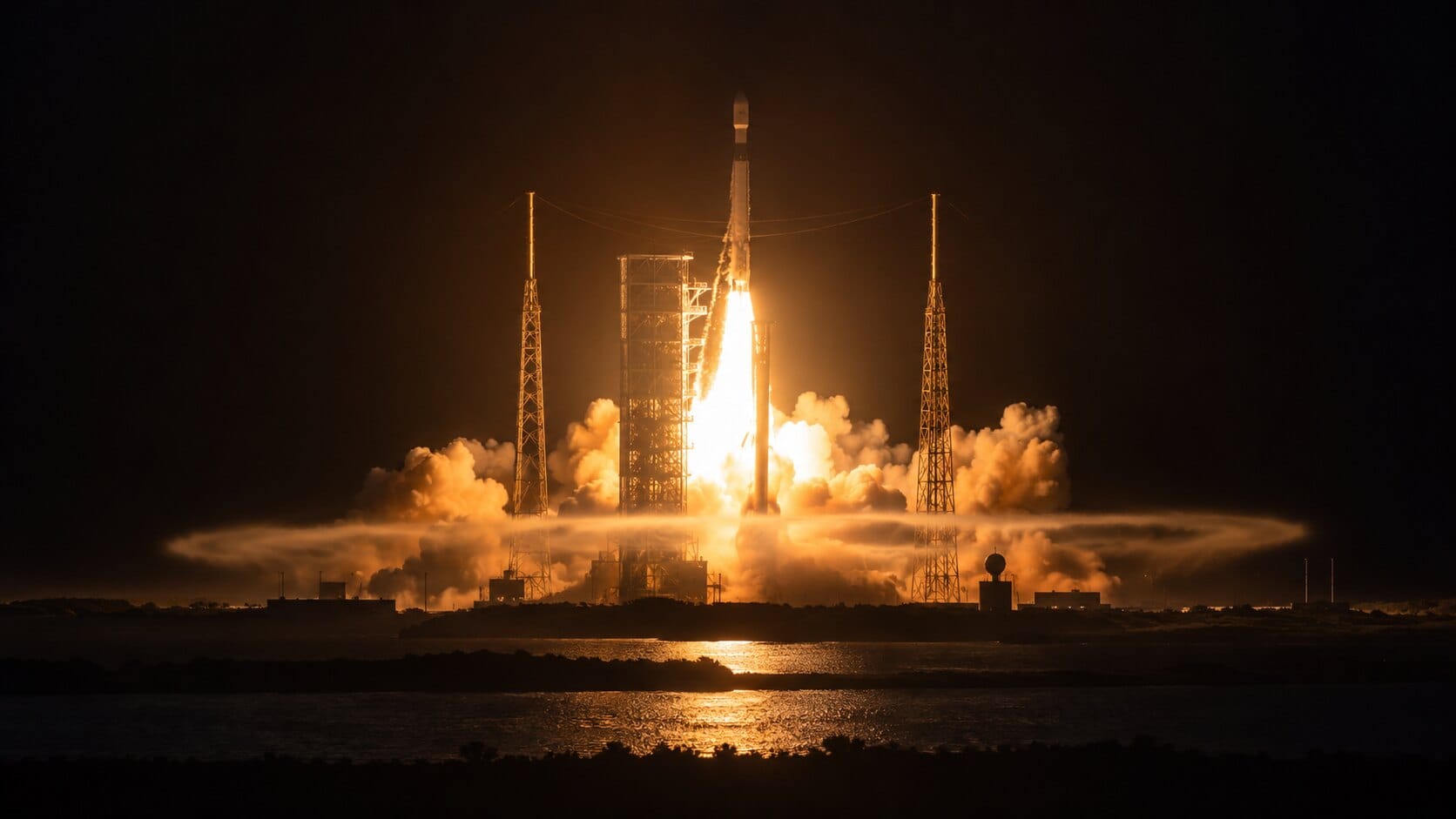
Space agencies publish launch times in Coordinated Universal Time (UTC). A launch listed as 23:30 UTC happens at a different clock time in every country - and, if the launch site is far enough east or west, on a different calendar day. Our list does the conversion for you and shows UTC alongside the local time at the launch site.
T-0, the launch window and why the time keeps moving
- Instantaneous window - a single possible second in the day; any problem means a postponement.
- Multi-hour window - controllers can wait out a storm or fix a small issue and still launch the same evening.
- Backup date - operators usually hold a second slot a day or two later.
What Go, TBC, TBD and Hold Mean
- Go - date and time confirmed, preparations are on schedule.
- TBC - provisional date, not yet confirmed by the operator. It can move by days.
- TBD - no date set; the mission is planned but has no firm slot.
- Hold - the countdown has been paused. Sometimes for minutes, sometimes until the window closes.
- Scrub - the attempt is called off for the day; the next try usually comes within 24-48 hours.
Where to Watch the Launch Live
Every major operator streams its own launches free and without registration. For missions on our list we link to the specific stream, but it is worth knowing the permanent channels too:
- SpaceX - the stream usually starts 10-15 minutes before T-0 and ends after the first stage is recovered.
- NASA - for crewed missions the stream starts several hours earlier and also covers crew preparations.
- ESA - Ariane 6 and Vega-C launches from French Guiana, with commentary in English and French.
- Rocket Lab, ULA, Arianespace - their own channels, streaming usually 20-30 minutes before liftoff.
Can You See a Rocket Launch from Europe?
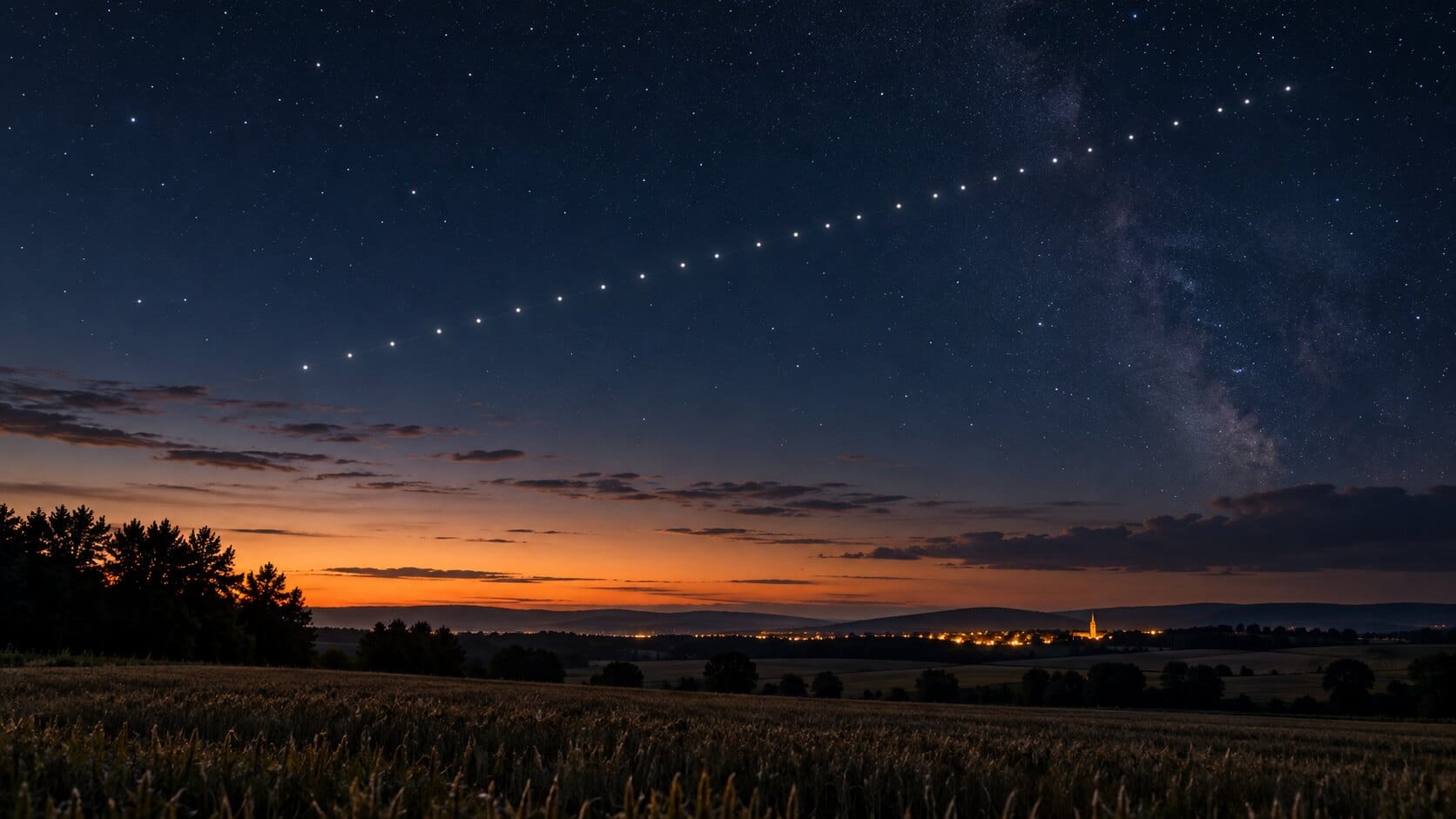
You will not see the launch itself from Europe - every active spaceport lies outside the continent or on its far edges. What you can see from European skies are the satellites put into orbit by that launch. The most recognisable is the Starlink "space train" a few days after the mission.
When a Launch Gets Postponed
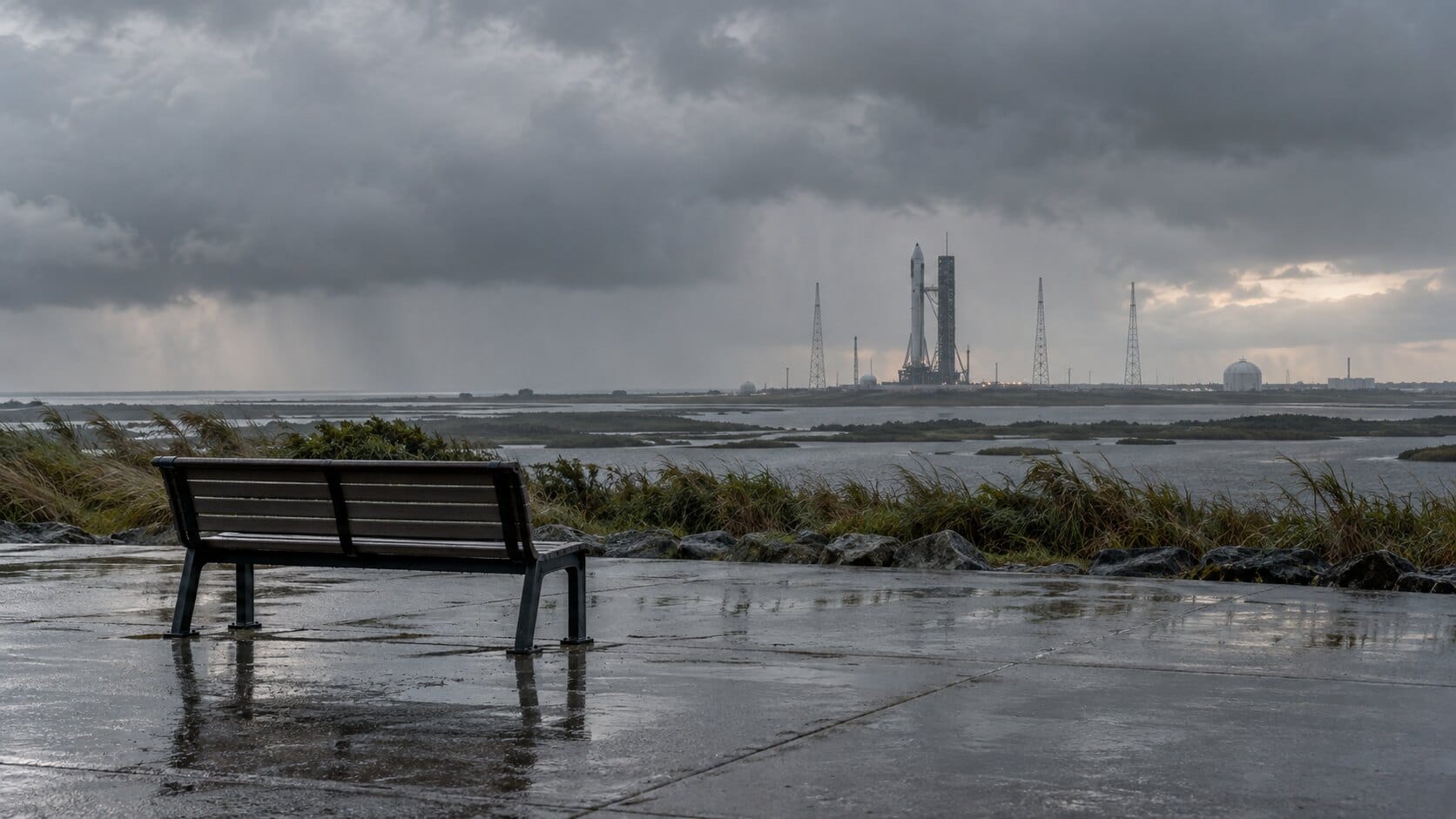
Delays are the rule, not the exception. The most common causes are weather around the launch site (lightning, strong upper-level winds), a small fault found during fuelling, and traffic along the flight path - a ship or an aircraft inside the safety zone.
What to do about it in practice: check the status on our list an hour before the planned T-0, not the day before. Operators usually announce the decision in the last two hours of the countdown, and the next attempt can come as soon as the following night. If you follow launches regularly, the other live tools - radar, maps and forecasts that refresh continuously - are useful too.
Rocket Launches Today - Frequently Asked Questions
Read Also
For the full calendar with countdowns and the 2026/27 mission programme, see rocket launches live. Planning to watch one in person? Start with the Cape Canaveral viewing guide. And if you see a moving string of lights a few days after a launch, check the Starlink tracker or what that light in the sky is.
Is there a rocket launch today?
Almost always yes - worldwide there are several launches a week, and in record months more than a dozen. The list on this page shows the next missions with their times; if it is empty, no launch is confirmed for the coming hours.
What time does a rocket launch happen in my time zone?
Operators publish times in UTC. Our list shows UTC next to the local time at the launch site, so you can convert to your own zone by applying your UTC offset and verify the time at the source.
Where can I watch a rocket launch live for free?
On the mission operator's official channels: SpaceX, NASA, ESA, Rocket Lab and ULA stream their launches free and without registration. For each mission on the list we add a link to the specific stream as soon as the operator announces it.
What do scrub and hold mean?
A hold is a pause in the countdown - sometimes a few minutes, sometimes until the launch window closes. A scrub is the cancellation of that day's attempt. After a scrub the next try usually takes place within 24-48 hours.
Can you see a rocket launch from Europe?
No, because the active spaceports lie outside Europe. What you can see is the satellites put into orbit by the launch - most recognisably the Starlink "space train" a few days after the mission.
Why does the launch date keep changing?
Because clearance to launch depends on the weather over the launch site, the state of the rocket after fuelling and a clear safety zone. For missions marked TBC and TBD, treat the date as indicative and check the status an hour before liftoff.
Planning to watch in person? Start with the Cape Canaveral viewing guide, then go back to the full launch calendar.

Guide
Sky Phenomena
Everything visible overhead: aurora, meteors, eclipses and noctilucent clouds.

Live tool
Starlink Tracker
Pass times for your location — the satellite train is visible days after a launch.
Tools
Live Tools
Radars, maps and live widgets we use every day.

About the author
Krystian — guide and photographer
Who runs OndaTravel and why these tools exist.

Hi, I'm Krystian “dziadzia przewodnik” from OndaTravel.pl!
The North is my greatest passion, but the world is far too beautiful to stay in just one climate. On my blog, I combine the raw landscapes of Iceland and Norway with the exotic energy of Thailand or Vietnam, showing you how to travel authentically — with passion and a camera in hand.
What will you find on OndaTravel.pl?
Visual storytelling: As a photographer and filmmaker, I don’t just describe places — I take you there with professional photos and video.
North expert: Ready-to-use road trip plans for Iceland and Norway, smart tips for budget travel, and my original Northern Lights Radar (locations and forecast).
Travel through the lens of cinema: I track down filming locations — from icy scenes in Interstellar to tropical frames from world cinema.
New direction: Exotic destinations: I love contrast, so the blog is featuring more and more practical knowledge about Vietnam and Thailand. I’ll show you how to find your way around Southeast Asia and come back with your best memories.
P.S. follow me here