

Greenland Northern Lights Live – Radar and Forecast
Is the aurora visible in Greenland tonight?
Kangerlussuaq records over 300 clear nights a year — the best weather odds of any aurora destination covered on this site. The reason is geography: it sits inland at the head of a 170 km fjord, sheltered by mountains and the ice sheet, which pushes cloud away while the coast fights storms. Season runs late August to early April, Kp 1 to 2 is enough, and light pollution is effectively zero.
Table of contents
- Kangerlussuaq or Ilulissat?
- What Kp do you need in Greenland?
- When to go: month-by-month
- Where to watch
- How many nights should you plan?
- Cloudy tonight? What to do instead
- Camera settings that work here
- Planning the trip: getting there, staying, packing
- FAQ: Northern Lights in Greenland
- Read also
Northern Lights – live radar and parameters
Parameters refresh automatically. The local aurora chance is calculated for your location (GPS or city).
Aurora oval radar – Northern Hemisphere
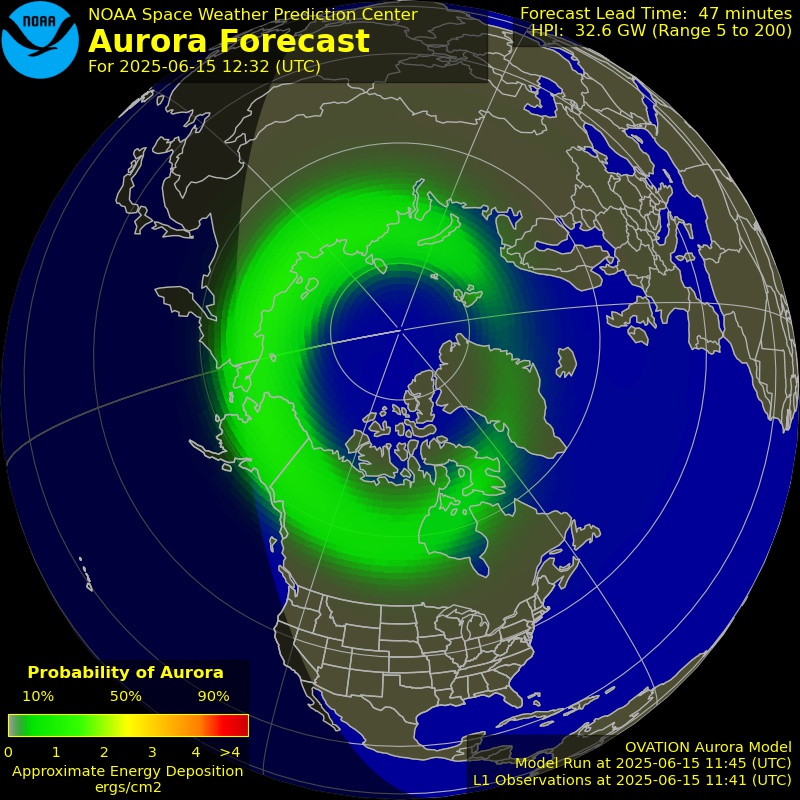
If the animation does not load, a static image will be shown.
Conditions assessment
The indicators consider your location, the local aurora chance and whether it is dark.
Kp (3h)
Kp (1 min)
Bz (GSM)
Bt (IMF)
Speed
Density
Temperature
Latest alerts: solar activity and geomagnetic storms
The monitor below updates automatically from NOAA data: it shows the outlook for the next seven nights and the current aurora alerts. Check it right before you head out — conditions can change within hours.
Sky phenomena
Planning your night-sky observations? These monthly guides highlight the most important astronomical events, meteor showers, Moon phases and the best observation windows. Below you’ll find the two most relevant monthly guides for the current period.
SKY PHENOMENA
Monthly guide
Sky events in September 2026: meteors, equinox and the Moon
The key sky events of the month, meteor activity, the Moon and practical observation windows.
Read the guide
SKY PHENOMENA
Monthly guide
Sky events in October 2026: Draconids, Orionids and Saturn
The key sky events of the month, meteor activity, the Moon and practical observation windows.
Read the guideNorthern Lights
Looking for a longer-term Northern Lights outlook? These monthly guides complement the live radar with seasonal conditions, expected aurora activity and practical viewing tips. Below you’ll find the two most relevant monthly forecasts currently available.
NORTHERN LIGHTS
Monthly forecast
Northern Lights — September 2026
A monthly Northern Lights outlook with live-radar context and practical viewing guidance.
Read the guide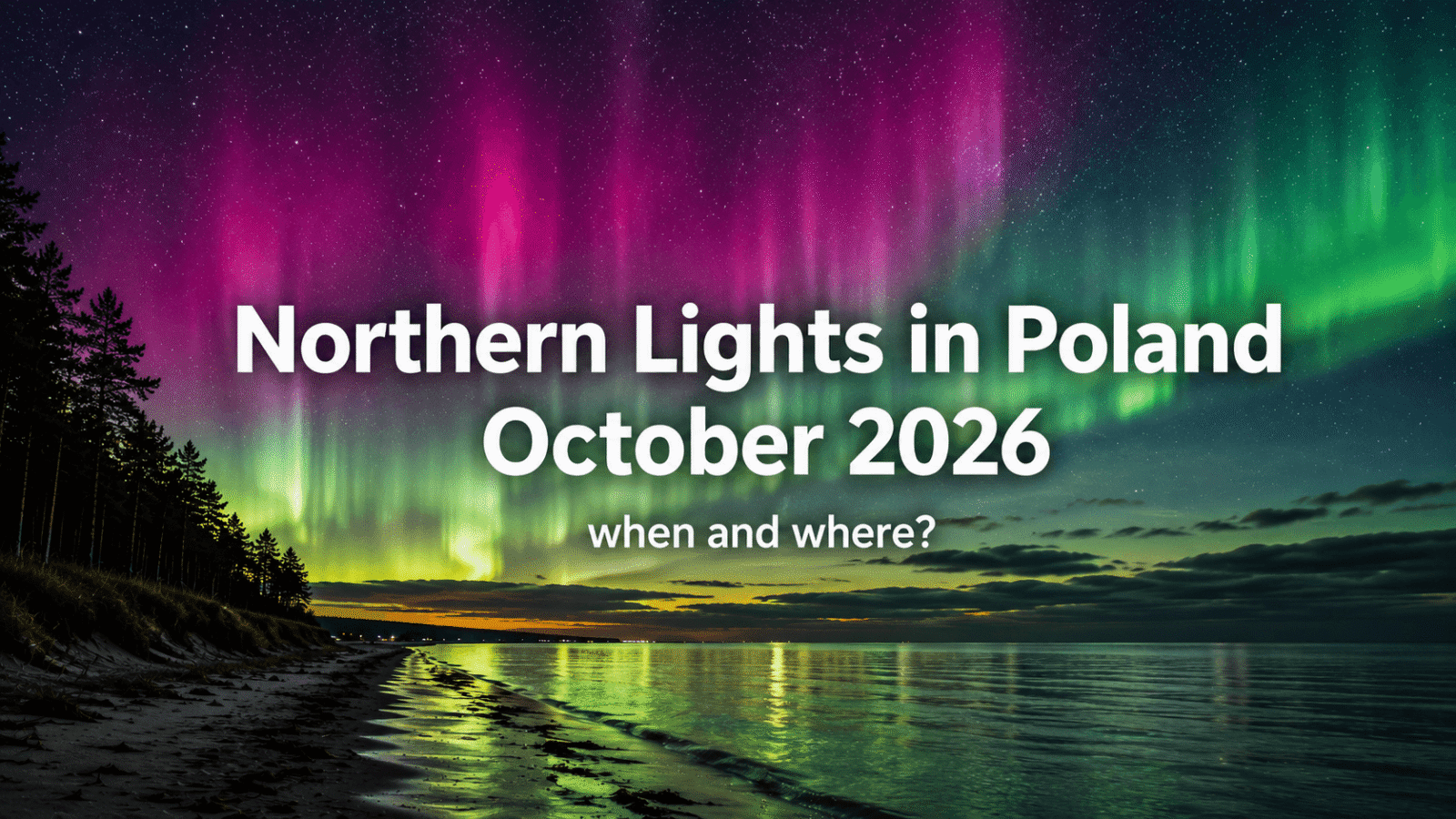
NORTHERN LIGHTS
Monthly forecast
Northern Lights — October 2026
A monthly Northern Lights outlook with live-radar context and practical viewing guidance.
Read the guide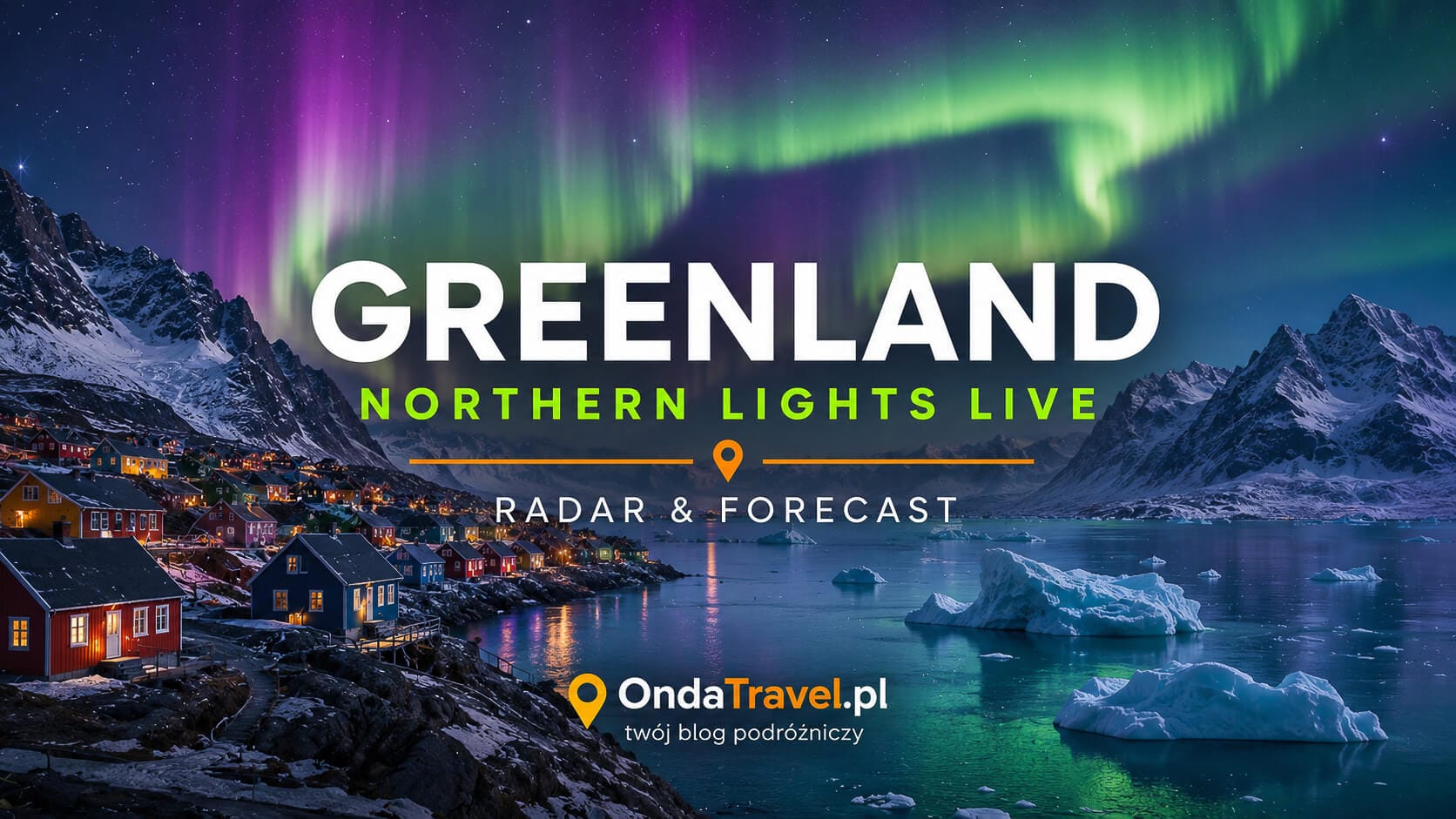
Kangerlussuaq or Ilulissat?
These are Greenland’s two main aurora bases and they are not interchangeable. The honest split: Kangerlussuaq wins on weather, Ilulissat wins on scenery.
| Kangerlussuaq | Ilulissat | |
|---|---|---|
| Latitude | 67°N, inland | 69°N, coastal |
| Clear nights | 300+ per year | Good, but coastal weather |
| Kp needed | 1-2 | 1-2 |
| Foreground | Ice sheet, Russell Glacier, frozen lakes, tundra | UNESCO icefjord, giant icebergs |
| Getting there | Main transit hub, easiest access | Direct flights, now easier after runway upgrade |
| Best for | Maximising your odds of a clear sky | The most dramatic photographs |
If your itinerary already routes through Kangerlussuaq — and most Greenland trips do — adding one extra night there specifically for the aurora is the single highest-probability decision you can make anywhere in the Arctic.



Hi, I’m Krystian “dziadzia przewodnik” from OndaTravel.pl!
The North is my greatest passion, but the world is far too beautiful to stay in just one climate. On my blog, I combine the raw landscapes of Iceland and Norway with the exotic energy of Thailand or Vietnam, showing you how to travel authentically — with passion and a camera in hand.
What will you find on OndaTravel.pl?
Visual storytelling: As a photographer and filmmaker, I don’t just describe places — I take you there with professional photos and video.
North expert: Ready-to-use road trip plans for Iceland and Norway, smart tips for budget travel, and my original Northern Lights Radar (locations and forecast).
Travel through the lens of cinema: I track down filming locations — from icy scenes in Interstellar to tropical frames from world cinema.
New direction: Exotic destinations: I love contrast, so the blog is featuring more and more practical knowledge about Vietnam and Thailand. I’ll show you how to find your way around Southeast Asia and come back with your best memories.
P.S. follow me here


What Kp do you need in Greenland?
| Location | Latitude | Kp for a visible display | Kp for a strong show |
|---|---|---|---|
| Kangerlussuaq | 67°N | 1 | 2 |
| Ilulissat | 69°N | 1 | 2 |
| Nuuk | 64°N | 2 | 3 |
As everywhere inside the oval, the Kp number is the least interesting variable. Weather decides your night, and in Kangerlussuaq weather is unusually likely to cooperate.
When to go: month-by-month
| Month | Darkness | Notes | Rating |
|---|---|---|---|
| Late Aug-Sep | Returning | Milder, tundra still accessible | Good |
| October | Growing fast | Cooling, snow arriving | Very good |
| November | Long nights | Peak season begins | Excellent |
| December | 20+ hours dark | Longest nights, deep cold | Excellent |
| January | Very long nights | Coldest, most reliable darkness | Excellent |
| February | Long nights | Clear and cold, superb | Excellent |
| March | Balanced | Equinox activity, daylight for exploring | Sweet spot |
| Early April | Shortening | Season closing | Fair |
March is often called the sweet spot: high geomagnetic activity around the equinox, stable weather, and enough daylight to actually explore the ice sheet and fjords during the day rather than only existing at night.
Where to watch
- Anywhere in Kangerlussuaq — the settlement is tiny and there is essentially no stray glow. Stepping outside your guesthouse is often enough; your eyes adapt within minutes. No car and no winter drive needed — this is the one spot on the list you can reach on foot in any weather. The valley opens on nearly every side, but the clearest sweep is toward the north edge of town, away from the airport apron lights. No parking to think about. One practical note: Kangerlussuaq sits inland, so its winter nights can run colder and stiller than coastal Greenland, with less cloud cover overall to soften the temperature swings — dress for real cold even when the sky looks calm.
- Russell Glacier — roughly 30 minutes by gravel road from Kangerlussuaq, at the edge of the ice sheet. The glacier face gives you a foreground nothing else in the Arctic can match. Not reachable without a vehicle — the road is unlit, ungritted, and too far to walk safely in winter darkness, which is why most visitors go with a local operator rather than a rental car. The ice face sits north-northeast of the viewing pull-in, so aim that direction for aurora over ice. Parking is a small, unmarked gravel pull-off with no lighting and no facilities of any kind. This is genuine backcountry driving with muskox in the area — go with a guide or a vehicle built for winter roads, and skip it after fresh snow without checking conditions locally first.
- Ilulissat Icefjord — UNESCO World Heritage site producing the largest icebergs in the Northern Hemisphere. Aurora over icebergs the size of buildings is the signature Greenland shot. Reachable on foot from town via the boardwalk trail, roughly 20-30 minutes’ walk from most hotels, so no car is needed if you’re staying in Ilulissat itself. The fjord opens south-southwest from the main boardwalk platforms, putting aurora and icebergs in the same frame. No parking required on foot, though a small gravel lot sits at the trailhead for anyone driving in from outside town. The boardwalk is unlit and can ice over — bring a headlamp and proper footwear, and stay on the marked planks rather than stepping onto rock or ice near the edge.
- Just outside Nuuk — the capital has enough light pollution to need a short drive, but fifteen minutes in any direction gives conditions that would count as excellent anywhere else. Common, easy pull-offs sit along the roads toward Qinngorput and Nuuk Airport. Not realistic on foot given winter distances and unlit roads, so plan on a car or taxi. Horizon depends on which pull-off you choose — pick one facing away from the city glow, typically east or north, since that’s where the oval sits on active nights. Parking is informal gravel shoulder, with no marked lots and no signage to guide you. Coastal weather here shifts fast, so check the cloud forecast before committing to a spot, and tell someone which road you’ve taken, since cell coverage gets patchy outside town.
Worth understanding before you plan: there are no roads between Greenlandic towns. Moving between Kangerlussuaq, Ilulissat and Nuuk means flying or sailing, so build your trip around one or two bases rather than expecting to chase clear sky across the country the way you would in Norway.
How many nights should you plan?
Two to three nights in Kangerlussuaq is genuinely enough, which is unusual — most Arctic destinations need four or more. With 300-plus clear nights a year the weather risk that dominates elsewhere is largely removed here. The practical constraint is not the aurora but logistics: flight schedules to and within Greenland are limited, so your itinerary is usually shaped by aircraft rather than by the sky.
Cloudy tonight? What to do instead
This is the one destination on this site where the honest answer is usually “wait”. Kangerlussuaq records over 300 clear nights a year, and there are no roads to other towns, so chasing weather is not an option. What you can do is change your foreground and your elevation.
| Where to go instead | Distance | Drive time | Why it can work |
|---|---|---|---|
| Russell Glacier road | 16 mi / 25 km | ~30 min | Ice sheet edge; the road often runs out from under a coastal cloud band |
| Lake Ferguson area | 3 mi / 5 km | ~10 min | Water foreground close to the settlement, quick to reach |
| Just outside the settlement | under 1 mi | 5 min walk | Almost no light pollution; enough on all but the worst nights |
| Wait for the break | – | – | With 300+ clear nights a year, patience beats driving here |
Camera settings that work here
Faint display: ISO 1600-3200, f/2.8 or wider, 8-15 seconds. Strong display: 2-5 seconds. One local trick worth knowing: a slim crescent Moon is an asset here rather than a problem. It puts just enough light on the snow, the ice sheet or the icebergs to render the foreground, without washing out the aurora — and in a landscape this dramatic, a visible foreground is what separates a good frame from a great one. Save the new-Moon nights for faint displays. Temperatures reach -28°C and below, so batteries live in an inside pocket.
Planning the trip: getting there, staying, packing
Getting there
Most routes run through Copenhagen or Reykjavik. Kangerlussuaq was for decades the main international gateway thanks to its long runway, and it remains the easiest inland base. New runways at Nuuk and Ilulissat have opened more direct options, which shortens some itineraries but does not change the basic rule: schedules are thin and weather-dependent, so leave buffer days at both ends.
Moving between towns
There are no roads between Greenlandic settlements. You move by air or by sea, both weather-dependent and both expensive. This is why a Greenland aurora trip is planned around one or two bases rather than a circuit, and why chasing clear sky across the country is not an option the way it is in Norway.
Where to stay
Kangerlussuaq has a small cluster of hotel and hostel accommodation built around the airport, which is functional rather than charming and perfectly adequate for two or three nights. Ilulissat has more choice and better views, including hotels overlooking the icefjord. Nuuk is the largest town with the widest range, but it sits further south and has more light to escape.
What to pack
Temperatures reach -28°C and below inland. Full Arctic layering, insulated boots, windproof shell, face covering and over-mitts. Because the classic shots here use the ice sheet or icebergs as foreground, a wide lens between 14mm and 24mm earns its place in the bag, along with a tripod solid enough to hold steady in katabatic wind coming off the ice.
FAQ: Northern Lights in Greenland
Why does Kangerlussuaq have so many clear nights?
Its inland position at the head of a 170 km fjord, sheltered by mountains and the ice sheet. The ice sheet creates a high-pressure zone that pushes cloud away, so while the coast deals with storms, Kangerlussuaq records over 300 clear nights a year.
Kangerlussuaq or Ilulissat for the aurora?
Kangerlussuaq for the best odds of a clear sky; Ilulissat for the most dramatic photographs, with aurora over the UNESCO icefjord and icebergs the size of buildings. Both need only Kp 1 to 2.
How many nights do I need in Greenland?
Two to three in Kangerlussuaq is genuinely enough, which is unusual for the Arctic. The 300-plus clear nights per year remove most of the weather risk. Flight schedules, not the aurora, are what usually shape the itinerary.
What is the best month for the aurora in Greenland?
November through March are all excellent. March is often called the sweet spot: equinox-boosted activity, stable weather, and enough daylight to explore the ice sheet and fjords during the day.
Can you travel between Greenlandic towns by road?
No. There are no roads between towns. Moving between Kangerlussuaq, Ilulissat and Nuuk means flying or sailing, so plan around one or two bases rather than chasing clear sky across the country.
Is a full Moon a problem for aurora photography in Greenland?
A slim crescent is actually helpful here. It lights the snow, ice sheet or icebergs enough to render a foreground without washing out the aurora. Save new-Moon nights for faint displays.

About the OndaTravel.pl author
Krystian — „dziadzia przewodnik”
Meet the OndaTravel.pl author: an independent Arctic guide, photographer and filmmaker. See how the guides are made, where the field photos come from, and how to reach out about a guided trip to Iceland, Lofoten or Norway.
Read also
ICELAND
Live radar
Iceland
The usual first choice, and a useful contrast: far easier to reach, but considerably cloudier.
Check Iceland radarALL LOCATIONS
Hub
Aurora Radar: Choose a Location
Compare Kp thresholds and cloud odds across every location we track.
See all locationsPHENOMENON EXPLAINED
Guide
Live Aurora Forecast Explained
Understand what Kp, Bz and cloud cover actually mean before you check any radar.
Read the explainerTOOL
Alerts
Aurora Alerts
Get notified the moment conditions turn favourable, wherever you are.
Open Aurora Alerts