


Sky events in October 2026: Draconids, Orionids and Saturn
October 2026 has three very clear observing pillars: Saturn, the Draconids and the Orionids. Saturn reaches opposition on 4 October, the night of 8/9 October is worth setting aside for the Draconids, and the Orionids peak on 21 October. Between these events, on 10 October, there is a New Moon and one of the best dark-sky windows of the month.
This is also the beginning of the full autumn meteor season. The Southern Taurids are already active, and from around 20 October the Northern Taurids join them, but their main peaks do not occur until November. That is why this monthly calendar gives you an overall observing plan, while the details of individual showers are covered in separate guides.
You can find the whole year in the Sky events 2026section. For detailed planning, also use the 2026 astronomical calendar, Moon phases and the meteor shower calendar.

SKY EVENTS
Observing section
Sky events — guide to phenomena and observations
A starting point for skywatching: aurora, noctilucent clouds, meteors, Moon phases, eclipses and practical guides. A good place to move quickly from the radar to other phenomena visible in the sky.
Go to the sky events section
SKY CALENDAR
Observation planning
Astronomical events calendar
An overview of the most important night-sky events in one place: conjunctions, eclipses, supermoons, oppositions and dates worth saving in advance. A useful page alongside the radar when you want to plan observations ahead.
See the astronomical events calendar
MOON
Observation calendar
Moon phases — 2026 calendar
The most important phases of the month — New Moon, Full Moon and quarter phases — ideal for planning observations and astrophotography.
See Moon phases
METEORS
Observation calendar
Meteor shower calendar 2026
Peak dates of meteor showers, the Perseids, Geminids, Lyrids, Moon conditions and a practical plan for observing shooting-star nights.
See the meteor calendarSky events October 2026 — at a glance
| Best dark nights | around 8–12 October, with New Moon on 10 October |
| Planet of the month | Saturn at opposition on 4 October — visible for most of the night |
| Draconids | peak on 9 October at around 03:00 CEST; very good Moon conditions |
| Orionids | peak on 21 October; ZHR 20+ under ideal conditions and several Moon-free hours |
| Taurids | active in October, but the main peaks fall on 5 and 12 November |
| Moon | New Moon on 10 October at 17:50; Full Moon on 26 October at 05:11 Polish time |
Contents: October 2026 night sky

Check out my YouTube channel and travel with me.
Follow the channel for videos, routes and practical travel inspiration.
Follow me here:
What’s up?
Enjoying my content?
Buy me a coffee at buycoffee.to/ondatravel and support the creation of more travel content.
Your support helps me create more practical guides, videos and travel inspiration.

Key astronomical dates in October 2026

| Date | Event | What will we see? |
|---|---|---|
| 3 October, 15:25 | Last Quarter Moon | Increasingly good conditions for evening observations of faint objects. |
| 4 October | Saturn at opposition | The best period of the year for observing the planet; Saturn is visible for most of the night. |
| 5 October | Moon near Mars | An easy-to-find morning pairing. |
| 6 October | Moon near Jupiter + Camelopardalid maximum | Jupiter is easy to observe; the shower is weak and mainly of interest to patient observers. |
| 9 October, approx. 03:00 CEST | Draconid maximum | Dark skies almost at New Moon; very good lunar conditions. |
| 10 October, 17:50 | New Moon | The best dark-sky window of the month. |
| 18 October, 18:12 | First Quarter + ε-Geminid maximum | A weak shower; the second half of the night may be more favorable. |
| 21 October | Orionid maximum | Fast meteors associated with Halley’s Comet; ZHR 20+ under ideal conditions. |
| from around 20 October | Both Taurid branches active | Slow, often impressive meteors; the main peaks do not occur until November. |
| 26 October, 05:11 | Full Moon | Very bright skies make faint objects difficult to observe. |
Best nights for observing in October 2026

The most versatile window falls on 8–12 October. The Moon is then a very thin crescent or at New Moon, so dark skies favor both the Draconids and star photography. If the weather cooperates, it is worth reserving at least two nights rather than putting everything on one date.
- 4/5 October: Saturn just after opposition — an excellent telescope target.
- 8/9 October: the most important Draconid night; peak around 03:00 CEST.
- 9/10 October: almost New Moon and the Draconids are still active.
- 10/11 October: very dark skies after New Moon — a good date for wide-field sky photography.
- 20/21 and 21/22 October: Orionids; use the hours when the Moon is already low or below the horizon.
October nights are much colder than August nights. Two hours of sitting still while watching meteors can chill you even when the thermometer does not look alarming. A warm layer, a thermos and an insulating mat are just as important as a sky chart.
Saturn at opposition on 4 October 2026

Saturn reaches opposition on 4 October 2026. This is the moment when Earth lies between the Sun and Saturn. The planet rises roughly around sunset, remains available for much of the night and reaches the best combination of brightness and angular size in its observing season this year.
Saturn can be seen with the naked eye as a bright point, but only a telescope reveals what makes this planet exceptional — its ring system. Even a small instrument can show the characteristic shape if the atmosphere is steady and the planet is sufficiently high above the horizon.
You do not have to observe exactly on 4 October. Opposition marks the best period, not the only good night. A few days before and after this date Saturn looks very similar. If 4 October is cloudy, choose the first clear night near that date.
Draconids 2026: peak on the night of 8/9 October

The Draconids are active from 6 to 10 October, and in 2026 the peak falls on 9 October at around 01:00 UT, or around 03:00 CEST in Poland. The International Meteor Organization gives a typical ZHR of around 5, but the history of this shower shows that in some years it has behaved very irregularly.
There is no official forecast of a strong activity outburst in 2026. This matters because the Draconids have a history of clickbait “meteor storm” predictions online. The most honest assumption is a quiet shower with the possibility of a surprise, not a guarantee of hundreds of meteors.
Lunar conditions are, however, very good. New Moon occurs one day later, on 10 October, so moonlight is practically no obstacle. The radiant lies high in the northern sky and is very favorably placed from Poland. The Draconids are also noticeably slower than many other showers.
You can find the full guide with the exact night, radiant and observing plan on the Draconids 2026 — when and where to watchpage. The monthly calendar shows only the context of the entire October sky.

METEORS
Draconids 2026 — when and where to watch?
Exact peak night, radiant, Moon conditions and a ready-made plan for observing the Draconids in Poland.
New Moon on 10 October 2026 and the darkest sky of the month

The New Moon occurs on 10 October at 17:50 Polish time. This is an excellent setup for the entire observing weekend around the Draconids. After dark the Moon does not brighten the sky, making it easier to see fainter stars, meteors and deep-sky objects.
October is no longer as favorable for the bright central Milky Way as summer, but the broad band of the Galaxy still crosses the autumn sky. It is a good time for photographs combining a dark landscape, constellations and the first distinctly autumnal atmosphere.
If you are taking photographs, check the camera settings for the night skyin advance. For meteors, it is better to shoot a large series of wide frames than to try to predict exactly where the next streak will appear.

PHOTO GUIDE
How to photograph the night sky and the Moon
Practical camera settings, framing advice and tips that help you photograph the Moon, meteors and the night sky more effectively.
Orionids 2026: peak on 21 October

The Orionids are active from 2 October to 7 November, with the main peak on 21 October. The IMO gives a ZHR of 20+ under ideal conditions. This is a fast meteor shower associated with material left by Halley’s Comet.
The Moon does not provide conditions as perfect as for the Draconids because First Quarter falls on 18 October and by the peak the lunar disk is already waxing. This does not mean the night is lost. The IMO notes that several hours without disruptive moonlight remain, while the Orionid radiant becomes usefully high around local midnight.
The best plan is not to finish observing too early. Conditions improve after moonset and the radiant is higher. It is also worth observing neighboring nights because the Orionids often maintain similar activity for several nights around the main peak.
You can find a detailed plan in the separate Orionids 2026 guide. It includes the best observing time, radiant position, Moon impact and a practical plan for the peak night.

METEOR SHOWER 2026
Orionids 2026
Check the 21/22 October peak, radiant position and observing conditions.
Taurids in October 2026: active, but not yet at peak

The Southern Taurids are active from 20 September, and the northern branch joins around 20 October. In October you can therefore see occasional, relatively slow meteors associated with the Taurid complex. Some can be bright and impressive.
We do not, however, list 10 October as the Taurid maximum. According to the IMO calendar, the main Southern Taurid maximum falls on 5 November and the Northern Taurids around 12 November. October is the beginning and development of activity, not the culmination of both branches.
If you are interested in fireballs and the longer autumn season of this shower, go to the full Taurids 2026 guide.

METEOR SHOWER 2026
Taurids 2026
See the dates of the Southern and Northern Taurids and the chances of bright fireballs.
The Moon in October 2026: New Moon, Full Moon and the best nights

| Phase | Date and time in Poland | Conditions |
|---|---|---|
| Last Quarter | 3 October, 15:25 | Increasingly good evenings for dark skies. |
| New Moon | 10 October, 17:50 | The best dark-sky window of the month. |
| First Quarter | 18 October, 18:12 | The Moon interferes in the evening, but the later part of the night may be better. |
| Full Moon | 26 October, 05:11 | Very bright night sky. |
When is the Full Moon in October 2026? The Full Moon occurs on 26 October at 05:11 Polish time. For observers of meteors and faint objects this is not a favorable night, but it can be used for Moon photography, especially a day earlier when the large disk rises.
When is the New Moon in October 2026? 10 October at 17:50. This is a very favorable date because it falls right next to the Draconid maximum. You can find the full annual schedule in the 2026 Moon phase calendar.
MOON CALENDAR
Moon phases 2026
Check Full Moons, New Moons and the key Moon phases before planning an observation or supermoon photography.
Northern Lights in Poland in October 2026
October is already a full-fledged month of the autumn aurora season. Nights are long, darkness falls much earlier than in summer, and observers have more time to react to sudden increases in geomagnetic activity.
Do not rely on Kp alone. To assess the situation, compare several parameters: Bz, solar-wind speed and density, the auroral oval model, cloud cover and local light pollution. Open the aurora radar and the monthly guide Northern Lights in Poland — October 2026.

FORECAST
OndaTravel guide
Live aurora forecast
Kp and Bz parameters and the basics of reading the data when planning observations.
Read the forecast
AURORA RADAR
OndaTravel guide
Aurora radar — all locations
Quick access to radars, locations and tools for checking conditions.
Check the radar
NORTHERN LIGHTS
Monthly guide
Northern Lights in the UK October 2026 — when and where? Radar and forecast
Northern Lights in Poland October 2026: check when the chances are highest after the equinox, how the Russell–McPherron effect works and where to observe. Live radar, Kp thresholds and alerts.
Open the guide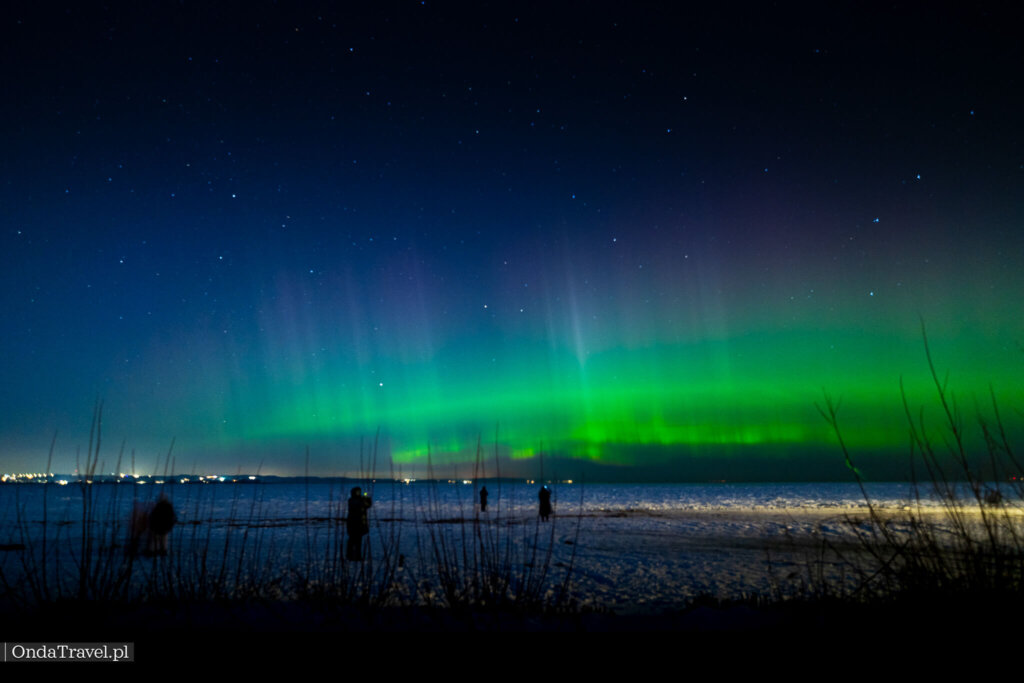
AURORA ALERTS
Current alerts and conditions
Aurora alerts
Check current aurora alerts, current conditions and the most important signals before planning an aurora observing trip.
See aurora alertsKey rocket launches and space missions in October 2026

October 2026 currently has fewer major launches with exact dates than September, but it brings one of autumn’s most important interplanetary events: the arrival of the Hera spacecraft in the vicinity of the Didymos–Dimorphos asteroid system. NASA is also planning scientific suborbital rocket launches from Alaska this month.
Schedule status: 14 August 2026. We do not assign to October missions that currently have only the labels “autumn 2026”, “second half of 2026” or “2026”. If an agency has not specified the month, the mission remains outside the main table.
| Date / window | Agency | Mission | What will happen? |
|---|---|---|---|
| October 2026 | ESA | Hera — Didymos / Dimorphos | The spacecraft will perform an impulsive rendezvous maneuver that will place it in the immediate vicinity of the asteroid system and begin the operational phase at the planetary-defense mission target. |
| NET October | NASA | INFUSE-2 | A Black Brant IX sounding rocket is scheduled to launch from Poker Flat Research Range in Alaska for ultraviolet research. |
| NET October | NASA | DUST III | A second Black Brant IX campaign from Poker Flat, carried out as a suborbital science mission. |
Which larger rocket launches could still move into October 2026? NASA still lists the SpaceX CRS-35 and Northrop Grumman CRS-25 flights only as NET autumn 2026. There is therefore no basis yet for listing them as October events.
We treat China’s Chang’e-7similarly. The China National Space Administration confirms preparations to launch the mission to study the Moon’s south pole in the second half of 2026, but as of 14 August it has not officially assigned it to October. When a confirmed date appears, the monthly calendar will be updated.
Hera is particularly interesting because it will study the effects of NASA’s DART spacecraft impact on Dimorphos. This was the first time humanity deliberately changed the motion of a celestial body, and Hera will precisely examine the result of that experiment and help develop planetary-defense techniques.
Schedule sources: ESA — Hera operations, NASA Wallops Launch Schedule, NASA Launch Schedule and CNSA — Chang’e-7.
Other interesting events in October 2026
On 5 October the Moon will pass near Mars, and on 6 October near Jupiter. These are good, easy observations for people who do not want to wait until late at night. Jupiter is one of the brightest objects in the sky and is an easy reference point even for beginners. If the point is moving or does not behave like a planet, use our guide to identify a light in the sky and compare Starlink, satellites, aircraft and other common explanations.

GUIDE
What Is That Light in the Sky? Identify Starlink, Satellites, Planes and More
Identify a strange light in the night sky by its movement, blinking, color and duration. Compare Starlink, satellites, ISS, planes, drones, meteors and more.
The weak October Camelopardalids also peak on 6 October, and the ε-Geminids on 18 October. Both showers have much less potential than the Orionids and should not dominate the article headline, but for systematic observers they are an interesting addition to the full October calendar.
Three ready-made observing scenarios for October 2026

Scenario 1: only one night
If you can choose only one date and are mainly interested in meteors, choose the night of 8/9 October. You get the Draconids, very dark skies and New Moon the following day. Even if the shower turns out to be quiet, the conditions are good for ordinary stargazing.
Scenario 2: you have a telescope
Start with Saturn in the first week of the month. Opposition on 4 October provides very convenient observing conditions. Choose a night with steady air, wait until the planet is higher above the horizon and gradually increase magnification.
Scenario 3: you are hunting meteors throughout the month
Reserve two sessions: 8/9 October for the Draconids and 20/21 or 21/22 October for the Orionids. In the second half of the month, also watch for slower Taurid meteors. This way you do not make the whole month dependent on the weather of a single night.
What should you watch out for in October 2026?
- No Draconid meteor storm is forecast for 2026. Historical outbursts are not a guarantee of a repeat.
- The Orionids have a ZHR of 20+ under ideal conditions. From a city you will see clearly fewer meteors.
- The Taurids do not have their main maximum on 10 October. The most important peaks occur in November.
- Saturn is easy to see with the naked eye, but the rings require a telescope.
- The Full Moon on 26 October will brighten the sky considerably.
- Autumn nights are cold and damp. Take warm clothing, protect your lens from dew and plan a safe return.
The biggest practical mistake is making your plan depend on one exact hour. A meteor can appear before or after the peak, a planet remains well placed for many consecutive nights, and clouds can change everything. Treat the calendar as a tool for choosing a window, not as a promise of a specific spectacle.
FAQ: sky events October 2026
What can you see in the sky in October 2026?
The key events are Saturn at opposition on 4 October, the Draconid maximum on 9 October, New Moon on 10 October, the Orionid maximum on 21 October and Full Moon on 26 October.
When are the Draconids in 2026?
The Draconids are active from 6–10 October, with the peak on 9 October at around 01:00 UT, or around 03:00 CEST in Poland.
When are the Orionids in 2026?
The Orionid maximum falls on 21 October 2026. The shower is active from the beginning of October to the first week of November.
When is the New Moon in October 2026?
The New Moon occurs on 10 October 2026 at 17:50 Polish time.
When is the Full Moon in October 2026?
The Full Moon occurs on 26 October 2026 at 05:11 Polish time.
Will Saturn be visible to the naked eye in October 2026?
Yes. Saturn is visible to the naked eye as a bright point. A telescope is required to see the rings.
Does the Taurid maximum occur in October 2026?
No. The Taurids are active in October, but the main Southern Taurid maximum falls on 5 November and the Northern Taurid maximum around 12 November.
What is the best night for observing in October 2026?
For the Draconids, the best choice is the night of 8/9 October. For generally dark skies, the nights of 9/10 and 10/11 October are also very good.
Astronomical data sources
Parameters for the Draconids, Orionids, Taurids and weaker showers were verified against the International Meteor Organization 2026 calendar. The date of Saturn’s opposition was also checked against the NASA calendar, and Moon-phase times against data for Warsaw. Before observing, it is always worth checking the weather and the current sky conditions once more.
Read also: Draconids, Orionids and the next months
If you arrived here from the monthly calendar, continue to the dedicated guides: Draconids 2026, Orionids 2026 and Taurids 2026. If you want to go back one month, see sky events in September 2026.

METEOR SHOWER 2026
OndaTravel guide
Draconids 2026: night of 8/9 October — when and where to watch?
Draconids 2026: peak on 9 October at around 03:00 CEST, ZHR around 5. Check the Moon-free conditions and the best observing time.
Open the guide
METEOR SHOWER 2026
OndaTravel guide
Orionids 2026: night of 21/22 October — when and where to watch?
Orionids 2026: peak on the night of 21/22 October, ZHR 20+. A shower from Halley’s Comet — check Moon conditions, the best time and where to look.
Open the guide
METEOR SHOWER 2026
OndaTravel guide
Taurids 2026: Southern and Northern Taurids calendar
Taurids 2026: Southern around 5 November, Northern on 12 November. Check bright fireballs, the best nights, Moon conditions and observing locations.
Open the guide
SEPTEMBER 2026
Monthly guide
Sky events in September 2026 — meteors, equinox and the Moon
Sky events in September 2026: ε-Perseids, New Moon, equinox, Neptune, Full Moon, aurora, space missions and the best observing nights in Poland.
Open the guide




Sorry, the comment form is closed at this time.