

Aurora Alerts
Aurora alert — what does it mean?
An aurora alert should be treated as a signal to check the conditions now: the live radar for your location, Kp, Bz, Bt, the solar wind, cloud cover and the northern horizon. What matters most is the combination of data, not a single number. Only when the activity, the weather and the darkness of the sky match should you make the decision to go out.
Table of contents
- Current status: is there an aurora alert tonight (UK & Europe)?
- Latest aurora alerts: news and quick decisions for today
- Aurora Alerts: forecasts, news and a quick start to the radar
- How to read an “aurora alert” (in 60 seconds)
- Aurora forecast: how to use alerts before you go out
- Sources of space weather data and how I verify them
- Jump straight to a live radar
- FAQ: frequently asked questions about aurora alerts and radar
- Read also / next



Hi, I’m Krystian “dziadzia przewodnik” from OndaTravel.pl!
The North is my greatest passion, but the world is far too beautiful to stay in just one climate. On my blog, I combine the raw landscapes of Iceland and Norway with the exotic energy of Thailand or Vietnam, showing you how to travel authentically — with passion and a camera in hand.
What will you find on OndaTravel.pl?
Visual storytelling: As a photographer and filmmaker, I don’t just describe places — I take you there with professional photos and video.
North expert: Ready-to-use road trip plans for Iceland and Norway, smart tips for budget travel, and my original Northern Lights Radar (locations and forecast).
Travel through the lens of cinema: I track down filming locations — from icy scenes in Interstellar to tropical frames from world cinema.
New direction: Exotic destinations: I love contrast, so the blog is featuring more and more practical knowledge about Vietnam and Thailand. I’ll show you how to find your way around Southeast Asia and come back with your best memories.
P.S. follow me here


Contents
- Current status: is there an aurora alert tonight (UK & Europe)?
- Latest aurora alerts: news and quick decisions for today
- Aurora Alerts: forecasts, news and a quick start to the radar
- How to read an “aurora alert” (in 60 seconds)
- Aurora forecast: how to use alerts before you go out
- Sources of space weather data and how I verify them
- Jump straight to a live radar
- FAQ: frequently asked questions about aurora alerts and radar
- Read also / next
Current status: is there an aurora alert tonight (UK & Europe)?
Status as of 10 September 2026: the 2026/27 season opened strongly — after several G1 nights, NOAA SWPC issued a G2 (moderate storm) watch for the night of 8/9 September, the first G2 of the season. The live widget below shows the current 3-hour Kp and the Bz component (NOAA data, refreshed every minute); the list of recent alerts with commentary follows in the next section.
Northern Lights – live radar and parameters
Parameters refresh automatically. The local aurora chance is calculated for your location (GPS or city).
Aurora oval radar – Northern Hemisphere
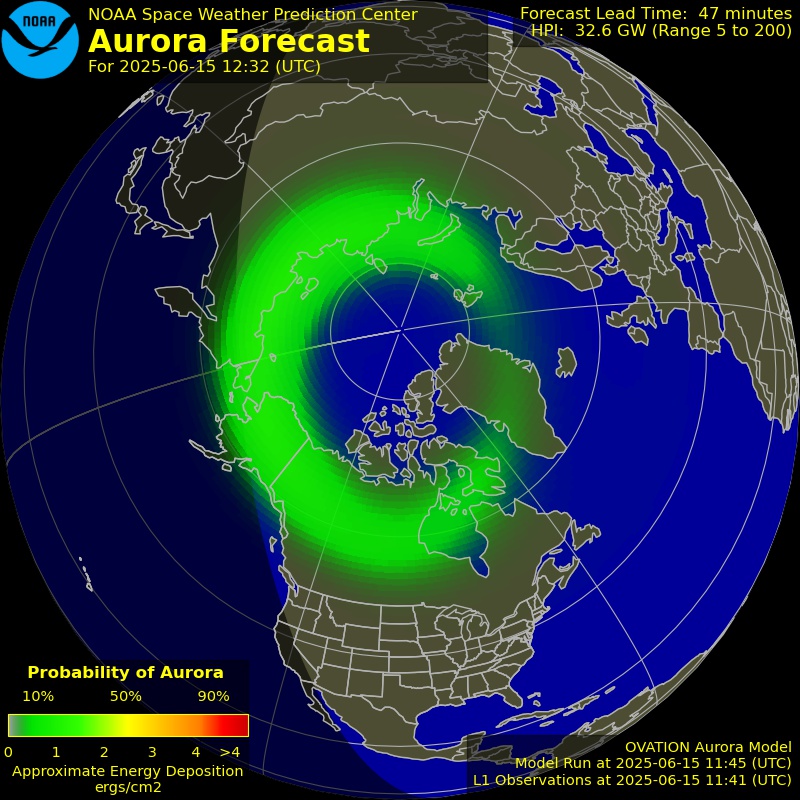
If the animation does not load, a static image will be shown.
Conditions assessment
The indicators consider your location, the local aurora chance and whether it is dark.
Kp (3h)
Kp (1 min)
Bz (GSM)
Bt (IMF)
Speed
Density
Temperature
NOAA G-scale and what it means for an observer in the UK and northern Europe (thresholds derived from the NOAA/SWPC visibility table for the UK’s geomagnetic latitude, roughly 52–58°):
| Level | Kp | Frequency (per 11-year cycle, NOAA) | Where it is realistically visible |
|---|---|---|---|
| G1 — minor | 5 | ~1,700 days | Shetland, Orkney, northern Scotland — low on the northern horizon, mostly on camera |
| G2 — moderate | 6 | ~600 days | Scotland and northern England with the naked eye from dark sites; Wales and the Midlands on camera |
| G3 — strong | 7 | ~200 days | the whole UK and Ireland away from lights; greens and reds down to the south coast |
| G4 — severe | 8–9- | ~100 days | overhead across the UK, visible even from suburbs (10–11 May 2024) |
| G5 — extreme | 9 | ~4 days | a once-in-a-generation event; last on 10 May 2024 and in October 2003 |
NOAA warnings come in three levels of confidence: a watch (a 1–3 day forecast issued after a CME is observed), a warning (impact expected within hours, based on data from the L1 spacecraft) and an alert (the threshold has already been reached — it is happening now). AuroraWatch UK (Lancaster University) uses its own colour scale — green, yellow, amber, red — based on magnetometers in the UK; amber or red is the moment to go outside.
Live log — 2026/27 aurora season. Every morning a new dated entry is added here with the latest NOAA SWPC data: the observed Kp index over the past 24 hours, the 3-day forecast peak and any active G1+ storm watch. The newest entry is always at the top.
.onda-zorza__log .onda-zorza__text{color:#22303f;}.onda-zorza__log .onda-zorza__text strong{color:#0f172a;}.onda-zorza__log .onda-zorza__date{color:#5a6b7d;}.onda-zorza__log .onda-zorza__entry–storm .onda-zorza__date{color:#8a5a00;}.onda-zorza__log .onda-zorza__entry{border-top-color:rgba(15,23,42,.12);}- 09.10.2026
NOAA SWPC reports elevated geomagnetic activity: observed Kp 3.3 over the past 24 hours, forecast peak 6.00. Source: NOAA SWPC.ACTIVE
- 08.10.2026
NOAA SWPC data shows Kp 2.7 in the last 24 hours with a forecast peak of 5.67. Source: NOAA SWPC.ACTIVE
- 07.10.2026
Active conditions flagged by NOAA SWPC – 24-hour Kp 3.0, 3-day forecast peak 5.67. Source: NOAA SWPC.ACTIVE
- 06.10.2026
NOAA SWPC reports elevated geomagnetic activity: observed Kp 4.0 over the past 24 hours, forecast peak 4.00. Source: NOAA SWPC.ACTIVE
- 05.10.2026
NOAA SWPC data shows Kp 5.7 in the last 24 hours with a forecast peak of 4.67. Source: NOAA SWPC.ACTIVE
- 03.10.2026
NOAA SWPC reports elevated geomagnetic activity: observed Kp 2.7 over the past 24 hours, forecast peak 4.67. Source: NOAA SWPC.ACTIVE
- 01.10.2026
Active conditions flagged by NOAA SWPC – 24-hour Kp 1.3, 3-day forecast peak 4.67. Source: NOAA SWPC.ACTIVE
“Night 12/13” — tonight or tomorrow? Dates, time zones and CME delay
The most common confusion after an alert is the date. NOAA gives times in UTC (UK time in winter; one hour behind BST in summer). A “G2 watch 12/13 Sep” means the night of 12 to 13 September: you go out on the evening of the 12th, and the peak may come after midnight on the 13th.
The second trap is the travel time of a coronal mass ejection. You see the flare in the news 1–3 days earlier, but the fastest CMEs arrive in 15–18 hours, slower ones in 2–3 days, and the exact moment of impact is only known when the DSCOVR spacecraft at L1 sees it — 15–60 minutes ahead. That is why a “G2 on Wednesday” forecast is sometimes delivered on Thursday morning; the Bz and solar-wind speed widget at the top of this page has the final word.
Why did I see nothing despite the alert? Four reasons
| Reason | How often | What to check next time |
|---|---|---|
| Cloud | the most common — most failed nights in the UK | low and mid-level cloud forecast (Met Office, Windy) for the exact hour, not the day |
| Bz pointing north | frequent with “weak” G1s | an alert speaks of possibility; the aurora at UK latitudes needs Bz negative (southward) for 1–2 hours — see the widget |
| CME late or a miss | regularly | the impact came after dawn or not at all — check whether solar-wind speed jumped (e.g. from 400 to 600+ km/s) |
| Moon and lights | constant | a full moon and street lights swallow a faint aurora; at Kp 5 you see nothing from a town, but you do from a dark northern coast |
A G-level is a threshold, not a promise. For most of England, G2 (Kp 6) gives a photographic aurora and G3 (Kp 7) a naked-eye one; Scotland and Northern Ireland get a real chance from G1 upwards with a clear northern horizon. Regional thresholds are on the UK live radar page.

GUIDE
Northern Lights in the UK — Live Radar and Forecast
Live UK aurora status and tonight's Kp index, plus Kp thresholds by region, official alert sources, and where to look.
Latest aurora alerts: news and quick decisions for today
Below you have an automatic list of the latest posts from the Northern Lights section (including alerts and updates). Each entry points you to the radar and helps you decide whether it’s really worth hunting tonight.
Monthly aurora alerts
The latest alerts, monthly forecasts and updates about the chances of seeing the Northern Lights in Poland.


Aurora Alerts: forecasts, news and a quick start to the radar
Aurora alerts are my “newsroom” about space weather: solar flares, CME/HSS, changes in the solar wind and what this really means for observing the aurora borealis. I post briefly and to the point: whether it’s worth going out today, for which regions of the UK and Europe, and what to check first.
If you want to connect this topic with a wider northern travel plan, see the North section, where I collect Iceland, Norway, Lofoten, fjords, northern lights and practical planning guides.
For a trip built around northern lights alerts, the Iceland travel guide helps connect live aurora data with routes, regions and practical planning.

AURORA ROUTE
Iceland travel guide — turn aurora alerts into a route
Alerts are only the signal. The Iceland guide helps you connect aurora windows with regions, safe driving, weather buffers and realistic travel planning.
Note: This page is an archive of aurora alerts (news). If you want to check the “live” situation, go to the Northern Lights in the UK Live (check now) or the radar for all locations.
If you arrived here from a notification/share: scroll to the “Latest alerts” section. And if you want to check the situation “here and now”, use the Quick start below.
How to read an “aurora alert” (in 60 seconds)
An alert is a signal that conditions may be favorable for the aurora — but visibility at UK and central-European latitudes always also depends on clouds, dark skies, and whether the “window” of activity falls during the nighttime hours.
- Step 1: check Northern Lights in the UK Live (check now) (oval + situation preview).
- Step 2: glance at the live parameters (especially Bz and the “stability” of conditions) — a quick explainer is here: live parameters (how to read them).
- Step 3: check the cloud cover and clear spells in your area.
- Step 4: if conditions look sensible — go to a dark location with an unobstructed northern horizon (urban glow can “kill” even good activity).
If you want to dive deeper into the basics: see the explanation of how the Northern Lights form and (for practical interpretation) what the live parameters mean for visibility. If you’re curious about other night-sky topics too, see Northern Lights and other phenomena.

NORTHERN LIGHTS
How the Northern Lights Form: Causes, Science, and Origins of the Aurora Borealis
How the northern lights form: solar wind, Earth's magnetic field, oxygen, nitrogen, colors and the atmospheric layers where auroras glow.
Aurora forecast: how to use alerts before you go out
An aurora alert is not a promise that the northern lights will appear. It is a practical warning that the space weather situation is becoming interesting enough to check the sky, the clouds and the northern horizon. For the UK, the most useful alert is the one that combines the aurora forecast with local conditions: nighttime hours, cloud breaks, light pollution and a clear view toward the north.
When I publish an aurora alert, I try to answer three questions first: is the geomagnetic activity strong enough, is the timing useful for observers in the UK and Europe, and is there a realistic chance that clouds will not block the view. This is why a short alert may mention Kp, Bz, solar wind speed, CME arrival, HSS conditions or a geomagnetic storm watch — but the decision is always practical: should you stay home, keep checking, or prepare a quick night trip?
Aurora radar: what to check first
If you are in a hurry, start with the live UK radar and then compare it with the real-time solar wind. A stable southward Bz, rising geomagnetic activity and a dark, clear northern horizon matter more than one isolated number. Kp can be helpful, but for the UK the timing and persistence of the disturbance are often what decide whether the aurora becomes visible or remains only a camera catch.
For beginners, the safest rule is simple: treat every alert as a checklist. Check the alert time, check whether it will still be dark, check cloud cover, pick a location away from city glow, and give your eyes and camera enough time. A weak green glow on the horizon may be invisible from a bright street but visible from an open field, beach, lake shore or another dark place with a clean northern view.
Sources of space weather data and how I verify them
In the alerts, I rely on trusted “operational” sources for space weather (NOAA/SWPC and SWPC services). If a major change appears (e.g., a confirmed CME or an increase in storm level), I make an update within the given alert.
Jump straight to a live radar
Once you understand how alerts work, this is the fastest way to check the sky at each of these locations.

UNITED KINGDOM
Alert-driven, mid-latitude
Northern Lights UK: live radar and forecast
Kp thresholds by region, plus practical guidance for dark-sky viewing across the UK.
Check UK radar
TROMSO, NORWAY
Arctic Europe, Kp 0-2
Tromso Northern Lights: live radar
Inside the auroral oval year-round – the aurora needs almost no help from a storm here.
Check Tromso radar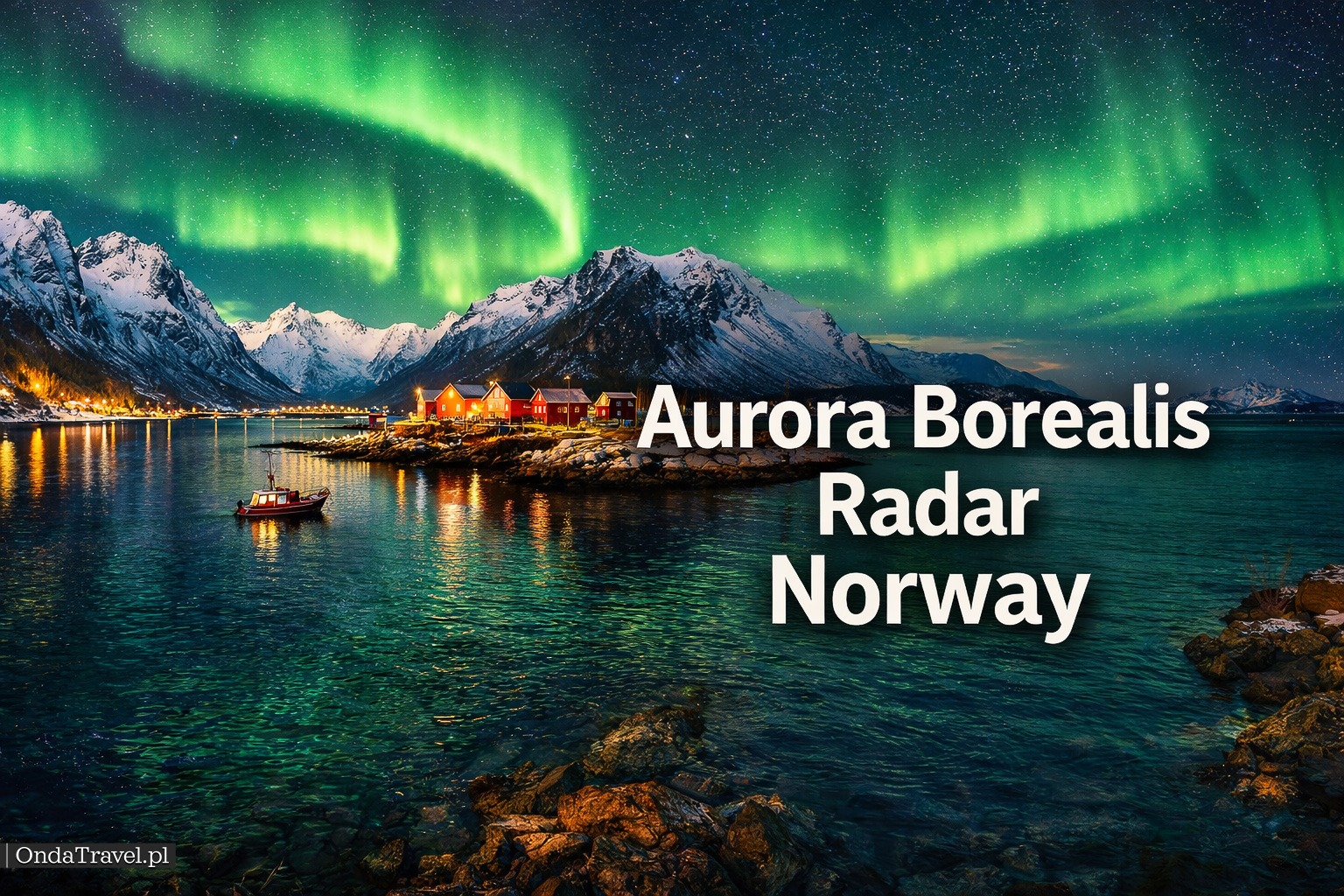
NORWAY
Choose your region
Northern Lights in Norway: live radar
A regional hub covering Tromso, Lofoten, Senja and Svalbard from one page.
Check Norway radar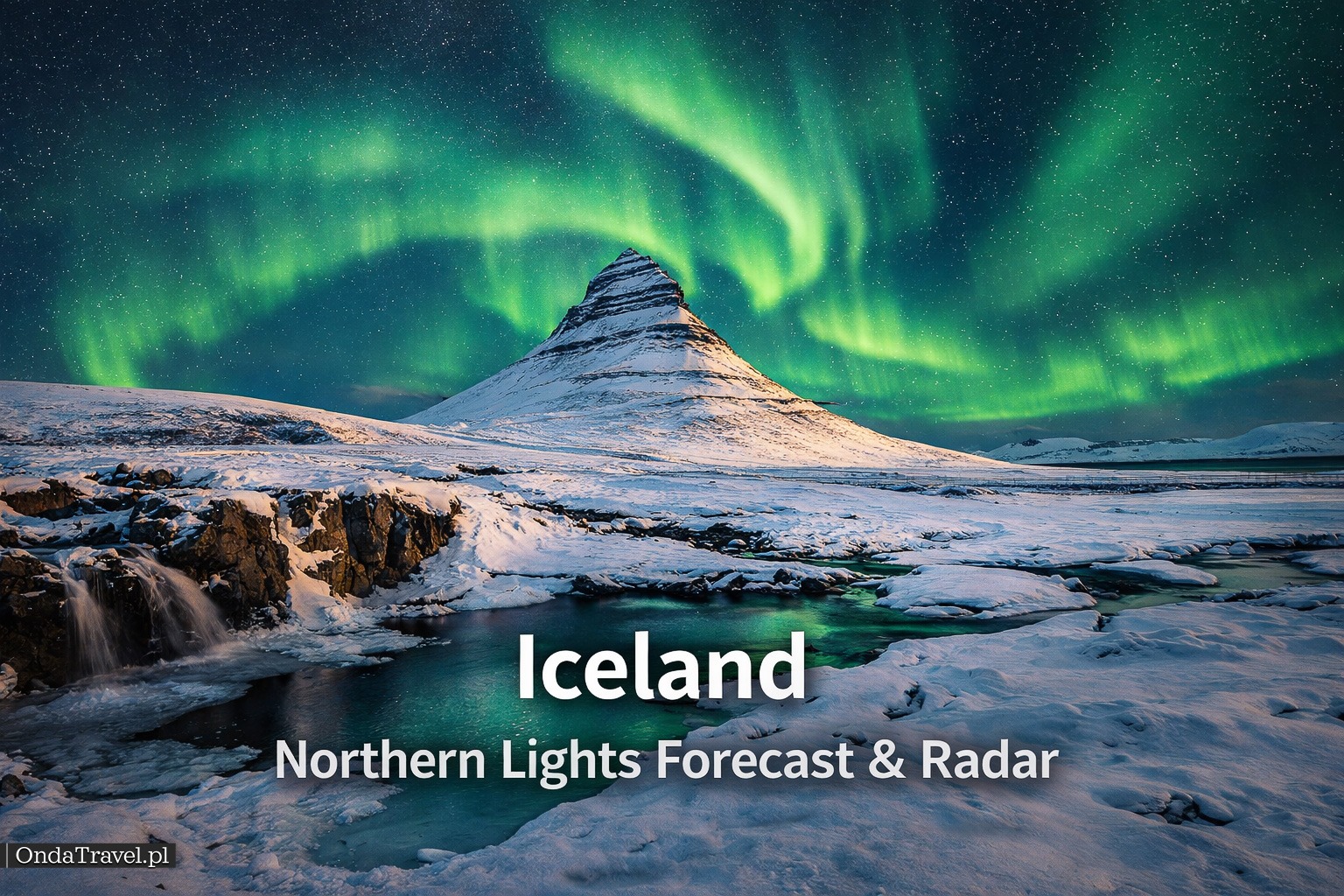
ICELAND
Self-drive country
Northern Lights Iceland: live radar
Best for a DIY road trip, with dark sky away from Reykjavik light pollution.
Check Iceland radarFAQ: frequently asked questions about aurora alerts and radar
What does an aurora alert mean and does it guarantee an aurora in the UK?
An aurora alert is a signal that geomagnetic conditions may be favorable for the aurora. It is not a guarantee of visibility in the UK — clouds, city glow, and whether the activity falls during nighttime hours often decide.
Which parameters are most important when hunting for the aurora in the UK?
Usually, it’s a combination: stable solar wind conditions + favorable magnetic field orientation (Bz) and whether the auroral oval descends lower. In practice, you can assess this fastest in the UK radar and on the live forecast and parameters page.
Why is there sometimes high activity, but nothing is visible in the UK?
The most common reasons are cloud cover, city glow and bright skies, as well as a short window of activity that falls outside of the night. It also happens that activity is stronger at higher latitudes, and only a faint glow remains at UK latitudes.
How can I check the chance for an aurora right now the fastest?
Go to the UK radar, check the oval and current parameters, then immediately verify the cloud cover in your area. If there are clear spells, go to a dark location with an unobstructed northern horizon.
Where in the UK is it usually best to try observing?
Usually, the north of the country and locations with dark skies, far from city lights, with a view to the north, work best. Even in good conditions, urban glow can obscure a weaker aurora.
How can I subscribe to aurora updates?
You can add the RSS feed of the Northern Lights section to a reader (or simply revisit this page). New posts appear automatically in the Latest alerts section.
The alert says “night 12/13” — is that tonight or tomorrow?
It is the night of the 12th to the 13th: go out on the evening of the 12th; the peak may fall after midnight on the 13th. NOAA uses UTC, so in British Summer Time add one hour.
Is G2 enough to see the aurora in the UK?
In Scotland, Northern Ireland and northern England — yes, with the naked eye from a dark site when Bz is negative. In the Midlands and the south a G2 usually shows only on camera; a G3 (Kp 7) is needed for a naked-eye display.
How long does an aurora alert last and when should I go out?
A watch is valid for 1–3 days, but the storm itself typically lasts a few to a dozen hours, with a peak of 30 minutes to 2–3 hours. The best window in the UK is 21:00–02:00; go out when Bz drops below −5 nT and solar-wind speed rises.
There was an alert but no aurora — why?
Usually cloud; then Bz pointing north (the storm did not “open” the magnetosphere), a late or missed CME, and the Moon or town lights. An alert is a probability threshold, not a guarantee.
Read also / next
NORTHERN LIGHTS
OndaTravel guide
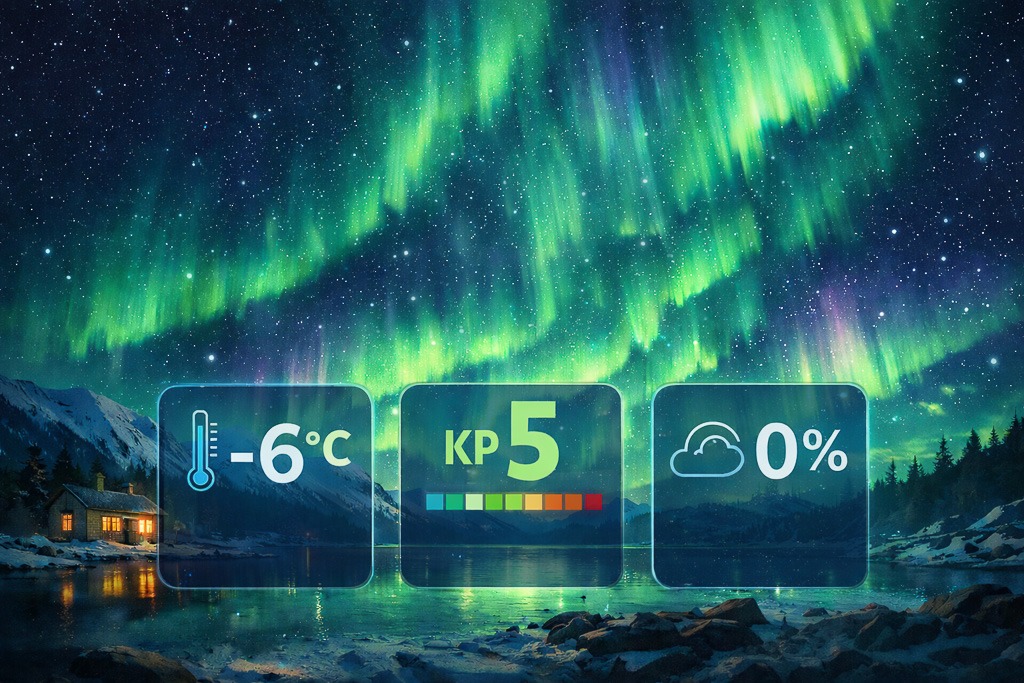
Aurora Forecast Tonight: Live Northern Lights Map
To judge your chances of seeing the aurora, do not look at a single number. What matters is the combination of geomagnetic activity, the Bz direction, the solar wind…
Open
GUIDE
OndaTravel guide
Northern Lights Radar: Live Aurora Forecast by Location
First check whether the auroral oval covers your latitude, then compare Kp, the direction of Bz and cloud cover. Even strong activity is not enough under full cloud…
Open
ARCTIC TRAIN
OndaTravel guide
The Arctic Northern Lights Train from Narvik – in search of the Northern Lights
The Northern Lights Train from Narvik is an Arctic train ride along the Ofoten Line, built around the landscapes, the atmosphere of the north and the chance of seeing…
OpenNORTHERN LIGHTS
OndaTravel guide
How the Northern Lights Form: Causes, Science, and Origins of the Aurora Borealis
Northern lights form when energy from the solar wind is transferred into Earth’s magnetic environment. Electrons are accelerated along magnetic field lines toward the…
Open
NORTHERN LIGHTS
OndaTravel guide
Northern Lights and Other Phenomena in the Night Sky – Noctilucent Clouds, Haarp, Sprite Jellyfish
The easiest way to tell the northern lights apart is by movement, structure and the context of the observation. Green arcs and curtains that change shape within…
OpenHi, I’m Krystian “dziadzia przewodnik” from OndaTravel.pl!
The North is my greatest passion, but the world is far too beautiful to stay in just one climate. On my blog, I combine the raw landscapes of Iceland and Norway with the exotic energy of Thailand or Vietnam, showing you how to travel authentically — with passion and a camera in hand.
What will you find on OndaTravel.pl?
Visual storytelling: As a photographer and filmmaker, I don’t just describe places — I take you there with professional photos and video.
North expert: Ready-to-use road trip plans for Iceland and Norway, smart tips for budget travel, and my original Northern Lights Radar (locations and forecast).
Travel through the lens of cinema: I track down filming locations — from icy scenes in Interstellar to tropical frames from world cinema.
New direction: Exotic destinations: I love contrast, so the blog is featuring more and more practical knowledge about Vietnam and Thailand. I’ll show you how to find your way around Southeast Asia and come back with your best memories.
P.S. follow me here