
NORTHERN LIGHTS NORWAY — TONIGHT AT A GLANCE
Can you see the Northern Lights in Norway tonight?
Often, yes — northern Norway sits directly under or close to the auroral oval, so around Tromsø, Lofoten and Senja even Kp 1–2 can be enough on a clear, dark night. The deciding factor is usually cloud cover, not a huge Kp number. Check the sky first, then the activity and wind/Bz trend.


Hi, I’m Krystian “dziadzia przewodnik” from OndaTravel.pl!
The North is my greatest passion, but the world is far too beautiful to stay in just one climate. On my blog, I combine the raw landscapes of Iceland and Norway with the exotic energy of Thailand or Vietnam, showing you how to travel authentically — with passion and a camera in hand.
What will you find on OndaTravel.pl?
Visual storytelling: As a photographer and filmmaker, I don’t just describe places — I take you there with professional photos and video.
North expert: Ready-to-use road trip plans for Iceland and Norway, smart tips for budget travel, and my original Northern Lights Radar (locations and forecast).
Travel through the lens of cinema: I track down filming locations — from icy scenes in Interstellar to tropical frames from world cinema.
New direction: Exotic destinations: I love contrast, so the blog is featuring more and more practical knowledge about Vietnam and Thailand. I’ll show you how to find your way around Southeast Asia and come back with your best memories.
P.S. follow me here



Check out my YouTube channel and travel with me.
Follow the channel for videos, routes and practical travel inspiration.
Follow me here:
What’s up?
Enjoying my content?
Buy me a coffee at buycoffee.to/ondatravel and support the creation of more travel content.
Your support helps me create more practical guides, videos and travel inspiration.


Main guide
Northern Lights live forecast and aurora guide
Open the main OndaTravel aurora guide for the live forecast, maps, viewing conditions and practical planning tips.
Northern Lights – live radar and parameters
Parameters refresh automatically. The local aurora chance is calculated for your location (GPS or city).
Aurora oval radar – Northern Hemisphere
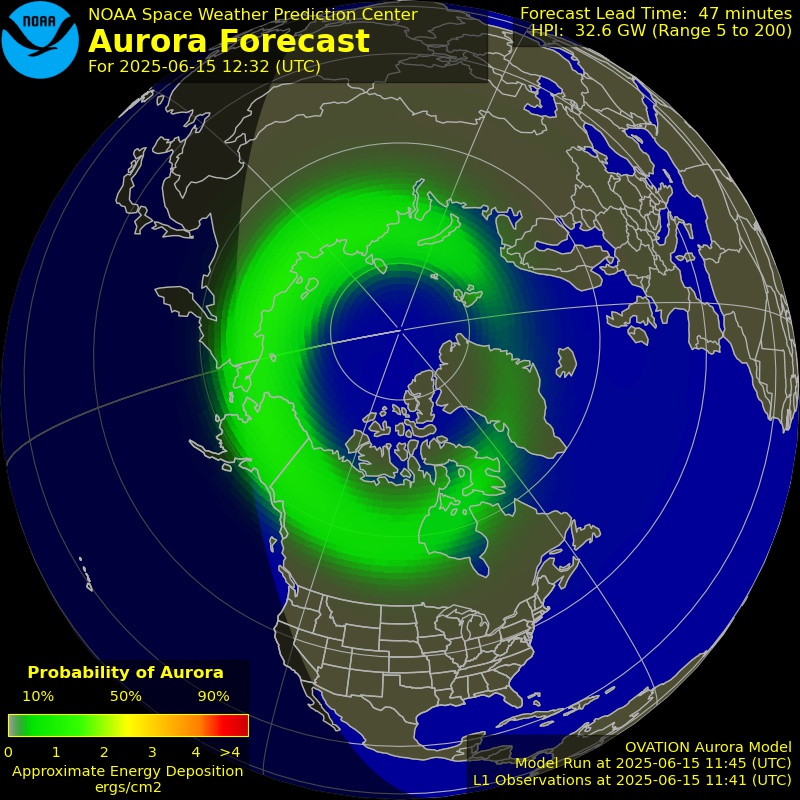
If the animation does not load, a static image will be shown.
Conditions assessment
The indicators consider your location, the local aurora chance and whether it is dark.
Aurora Score (Tromsø, beta): -/100
Kp (3h)
Kp (1 min)
Bz (GSM)
Bt (IMF)
Speed
Density
Temperature
Read the live widget in three steps. First, check cloud cover over your part of northern Norway — the clearest patch is usually more important than chasing the highest Kp number. Second, check the activity trend, especially Bz and solar-wind conditions. Third, choose a safe dark viewpoint and remember that coastal weather can change quickly even within the same evening.
Latest alerts: solar activity and geomagnetic storms
The monitor below updates automatically from NOAA data: it shows the outlook for the next seven nights and the current aurora alerts. Check it right before you head out — conditions can change within hours.
What Kp do you need in Norway?
In northern Norway, Kp is a useful context number rather than a pass-or-fail rule. Tromsø, Lofoten and Senja sit far enough north that weak activity can already be visible when the sky is dark and clear.
When to go: month-by-month
The northern Norway aurora season is driven by darkness. September and October are easier for road conditions, deep winter brings the longest nights, and February–March often give a good balance between darkness and more usable travel conditions.
AURORA SCIENCE
Explainer
How the Northern Lights Form
A visual, plain-language guide to the aurora mechanism, solar activity and what actually creates the display.
Read the science guide
AURORA GUIDE
Related read
Northern Lights and Other Phenomena in the Night Sky – Noctilucent Clouds, Haarp, Sprite Jellyfish
Learn what can be confused with the aurora in the night sky, including noctilucent clouds, sprites and other unusual atmospheric phenomena.
Open related guideSky phenomena
Planning your night-sky observations? These monthly guides highlight the most important astronomical events, meteor showers, Moon phases and the best observation windows. Below you’ll find the two most relevant monthly guides for the current period.
SKY PHENOMENA
Monthly guide
Sky events in October 2026: Draconids, Orionids and Saturn
The key sky events of the month, meteor activity, the Moon and practical observation windows.
Read the guide
SKY PHENOMENA
Monthly guide
Sky events in November 2026: Leonids, Taurids and a supermoon
The key sky events of the month, meteor activity, the Moon and practical observation windows.
Read the guideNorthern Lights
Looking for a longer-term Northern Lights outlook? These monthly guides complement the live radar with seasonal conditions, expected aurora activity and practical viewing tips. Below you’ll find the two most relevant monthly forecasts currently available.
NORTHERN LIGHTS
Monthly forecast
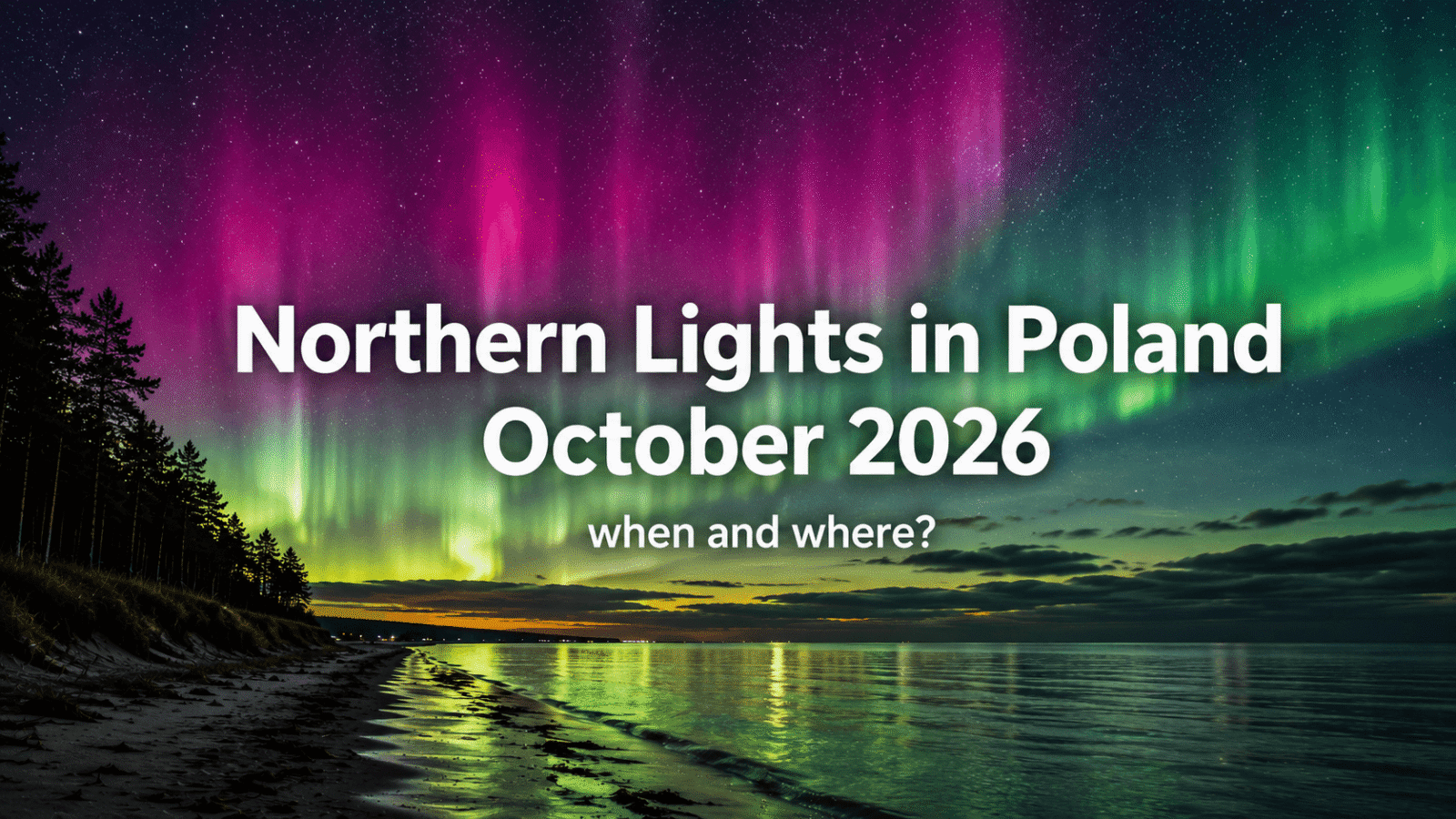
Northern Lights — October 2026
A monthly Northern Lights outlook with live-radar context and practical viewing guidance.
Read the guide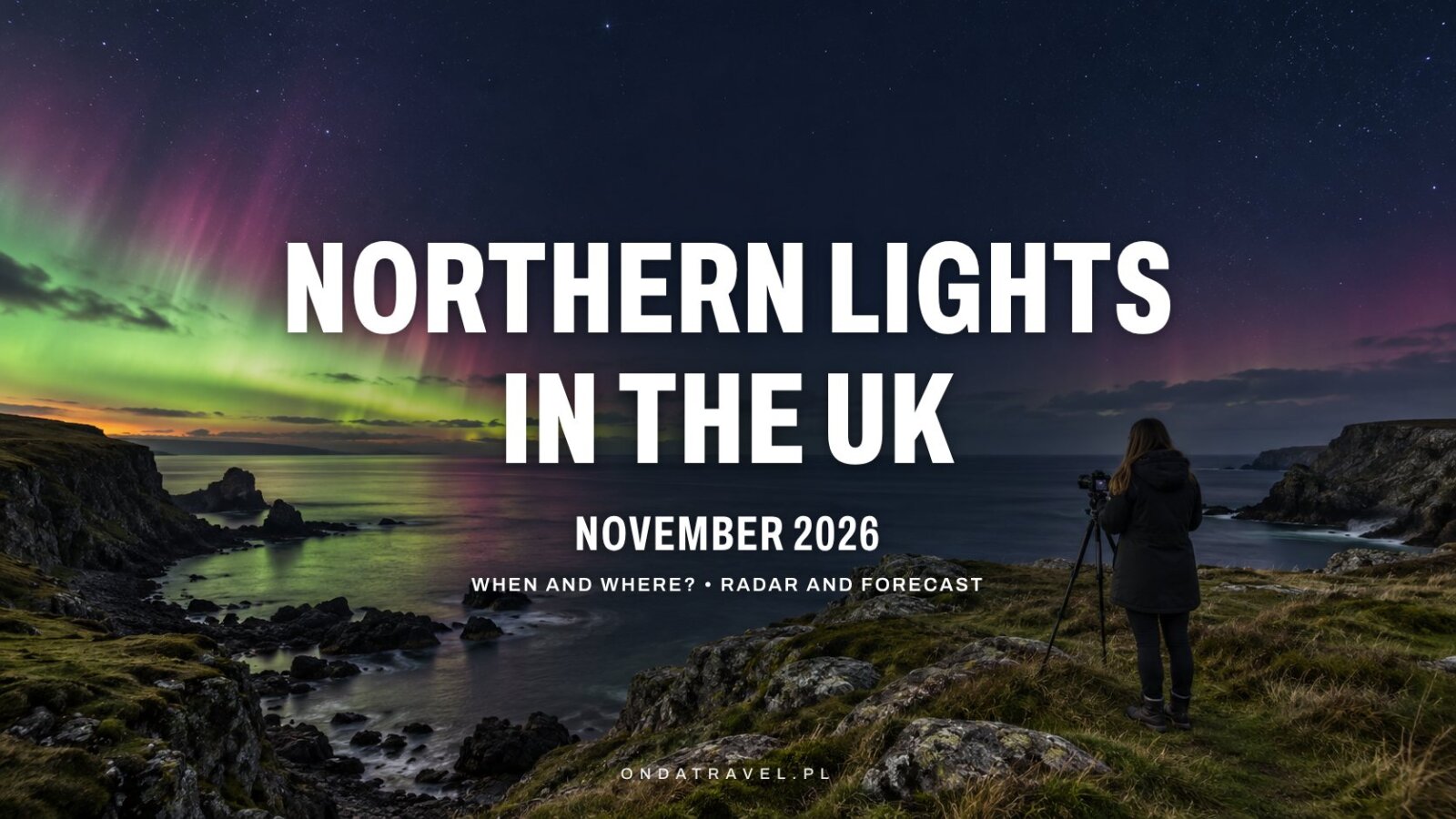
NORTHERN LIGHTS
Monthly forecast
Northern Lights — November 2026
A monthly Northern Lights outlook with live-radar context and practical viewing guidance.
Read the guideBest regions in Norway for the aurora
There is no single “best” place every night. The best region is the one with darkness, a safe viewpoint and a clear weather window. Use these local radars to compare the main northern Norway bases before you decide where to drive.
Tromsø
Live radar
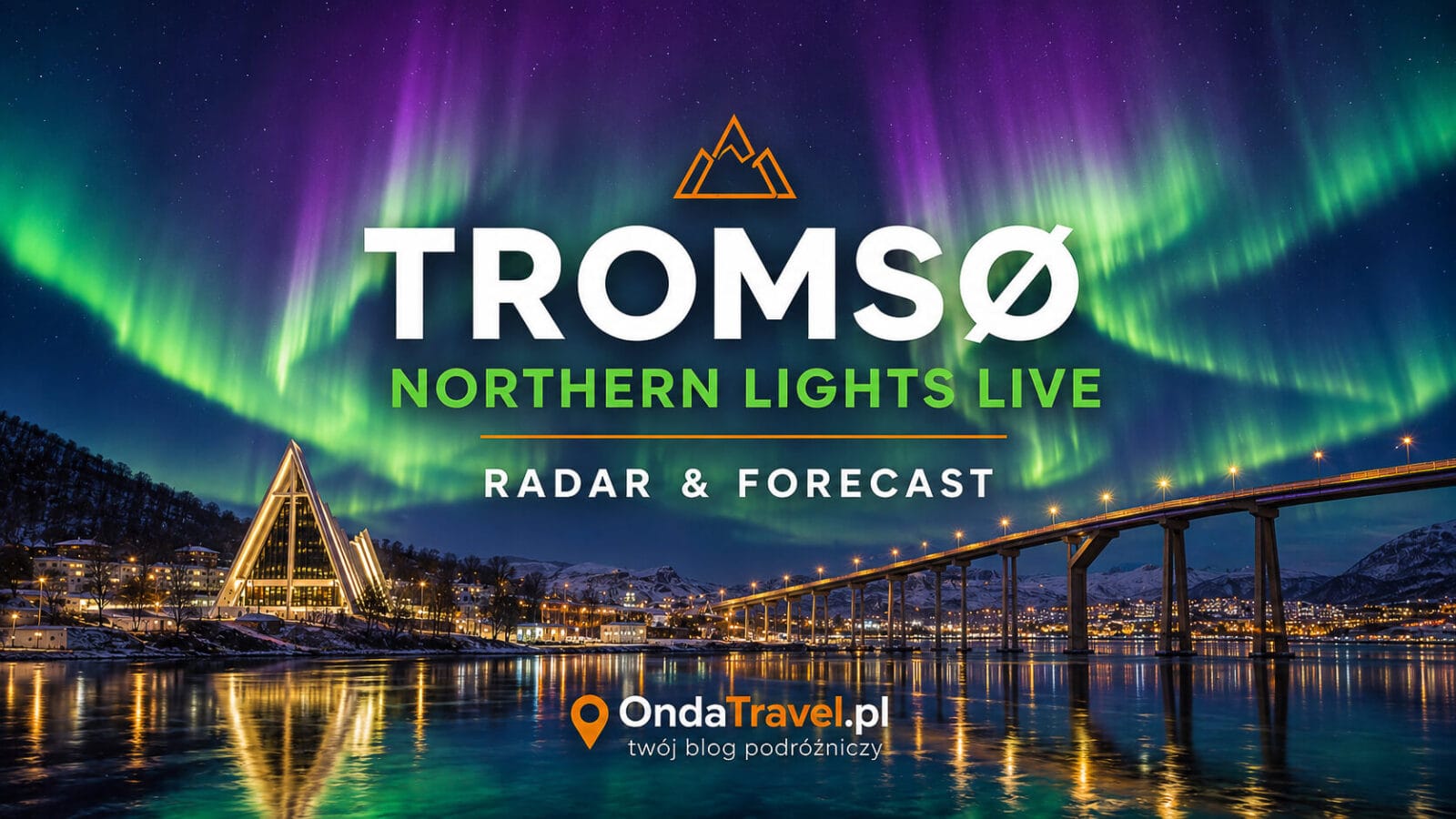
Northern Lights in Tromso: Live Radar and Where to Actually See Them
The easiest northern Norway base for a quick weather-first aurora decision.
Check Tromsø radar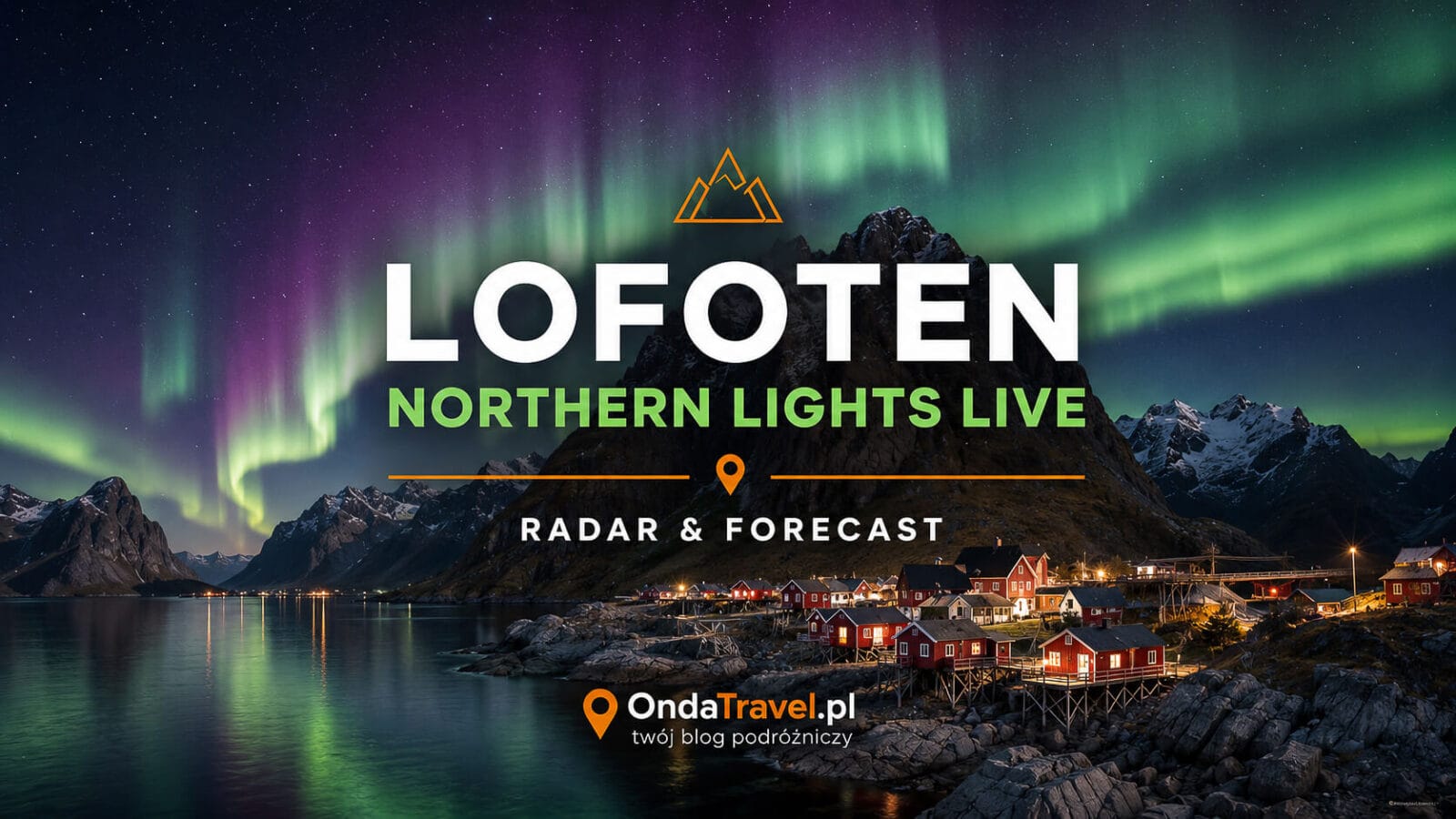
Lofoten
Live radar
Northern Lights in Lofoten: Live Radar, Best Spots and When to Go
Dark beaches and mountain horizons — spectacular when the coastal cloud breaks.
Check Lofoten radar
Senja
Live radar
Senja Northern Lights Live – Radar and Forecast
A quieter island base with dark coastal viewpoints and fast-moving weather windows.
Check Senja radar
Svalbard
Live radar
Svalbard Northern Lights Live – Radar and Forecast
A high-Arctic option with polar-night conditions and very different logistics.
Check Svalbard radarHow many nights should you plan?
Plan at least 3 to 4 nights if seeing the Northern Lights is one of the main reasons for your trip. Activity is common this far north, but cloud, wind and snow can block one or two evenings in a row. A five- to seven-night trip gives you much more flexibility to follow clear weather instead of forcing one fixed location.
If you are based in Tromsø, use the city as a logistics hub rather than a promise of clear sky. Lofoten and Senja can be spectacular, but coastal cloud is often more variable. The practical strategy is to compare the forecast across several nearby areas and move only when road conditions are safe.
Cloudy tonight? Where to go instead
A cloud band over the Norwegian coast does not always cover the whole region. Inland Sweden or Finnish Lapland can sit under a different weather pattern. If the coast is completely closed in, compare these nearby radars before giving up on the night.
Abisko
Alternative radar
Abisko Northern Lights Live – Radar and Forecast
A useful inland comparison when the Norwegian coast is trapped under cloud.
Check Abisko radar
Rovaniemi
Alternative radar
Rovaniemi Northern Lights Live – Radar and Forecast
Compare Finnish Lapland when the weather system over northern Norway is unfavorable.
Check Rovaniemi radarCamera settings that work here
For a visible, moving aurora start around 1–3 seconds, f/1.4–f/2.8 and ISO 800–3200, then shorten the exposure if the display becomes brighter or faster. Use manual focus on a distant light or star, switch image stabilisation off on a tripod, and keep spare batteries warm inside your jacket.
On beaches and exposed coastal viewpoints, wind can ruin a technically correct exposure. Keep the tripod low, avoid extending the thinnest leg sections, and never stand where waves, ice or traffic make the shot unsafe. For a full workflow, use our night-sky photography guide.
GUIDE
How to Photograph the Night Sky and Stars: Camera Settings
How to photograph the night sky: camera settings, planning tips, useful conditions and related guides for stars, auroras and meteors.
With or without a tour?
You do not need a tour to see the aurora in northern Norway. A self-drive trip gives you maximum flexibility if you are comfortable reading weather maps, driving on snow and choosing safe parking after dark. A tour is useful when you would rather hand the cloud-window decision and winter driving to a local guide.
Whichever option you choose, do not stop in the carriageway, on narrow bridges or in unploughed lay-bys. The Northern Lights are never worth creating a road hazard.

About the author
Krystian — photographer, filmmaker and Arctic guide
OndaTravel guides are built from field travel, photography and practical route planning. Use the live tools as decision support, then verify weather, road conditions and local safety before heading out at night.
Northern Lights in Norway FAQ
What Kp index do I need to see the aurora in northern Norway?
Around Tromsø, Lofoten and Senja, Kp 1–2 can already be enough from a dark place with clear sky. Kp 3–4 usually gives a brighter and wider display, but cloud cover still matters more than chasing a high number.
Can I see the Northern Lights from Tromsø?
Yes. Active displays can be visible from Tromsø itself, but city lighting makes faint aurora harder to see. A short move to a darker, clear viewpoint often improves the result.
What are the best months for the Northern Lights in Norway?
September through March is the core season in northern Norway. September–October and February–March often balance darkness with easier travel, while November–January provide the longest nights.
How many nights should I plan for aurora hunting in Norway?
Plan at least 3 to 4 nights if the aurora is a priority. Northern Norway has frequent activity, but cloud, wind and snow can block individual evenings.
Is Tromsø, Lofoten, Senja or Svalbard best for the aurora?
There is no universal winner. Tromsø is the easiest logistics base, Lofoten and Senja offer dramatic dark landscapes, and Svalbard is a special high-Arctic trip. On any specific night, the clearest safe location is usually the best choice.
Do I need a guided tour to see the Northern Lights in Norway?
No. Self-driving works if you are experienced with winter roads and weather forecasts. A guided tour is useful if you prefer someone else to handle the driving, cloud-window decisions and safe viewpoint selection.
Read also
GUIDE
OndaTravel guide
Northern Lights Radar: Live Aurora Forecast by Location
First check whether the auroral oval covers your latitude, then compare Kp, the direction of Bz and cloud cover. Even strong activity is not enough under full cloud…
Open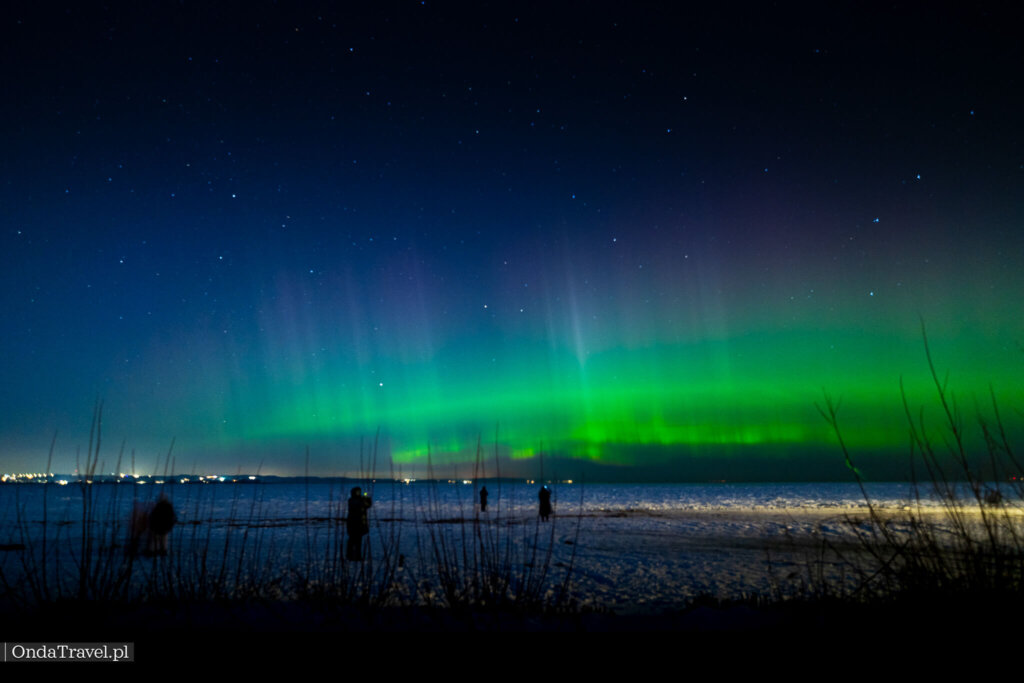
GUIDE
OndaTravel guide
Aurora Alerts
An aurora alert should be treated as a signal to check the conditions now: the live radar for your location, Kp, Bz, Bt, the solar wind, cloud cover and the northern…
Open
GUIDE
OndaTravel guide
Northern Lights in the UK — Live Radar and Forecast
Northern Lights in the UK are never guaranteed on any single night — they depend on live geomagnetic activity, cloud cover and how far north you are. This page pulls…
Open
AURORA ALERTS
OndaTravel guide
Aurora Alert UK: How to Check If Tonight Is a Northern Lights Night
If you’ve heard there’s an aurora alert and want to know whether it applies to you tonight, the short version is: there’s no fixed „alert day” you can look up in…
OpenPlanning the whole trip?
Use the live radar for tonight, but plan the wider journey around daylight, road conditions and realistic driving distances. These two OndaTravel hubs are the best next step for a full northern itinerary.
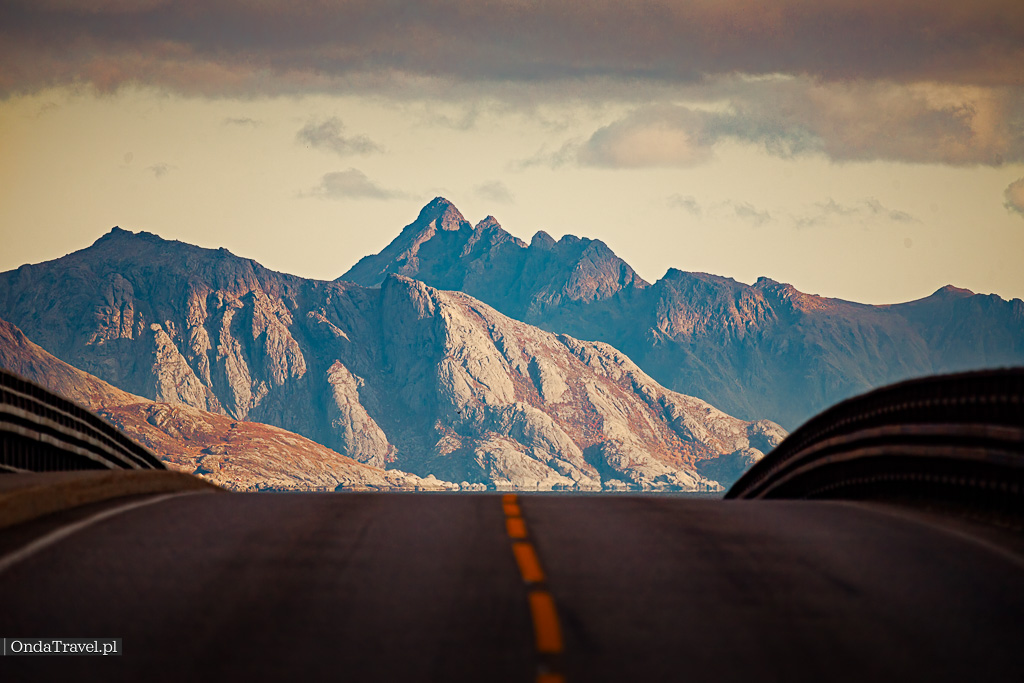
Norway
Travel map
Norway
Routes, regions and practical guides for planning a wider Norway trip.
Plan NorwayHi, I’m Krystian “dziadzia przewodnik” from OndaTravel.pl!
The North is my greatest passion, but the world is far too beautiful to stay in just one climate. On my blog, I combine the raw landscapes of Iceland and Norway with the exotic energy of Thailand or Vietnam, showing you how to travel authentically — with passion and a camera in hand.
What will you find on OndaTravel.pl?
Visual storytelling: As a photographer and filmmaker, I don’t just describe places — I take you there with professional photos and video.
North expert: Ready-to-use road trip plans for Iceland and Norway, smart tips for budget travel, and my original Northern Lights Radar (locations and forecast).
Travel through the lens of cinema: I track down filming locations — from icy scenes in Interstellar to tropical frames from world cinema.
New direction: Exotic destinations: I love contrast, so the blog is featuring more and more practical knowledge about Vietnam and Thailand. I’ll show you how to find your way around Southeast Asia and come back with your best memories.
P.S. follow me here