


Northern Lights in the UK in October 2026: When Are the Best Chances?
October is a transitional month for the northern lights in the UK, and that’s actually its strength. It doesn’t have the equinox boost that makes September the standout month — that peak sits around 22-23 September — but the nights keep getting longer week by week, and near the end of the month the clocks go back, handing you an extra hour of usable darkness in the evening. More dark hours means more chances to catch a storm when one arrives, even without a statistical edge working in your favour. This guide covers what’s actually different about October, how much darkness you get and when, what Kp you need, and which regions realistically have a shot.
Quick answer (60 seconds)
October doesn’t have a statistical activity peak of its own, but darkness returns in force — early nights, and even earlier ones once the clocks go back on 25 October 2026. That’s more opportunity to catch a real storm when it happens, not a guarantee that one will. Check the live radar below before heading out.
| Question | Quick answer |
|---|---|
| What Kp do I need this month? | Kp 3-4 for Shetland and the far north Highlands; Kp 5 for Edinburgh/Glasgow/Newcastle; Kp 6-7 for Manchester, Yorkshire and Wales; Kp 7-9 (rare) for London and the south |
| Where are the best chances this month? | Shetland, Caithness and the far north Highlands, then the Cairngorms/Aberdeenshire — away from light pollution, with a clear view north |
| What’s different about October specifically? | No equinox boost (that peaked in late September), but darkness arrives earlier every week, and the clock change on 25 October 2026 adds roughly an hour more usable evening darkness from that date on |
Contents
- Live radar: is there a chance of northern lights tonight in the UK?
- Why October works: lengthening nights, not an activity peak
- How much darkness you get, and how the clock change helps
- What Kp you need and where in the UK
- Common mistakes when chasing the aurora in the UK in October
- FAQ: northern lights in the UK in October
- Read also
Live radar: is there a chance of northern lights tonight in the UK?
The Kp index changes every three hours, so everything below is background — the radar is what to actually check before you go out. It shows the current Kp index and solar wind activity. For a fuller breakdown of alert levels, AuroraWatch UK (Lancaster University) runs a free UK-specific alert service, and the Met Office space weather forecast covers the same activity with a UK-wide outlook.
- 12.10.2026
NOAA SWPC reports elevated geomagnetic activity: observed Kp 3.7 over the past 24 hours, forecast peak 5.00. Source: NOAA SWPC.ACTIVE
- 11.10.2026
NOAA SWPC data shows Kp 7.0 in the last 24 hours with a forecast peak of 5.67. Source: NOAA SWPC.ACTIVE
- 10.10.2026
Active conditions flagged by NOAA SWPC – 24-hour Kp 4.0, 3-day forecast peak 5.67. Source: NOAA SWPC.ACTIVE
- 09.10.2026
NOAA SWPC reports elevated geomagnetic activity: observed Kp 3.3 over the past 24 hours, forecast peak 6.00. Source: NOAA SWPC.ACTIVE
- 08.10.2026
NOAA SWPC data shows Kp 2.7 in the last 24 hours with a forecast peak of 5.67. Source: NOAA SWPC.ACTIVE
- 07.10.2026
Active conditions flagged by NOAA SWPC – 24-hour Kp 3.0, 3-day forecast peak 5.67. Source: NOAA SWPC.ACTIVE
- 06.10.2026
NOAA SWPC reports elevated geomagnetic activity: observed Kp 4.0 over the past 24 hours, forecast peak 4.00. Source: NOAA SWPC.ACTIVE
- 05.10.2026
NOAA SWPC data shows Kp 5.7 in the last 24 hours with a forecast peak of 4.67. Source: NOAA SWPC.ACTIVE
- 04.10.2026
Active conditions flagged by NOAA SWPC – 24-hour Kp 3.3, 3-day forecast peak 4.67. Source: NOAA SWPC.ACTIVE
- 03.10.2026
NOAA SWPC reports elevated geomagnetic activity: observed Kp 2.7 over the past 24 hours, forecast peak 4.67. Source: NOAA SWPC.ACTIVE
- 01.10.2026
Active conditions flagged by NOAA SWPC – 24-hour Kp 1.3, 3-day forecast peak 4.67. Source: NOAA SWPC.ACTIVE
Northern Lights – live radar and parameters
Parameters refresh automatically. The local aurora chance is calculated for your location (GPS or city).
Aurora oval radar – Northern Hemisphere
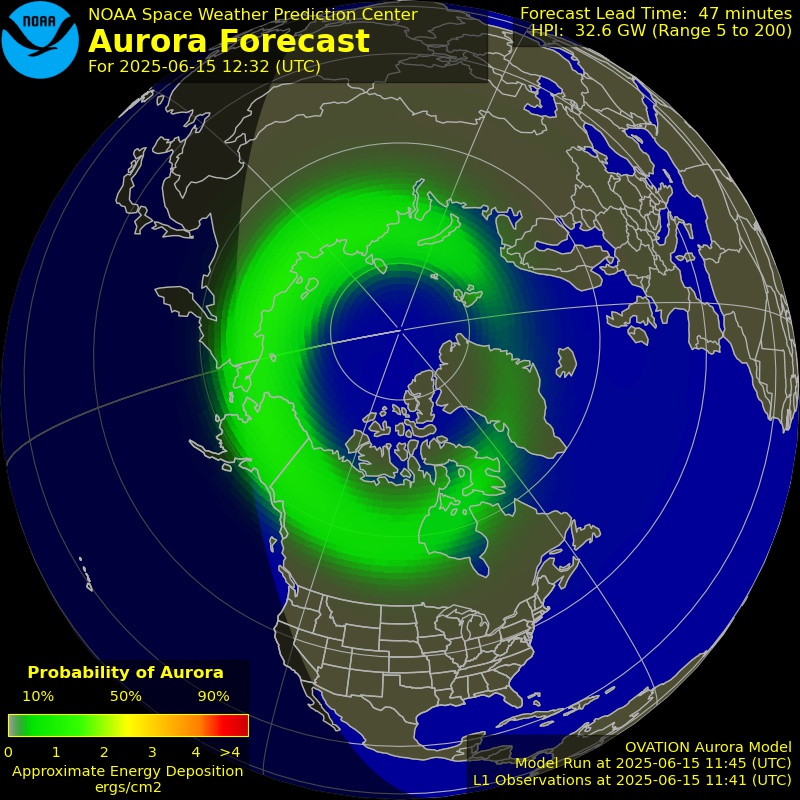
If the animation does not load, a static image will be shown.
Conditions assessment
The indicators consider your location, the local aurora chance and whether it is dark.
Kp (3h)
Kp (1 min)
Bz (GSM)
Bt (IMF)
Speed
Density
Temperature
Why October works: lengthening nights, not an activity peak
It’s worth being upfront about what October is and isn’t. September, tied to the autumn equinox around 22-23 September, tends to run statistically higher for geomagnetic activity than the months either side of it — that’s the Russell-McPherron effect covered on our September guide. October doesn’t have that same boost. If you’re choosing between the two purely on the odds of a storm happening, September edges it.

AURORA ALERT: NIGHT OF 11–12 OCTOBER
NOAA forecasts a G1–G2 geomagnetic storm on the night of 11–12 October
Several CMEs from a strong flare on 8 October are heading for Earth. NOAA SWPC forecast of 10 Oct (00:30 UTC): Kp up to 4.67 (G1) on the evening of 11 October and Kp 5.33–5.67 (G1–G2) early on 12 October. New Moon on 10 October means dark skies. In the UK the best window is roughly 01:00–05:45 BST on 12 October, especially in Scotland and northern England; look low to the north. Forecasts can shift by hours, so check the live radar before going out.
AURORA ALERTS
Northern Lights in the UK in September 2026: When Are the Best Chances?
Nights return after summer's short darkness, and the autumn equinox lifts geomagnetic activity. What Kp you need, best UK regions, and the live radar.
What October has instead is opportunity. A storm can happen in any month — what changes is whether it’s dark enough, for long enough, when it does. Through October the nights lengthen fast: by the end of the month Scotland has several hours more usable darkness each evening than at the start. More dark hours means more windows to be checking the radar when activity does spike, which matters because a storm can flare up and fade again within a few hours. In that sense, October can end up delivering more real viewing opportunities than a shorter-but-statistically-boosted month, simply because there’s more time in the dark to catch one.
How much darkness you get, and how the clock change helps
At the start of October, Scotland is already getting proper darkness by early evening — roughly from around 7pm, give or take, while the UK is still on British Summer Time (BST). As the month goes on, sunset creeps earlier day by day. Then, on the last Sunday of the month — 25 October 2026 — the clocks go back to Greenwich Mean Time (GMT), and darkness effectively arrives about an hour earlier than the day before. By the final days of October, real darkness in Scotland is setting in well before 5pm.
The practical effect: if you can only realistically watch the sky in the early evening — after dinner, before a reasonable bedtime — the back half of October, once the clocks have changed, gives you a much longer practical window than the front half of the month. Exact sunset and full-darkness times shift slightly by location and are worth checking on a sunset calculator for your specific spot rather than relying on rough figures here, but the direction of travel is clear: every week in October brings more usable dark evening hours than the last.
What Kp you need and where in the UK
More dark hours don’t change where the aurora is visible from — that’s still down to geomagnetic latitude. The UK’s shape means “can I see it from the UK” doesn’t have one answer: Shetland and Cornwall are roughly 13 degrees of latitude apart, the difference between “worth checking most clear nights with any real storm” and “practically only during the rare extreme event.” As a rough guide:
| Region | Kp for a chance near the horizon | Kp for a clear, obvious display |
|---|---|---|
| Shetland and the far north Highlands (Caithness, Sutherland) | 2-3 | 5 |
| Cairngorms and Aberdeenshire | 3-4 | 6 |
| Edinburgh, Glasgow, Newcastle, Northumberland | 4-5 | 7 |
| Manchester, Yorkshire, the Midlands | 5-6 | 8 |
| North Wales (Snowdonia) | 5-6 | 8 |
| London, southern England, south Wales | 6-7 | 9 (in practice, only during a G5-class storm) |
For a deeper dive into one specific location in this top band — dark-sky spots, driving notes and its own live radar — see our Cairngorms northern lights guide, which covers one of the most reliable realistic targets in the country outside Shetland and the far north.
GUIDE
Scotland Northern Lights Live – Cairngorms Radar and Forecast
Live aurora radar for the Cairngorms plus the Kp you actually need at Scottish latitude, official Dark Sky Park spots, and why your phone sees more than your eyes.
Note: these thresholds are an orientative guide, not a precise forecast for a specific location — actual visibility depends on your exact geomagnetic latitude (not the same as geographic latitude), local horizon, and cloud cover on the night. For a location-specific figure, the British Geological Survey’s coordinate calculator converts a geographic location to geomagnetic latitude.
Common mistakes when chasing the aurora in the UK in October
- Assuming longer nights mean higher odds of a storm: more darkness means more chances to catch one if it happens, not a higher chance of one happening. You still need a real geomagnetic event — check the radar, don’t just count on the calendar.
- Forgetting the clock change works in your favour here: unlike March, where the clocks moving forward shortens your evening window, in October the clocks going back on 25 October 2026 lengthens it — plan later-month evenings with that extra hour in mind.
- Ignoring cloud cover: October is one of the wetter, cloudier months in Scotland and the north of England. A promising Kp reading is worthless under an overcast sky — check the local cloud forecast alongside the Kp index, not instead of it.
- Only checking a daily forecast, not the live index: Kp updates every three hours, and a storm can arrive and pass within an evening.
- Expecting a Norway- or Iceland-level display everywhere in the UK: even in Shetland or the Cairngorms during a decent storm, the typical view is a pale glow or arc on the northern horizon — sometimes only clearly visible in a camera — not necessarily the dancing curtains of colour from further-north destinations.
Geomagnetic storm, 10–12 October 2026: after several CMEs and M6.7 and M6.4 flares, a shock wave has hit Earth. Follow the geomagnetic storm live and your chances of seeing the northern lights in the UK, with NOAA bulletins added automatically.

GEOMAGNETIC STORM LIVE
CME hits Earth — will the aurora reach the UK?
Live NOAA bulletins, Kp, Bz, the 10–12 Oct forecast and where to look.
FAQ: northern lights in the UK in October
Is October a good month for the northern lights in the UK?
It’s a solid transitional month. It doesn’t have the equinox activity boost that September gets, but the nights are lengthening fast, giving you more dark hours in which to catch a storm when one happens.
Is October better or worse than September for the northern lights?
September has the statistical edge, tied to the autumn equinox. October’s advantage is more usable darkness, especially after the clocks change late in the month.
How does the October clock change affect my chances?
It doesn’t change the geomagnetic odds, but when UK clocks go back to GMT on the last Sunday of October (25 October 2026), darkness arrives roughly an hour earlier from then on.
What Kp do I need this October, and where?
As an orientative guide: Kp 3-4 for Shetland and the far north Highlands, Kp 5 for Edinburgh, Glasgow and Newcastle, Kp 6-7 for Manchester, Yorkshire and Wales, and Kp 7-9 (rare) for London and the south. The further south you are, the higher the Kp you need.
Which parts of the UK have the best chances in October?
Shetland and the far north Highlands (Caithness, Sutherland) have the best realistic odds, followed by the Cairngorms and Aberdeenshire. Central and southern England and Wales need a much stronger storm to have any chance.
Where do I check tonight’s forecast?
The live radar at the top of this page shows the current Kp index, updated constantly. AuroraWatch UK and the Met Office space weather forecast are also useful UK-specific sources for alert levels.
Read also

GUIDE
OndaTravel guide
Northern Lights in the UK — Live Radar and Forecast
Northern Lights in the UK are never guaranteed on any single night — they depend on live geomagnetic activity, cloud cover and how far north you are. This page pulls…
OpenGUIDE
OndaTravel guide
Northern Lights Radar: Live Aurora Forecast by Location
First check whether the auroral oval covers your latitude, then compare Kp, the direction of Bz and cloud cover. Even strong activity is not enough under full cloud…
Open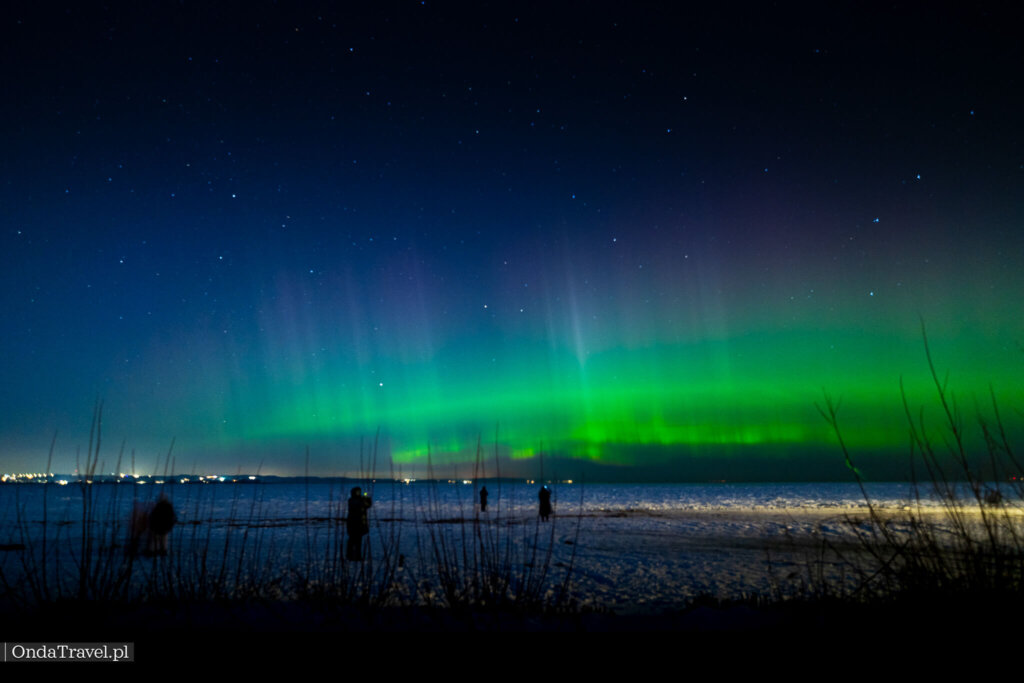
GUIDE
OndaTravel guide
Aurora Alerts
An aurora alert should be treated as a signal to check the conditions now: the radar for the UK, Kp, Bz, Bt, the solar wind, cloud cover and the northern horizon.…
Open
AURORA ALERTS
OndaTravel guide
Aurora Alert UK: How to Check If Tonight Is a Northern Lights Night
If you’ve heard there’s an aurora alert and want to know whether it applies to you tonight, the short version is: there’s no fixed „alert day” you can look up in…
Open
About the OndaTravel.pl author
Krystian – photographer, filmmaker and guide
Meet the OndaTravel.pl author: an independent Arctic guide, photographer and filmmaker. See how the guides are made, where the field photos come from, and how to reach out about a guided trip to Iceland, Lofoten or Norway.





Sorry, the comment form is closed at this time.