
LOFOTEN NORTHERN LIGHTS — TONIGHT AT A GLANCE
Can you see the Northern Lights in Lofoten tonight?
Often, yes — Lofoten sits around 68°N, so on a clear, dark night even Kp 1–2 can be enough. The main limitation is usually coastal cloud, which means the ability to move between islands and beaches matters more than any single index.


Hi, I’m Krystian “dziadzia przewodnik” from OndaTravel.pl!
The North is my greatest passion, but the world is far too beautiful to stay in just one climate. On my blog, I combine the raw landscapes of Iceland and Norway with the exotic energy of Thailand or Vietnam, showing you how to travel authentically — with passion and a camera in hand.
What will you find on OndaTravel.pl?
Visual storytelling: As a photographer and filmmaker, I don’t just describe places — I take you there with professional photos and video.
North expert: Ready-to-use road trip plans for Iceland and Norway, smart tips for budget travel, and my original Northern Lights Radar (locations and forecast).
Travel through the lens of cinema: I track down filming locations — from icy scenes in Interstellar to tropical frames from world cinema.
New direction: Exotic destinations: I love contrast, so the blog is featuring more and more practical knowledge about Vietnam and Thailand. I’ll show you how to find your way around Southeast Asia and come back with your best memories.
P.S. follow me here



Check out my YouTube channel and travel with me.
Follow the channel for videos, routes and practical travel inspiration.
Follow me here:
What’s up?
Enjoying my content?
Buy me a coffee at buycoffee.to/ondatravel and support the creation of more travel content.
Your support helps me create more practical guides, videos and travel inspiration.

Northern Lights – live radar and parameters
Parameters refresh automatically. The local aurora chance is calculated for your location (GPS or city).
Aurora oval radar – Northern Hemisphere
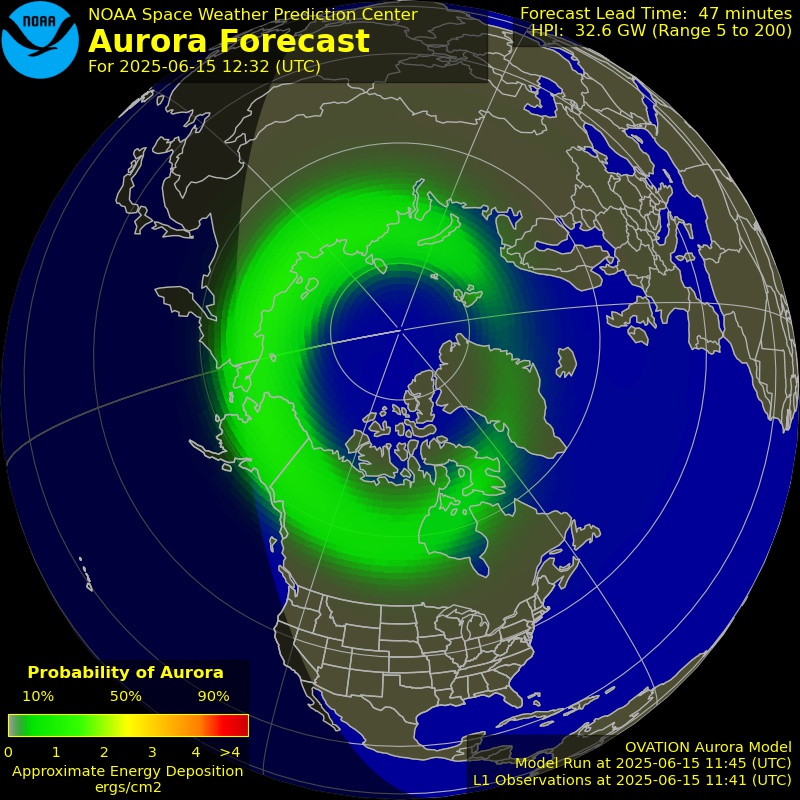
If the animation does not load, a static image will be shown.
Conditions assessment
The indicators consider your location, the local aurora chance and whether it is dark.
Aurora Score (Lofoten, beta): -/100
Kp (3h)
Kp (1 min)
Bz (GSM)
Bt (IMF)
Speed
Density
Temperature
Treat the radar as an operational reference for the archipelago, not a cloud forecast for every island. Check cloud first, then Bz and solar-wind trends. Lofoten is long and narrow, so a relatively small move can produce a completely different sky.
Latest alerts: solar activity and geomagnetic storms
The monitor below updates automatically from NOAA data: it shows the outlook for the next seven nights and the current aurora alerts. Check it right before you head out — conditions can change within hours.
What Kp do you need in Lofoten?
At low activity around Kp 1–2, an open northern horizon works best. As activity rises toward Kp 3+, the aurora moves higher and can shift into other parts of the sky, so changing beach or viewing direction can matter.
Where to see the Northern Lights in Lofoten
For weaker activity, look for an open northern horizon. Uttakleiv is a classic example. As the aurora becomes stronger and shifts west, Haukland or Vik may give better geometry. Gimsøy and Hov offer broad horizons. Reine and Hamnøy are exceptional photographic landscapes, but surrounding mountains can block parts of the sky.
When to visit Lofoten: month-by-month
The key factor is enough darkness. September and October are easier on the roads, deep winter gives the longest nights, and February–March balance darkness with useful daylight.
AURORA SCIENCE
Explainer
How the Northern Lights Form
A visual, plain-language guide to the aurora mechanism, solar activity and what actually creates the display.
Read the science guide
AURORA GUIDE
Related read
Northern Lights and Other Phenomena in the Night Sky – Noctilucent Clouds, Haarp, Sprite Jellyfish
Learn what can be confused with the aurora in the night sky, including noctilucent clouds, sprites and other unusual atmospheric phenomena.
Open related guideSky phenomena
Planning your night-sky observations? These monthly guides highlight the most important astronomical events, meteor showers, Moon phases and the best observation windows. Below you’ll find the two most relevant monthly guides for the current period.
SKY PHENOMENA
Monthly guide
Sky events in October 2026: Draconids, Orionids and Saturn
The key sky events of the month, meteor activity, the Moon and practical observation windows.
Read the guide
SKY PHENOMENA
Monthly guide
Sky events in November 2026: Leonids, Taurids and a supermoon
The key sky events of the month, meteor activity, the Moon and practical observation windows.
Read the guideNorthern Lights
Looking for a longer-term Northern Lights outlook? These monthly guides complement the live radar with seasonal conditions, expected aurora activity and practical viewing tips. Below you’ll find the two most relevant monthly forecasts currently available.
NORTHERN LIGHTS
Monthly forecast
Northern Lights — October 2026
A monthly Northern Lights outlook with live-radar context and practical viewing guidance.
Read the guide
NORTHERN LIGHTS
Monthly forecast
Northern Lights — November 2026
A monthly Northern Lights outlook with live-radar context and practical viewing guidance.
Read the guideBest next pages and regions from Lofoten
Lofoten rewards flexibility. These four pages connect the local island plan with the wider Northern Lights situation in northern Norway.
Lofoten
Travel guide
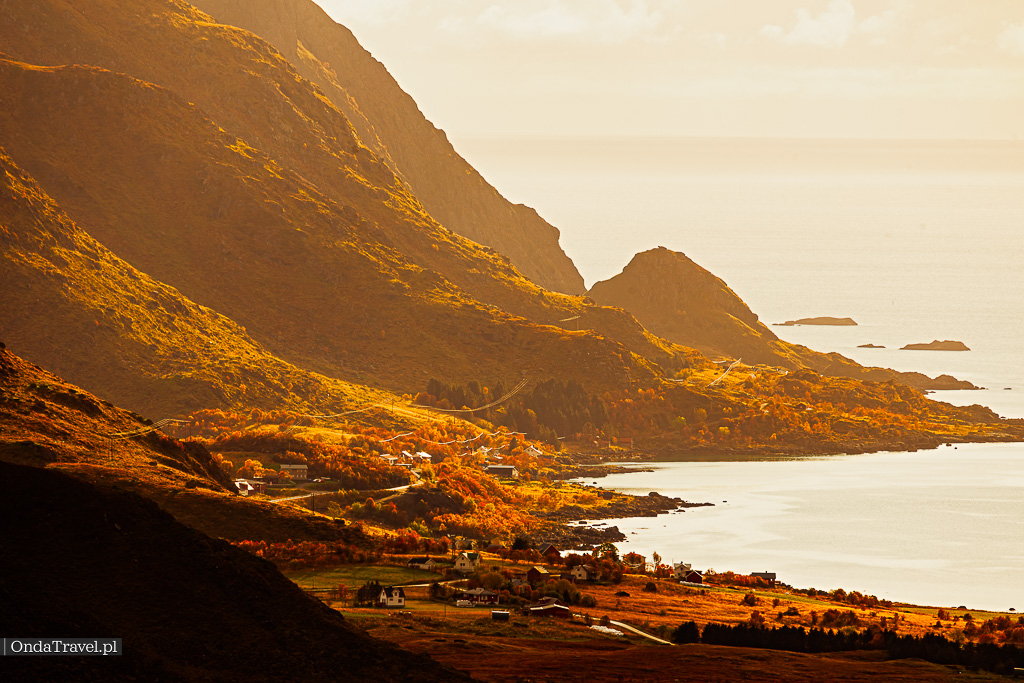
Lofoten: A Travel Guide to the Pearl of Norway
Routes, places and practical information for planning the islands beyond tonight’s aurora chase.
Open the Lofoten guide
Norway
Country radar
Northern Lights in Norway Live Radar
Compare Lofoten with the wider aurora situation across northern Norway.
Check Norway radar
Tromsø
Live radar
Northern Lights in Tromso: Live Radar and Where to Actually See Them
Compare conditions farther north and east.
Check Tromsø radar
Senja
Live radar
Senja Northern Lights Live – Radar and Forecast
Check Senja as another northern Norway direction.
Check Senja radarHow many nights should you plan in Lofoten?
At least 4 nights is a sensible minimum when the aurora is an important goal. Coastal cloud can block several hours or a whole evening, so a longer stay gives you a major advantage.
With 5–7 nights you can combine aurora chasing with landscape photography and avoid risky driving simply because one evening looks poor.
Cloudy in Lofoten? What next
First compare other parts of the archipelago — cloud over Moskenesøy does not guarantee cloud over Vestvågøy or Austvågøy. If the whole coast is closed, inland areas beyond the mountains can sit under a very different weather pattern.
Abisko
Alternative radar
Abisko Northern Lights Live – Radar and Forecast
An inland comparison beyond the mountains when the Norwegian coast is closed by cloud.
Check Abisko radar
Rovaniemi
Alternative radar
Rovaniemi Northern Lights Live – Radar and Forecast
A broader Finnish Lapland comparison when the coastal pattern is unfavourable.
Check Rovaniemi radarPhotographing the Northern Lights in Lofoten
Start around 1–4 seconds, f/1.4–f/2.8 and ISO 800–3200. Shorten the exposure for fast structures. On beaches, tripod stability, wind shelter and keeping water drops off the front element are especially important.
Build the composition around the direction of the aurora. At low activity, an open northern horizon matters more than the most famous viewpoint. During strong activity you can use mountains, beaches and reflected light under a sky filled with aurora. full night-sky photography guide.
GUIDE
How to Photograph the Night Sky and Stars: Camera Settings
How to photograph the night sky: camera settings, planning tips, useful conditions and related guides for stars, auroras and meteors.
Car or tour?
A car gives the greatest flexibility between islands, but winter driving requires experience. Wind, snow and ice can change quickly, and a photogenic roadside pull-off is not automatically a safe place to stop.
A tour makes sense if you do not want to analyse weather and drive in darkness. Either way, respect parking rules and never block private roads or access points.

Main guide
Northern Lights Live – Northern Lights Forecast
The main OndaTravel aurora hub combines forecasts, activity indicators and the core rules for observing the Northern Lights.

About the author
Krystian — photographer, filmmaker and guide
OndaTravel guides are built from field travel, photography and practical route planning. Use live tools as decision support, then verify weather, roads and local safety before heading out at night.
Lofoten Northern Lights FAQ
What Kp do you need in Lofoten?
With a good northern horizon, Kp 1–2 can already be enough. At Kp 3+ the aurora often moves higher overhead and changes the best viewing direction.
Where is the best place to see the aurora in Lofoten?
There is no single winner. Uttakleiv works well for lower activity and a northern horizon, Haukland and Vik can suit a more westerly display, and Gimsøy offers broad open sky.
Is Reine good for the Northern Lights?
Yes, especially for photography, but mountains block parts of the horizon. On a specific night, a more open beach may give a better view.
How many nights should I stay in Lofoten?
Around 4 nights is a sensible minimum, while 5–7 nights gives much better resilience against coastal cloud.
When is Northern Lights season in Lofoten?
Roughly September to early April. Midwinter has the longest nights, while February and March balance darkness with useful daylight.
Do I need a car?
Not strictly, but a car gives the most flexibility to move under clearer skies. In winter it also requires experience and caution.
Read also
GUIDE
OndaTravel guide
Northern Lights Radar: Live Aurora Forecast by Location
First check whether the auroral oval covers your latitude, then compare Kp, the direction of Bz and cloud cover. Even strong activity is not enough under full cloud…
Open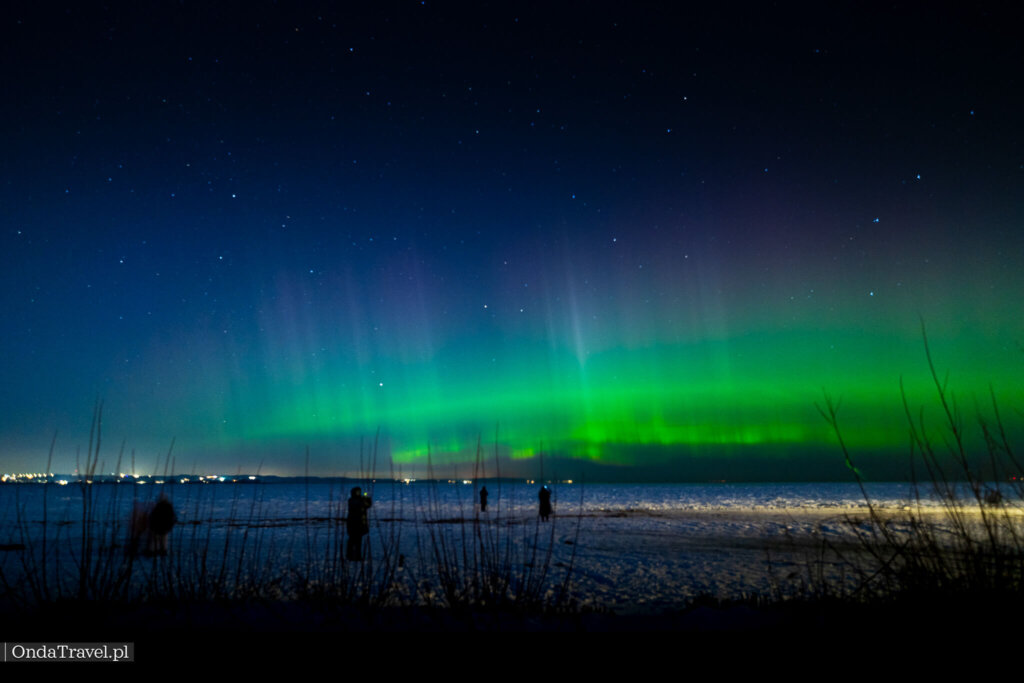
GUIDE
OndaTravel guide
Aurora Alerts
An aurora alert should be treated as a signal to check the conditions now: the live radar for your location, Kp, Bz, Bt, the solar wind, cloud cover and the northern…
Open
GUIDE
OndaTravel guide
Northern Lights in the UK — Live Radar and Forecast
Northern Lights in the UK are never guaranteed on any single night — they depend on live geomagnetic activity, cloud cover and how far north you are. This page pulls…
Open
AURORA ALERTS
OndaTravel guide
Aurora Alert UK: How to Check If Tonight Is a Northern Lights Night
If you’ve heard there’s an aurora alert and want to know whether it applies to you tonight, the short version is: there’s no fixed „alert day” you can look up in…
OpenPlanning the whole Lofoten and Norway trip?
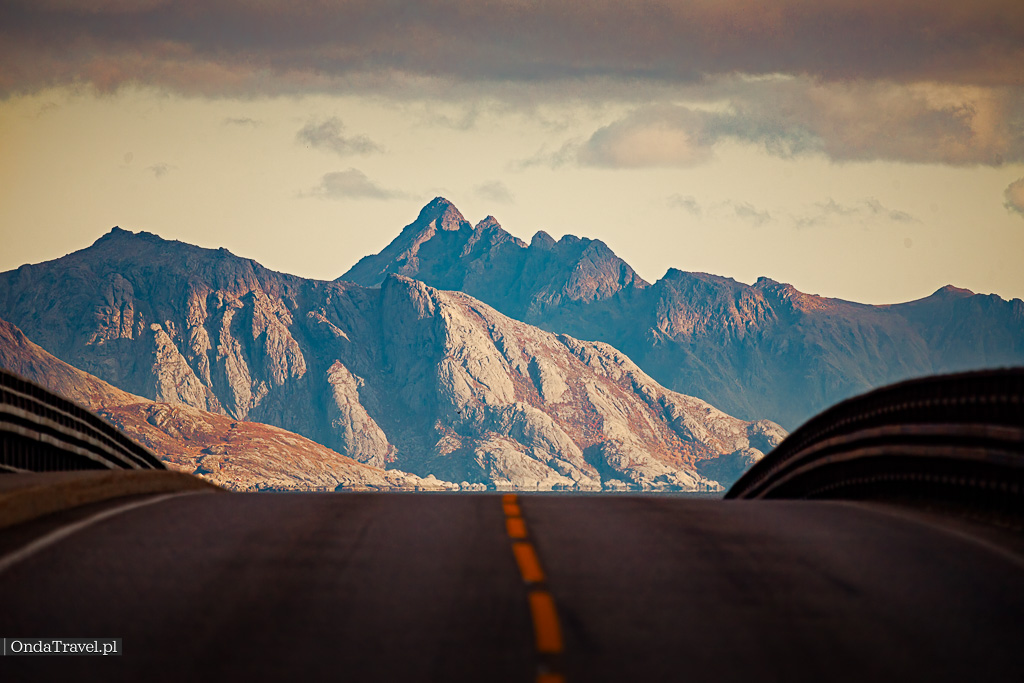
The radar helps with tonight’s decision. For the wider trip, use the Norway travel hub and the OndaTravel North section for routes, regions and practical planning.
Norway
Travel guides and routes
Norway
Routes, regions and practical guides for planning a wider Norway trip.
Plan NorwayHi, I’m Krystian “dziadzia przewodnik” from OndaTravel.pl!
The North is my greatest passion, but the world is far too beautiful to stay in just one climate. On my blog, I combine the raw landscapes of Iceland and Norway with the exotic energy of Thailand or Vietnam, showing you how to travel authentically — with passion and a camera in hand.
What will you find on OndaTravel.pl?
Visual storytelling: As a photographer and filmmaker, I don’t just describe places — I take you there with professional photos and video.
North expert: Ready-to-use road trip plans for Iceland and Norway, smart tips for budget travel, and my original Northern Lights Radar (locations and forecast).
Travel through the lens of cinema: I track down filming locations — from icy scenes in Interstellar to tropical frames from world cinema.
New direction: Exotic destinations: I love contrast, so the blog is featuring more and more practical knowledge about Vietnam and Thailand. I’ll show you how to find your way around Southeast Asia and come back with your best memories.
P.S. follow me here