


NLC radar is a practical name for a set of sources that help you decide whether noctilucent clouds are worth looking for tonight. It does not work like rain radar or an aurora radar, but combines practical signals: cameras, observer reports, local weather and data about conditions in the mesosphere.
If you want to combine sky watching with travel planning, see also the North.
NORTH
North: Iceland, Norway, aurora and the Lofoten Islands
A dedicated OndaTravel section for northern destinations: Iceland, Norway, fjords, the Lofoten Islands, the northern lights, ready routes and planning tools.
The NLC radar helps you quickly check whether conditions tonight or in the next few hours are favorable for observing noctilucent clouds. If you first want to understand what these bright night clouds are and when they appear, go to the Noctilucent Clouds NLC.

GUIDE
Noctilucent clouds (NLC) — when and where to observe them
A summer night-sky phenomenon visible in Poland and across northern regions. See when it appears, where to look and how to recognize it.
NLC radar — in short
The NLC radar should be treated as a practical decision panel: first the season and the time of night, then the cameras, OSWIN/PMSE, observers’ reports, cloud cover and the view to the north. Noctilucent clouds (NLC) are best observed in summer, low above the northern horizon, after dusk or before dawn.
NLC Radar — quick answer
There is no single official NLC radar that shows noctilucent clouds over Poland in the same way that weather radar shows precipitation. In practice, “NLC radar” means a visibility monitor: you check several sources and then decide whether it is worth going outside.
NLC today — checklist before leaving home
- 1. Check the season: in Poland and much of northern Europe, the best chances usually run from the second half of May to August, especially in June and July.
- 2. Check the time: the best window is usually around 90–120 minutes after sunset or before sunrise.
- 3. Check the northern horizon: NLC are visible low in the north; before midnight they are often more to the northwest, after midnight more to the northeast.
- 4. Check cloud cover: you need a clear sky low in the north. Low clouds near the horizon can hide the whole display.
- 5. Check confirmations: NLC cameras, observer reports and signals from northern Europe help assess whether the phenomenon is active.
- 6. Test it with a camera: a phone or camera often reveals delicate NLC structures faster than the naked eye.
Where can you check noctilucent clouds live?
Below are the sources that best match the intent behind “NLC radar”. Some are practical for observers, others are more scientific. It is best to use them together, because no single source guarantees visibility over one specific location.
NLC Monitor — cameras and reports
The most practical source for quickly checking whether noctilucent clouds are appearing in Europe. Treat it as a camera monitor, not as a guarantee of visibility over your town.
IAP / PMSE and NLC — scientific data
A source for understanding the relationship between NLC and mesospheric signals. Useful for context, but it does not replace cloud forecasts or local observations.
IAP — current radar observations
A place for people who want to check mesospheric radars such as OSWIN or MAARSY. These are scientific tools, so they require careful interpretation.
NASA AIM — archive and context
AIM was an important mission for studying noctilucent clouds, but it is no longer a current radar-like tool for daily NLC checks.
How to read NLC radar, OSWIN and camera signals
NLC cameras
NLC cameras and monitors are the most practical tools. If you see fresh silvery structures above the northern horizon in Europe, treat it as a signal: check your local weather and go to a place with an open view to the north.
OSWIN, PMSE and mesospheric radars
Mesospheric radars such as OSWIN are not a simple “cloud preview”. They may show signals related to conditions in the mesosphere, but they do not automatically mean that you will see NLC from your location. Treat them as additional context, not as a verdict.
Local weather
The most down-to-earth factor often decides everything: cloud cover over the northern horizon. If there are low clouds, fog or strong light pollution in the north, even active NLC may remain invisible.
AIM/NASA — why it is not a current radar
The AIM mission was groundbreaking for research into noctilucent clouds and polar mesospheric clouds, but today it should not be treated as a daily visibility radar. It is mainly scientific and archival context.
NLC Radar in Poland — where are your chances highest?
| Place | Chance | What to check? |
|---|---|---|
| Coast and Pomerania | high | northern horizon, cloud cover over the sea, reports from northern Europe |
| Masuria and the northeast | good | air clarity, fog, open horizon |
| Central Poland | medium | display brightness, city glow, low clouds in the north |
| Southern Poland | lower, but possible | very clear horizon and a strong NLC display |
The most important factor is not the name of the town, but an open northern horizon. A good spot outside the city often works better than the center of a large city, even if that city is farther north.
NLC, aurora or ordinary clouds — how not to confuse them
- Noctilucent clouds: silvery-blue, wavy bands, usually low in the north, visible in summer during deep twilight.
- Northern lights: arcs, pillars or curtains linked to geomagnetic activity; for assessing them, use the northern lights radar.
- City glow: usually yellowish or orange, static and without delicate wavy structure.
- Ordinary clouds: after sunset they darken, while NLC can shine with a bright, cool light because they are very high in the atmosphere.
Full guide to noctilucent clouds
This page answers the question “where can I check NLC today?”. If you want to understand what noctilucent clouds are, why they shine after sunset, when the season begins and how to photograph them, go to the full guide.
Night-sky observation calendars and tools

SKY PHENOMENA
Main section page
Sky phenomena
The main place for aurora, NLC, meteors, Moon phases, eclipses and observation tools.
Go to the section
CALENDAR
Observation plan
Astronomical events calendar
Dates, seasons and the most important sky-watching opportunities.
Check the calendar
NOCTILUCENT CLOUDS
Observer guide
Noctilucent Clouds NLC
Full guide: what NLC are, when they appear and how to recognize them.
Read the guide
AURORA RADAR
Live tool
Northern lights radar
Check geomagnetic conditions and compare phenomena visible in the northern sky.
Check aurora radar
ASTROPHOTO
Photo guide
How to photograph the night sky
Camera settings, framing and practical tips for photographing NLC, meteors and aurora.
See the guide
METEOR SHOWERS
Observation calendar
Meteor shower calendar
The most important meteor showers and dates worth combining with summer sky watching.
Check meteors
MOON PHASES
Night planning
Moon phases 2026
Check moon brightness and choose the best evening for photos and observations.
Check the calendar
ECLIPSES
Sky calendar
Solar and lunar eclipses 2026
Dates, visibility and safe eclipse-observation rules.
See eclipses
MOON
Sky brightness
Supermoon
Check when a bright Moon may disturb night-sky observations and photos.
See supermoon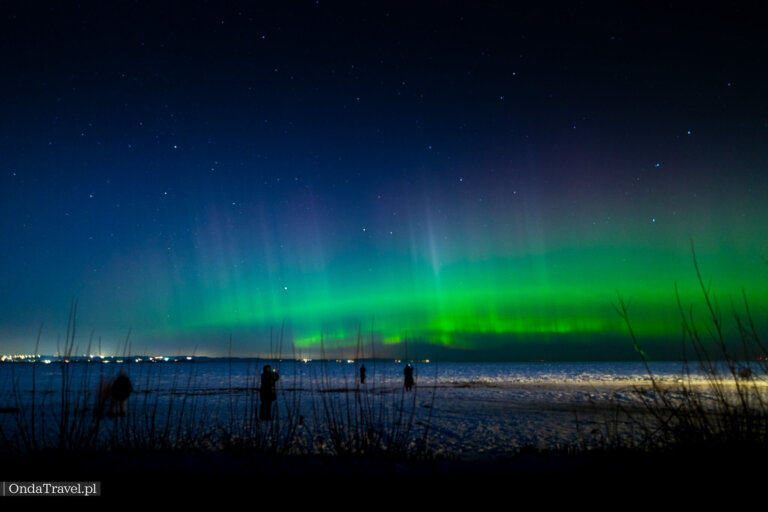
ALERTS
Quick decision
Aurora alerts
Current space-weather notices, geomagnetic storms and aurora chances.
Check alerts
LIVE MAP
Tool
Live earthquake map
An active world map with the latest tremors — useful for travel and observing natural phenomena.
Open the mapFAQ: NLC radar and noctilucent clouds live
Does an NLC radar exist?
Not in the classic sense. There is no single official noctilucent-cloud radar that works like rain radar. In practice, NLC radar means a set of sources: camera monitors, observer reports, cloud cover, local weather and scientific data about conditions in the mesosphere.
Where can I check whether noctilucent clouds will appear tonight?
First check the season, the time of night and cloud cover over the northern horizon. Then check NLC cameras, observer reports and possible signals from mesospheric radars. Only combining these sources gives a practical answer.
Does OSWIN or a mesospheric radar show NLC over Poland?
Not directly. Mesospheric radars show signals related to upper-atmosphere conditions, but they do not replace a local cloud forecast or observation of the northern horizon.
Does AIM/NASA still show current noctilucent clouds?
Not as a current observing tool. The AIM mission was very important for noctilucent-cloud research, but after battery problems it is no longer a daily data source for checking NLC visibility.
When is the best time to observe NLC in Poland?
The best chances are usually from the second half of May to August, especially in June and July. Look low over the northern horizon about 90–120 minutes after sunset or before sunrise.
Can noctilucent clouds be seen with the naked eye?
Yes. In good conditions, NLC are visible to the naked eye as silvery-blue, wavy bands. A phone or camera often shows their structure more clearly than the eye alone.
How is NLC radar different from aurora radar?
Aurora radar is based on geomagnetic activity and solar-wind parameters. NLC radar is a practical name for a set of tools used to observe noctilucent clouds: cameras, weather, reports and mesospheric data.



Hi, I’m Krystian “dziadzia przewodnik” from OndaTravel.pl!
The North is my greatest passion, but the world is far too beautiful to stay in just one climate. On my blog, I combine the raw landscapes of Iceland and Norway with the exotic energy of Thailand or Vietnam, showing you how to travel authentically — with passion and a camera in hand.
What will you find on OndaTravel.pl?
Visual storytelling: As a photographer and filmmaker, I don’t just describe places — I take you there with professional photos and video.
North expert: Ready-to-use road trip plans for Iceland and Norway, smart tips for budget travel, and my original Northern Lights Radar (locations and forecast).
Travel through the lens of cinema: I track down filming locations — from icy scenes in Interstellar to tropical frames from world cinema.
New direction: Exotic destinations: I love contrast, so the blog is featuring more and more practical knowledge about Vietnam and Thailand. I’ll show you how to find your way around Southeast Asia and come back with your best memories.
P.S. follow me here

