Noctilucent Clouds (NLC): what they are and when to see them

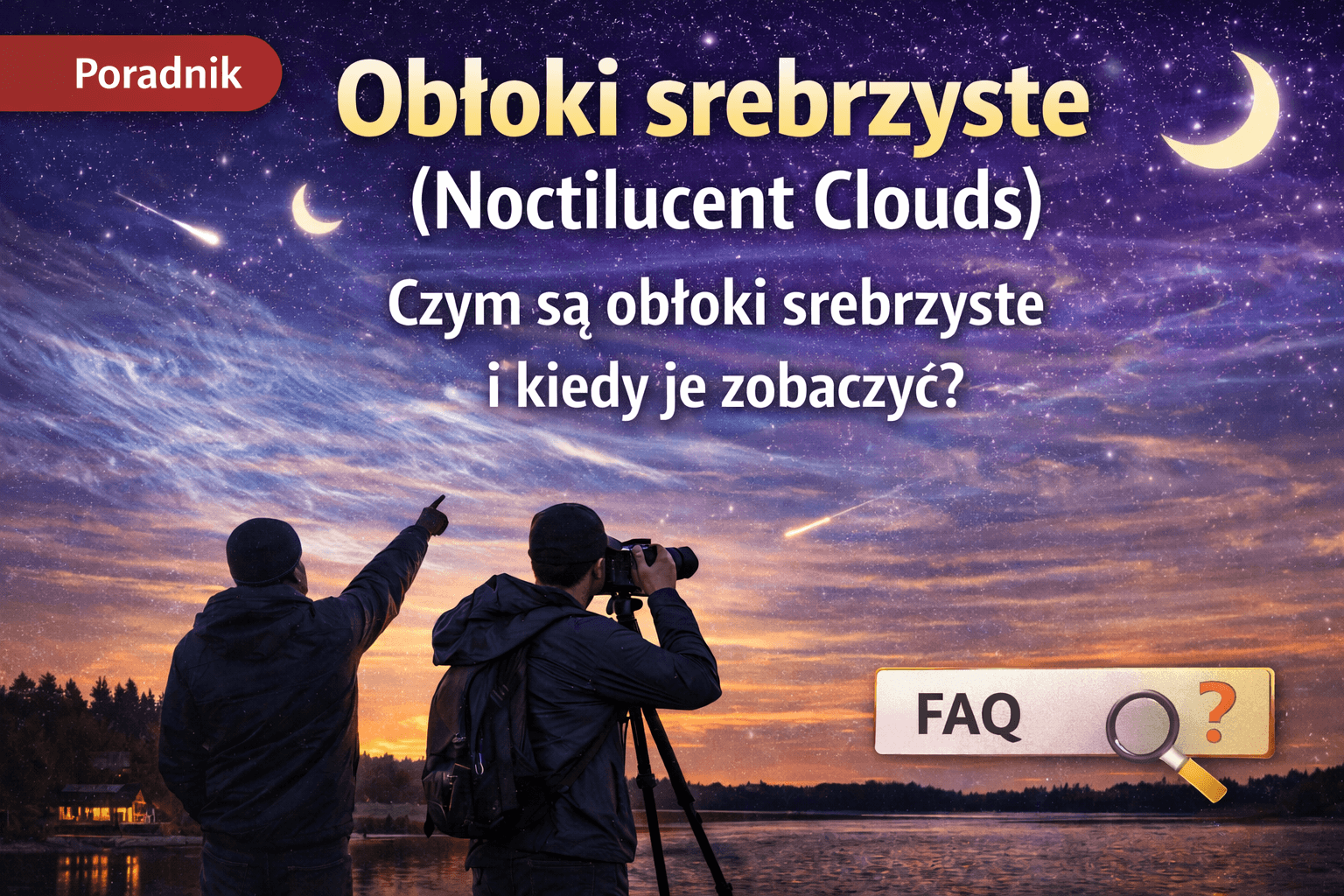
Noctilucent clouds, also called NLC or night-shining clouds, are one of the most beautiful summer sky phenomena visible from Poland and other mid-northern latitudes. They look like blue-silver waves, threads or nets suspended low above the northern horizon after sunset or before dawn.
To connect this topic with a wider northern travel plan, see the North section.

NORTH
North: Iceland, Norway, northern lights and Lofoten
A dedicated OndaTravel section for northern trips: Iceland, Norway, fjords, Lofoten, northern lights, ready-made routes and planning tools.
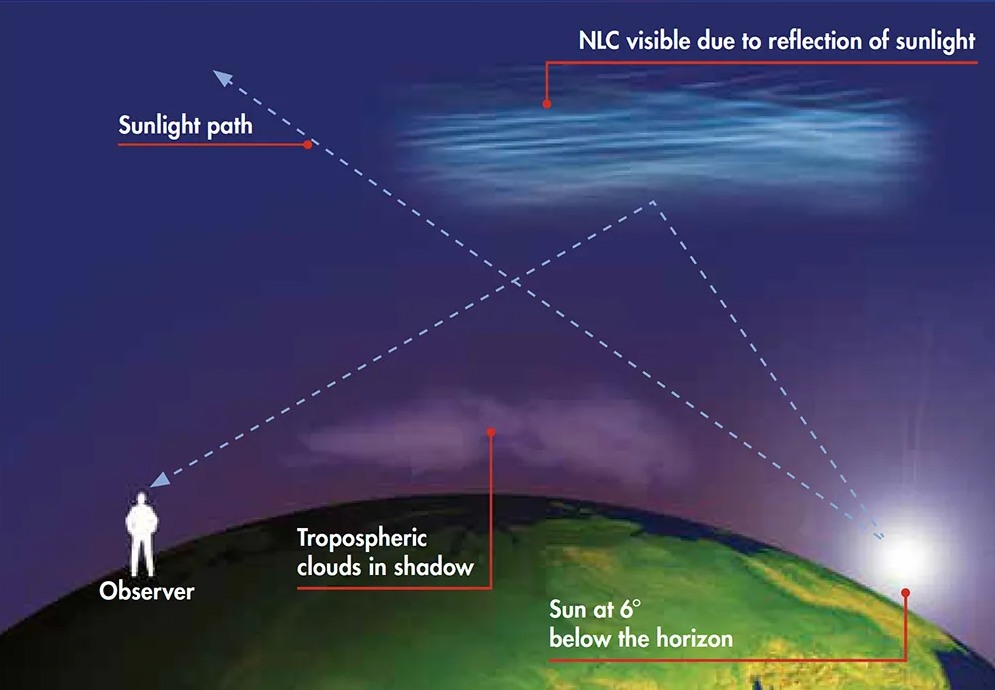
The key is timing. NLC are usually visible only when the lower atmosphere is already dark, but the Sun still illuminates the mesosphere. That is why they can look almost unreal: ordinary clouds are dark, while these high clouds still shine.
For the wider observing plan, start with the main Sky Phenomena section, then compare NLC with the astronomical events calendar and, when the display looks green or dynamic, verify conditions on the aurora radar.
Noctilucent clouds — in short
Noctilucent clouds (NLC) are best looked for from the end of May to the beginning of August, usually 30–90 minutes after sunset or before dawn. If you are checking the NLC radar, the monitor or today’s forecast, look low above the northern horizon and search for bright, silvery-blue waves, nets or streaks. In this guide I explain when they are visible, what time to look, how to tell them from ordinary clouds and where to quickly check the observation conditions.
Calendars and tools for night-sky observing
These pages connect NLC with the rest of the night-sky tree: meteors, the Moon, eclipses, aurora and photography.
Night-sky guide
Sky Phenomena
The main starting point for meteors, eclipses, Moon phases, NLC and aurora tools.

Calendar
Astronomical events calendar
Plan the next visible sky events month by month and compare them with the Moon phase.
Photo guide
How to photograph the night sky
Camera and phone settings for the Moon, meteors, Milky Way, aurora and NLC.
Quick answer: how to catch noctilucent clouds today

| Season | Usually late May to early August, with the best chance in June and July. |
| Time | 30–90 minutes after sunset and 30–90 minutes before sunrise. |
| Direction | Look low over the northern horizon in the Northern Hemisphere. |
| Look | Blue-silver waves, ripples, nets or fine luminous threads. |
| First test | Take a quick photo: the camera often reveals NLC better than the eye. |
If the northern horizon is cloudy, the display may be impossible to see even when NLC are present high above the weather layer.
What are noctilucent clouds and why do they shine at night?

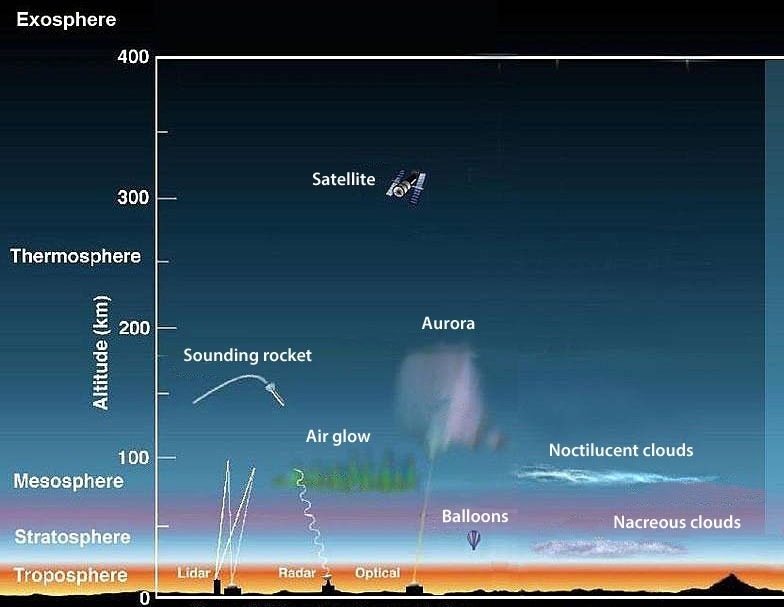
Noctilucent clouds are extremely high clouds that form in the mesosphere, roughly 75–85 km above Earth. Unlike normal weather clouds, they are made of tiny ice crystals around dust particles and are visible only in a narrow twilight geometry.
The name means night-shining clouds. They shine because the Sun is already below your horizon but still lights the mesosphere from below. The lower atmosphere is dark, so the contrast becomes strong.

When and where to see NLC

In Poland and northern Europe, look north or north-west after sunset and north or north-east before sunrise. You do not need a telescope. A wide, open horizon is much more important.
- Choose a place with a clean northern horizon.
- Avoid low clouds and strong city glow when possible.
- Check several times during twilight because the structure can change quickly.
- Use a phone photo as a confirmation tool.
- Do not confuse warm orange city glow with cold blue-silver NLC.

NLC vs aurora: the most important differences

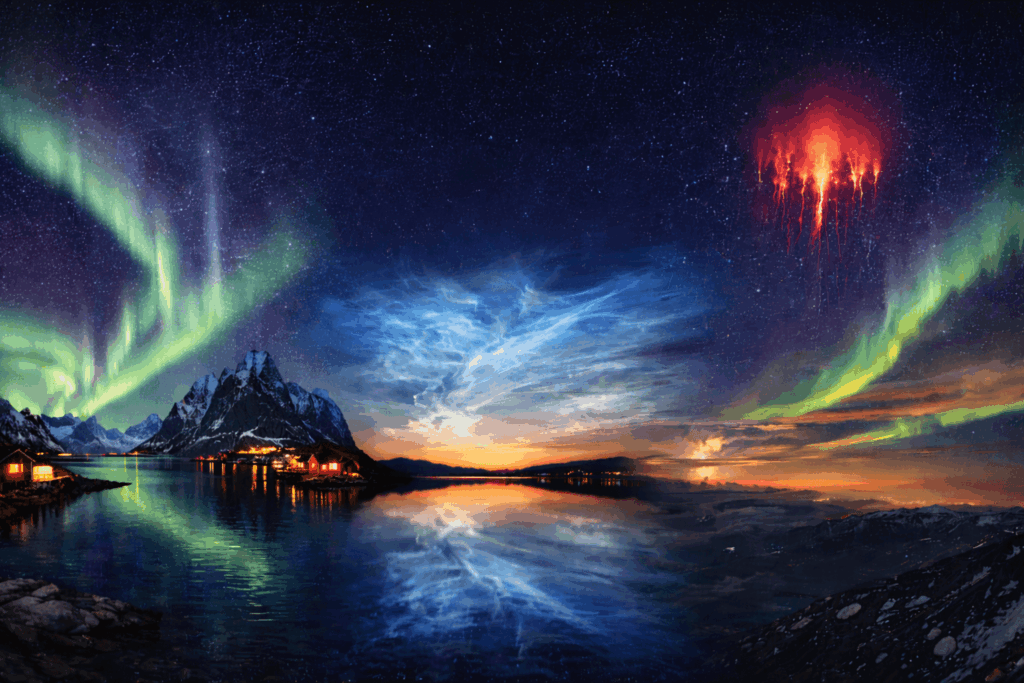
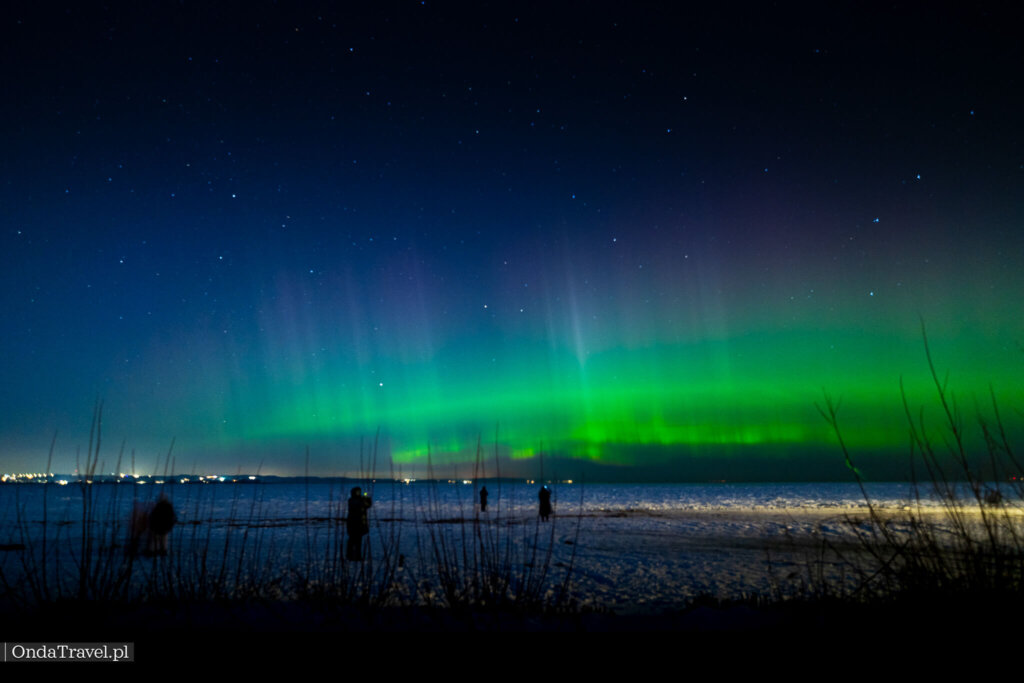
NLC can look cosmic, but they are not aurora. If you are unsure, compare the view with the aurora radar and aurora alerts before calling it a northern-lights display.
GUIDE
Aurora Alerts
Aurora forecast UK: alerts, radar, Kp, Bz, solar wind and northern lights chances. Check when to go out, where to look and how to read conditions.
- NLC are usually blue-silver and low over the northern horizon.
- Aurora often forms arcs, curtains or rays and can move faster.
- NLC are clouds lit by sunlight; aurora is driven by charged particles and geomagnetic activity.
- NLC do not require a geomagnetic storm.
How to photograph noctilucent clouds

For a full workflow, use the guide on how to photograph the night sky. For NLC, start simple: keep the camera stable, use a wide view and avoid exposures that are too long.
GUIDE
How to Photograph the Night Sky and Stars: Camera Settings
How to photograph the night sky: camera settings, planning tips, useful conditions and related guides for stars, auroras and meteors.
- Phone: night mode, stable support and several frames.
- Manual phone mode: try ISO 400–800 and 1–4 s.
- Camera: tripod, manual focus, ISO 400–800, f/2.8–f/4 and 2–10 s.
- Use shorter exposures if the wave structure becomes too smooth.
- Include a horizon or landscape element to show scale.
Science and history of noctilucent clouds

NLC are valuable for science because they reveal conditions in the upper atmosphere. Their brightness and frequency are linked to temperature, water vapour, tiny dust particles and long-term changes in the mesosphere.
Historical observations became more systematic in the late nineteenth century. Today, ground observations, satellite data and space-based instruments help scientists track how these clouds form and change.


What to watch after the NLC season
NLC are only one part of the observing year. Compare them with Eta Aquariids, the meteor-shower calendar, Moon phases, eclipses and the major guide to the total solar eclipse of 12 August 2026.
FAQ: noctilucent clouds
Noctilucent clouds: viewing conditions and identification
This article explains the NLC phenomenon: how it forms, its season, the viewing direction and the features used to identify noctilucent clouds.
- The best chances in the Northern Hemisphere usually occur near the summer solstice.
- Look low above the northern horizon after sunset.
- NLC may appear silver or blue with a clearly rippled structure.
- Ordinary low clouds become dark, while high noctilucent clouds can still reflect sunlight.
For current maps and the viewing outlook for the coming night, open the NLC radar.

GUIDE
NLC Radar and noctilucent cloud monitor: where to check live visibility?
NLC radar, camera monitors, OSWIN, reports and weather for noctilucent clouds. Check whether tonight is worth observing the northern horizon.
Can noctilucent clouds be seen with the naked eye?
Yes. In good conditions they are visible as bright blue-silver waves, although a camera often shows them more clearly.
Which months are best for NLC?
In the Northern Hemisphere, the best season is usually from late May to early August, especially June and July.
What time should I look for them?
Usually 30–90 minutes after sunset and 30–90 minutes before sunrise.
Can I see NLC from a city?
Sometimes, but city glow reduces contrast. A darker place with a clean northern horizon is better.
How do I tell NLC from aurora?
NLC usually look like static blue-silver waves. Aurora is often more dynamic and linked to geomagnetic activity.
Can I photograph NLC with a phone?
Yes. Use night mode, keep the phone stable and take several shots.
Read next
- Sky Phenomena
- Astronomical events calendar
- Eta Aquariids 2026
- Meteor shower calendar
- Moon phases
- Eclipses
- Aurora radar



Hi, I’m Krystian “dziadzia przewodnik” from OndaTravel.pl!
The North is my greatest passion, but the world is far too beautiful to stay in just one climate. On my blog, I combine the raw landscapes of Iceland and Norway with the exotic energy of Thailand or Vietnam, showing you how to travel authentically — with passion and a camera in hand.
What will you find on OndaTravel.pl?
Visual storytelling: As a photographer and filmmaker, I don’t just describe places — I take you there with professional photos and video.
North expert: Ready-to-use road trip plans for Iceland and Norway, smart tips for budget travel, and my original Northern Lights Radar (locations and forecast).
Travel through the lens of cinema: I track down filming locations — from icy scenes in Interstellar to tropical frames from world cinema.
New direction: Exotic destinations: I love contrast, so the blog is featuring more and more practical knowledge about Vietnam and Thailand. I’ll show you how to find your way around Southeast Asia and come back with your best memories.
P.S. follow me here


Author
Krystian „dziadzia przewodnik”The North is my greatest passion, but the world is too beautiful to stay in one climate. On my blog I combine the raw nature of Iceland and Norway with the exotic energy of Thailand and Vietnam, showing you how to travel authentically, with passion and a camera in hand.