


Sky events in September 2026: meteors, equinox and the Moon
September 2026 sky events — how to use this guide anywhere
This English edition is for observers worldwide. Where an exact astronomical moment matters, use UTC and convert it to your local time; whether you can see an event depends on your horizon, time zone, weather and sky darkness.
September 2026 marks the transition from the summer sky to longer, darker nights. The most interesting observing window falls in the first half of the month: the September ε-Perseids peak on 9 September, the New Moon occurs on 11 September, and several nights around these dates offer very good conditions for meteors, the Milky Way and night-landscape photography.
The second half of September has a completely different character. The autumn equinox will occur on 23 September 2026 at 00:05 UTC, the Moon will reach full phase on 26 September, and Neptune will be at opposition at almost the same time. This is a month when it is worth combining meteor observations with the start of the autumn aurora season and planetary observing.
If you want to see the whole year in one place, start with the Sky events 2026 section and the 2026 astronomical events calendar. To plan a specific night, you can also use the Moon phases 2026 and the meteor shower calendar.

SKY EVENTS
Observing section
Sky events — guide to phenomena and observations
A starting point for skywatching: aurora, noctilucent clouds, meteors, Moon phases, eclipses and practical guides. A good place to move quickly from the radar to other phenomena visible in the sky.
Go to the sky events section
SKY CALENDAR
Observation planning
Astronomical events calendar
An overview of the most important night-sky events in one place: conjunctions, eclipses, supermoons, oppositions and dates worth saving in advance. A useful page alongside the radar when you want to plan observations ahead.
See the astronomical events calendar
MOON
Observation calendar
Moon phases — 2026 calendar
The most important phases of the month — New Moon, Full Moon and quarter phases — ideal for planning observations and astrophotography.
See Moon phases
METEORS
Observation calendar
Meteor shower calendar 2026
Peak dates of meteor showers, the Perseids, Geminids, Lyrids, Moon conditions and a practical plan for observing shooting-star nights.
See the meteor calendarSky events September 2026 — at a glance
| Best dark nights | around 8–13 September, especially near the New Moon on 11 September |
| Meteors | September ε-Perseids — peak on 9 September, ZHR around 8 under ideal conditions |
| Moon | New Moon on 11 September and Full Moon on 26 September; check the exact time in your local time zone |
| Autumn equinox | 23 September 2026 at 00:05 UTC |
| Planet for a telescope | Neptune at opposition around the night of 25/26 September; the calendar date is 26 September in UTC |
| Aurora | after the equinox it is worth monitoring space weather more closely, but the equinox does not guarantee an aurora |
Contents: September 2026 night sky
- Key astronomical dates in September 2026
- Best nights for observing
- September ε-Perseids
- The Moon in September 2026: New Moon and Full Moon
- The Milky Way and dark skies
- Autumn equinox 2026
- Aurora after the equinox
- Neptune at opposition
- Other interesting September events
- Ready-made observing plan
- Key rocket launches and space missions
- FAQ

Check out my YouTube channel and travel with me.
Follow the channel for videos, routes and practical travel inspiration.
Follow me here:
What’s up?
Enjoying my content?
Buy me a coffee at buycoffee.to/ondatravel and support the creation of more travel content.
Your support helps me create more practical guides, videos and travel inspiration.

Key astronomical dates in September 2026

This calendar is for observers worldwide. For global events we give the astronomically important moment; you still need to take into account the object’s local altitude above the horizon, the weather and sky brightness.
| Date | Event | What does it mean in practice? |
|---|---|---|
| 1 September | Aurigid maximum | A weaker shower; the bright Moon strongly limits observing conditions. |
| 4 September, 09:51 | Last Quarter Moon | Evenings gradually become more favorable for dark-sky observing. |
| 6 September | Moon near Mars | An easy-to-find pairing in the morning sky, weather permitting. |
| 8 September | Moon near Jupiter | Bright Jupiter makes it easy to orient yourself in the sky. |
| 9 September | September ε-Perseids maximum | The main peak is around 18:00 UT; plan your observing window after converting to local time. |
| 11 September, 05:27 | New Moon | The darkest sky of the month — very good for meteors, stars and photography. |
| 13 September | September Lyncids maximum | A weak shower, ZHR around 3–4; an extra target for patient observers. |
| 14 September | Occultation / close encounter of Venus and the Moon | A daytime event; great caution is required because of the proximity of the Sun. |
| 18 September, 22:43 | First Quarter | The evening sky is already noticeably brighter. |
| 23 September, 02:05 | Autumn equinox | The beginning of astronomical autumn and an important point in the aurora season. |
| 26 September | Neptune at opposition | The best time of the year to observe Neptune through a telescope. |
| 26 September, 18:49 | Full Moon | Bright skies limit observations of faint objects, but the Full Moon itself is a good photographic target. |
Best nights for observing in September 2026

If you can choose only a few dates, divide September into three different types of observing. The night of 9/10 September is the most important for meteors, 10/11 and 11/12 September are excellent for dark skies and photography, while the period around 22–24 September is worth using to monitor aurora conditions after the equinox.
- 9/10 September: ε-Perseids, very little moonlight and a chance of bright meteors.
- 10/11 September: almost New Moon — one of the best windows for the Milky Way and wide-field star images.
- 11/12 September: the New Moon passed only a few hours earlier; the sky remains very dark.
- 22–24 September: this is not the best window for faint objects because of the waxing Moon, but it is worth monitoring geomagnetic activity.
- 25/26 September: a good date for Neptune, although the bright Moon does not help with faint deep-sky objects.
Do not plan observations by date alone. A few hours before you leave, check cloud cover, atmospheric transparency and local light sources. For meteors, a dark location often improves the view more than shifting your observing time by a few dozen minutes.
September ε-Perseids 2026: when to watch?

The September ε-Perseids are active from 5 to 21 September, and in 2026 the peak falls on 9 September at around 18:00 UT, ; convert from UTC to plan for your location. The International Meteor Organization gives a typical ZHR of around 8. This does not mean, however, that standing under a city streetlight you will see eight meteors every hour.
The shower’s radiant lies high in the northern sky and is favorably placed from Polish latitudes for much of the night. The IMO describes this shower as relatively rich in bright meteors. In 2026 the Moon is the biggest advantage: New Moon falls on 11 September, so the nights around the peak are practically free from disruptive moonlight.
The most sensible plan is to begin observing on the evening of 9 September and remain under the sky for at least an hour or two. The catalog peak is only a reference point — shower activity does not switch on and off in a single minute. Models also indicate a possible, but uncertain, weak encounter with shower material around the morning of 10 September. It is an interesting possibility for patient observers, not a promise of an outburst.
You do not need a telescope for meteors. It is best to watch a broad area of sky, sit or lie down comfortably and give your eyes 20–30 minutes to adapt. It is also worth comparing this night with the full 2026 meteor shower calendar, to see which larger showers will appear later in autumn.
Meteor showers 2026
Meteor shower calendar 2026 — showers, peaks and the best nights
Go to the meteor shower calendar if, after the eclipse, you also want to plan the Perseids and other strongest observing nights of the year.
The Moon in September 2026: when are the New Moon and Full Moon?

| Moon phase | Date and time — use your local time zone | Meaning for observing |
|---|---|---|
| Last Quarter | 4 September, 09:51 | The first part of the night gradually becomes darker. |
| New Moon | 11 September, 05:27 | The best window for faint objects, meteors and the Milky Way. |
| First Quarter | 18 September, 22:43 | Evening moonlight starts to become a clear obstacle. |
| Full Moon | 26 September, 18:49 | Bright skies, but a good target for observing and photographing the Moon itself. |
When is the Full Moon in September 2026? The Full Moon occurs on 26 September at 18:49 Polish time. If your goal is meteors or the Milky Way, do not choose this night. If instead you are photographing a landscape with a large Moon, it is worth finding a location with an unobstructed eastern horizon in advance.
When is the New Moon in September 2026? The New Moon occurs on 11 September at 05:27. That is why the period from 9–13 September is the strongest observing window of the month. You can find the complete calendar of all phases on the Moon phases 2026.
MOON CALENDAR
Moon phases 2026
Check Full Moons, New Moons and the key Moon phases before planning an observation or supermoon photography.
The Milky Way in September 2026 and dark skies

September still allows you to photograph the Milky Way from Poland, but the season for the bright summer Galactic Center is ending quickly. It is best to use the first half of the month and the evening hours before the most interesting part of the Milky Way drops low over the horizon. A dark site with an open view to the south and southwest is most important.
The nights around the New Moon on 11 September are especially good for wide-field images: you can combine the Milky Way, an autumn landscape and possible meteors. If you are using a camera, start with a wide-angle lens, a stable tripod, manual focus on the stars and a series of shorter exposures. More detailed settings are available in the guide how to photograph the night sky.
PHOTO GUIDE
How to photograph the night sky and the Moon
Practical camera settings, framing advice and tips that help you photograph the Moon, meteors and the night sky more effectively.
Autumn equinox 2026: exact date and time

The autumn equinox in 2026 falls on 23 September at 00:05 UTC, or 02:05 CEST in Poland. At that moment the center of the Sun’s disk crosses the plane of the celestial equator. This is the astronomical beginning of autumn in the Northern Hemisphere.
In practical terms, for a night-sky observer the equinox mainly means rapidly lengthening nights. It does not mean that day and night last exactly 12 hours everywhere on that date — atmospheric refraction and the way sunrise and sunset are defined also have an effect.
The equinox is also important for people who follow the aurora. You can read more about the mechanism behind the seasonal increase in the probability of geomagnetic disturbances in the guide to the equinox effect and the Russell–McPherron mechanism. This is statistical context, not a forecast for a specific night.
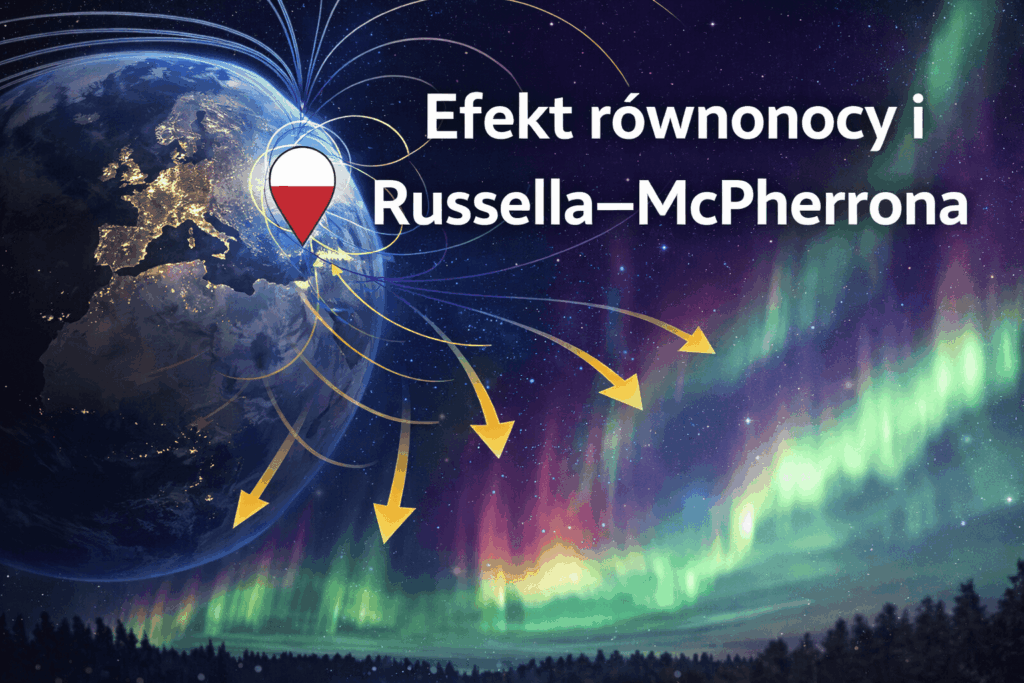
Aurora seasonality
Why aurora activity can be stronger around the equinox
In a separate article I explain why the periods around March and September statistically favor stronger geomagnetic activity more often. It is useful context when you wonder why the aurora is discussed so frequently near the equinox and Russell–McPherron effect.
Aurora in September 2026: is it worth watching?

Yes — September is one of the months when it is worth checking space weather regularly. The equinox itself does not cause the aurora. For observations in Poland you still need suitable solar-wind parameters, an interplanetary magnetic field with a favorable Bz, sufficiently strong geomagnetic activity and, of course, clear, dark skies.
Use the aurora radar and the monthly guide Northern Lights in Poland — September 2026on an ongoing basis. In the monthly sky calendar the aurora is one of several elements; detailed Kp, Bz, solar-wind and cloud-cover data are available in the radar and the monthly aurora guide.
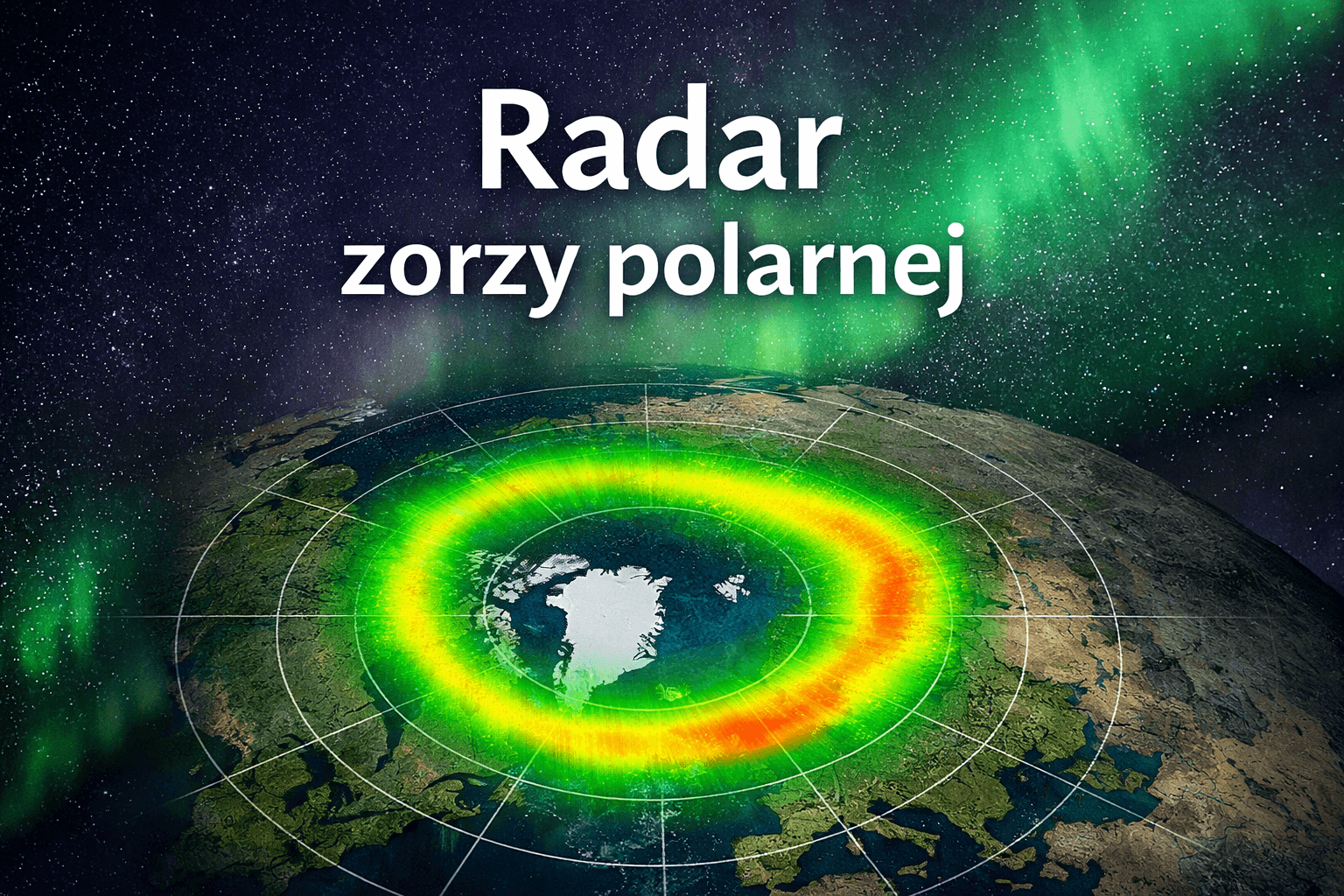
AURORA RADAR
Observing tool
Aurora radar: choose a location and check conditions
Choose an aurora radar for Poland, Iceland, Norway and other locations. Open the conditions map, parameter explanations or aurora alerts.
Open the radar
NORTHERN LIGHTS
September 2026
Northern Lights in the UK September 2026 — when and where? Radar and forecast
Northern Lights in Poland September 2026: check when the chances are highest, how the Russell–McPherron equinox effect works and where to observe. Live radar and alerts.
Check the forecastNeptune at opposition in September 2026
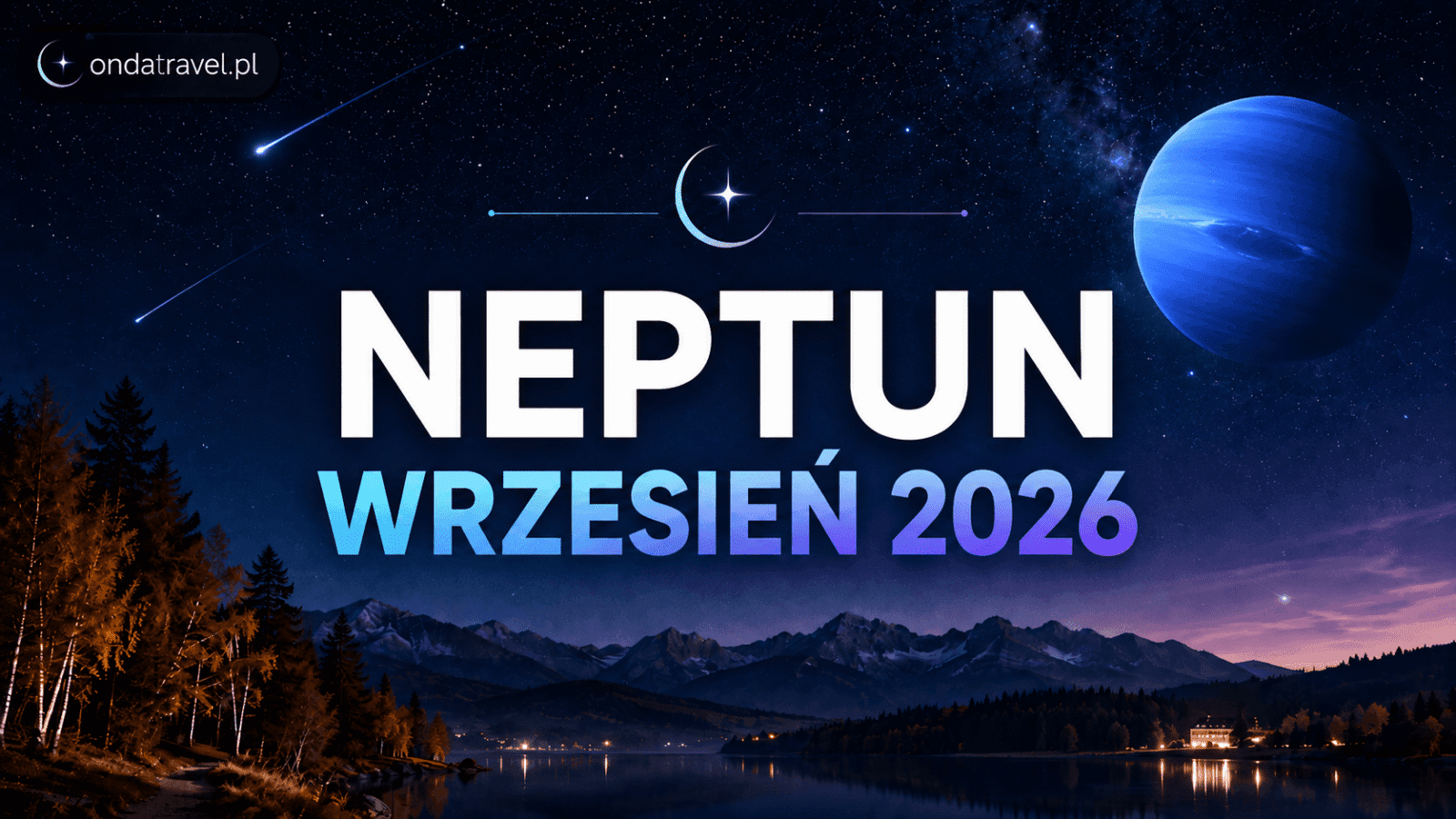
Around the night of 25/26 September, Neptune reaches opposition. For an observer in Poland, the moment falls on 26 September. Opposition means that the planet lies on the opposite side of the sky from the Sun and is available for observation for much of the night.
Do not, however, expect a bright “blue star” visible without equipment. Neptune is not a naked-eye object. You need at least good binoculars under a dark sky, although a telescope and an up-to-date sky chart are much more convenient. In a small telescope the planet appears as a very tiny bluish point or disk. If you see a bright point and are unsure whether it is a planet, satellite, aircraft or Starlink, our What Is That Light in the Sky? guide offers a quick comparison of the most common possibilities.
GUIDE
What Is That Light in the Sky? Identify Starlink, Satellites, Planes and More
Identify a strange light in the night sky by its movement, blinking, color and duration. Compare Starlink, satellites, ISS, planes, drones, meteors and more.
The Full Moon occurs on the same day, so 2026 does not provide an ideal dark background. Even so, the opposition is a good reason to try to find the most distant Solar System planet accessible to amateur telescopes.
Key rocket launches and space missions in September 2026

September 2026 will be interesting not only in the night sky but also in spaceflight. The calendar includes both rocket launches to the International Space Station and important stages of interplanetary missions. Below we show only the largest events that currently have an official date, a NET window or a confirmed month.
Schedule status: 14 August 2026. Rocket launch dates may change because of weather, technical problems, conditions at the spaceport or mission-schedule changes. The abbreviation NET means “No Earlier Than”.
| Date / window | Agency / operator | Mission | Why is it worth following? |
|---|---|---|---|
| 3 September | ESA + JAXA | BepiColombo | Separation of the Mercury Transfer Module. This is the first key step in the final sequence of the spacecraft’s arrival at Mercury. |
| 9 September | Roscosmos | Progress 96 | Planned launch of an uncrewed cargo spacecraft from Baikonur to the International Space Station. |
| NET 12 September | NASA + SpaceX | Crew-13 | Another crewed Crew Dragon flight to the ISS. NASA currently lists the date as no earlier than 12 September. |
| 15 September, 03:21 CEST | ESA / Avio | FLEX + Copernicus Sentinel-3C | The two satellites will launch together on a Vega-C rocket from Kourou. Liftoff is scheduled for 14 September at 22:21 local time in French Guiana, which is already 15 September in Poland. |
| September 2026 | ESA + Chinese Academy of Sciences | SMILE | After instrument commissioning is complete, the joint European-Chinese mission is expected to begin regular observations of the magnetosphere, solar wind and auroras. |
When does SpaceX launch in September 2026? The most important September SpaceX flight currently officially listed on NASA’s calendar is Crew-13, NET 12 September. Operational Falcon 9 flights, including further Starlink missions, may receive precise dates much closer to launch, so we do not list unconfirmed dates here.
Of particular interest to OndaTravel readers is SMILE. The mission will observe the global response of Earth’s magnetosphere to the solar wind while simultaneously imaging auroras in ultraviolet. This directly connects space research with what we monitor in the aurora radar.

Tool
How to use the live aurora radar
Open the aurora radar and quickly switch between locations for United Kingdom, Iceland, Norway and other places. This is the quickest way to check where it makes sense to look at the sky at all before you begin analyzing detailed parameters.
Schedule sources: NASA Launch Schedule, ESA – BepiColombo, ESA – FLEX and Sentinel-3C and ESA – SMILE.
Other interesting sky events in September 2026
The September calendar also includes several simpler Moon-planet pairings. On 6 September the Moon will be near Mars, and on 8 September near Jupiter. These are good events for beginners because the bright Moon and planets are easy to locate without specialist equipment.
On 14 September there is a close encounter and, locally, an occultation of Venus by the Moon. Part of the event takes place in the daytime sky. Do not search for Venus with binoculars or a telescope near the Sun unless you have experience and full control over where the instrument is pointed. Accidentally pointing optics at the Sun can cause immediate and permanent eye damage.
Southern Taurid activity also begins around 20 September. We do not, however, call this a “September maximum” — the main peak of this shower does not occur until November. In September it is simply another source of occasional, slower meteors.
Three ready-made observing plans for September 2026

Plan 1: observing with the naked eye only
Choose the night of 9/10 September and a location at least a dozen to several dozen kilometers from the largest sources of light pollution. Arrive before dusk, find a safe place, turn off bright screens and watch a broad part of the sky for at least an hour. You do not need to follow a radiant map the entire time — darkness, patience and a wide field of view matter most.
Plan 2: you want to photograph the night sky
The best nights are around 10–12 September. Frame a wide view that includes both sky and landscape. Take a series of photographs instead of one exposure. This increases your chance of recording a meteor while also letting you choose the cleanest Milky Way frames later.
Plan 3: you have binoculars or a telescope
Use the first half of the month for star clusters and brighter deep-sky objects while the Moon is not a problem. Toward the end of the month, prepare a chart of Neptune’s position and try to locate the planet near opposition. The Full Moon on 26 September will make faint targets more difficult, so do not expect ideal contrast.
What should you watch out for during September observations?
- ZHR does not mean the number of meteors you will see. It is a standardized value for ideal conditions.
- The equinox does not guarantee an aurora. Greater seasonal potential does not replace the current geomagnetic forecast.
- The Full Moon brightens the entire sky. On 26 September faint objects will be much more difficult.
- Neptune requires equipment and a chart. It is not a planet visible to the naked eye.
- Venus in the daytime sky requires special caution. Do not point optics near the Sun unless you have the necessary experience.
- Weather beats the calendar. A clear night one day earlier can be better than the theoretical peak under clouds.
If the forecast for the main night is poor, do not give up automatically. Meteors and most events can also be observed on neighboring days. When planning a trip, it is always worth having a backup night and a second observing location.
FAQ: sky events September 2026
What can you see in the sky in September 2026?
The key events are the September ε-Perseid maximum on 9 September, New Moon on 11 September, autumn equinox on 23 September, Neptune at opposition and Full Moon on 26 September. It is also worth monitoring the possibility of aurora.
When is the Full Moon in September 2026?
The Full Moon occurs on 26 September 2026; check the exact local time for your location.
When is the New Moon in September 2026?
The New Moon occurs on 11 September 2026; check the exact local time for your location. The nights around this date are the best dark-sky window of the month.
When is the September ε-Perseid maximum in 2026?
The peak falls on 9 September at around 18:00 UT, ; convert from UTC to plan for your location. The shower is active from 5 to 21 September.
When is the autumn equinox in 2026?
The autumn equinox occurs on 23 September 2026 at 00:05 UTC.
Can you see the aurora in September 2026?
Yes, it is possible when geomagnetic activity is strong enough and the sky is clear. The equinox itself does not guarantee an aurora.
Can Neptune be seen with the naked eye?
No. Neptune is too faint for the unaided eye. You need binoculars or a telescope and a sky chart to observe it.
What is the best night for observing in September 2026?
For meteors, the best choice is the night of 9/10 September; for dark-sky photography, the nights of 10/11 and 11/12 September are also very good.
Astronomical data sources
Meteor-shower dates and ZHR parameters were verified against the International Meteor Organization 2026calendar. The equinox time was checked against NASA data, and Moon-phase times for Poland against the Timeanddate calendar for Warsaw. Times and conditions may still require local adjustment when planning a specific observation.
Read next: upcoming sky observations
September is a bridge between the summer meteors and the autumn Draconids, Orionids and aurora season. If you are planning the next month, go straight to the October 2026 sky events calendar. For comparison, you can also return to sky events in August 2026.

OCTOBER 2026
Monthly guide
Sky events in October 2026 — Draconids, Orionids and Saturn
Sky events in October 2026: Saturn, Draconids, New Moon, Orionids, Taurids, Full Moon, space missions and the best observing nights.
Open the guide
AUGUST 2026
Monthly guide
Sky events in August 2026 — Perseids and eclipses
Sky events in August 2026: Perseids, shooting-star night, meteor showers, solar eclipse map, lunar eclipse and the Milky Way.
Open the guide



Sorry, the comment form is closed at this time.