
The next major meteor shower is the Leonids, peaking on the night of November 17–18, 2026. The first-quarter Moon sets before midnight in the UK and central Europe, so the best views come after midnight until dawn. Before that, the weaker Southern and Northern Taurids peak around November 5 and 12 and can produce occasional bright fireballs; the Geminids follow on December 13–14. The Orionids peaked on October 21–22. Local weather, darkness and latitude decide how many meteors you can see. Updated October 22, 2026.
When is the next meteor shower in 2026?
The Leonids are the next major meteor shower, peaking on the night of November 17–18 and best after midnight, once the first-quarter Moon has set, until dawn. The weaker Taurids peak earlier, around November 5 and 12, and the Geminids follow on December 13–14.
The next major shower is the Leonids on the night of November 17–18; the Orionids already peaked on October 21–22. Check the local time, weather and Moon for your location before you go out. If a moving point catches your eye and you are not sure whether it was a meteor, satellite, aircraft or Starlink, use our guide to identify an unfamiliar light in the sky.
Key meteor nights in the second half of 2026
NEXT MAJOR PEAK
Leonids 2026
Peak: night of November 17–18 • active November 6–30
The first-quarter Moon sets before midnight, so watch after midnight until dawn. The weaker Taurids peak earlier, around November 5 and 12.
LATER IN 2026
Geminids and Quadrantids
December 13–14, 2026 → January 3–4, 2027
After the Leonids, the next major peaks are the Geminids on December 13–14 and the Quadrantids on January 3–4, 2027.
Dates are based on annual calendars from NASA , the American Meteor Society and the International Meteor Organization. Local viewing conditions depend on the Moon, weather, darkness and your location.
Meteor Shower Calendar 2026 at a glance
- A meteor shower calendar helps you choose the best nights to watch shooting stars in 2026.
- The key factors are the shower peak date, Moon phase, weather, dark skies and whether the best viewing window falls before dawn or after nightfall.
- The remaining 2026 calendar starts with the Taurids (around November 5 and 12), followed by the Leonids on November 17–18, the Geminids on December 13–14 and the Ursids on December 22–23.

Night-sky calendars and observing tools

Check out my YouTube channel and travel with me.
Follow the channel for videos, routes and practical travel inspiration.
Follow me here:
What’s up?
Enjoying my content?
Buy me a coffee at buycoffee.to/ondatravel and support the creation of more travel content.
Your support helps me create more practical guides, videos and travel inspiration.

Upcoming meteor showers in 2026: remaining peak dates
NEXT METEOR SHOWERS IN 2026
Upcoming meteor showers in 2026: remaining peak dates
The upcoming calendar now runs from the Taurids through the Ursids. Use the peak night as a starting point, then check the best local time, Moon and cloud cover for your location.


For the summer archive, see sky events in July 2026 and sky events in August 2026. These archived guides cover the summer observing season: noctilucent clouds, the Milky Way, Moon phases, the Perseids and the August eclipses. For current planning, use the September and October guides below.
Summer 2026 archive
July and August 2026: sky events archive
Revisit the July and August observing calendars for background on summer noctilucent clouds, the Moon, the Milky Way, meteor showers, the Perseids and the August eclipses.
Sky phenomena
Planning your night-sky observations? These monthly guides highlight the most important astronomical events, meteor showers, Moon phases and the best observation windows. Below you’ll find the two most relevant monthly guides for the current period.

SKY PHENOMENA
Monthly guide
Sky events in October 2026: Draconids, Orionids and Saturn
The key sky events of the month, meteor activity, the Moon and practical observation windows.
Read the guide
SKY PHENOMENA
Monthly guide
Sky events in November 2026: Leonids, Taurids and a supermoon
The key sky events of the month, meteor activity, the Moon and practical observation windows.
Read the guideNorthern Lights
Looking for a longer-term Northern Lights outlook? These monthly guides complement the live radar with seasonal conditions, expected aurora activity and practical viewing tips. Below you’ll find the two most relevant monthly forecasts currently available.
NORTHERN LIGHTS
Monthly forecast
Northern Lights — October 2026
A monthly Northern Lights outlook with live-radar context and practical viewing guidance.
Read the guide
NORTHERN LIGHTS
Monthly forecast
Northern Lights — November 2026
A monthly Northern Lights outlook with live-radar context and practical viewing guidance.
Read the guideMeteor Shower Calendar 2026 – peak dates and viewing conditions
In practice, the best nights depend on more than the official peak date. You also need dark skies. A bright Moon can wash out many fainter meteors, so before planning a trip, compare the dates below with the Moon phases.
GUIDE
Moon Phases 2026
Moon Phases 2026: check dates, observation tips and related guides for planning night-sky photography, eclipses and other sky phenomena.
| Meteor shower | Peak night in 2026 | Activity (ZHR) | Best local viewing window | Moon / conditions | Status |
|---|---|---|---|---|---|
| Quadrantids | January 3–4 | up to ~120 | before dawn | full Moon – poor | finished |
| Lyrids | April 22–23 | ~18 | from about 10:30 p.m. until dawn | no significant interference – good | finished |
| Eta Aquariids | May 5–6 | ~50 | before dawn | about 84% – difficult | finished |
| Southern Delta Aquariids | July 30–31 | ~25 | after midnight until dawn | about 98% – difficult | finished |
| Perseids | August 12–13 | up to ~100 | late evening until dawn | about 0% – excellent | finished |
| Draconids | October 8–9 | <10 | after nightfall | variable | finished |
| Orionids | October 21–22 | ~20 | after midnight until dawn | waxing gibbous Moon – reduced visibility | finished |
| Leonids | November 17–18 | ~15 | after midnight until dawn | about 55%, Moon sets before midnight – good | next |
| Geminids | December 13–14 | up to ~150 | evening and night | about 21% – very good | strong finale to the year |
| Ursids | December 22–23 | ~10 | late evening until dawn | about 97% – difficult | later |
Shooting stars in 2026: upcoming dates
The next listed maxima are the Leonids on November 17–18, Geminids on December 13–14 and Ursids on December 22–23. Compare each peak with the local Moon, cloud cover and darkness before choosing your observing night.
The peak has already passed.
The spring peak is already behind us.
The July peak has already passed.
The peak has passed; the Perseids were active until August 24.
One of the strongest meteor showers of the year.
The spring observing season is now part of the 2026 archive. You can compare May conditions in the guide to sky phenomena in May 2026, and revisit the earlier bright-night season in the summary of sky events in June 2026. After the August Perseid maximum, attention shifts to the later meteor showers of 2026.

SKY PHENOMENA
Sky events in June 2026: Venus with Jupiter, NLC and Bootids
June 2026 in the sky: Venus and Jupiter, the young Moon with planets, noctilucent clouds, Bootids, solstice and full Moon.
Southern Delta Aquariids 2026 – when is the peak and are they worth watching?
The Southern Delta Aquariids reached their 2026 maximum on the night of July 30–31. Bright moonlight made conditions difficult, so many fainter meteors could disappear into the bright sky background.
| Peak | night of July 30–31, 2026 |
|---|---|
| Best time | after midnight and before dawn |
| Activity | around ZHR 25 under ideal conditions |
| Moon | about 98% – difficult conditions |
| Verdict | worth trying, but do not expect a display comparable with the Perseids |
For 2026, the Perseid maximum on August 12–13 offered the strongest summer observing window. The Southern Delta Aquariids marked the earlier part of the summer meteor season.
When are the Eta Aquariids in 2026?
The Eta Aquariids reached their 2026 peak on the night of May 5–6. This shower has high potential, but it is usually less impressive from higher northern latitudes than from lower latitudes, and in 2026 bright moonlight made conditions even more difficult.
To see whether this shower was worth watching from your location, read the full guide to the Eta Aquariids 2026: when to watch the May 5–6 peak. It includes a realistic assessment of the conditions, the effect of moonlight, the best pre-dawn hours and practical advice for observing in the field.

Meteor observing
Eta Aquariids 2026: when to watch the May 5–6 peak
See when the May 5–6 peak occurs, how much the bright Moon interferes and whether it is worth planning a pre-dawn observing session from your location.
When are the Lyrids in 2026?
The Lyrids in 2026 were best observed from late evening on April 22 until dawn on April 23. The predicted maximum occurred on April 22 at about 19:40 UTC, and the radiant reached a useful altitude at around 10:30 p.m. For observers at similar northern latitudes, the most practical window was therefore the night of April 22–23, with no significant interference from moonlight.
GUIDE
Lyrids 2026: night of April 22/23 – when and where to watch?
Lyrids 2026: peak on the night of April 22/23, ZHR up to 18. Check when and where to look and how to prepare for observing.
This is one of the more enjoyable spring showers. Activity is not record-breaking, but the Moon conditions in 2026 were quite good, so under a dark sky the Lyrids had the potential to put on a rewarding display.
Perseids 2026 – when is the peak and what time should you watch?
The 2026 Perseid peak fell on the night of August 12–13. It was the most important summer night for shooting stars, and in 2026 there is an extra advantage: the sky was very dark and moonlight barely interfered with observing.
| Perseid peak | night of August 12–13, 2026 |
|---|---|
| When should you start? | late evening on August 12 |
| Best hours | after midnight and before dawn on August 13 |
| Moon | about 0% – excellent conditions |
| Where should you look? | across a wide area of sky, away from city lights |
| Do you need a telescope? | no – meteors are best watched with the naked eye |
This is the short Perseid overview in the shower calendar. For the full peak hours, where to look, Moon conditions and a night-by-night observing plan, see the dedicated Perseids 2026 guide.

PERSEIDS 2026
Perseids 2026: when and where to watch
Peak night, best hours, where to look, Moon conditions and a practical observing plan.
You do not need to look only toward Perseus. The radiant shows the direction from which the meteors appear to originate, but longer and more impressive trails can appear in many parts of the sky. The most important things are a wide field of view and a location as far from artificial light as possible.
The strongest summer observing window in 2026 was the Perseid maximum on August 12–13. The Southern Delta Aquariids at the end of July opened the summer meteor season, while Perseids offered much higher activity.
When are the Geminids in 2026?
The Geminids peak in 2026 on the night of December 13–14. This is one of the strongest meteor showers of the entire year and can often be even more impressive than the Perseids, although it requires winter patience and favourable weather.
Full guide with times, Moon conditions and where to look: Geminids 2026 – night of 13/14 December. A month earlier, on the night of 17/18 November, the Leonids 2026 peak.
Moonlight conditions also look favourable in 2026, so if the sky is clear, the night of December 13–14 could be one of the best opportunities for meteor watching at the end of the year.
Best meteor showers in 2026: which are worth watching?
Perseids (August)
The most family-friendly shower of the year: warm nights, often plenty of meteors and a good chance of bright trails. In 2026, conditions are exceptionally favourable thanks to the dark sky.
Geminids (December)
One of the strongest meteor showers of the year. The downside: cold weather. The upside: often very bright meteors and good activity even from a city, although a dark location will always be better.
Quadrantids (January)
They can be spectacular, but their peak is short. In 2026, bright moonlight made conditions difficult, so they were best treated as a bonus on a clear night.

How to watch meteors – simply and effectively
- Choose a dark location – preferably outside the city, with a wide view of the sky.
- Give your eyes time – allow at least 15–30 minutes without bright screens.
- Use a wide field of view – meteors can appear anywhere in the sky, not only from one point.
- Choose the best time – usually late at night and during the hours before dawn.
- Check the conditions – clouds, fog and atmospheric clarity all matter.
For the darkest possible sky, check the Moon phases and choose nights around the New Moon.
OBSERVING CONDITIONS
Check the Moon, weather and calendar before choosing a night
These three guides help you judge whether a night is worth going out for meteors: check the Moon phase, the shower peak date and other events visible that evening.
MOON
Planning dark nights
Moon phases 2026
New Moon, Full Moon and quarter phases help you choose nights when faint meteors will not disappear in moonlight.
See Moon phases
Where is the storm? Live storm and rainfall radar
Check the storm map and rainfall radar to see where it is raining and whether a storm is moving toward your location.
Check the storm radar
CALENDAR
Observing plan
Astronomical events calendar 2026
Meteors, conjunctions, eclipses and seasonal sky events in one place, making it easier to plan a night under dark skies.
Open the events calendarWeather and cloud cover (Windy): before heading out, check the cloud layer and atmospheric visibility. Even thin cloud and skyglow can make a noticeable difference when watching meteors.
Meteor showers 2026: how to read the calendar and choose the best night
Meteor showers in 2026 are best planned using more than the official peak date. Moon phase, weather and the time of night all make a difference. The most useful approach is to combine the shower peak, a dark sky and a location with a wide view of the sky.
In practice, one calendar is not enough. First check the peak date, then the Moon phases, and finally the cloud forecast. A Full Moon can hide fainter meteors, while a New Moon gives the best conditions for seeing weak trails and observing for longer. That is why Moon phases and meteor showers should always be considered together when planning a night outside.
What does ZHR mean, and why will you not always see that many meteors?
What does ZHR mean? It is the theoretical number of meteors an observer could see in one hour under ideal conditions, with the radiant high in the sky and a very dark observing site. In practice, the number is often lower because of moonlight, city lights, clouds, fog, trees, buildings and eye fatigue.
The meteor radiant is the point in the sky from which the meteors of a particular shower appear to originate. You do not need to look directly at the radiant. It is often better to lie back comfortably and watch as much of the sky as possible, because longer trails may appear farther away from the radiant. Shower activity also matters: the number of meteors changes depending on whether you are close to the peak or near the beginning or end of the active period.
Perseids 2026 and Geminids 2026: which showers matter most?
When are the Perseids in 2026? The Perseids are the most popular summer meteor shower, and every year their peak attracts many observers because August nights are well suited to long viewing sessions. This is a good shower for beginners: all you need is a dark location, a reclining chair, a warm layer and patience. Conditions still depend on the Moon and weather, so check the current Moon phase calendar before heading out.
The 2026 Geminid peak is another major highlight of the year. The Geminids can be among the most active showers, but December means cold weather, less comfortable observing and a greater risk of cloud. Even so, the Perseids, Geminids and Quadrantids are often counted among the major meteor showers of 2026.
When should you watch meteors and how should you prepare for the night?
When should you watch meteors? The best time is when a shower is close to its peak, the Moon is not brightening the sky and the cloud forecast shows long clear spells. Avoid car parks, streetlights and bright phone screens. Give your eyes time: dark adaptation takes anywhere from several minutes to half an hour, so do not judge the conditions too quickly after arriving.
- Location: choose a spot outside the city, with a wide view and no lamps in your field of vision.
- Time: plan at least an hour of observing, because meteors often appear in bursts with quiet intervals in between.
- Comfort: bring a sleeping mat or reclining chair, warm clothes and a flask, especially for winter showers.
- Plan B: check other events in the astronomical events calendar.
How to photograph meteors
How do you photograph meteors? The essentials are a tripod, a wide field of view, a fast lens, manual focus and a long sequence of images. Meteors are unpredictable, so a single exposure is rarely enough. It is better to set the camera to shoot continuously and leave it pointed toward a dark part of the sky, away from the Moon and city glow.
Photographing meteors works best when you scout the location in advance. Look for an interesting foreground, but avoid excessive artificial light. For more detailed camera settings, see the guide to photographing the night sky, Moon, meteors and Milky Way.
Meteors, eclipses and other sky events in one observing plan
A good observing plan does not end with meteors. It is also worth checking solar and lunar eclipses, supermoons, Moon phases and seasonal sky phenomena. For summer 2026, also pay attention to the total solar eclipse on August 12, 2026, one of the most important observing events of the year.
For shooting stars in 2026, the most important date was the Perseid peak on the night of August 12–13. This was the summer maximum most people waited for, but the whole year is worth planning more broadly: from the Lyrids in April, through the Perseids in August, to the Geminids in December. This approach also fits the idea of noctourism: travelling after dark for dark skies, meteors, the Milky Way and the northern lights.
READ NEXT
Meteors, night-sky photography and other phenomena
For observing plans that go beyond a single meteor shower, these guides take you further into photography, eclipses, the summer total solar eclipse and travel after dark.
ASTROPHOTOGRAPHY
Camera settings
How to photograph the night sky and meteors?
A practical guide to tripods, focusing, exposure times and planning photographs of meteors, the Moon and the Milky Way.
See the photography guide
ECLIPSES
Sun and Moon
Solar and lunar eclipses 2026
Dates, viewing locations and the key information about eclipses visible in 2026.
See the eclipse guide
AUGUST 2026
Major event of the summer
Total solar eclipse on August 12, 2026
One of the year’s most important astronomical events: the path of totality, Europe, Iceland, Spain and observing plans.
See the 2026 eclipse
NOCTOURISM
Travel after dark
Noctourism: travel after dark and the night sky
Travel ideas built around dark skies, meteors, the northern lights, the Milky Way and night-time observing.
Explore noctourismOBSERVING PLAN
Guides and tools for planning observations
These guides help you turn an event date into a practical observing plan: when to look, where to check conditions and how to combine the Moon, meteors, eclipses, NLC and the northern lights.
SECTION
Main observing guide
Sky phenomena 2026
A practical starting point for calendars, meteors, the Moon, eclipses, auroras and observing tools.
Back to the sectionCALENDAR
What to see month by month
Astronomical events calendar
The key 2026 dates, sky events and observing shortcuts in one place.
Open the calendarMOON
Planning dark nights
Moon phases 2026
New Moon, Full Moon and quarter phases help you plan observations of meteors, the Milky Way, eclipses and fainter phenomena.
See Moon phasesASTROPHOTOGRAPHY
Photography guide
How to photograph the night sky
Camera settings, practical tips and a starting point for photographing meteors, the Moon, the Milky Way and auroras.
Open the photography guide
NLC
Summer night-sky phenomenon
Noctilucent clouds
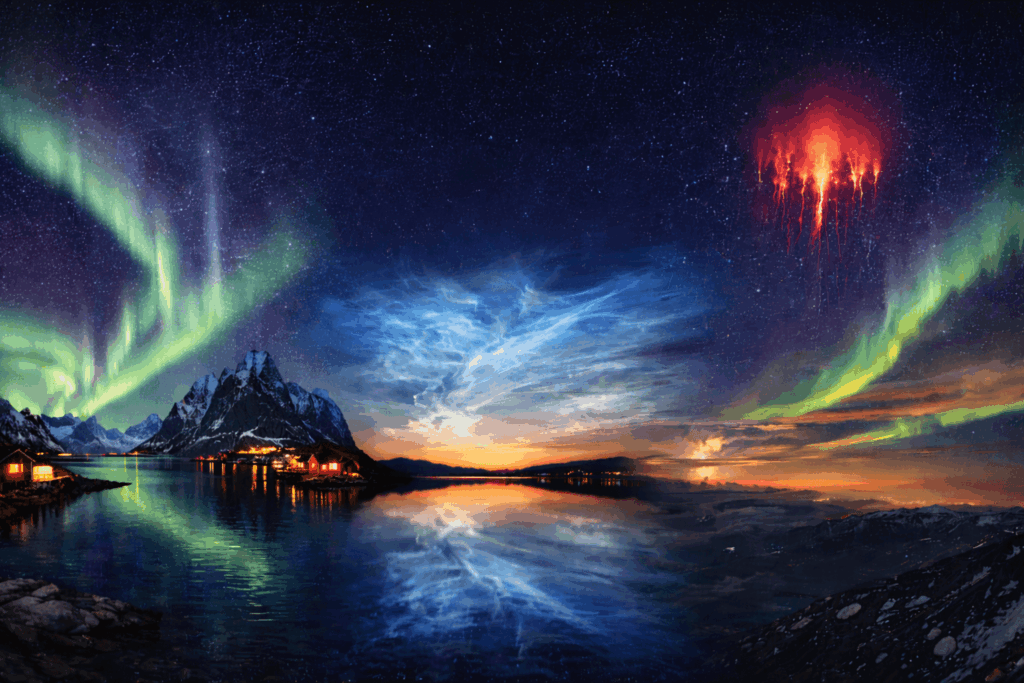
When NLC appear, where to look and how to tell them from ordinary clouds low above the northern horizon.
See the NLC guide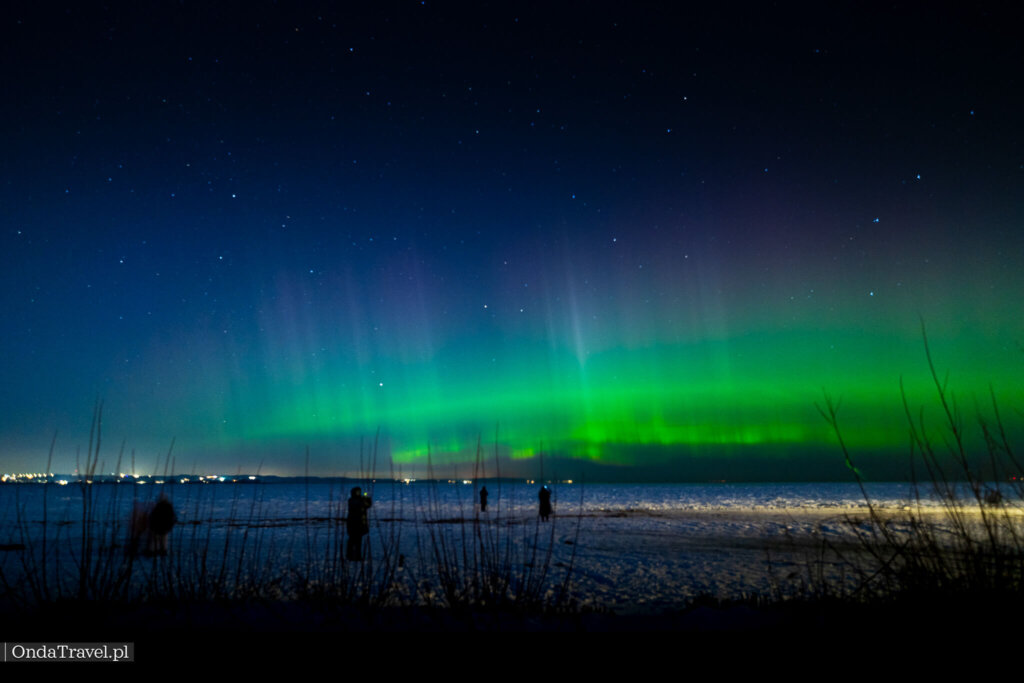
AURORA ALERTS
When to look up
Aurora alerts
A practical shortcut to alerts, forecasts and the moments when it is worth checking the northern horizon.
Check alerts
NLC radar and noctilucent cloud monitor
A quick set of sources for checking whether noctilucent clouds may be visible above the northern horizon tonight.
NOCTOURISM
Travel after dark
Noctourism: travel after dark and the night sky
Ideas for night trips, meteor watching, the northern lights, dark skies, astrophotography and travel planned around phenomena after sunset.
Explore noctourismFAQ: meteor showers
When is the best night for shooting stars in 2026?
The best-known night for shooting stars in 2026 is the Perseid peak on August 12–13. Other important showers include the Lyrids on April 22–23 and the Geminids on December 13–14.
When are the Lyrids in 2026?
The Lyrids in 2026 were best observed from late evening on April 22 until dawn on April 23. The predicted maximum occurred at about 19:40 UTC, and the radiant reached a useful altitude at around 10:30 p.m. Moonlight did not significantly interfere.
When are the Perseids in 2026?
The Perseids reached their 2026 peak on the night of August 12–13. It was one of the best meteor-watching dates of the year because moonlight conditions were excellent.
When are the Geminids in 2026?
The Geminids peak in 2026 on the night of December 13–14. They are one of the strongest showers of the entire year and can produce an impressive display under clear skies.
Can you see shooting stars with the naked eye?
Yes. You do not need a telescope or binoculars to watch meteors. The best approach is simply to watch a wide area of sky. Equipment becomes useful mainly for photography.
Does the Moon phase matter during a meteor shower?
Yes. A bright Moon lights up the sky and hides fainter meteors. The best conditions occur around the New Moon or when the Moon is low below or near the horizon.
How many meteors per hour can you see?
It depends on the shower, location and conditions. ZHR gives the theoretical number of meteors per hour under ideal conditions. In practice, the actual count is often lower, but a good dark sky can still produce an impressive display.
Where is the best place to watch shooting stars?
Choose a dark-sky location away from cities, with an open horizon. The less artificial light and the clearer the air, the more meteors you are likely to see.
Read next
Annual shower data and Moon conditions: IMO / AMS / Timeanddate.
Meteor showers 2026 — at a glance
The best time to watch meteors is around the shower peak, but only when the sky is dark, clear and as far from city lights as possible. Always check the Moon phase as well, because a bright Full Moon can weaken even an active shower.
To combine night-sky observing with travel, explore the North section as well.

NORTH
The North: Iceland, Norway, northern lights and Lofoten
A dedicated OndaTravel section for northern destinations: Iceland, Norway, fjords, Lofoten, the northern lights, ready-made itineraries and travel-planning tools.


Hi, I’m Krystian “dziadzia przewodnik” from OndaTravel.pl!
The North is my greatest passion, but the world is far too beautiful to stay in just one climate. On my blog, I combine the raw landscapes of Iceland and Norway with the exotic energy of Thailand or Vietnam, showing you how to travel authentically — with passion and a camera in hand.
What will you find on OndaTravel.pl?
Visual storytelling: As a photographer and filmmaker, I don’t just describe places — I take you there with professional photos and video.
North expert: Ready-to-use road trip plans for Iceland and Norway, smart tips for budget travel, and my original Northern Lights Radar (locations and forecast).
Travel through the lens of cinema: I track down filming locations — from icy scenes in Interstellar to tropical frames from world cinema.
New direction: Exotic destinations: I love contrast, so the blog is featuring more and more practical knowledge about Vietnam and Thailand. I’ll show you how to find your way around Southeast Asia and come back with your best memories.
P.S. follow me here

