
Sky events in July 2026: observation calendar
July 2026 is a month of summer skies: short nights, the end of the noctilucent cloud season, a very good time for the Milky Way after the new moon, and the beginning of Perseid activity. It is a month with several good observing opportunities, especially if you are planning observations from Poland or a summer trip under darker skies.

NOCTILUCENT CLOUDS
NLC radar and noctilucent cloud monitor
Check the conditions for noctilucent clouds before you go out observing after dusk or before dawn.
In practice, one thing will matter most: the dark window after the new moon. The new moon falls on July 14, so the second half of the month starts very well for stargazers. The end of July, however, will be more difficult for meteor observing because of the bright Moon. The Delta Aquariids and Alpha Capricornids peak close to the full moon, so in 2026 they are best treated as an extra, not the main reason for a night trip.

METEORS
Meteor shower calendar 2026
See the most important meteor showers, peak dates and observing conditions in 2026.
For planning your observations, start with the main guide: Sky events 2026. For July, these guides will also be very useful: astronomical events calendar 2026, meteor shower calendar, Moon phases 2026, how to photograph the night sky and NLC radar.
ASTROPHOTOGRAPHY
How to photograph the night sky?
A practical guide to photographing the Milky Way, the Moon, meteors and stars.
July requires matching your goal to a specific part of the month.
Table of contents

Check out my YouTube channel and travel with me.
Follow the channel for videos, routes and practical travel inspiration.
Follow me here:
What’s up?
Enjoying my content?
Buy me a coffee at buycoffee.to/ondatravel and support the creation of more travel content.
Your support helps me create more practical guides, videos and travel inspiration.

Sky events in July 2026 — key dates

In July 2026, the key highlights will be the final part of the noctilucent cloud season, the new moon on July 14, the best Milky Way window roughly from July 10 to 18, the young Moon after the new moon, and meteor showers at the turn of July and August. For observers in Poland, the best options will be evenings with a clear northern horizon and nights after the new moon, away from city glow.
| Date | Event | Where to look? | Rating |
| early July | end of the NLC season | low northern horizon after dusk or before dawn | a very good summer phenomenon, but weather-dependent |
| July 7, 2026 | last quarter Moon | the Moon visible mainly in the second half of the night | the beginning of better conditions for dark skies |
| July 10–18, 2026 | best window for the Milky Way | southern sky, a dark place outside the city | the best point of the month for photographers |
| July 14, 2026 | new moon | no bright Moon in the night sky | the darkest nights of the month |
| July 15–17, 2026 | young Moon after the new moon | western horizon after sunset | a nice target for landscape photos |
| from July 17 | start of Perseid activity | a wide view of the sky, best after midnight | the first scattered meteors before the August peak |
| July 29, 2026 | full moon | eastern and south-eastern horizon | good for photos, weak for meteors |
| July 29–31, 2026 | Delta Aquariids and Alpha Capricornids | south and south-east of the sky | more difficult because of the bright Moon |
Night sky calendars and observing tools
These guides help you move quickly from a calendar date to a practical observing plan: Moon phases, eclipses, meteors, aurora and other sky events.
Sky events 2026
The main page with the sky events calendar, auroras, eclipses, the Moon and meteors.
Go to the hub
Astronomical events calendar 2026
Dates of the most important events and the best observing windows throughout the year.
Check the calendar
Moon phases 2026
New moon, full moon and the best days for dark skies and night observations.
Check the phases
Solar and lunar eclipses 2026
Dates, visibility and safe observing rules for eclipses.
See the eclipses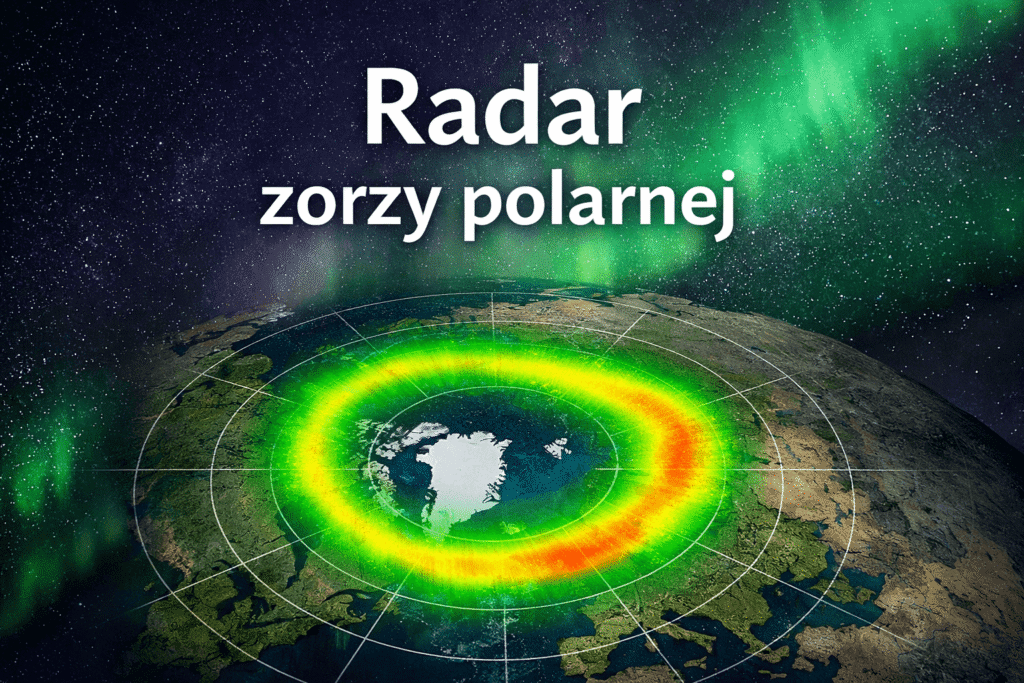

Supermoon 2026
When the supermoon occurs and how to observe it without technical confusion.
See the supermoonsThe best nights for observing in July 2026

The easiest way to plan observations is around three moments: the first clear evenings of the month for noctilucent clouds, the days around July 14 for dark skies and the Milky Way, and July 15–17 for the young Moon above the western horizon. Meteor showers are still worth watching, but in 2026 the end of July will not be ideal because the full moon will brighten the sky.
- Easiest with the naked eye: the young Moon after the new moon and bright summer constellations.
- Best for photos: the Milky Way in the window after the new moon, preferably far from cities.
- Most summery: noctilucent clouds above the northern horizon.
- Most uncertain: the Delta Aquariids and Alpha Capricornids, because the bright Moon will interfere.
- Best for beginners: a walk after sunset with a view to the west and north.
How to use this calendar
- a quick table with the key dates of July 2026,
- a description of the best nights for dark skies and the Milky Way,
- an explanation of when to look for noctilucent clouds,
- a practical look at the Delta Aquariids, Alpha Capricornids and the first Perseids,
- Moon phases and their impact on observations,
- ready-made observing scenarios: city, beach and dark sky,
- an FAQ at the end of the article.
Noctilucent clouds in July 2026

July is still a very good time for noctilucent clouds, although the season is slowly moving toward its end. NLCs look like delicate silver-blue streaks, waves or web-like structures low above the northern horizon. They are most often searched for after dusk, when ordinary clouds are already dark, or before dawn, when the northern horizon begins to turn cool and bright.
The most important condition is an open view to the north. NLCs can also be visible in the city, but a beach, pier, lake, open field or viewpoint without trees and tall buildings works best. It is worth taking a phone photo in night mode — the camera often reveals delicate structures faster than the eye.
New moon on July 14, 2026 and the best dark nights

The new moon on July 14, 2026 is the most important point of the month for anyone who wants to photograph stars, the Milky Way or simply see more of the summer sky. A few nights before and after the new moon offer the best conditions, because the Moon does not brighten the sky for most of the night.
In Poland, July still has fairly short nights, especially in the north of the country, but after mid-month it becomes easier than in June. You gain the most by leaving the city. Even 20–30 km from a large urban area can make a huge difference, especially when photographing a wide frame with the southern sky.
For observing the Milky Way, choose a place with an open view to the south. Beaches away from resorts, fields, forest clearings, dark lakes and mountain passes work best. A lighthouse, tree, tent, ruins, shoreline or human silhouette can work well in the frame — then the photo becomes more travel-like, natural and rooted in the place.
Young Moon on July 15–17, 2026

After the new moon, it is worth looking low above the western horizon. The young Moon returns as a thin crescent and looks very good in the landscape. You do not need a telescope, but a good location helps a lot: the lower you can see the horizon, the better your chance of a successful frame.
It is best to go out about 30–60 minutes after sunset. Under clear skies, the thin lunar crescent will appear against the bright twilight. You can take a photo with a phone, but set the focus manually on the Moon or on the distant horizon. Avoid overexposure — it is better to take a darker photo and gently brighten it later.
Delta Aquariids and Alpha Capricornids — meteors for late July

At the turn of July and August, two showers that often appear in summer calendars are active: the Southern Delta Aquariids and the Alpha Capricornids. The first shower usually produces more faint meteors, while the second is known for slower and sometimes brighter events. In 2026, the problem will be the full moon on July 29, so I would not expect a spectacular show.
Still, it is worth looking at the sky — but with realistic expectations. It is best to observe after midnight, block the Moon with a building, tree or slope, and look toward the darkest possible part of the sky. If you are taking photos, use a wide frame, a tripod and a sequence of shots, but remember that a bright background will limit the number of meteors captured.
For most people, late July will be a good warm-up before the August Perseids. Individual Perseids may appear as early as mid-July, but their true peak will come in August — in 2026 under exceptionally favorable dark-sky conditions.
Planning August observations? Save the dedicated Perseids 2026 guide with the exact peak night, best hours and where to look.

GUIDE
Perseids 2026: When and Where to Watch the Meteor Shower
Perseids 2026: best night, peak time, where to look, Moon conditions and practical viewing and photography advice for your location.
Full moon on July 29, 2026

The full moon on July 29, 2026 will be easy to observe and good for landscape photos, but poor for meteors and the Milky Way. The bright Moon acts like a natural lamp: it looks beautiful low above the horizon, but washes out fainter stars and meteors.
The most beautiful full moon shots are usually taken at moonrise. Choose a place where you can combine the lunar disk with a landscape: the sea, a cliff, a lighthouse, a castle, a church tower or a city skyline. A longer focal length works best for this kind of frame, but a phone can also manage if you treat the Moon as part of the scene rather than the only subject of the photo.
Three ready-made observing scenarios for July 2026

Scenario 1: city and a walk after sunset
Choose a place with an open view to the west and north. First look for the young Moon, then check the northern horizon for noctilucent clouds. This is the simplest plan for people who do not want to travel far.
Scenario 2: beach, lake or open field
This is the best setup for NLCs and summer frames. Water gives a clean horizon, and reflections can add atmosphere to photos. Take a warmer sweatshirt, because even in July, a night by the water can be cool.
Scenario 3: dark sky and the Milky Way
The best nights fall around July 14. Leave the city, check cloud cover and choose a place with an open view to the south. This is more of a photography plan than a walking plan, but it gives the biggest reward.
What to watch out for in July 2026?
It is not worth expecting a major meteor shower. Late July is active, but the full moon will strongly worsen conditions. Aurora in Poland is possible only during strong geomagnetic activity, although during strong solar activity it is always worth following alerts. The most realistic plan for July is: dark nights after the new moon, NLCs with a good horizon and the first meteors before the August Perseid peak.
It is worth planning the next month: August will bring the Perseids under very good conditions, a total solar eclipse on a route through Greenland, Iceland and Spain, and a partial lunar eclipse. That is why July can be treated as calm preparation for the strongest month of the summer sky.It is worth planning the next month: August will bring the Perseids under very good conditions, a total solar eclipse on a route through Greenland, Iceland and Spain, and a partial lunar eclipse. That is why July can be treated as calm preparation for the strongest month of the summer sky.
FAQ: sky events in July 2026
Sky events in July 2026: shooting-star night, meteors and noctilucent clouds
Sky events in July 2026 are not only the full moon, new moon and the Milky Way. It is also a good moment to prepare for phrases many people search for in summer: shooting-star night 2026, shooting stars 2026, meteor shower 2026 i meteor showers 2026.
If you are asking, when is shooting-star night 2026 or more briefly: when shooting-star night 2026, the most important peak falls in August during the Perseids. July is still a very important preparation month, because at the end of the month the Delta Aquariids, Alpha Capricornids and first Perseids 2026.
Shooting stars 2026 and meteor shower 2026 in July
A colloquial phrase also often appears in search: meteorite shower 2026. Astronomically, it is more correct to speak about meteors — bright streaks visible when small particles of matter enter the atmosphere. In July, the best results come from dark locations, no city lights and nights as close as possible to the new moon.
That is why it is worth combining the July observing plan with the meteor calendar and Moon phases 2026. This makes it easier to choose a night when shooting stars in 2026 will not disappear in moonlight or city lights.
Noctilucent clouds today and noctilucent cloud radar
July is also the final part of the noctilucent cloud season. If you are interested in noctilucent clouds today, it is worth checking before you go out noctilucent cloud radar and NLC radar. NLC clouds are most often visible low above the northern horizon after dusk or before dawn.
Which sky events are worth observing in July 2026?
In July, the most important events are noctilucent clouds, the Milky Way, meteor showers at the end of the month and observing the Moon in the right phases.
Will the Milky Way be clearly visible in July 2026?
Yes, the best conditions fall on nights close to the new moon, away from city lights and with good air transparency.
When is the best time to look for noctilucent clouds?
It is best to look low above the northern horizon after dusk or before dawn, when the Sun is already below the horizon but still illuminates the upper layers of the atmosphere.
Are July meteors visible with the naked eye?
Yes, some meteors can be observed without equipment. The most important things are a dark place, a wide field of view and patience.
Do you need a telescope to observe the July sky?
No. Most of the described events are best observed with the naked eye or binoculars. A telescope is useful mainly for the Moon and selected objects.
Where should you check conditions before observing?
Before going out, it is worth checking cloud cover, the Moon phase, the NLC radar, the meteor calendar and local light conditions.
Read more
If you are planning more nights under the sky, also check the related OndaTravel guides — from aurora to Iceland, northern directions and practical observing tools.
Planning observations beyond the summer holidays? Autumn nights become longer and darker. September brings the equinox and the start of a stronger aurora season, while October adds the Draconids, Orionids, Taurids and Saturn. Check the next monthly calendars and plan the rest of the observing season.
Sky phenomena
Planning your night-sky observations? These monthly guides highlight the most important astronomical events, meteor showers, Moon phases and the best observation windows. Below you’ll find the two most relevant monthly guides for the current period.

SKY PHENOMENA
Monthly guide
Sky events in October 2026: Draconids, Orionids and Saturn
The key sky events of the month, meteor activity, the Moon and practical observation windows.
Read the guide
SKY PHENOMENA
Monthly guide
Sky events in November 2026: Leonids, Taurids and a supermoon
The key sky events of the month, meteor activity, the Moon and practical observation windows.
Read the guideNorthern Lights
Looking for a longer-term Northern Lights outlook? These monthly guides complement the live radar with seasonal conditions, expected aurora activity and practical viewing tips. Below you’ll find the two most relevant monthly forecasts currently available.
NORTHERN LIGHTS
Monthly forecast
Northern Lights — October 2026
A monthly Northern Lights outlook with live-radar context and practical viewing guidance.
Read the guide
NORTHERN LIGHTS
Monthly forecast
Northern Lights — November 2026
A monthly Northern Lights outlook with live-radar context and practical viewing guidance.
Read the guide
How does the aurora form?
A simple explanation of the aurora mechanism and solar activity.
Read about the aurora
Aurora forecast: how to read the radar?
Kp, Bz, cloud cover and practical reading of aurora conditions.
Read the forecast
Iceland: guides and attractions
Waterfalls, routes, geothermal areas, the south coast and northern skies.
Go to Iceland
Iceland from Gdańsk for a weekend
An idea for a short trip for northern landscapes and night skies.
See the planAuthor
Krystian „dziadzia przewodnik”The North is my greatest passion, but the world is too beautiful to stay in one climate. On my blog I combine the raw nature of Iceland and Norway with the exotic energy of Thailand and Vietnam, showing you how to travel authentically, with passion and a camera in hand.