Most Common First-Trip Mistakes in Iceland
First-trip mistakes – at a glance
Most first-timer problems don’t come from a lack of knowledge — they come from underestimating time and conditions. Google Maps, weather forecasts, and a car’s looks can all be misleading. Here are the seven areas where it shows up most.
- An overly packed route and underestimated drive time
- A car matched to your route, not to its looks
- Clothing that only looks waterproof
- Money and logistics at the gas station
- Food and breaks outside Reykjavík
- Accommodation and camping: where you’re actually allowed to sleep
- Phone, SIM, and offline connectivity
- Mistakes that most often wreck the whole itinerary
- FAQ: first trip to Iceland

Check out my YouTube channel and travel with me.
Follow the channel for videos, routes and practical travel inspiration.
Follow me here:
What’s up?
Enjoying my content?
Buy me a coffee at buycoffee.to/ondatravel and support the creation of more travel content.
Your support helps me create more practical guides, videos and travel inspiration.

An overly packed route and underestimated drive time
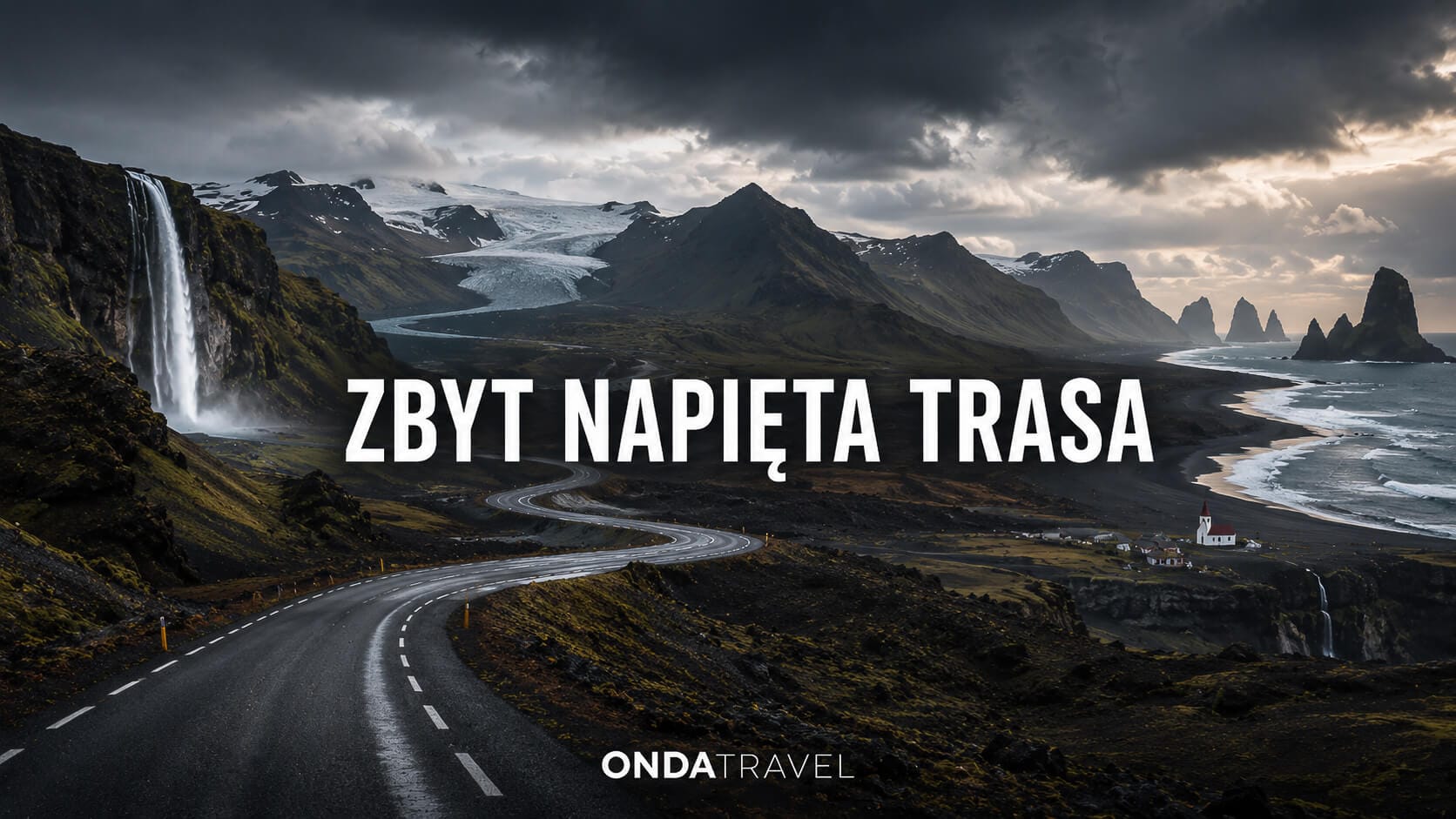
One thing comes up again and again in reports from travelers returning from Iceland: the drive time shown by Google Maps is optimistic. On the stretch from Vík to the Dyrhólaey lighthouse, navigation shows about 20 minutes, but in practice, driving the narrow switchbacks with a line of cars takes closer to 40. Multiplied across a full day of sightseeing, these small underestimates add up into a delay at the last stop of the day.
The second recurring problem is trusting the app’s suggested “fastest” route without checking what type of road it actually is. Travelers describe cases where navigation routed them onto gravel roads or mountain shortcuts in the Westfjords instead of the scenic coastal route — sometimes it turns into an interesting adventure, sometimes it’s a few hours lost on a road that wasn’t built for it. Before you turn off the main Route 1, always check the current condition and surface type on road.is — navigation apps won’t show you that.
READY-MADE ITINERARY
Iceland in 7 days: a route that avoids these mistakes
Most common mistakes come from having no plan at all. A proven 7-day itinerary shows realistic distances, drive times, and the order of attractions.
A third mistake is underestimating the time spent at the attractions themselves, not just getting there. The parking lot near the abandoned Sólheimasandur plane wreck is nearly an hour’s walk one way, and Svartifoss is another 40 minutes off the trail. Travelers who planned “30 minutes for a photo” at Dyrhólaey ended up spending three hours watching the puffins. Those aren’t wasted hours — they just need to be built into your day, instead of treating the schedule like a checklist to tick off.
A car matched to your route, not to its looks

A “4×4 only” sign on a road doesn’t mean any SUV with all-wheel drive will do — it refers to the ground clearance and tires that only certain models have, usually jeeps with high suspension. Travelers who skipped this check ended up stuck on routes their regular crossover was physically unable to handle.
The second recurring issue is tire condition on rental cars — several accounts describe a punctured or already-patched tire that failed on the road, costing hours to reach a repair shop, even though the repair cost was formally the renter’s responsibility. When picking up the car, it’s worth checking the tread yourself and asking directly whether the tires were inspected before the rental — that one question can save you half a day later.
If you’re considering a large campervan, keep in mind that bigger isn’t always more comfortable — larger vehicles are harder to park at popular viewpoints and burn more fuel, and the single-lane tunnels and bridges in the north (e.g. on the Tröllaskagi peninsula) can be a real challenge for them. Your budget can also guide your choice of car — if you haven’t worked it out yet, see the Iceland travel budget, where car rental costs are broken down into concrete figures.
PLANNING & ITINERARIES
Iceland Travel Budget: How Much Does a Trip Cost and How to Save
Wondering how much a trip to Iceland costs? See real weekly budgets for budget, mid-range and comfort travel, plus practical tips to save money.
Clothing that only looks waterproof
One of the most common traveler regrets is a jacket that turns out to be waterproof in name only once it hits Iceland. Membranes lose their effectiveness after years of use, and the gap between “water-resistant” and “waterproof” shows up after the first hour at Seljalandsfoss or Gljúfrabúi, where the waterfall’s mist soaks straight through. The same goes for rain boots and pants — several accounts describe discovering a leak only once on the road, with a rescue via a wash-in waterproofing treatment (like Nikwax) bought at a clothing store in Vík and a run through the first self-service laundromat they could find.
A test worth doing before you leave: stand under the shower in your jacket and pants for a few minutes. If water soaks through to the lining, that gear needs re-waterproofing or replacing, not packing for Iceland. Dressing in one layer that’s too thick and stiff (like a ski jacket in summer) can be just as much of a problem as not having enough — taking off one heavy layer loses too much warmth at once, so several thinner layers you can remove one at a time work better. For the complete layering and gear list, including what’s not worth packing, see our separate guide on what to pack for Iceland.
PLANNING & ITINERARIES
What to Pack for Iceland
A complete Iceland packing list: the three-layer system, footwear, car essentials, and mistakes to avoid on your first trip.
Money and logistics at the gas station
Outside Reykjavík, most gas stations (e.g. the N1 chain) are unattended pumps — you pay only by card with an active PIN, with no tap-to-pay or signature option. Cards issued by some banks have the PIN disabled by default, or active only for cash withdrawals, which usually gets discovered at the worst possible moment — on an empty stretch of road, low on fuel, with no alternative station in range. It’s worth activating and testing your payment PIN back home, before you fly.
This is just one piece of the broader payments picture in Iceland — we’ve covered the full rules on cards, cash, VAT refunds, and what fuel actually costs in our guide to payments in Iceland.

PLANNING & ITINERARIES
Money and Payments in Iceland: Cards, Cash, and Tax-Free
Wondering how to pay in Iceland? Learn when to use cards vs cash, avoid the DCC trap, find ATMs, tipping rules, and claim your VAT tax-free refund.
Food and breaks outside Reykjavík
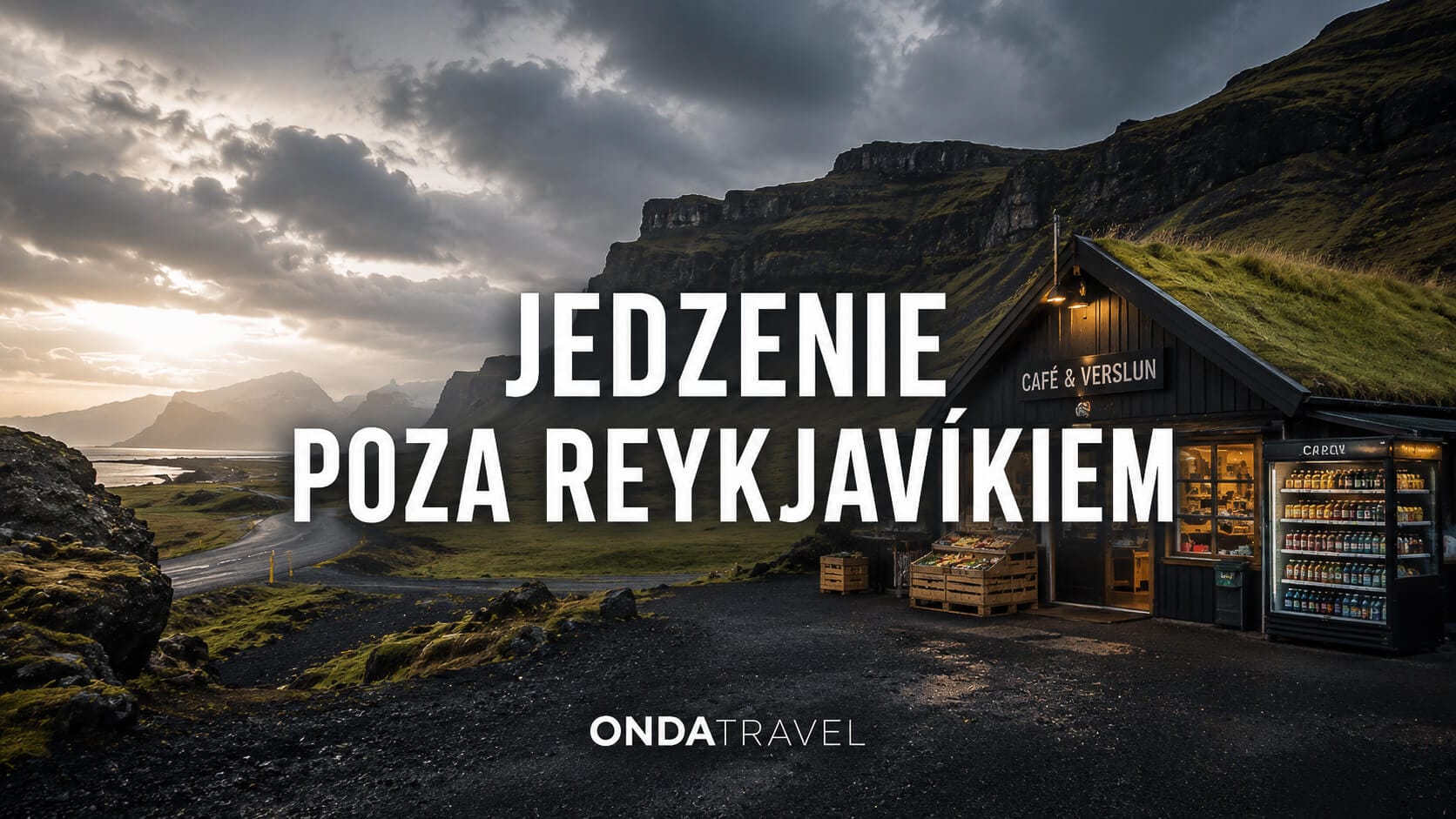
Outside the capital, places close earlier than most tourists expect, and distances that look close “on the map” tend to stretch out with a few more photo stops. Several traveler accounts describe the same scenario: a planned 7 pm arrival turns into getting there after 9 pm on a long, empty stretch of road, where the only thing still open turns out to be a random gas station. The good news — sandwiches from N1 stations get a surprisingly good reputation in these accounts, though after a week of that diet, everyone’s had enough.
A proven habit: keep a stash in the car that doesn’t need refrigeration — bread, peanut butter, honey, bananas — for the day your plan falls apart. The same goes for ice for a cooler — during busy periods it can be sold out everywhere, so it’s better not to plan your entire food strategy around chilled items. Food prices in Iceland vary considerably by location — from gas stations to restaurants — so it’s worth budgeting for that with some room to spare. For a full rundown of real prices and reliable spots, see our guide to where to eat in Iceland.

PLANNING & ITINERARIES
Where to Eat in Iceland: Prices, Local Dishes and Food Halls
Practical guide to eating in Iceland: supermarket and restaurant prices, food halls, the Icelandic hot dog, local dishes, and vegetarian options.
Accommodation and camping: where you’re actually allowed to sleep
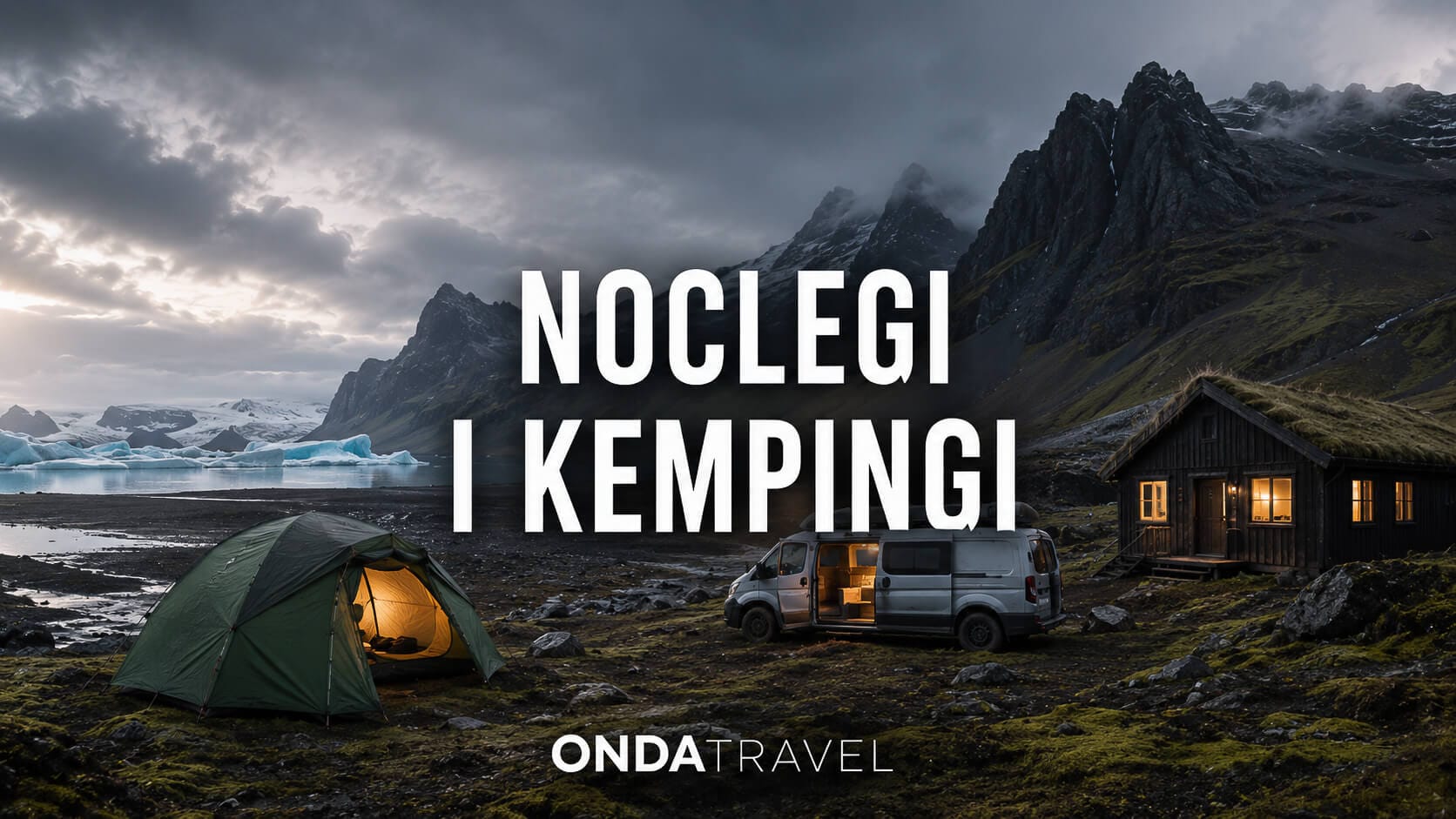
Sleeping in a regular, non-camper car at a campsite is a mistake travelers describe over and over, always with the same summary: cold, uncomfortable, and technically against the site’s rules. Icelandic campsites are set up for tents and campervans, not for sleeping in a car seat — if your budget doesn’t stretch to a camper or a roof over your head, it’s better to book a cheap guesthouse room than to assume a spot in a campsite parking lot will do.
Wild camping outside designated areas — including a scenic-looking pull-off by the road — also regularly ends in a fine or a police order to move on. A rule worth remembering: sleep where the site’s rules explicitly allow it, not wherever no one happens to be looking.
Phone, SIM, and offline connectivity

Buying a SIM card only after landing can be a gamble — during peak season, several travelers describe SIM cards being sold out both at the airport and at the nearest gas stations, with the only solution being a trip to an operator’s store on Monday — losing the first day of the trip to logistics instead of sightseeing. A simpler solution is buying a data eSIM before you fly — it activates automatically after landing and eliminates this problem entirely.
Signal off the main Route 1 can be unreliable, especially in the Westfjords and along the east coast, so it’s worth downloading your route map offline in advance rather than counting on navigation loading on the fly.
Mistakes that most often wreck the whole itinerary
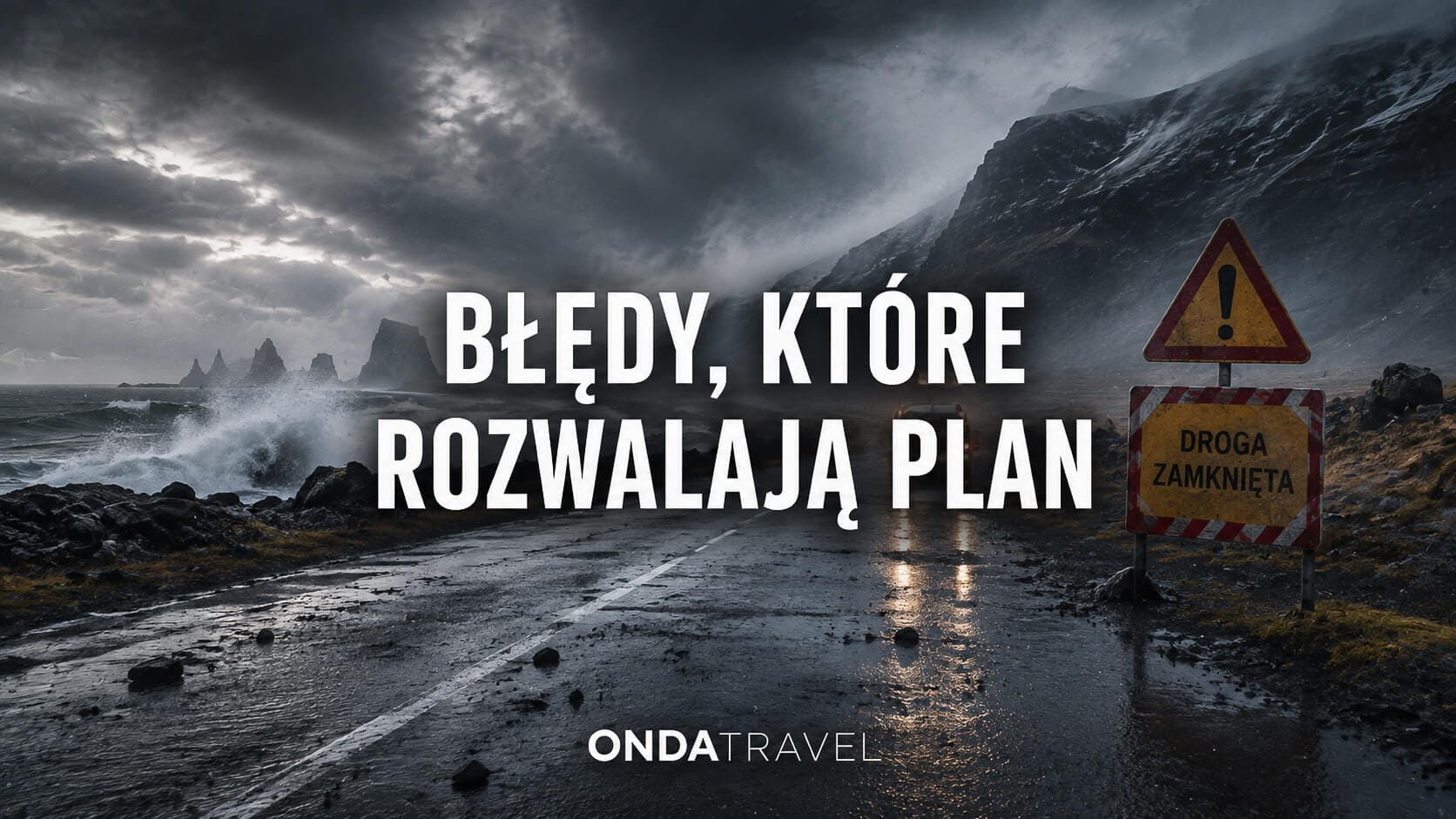
Most problems come from three assumptions: that every day can be filled with the maximum number of kilometers, that a plan from a different season will work unchanged, and that the last stop of the day can be started regardless of the time. These mistakes compound — a delay at the first stop rolls over to the next ones and ends with arriving at your accommodation with no buffer left.
Use ready-made itineraries as a reference point for scale, not as a mandatory checklist. Compare the pace of the 4-day itinerary against the more relaxed 7-day itinerary. Then drop the stops that don’t fit your season, your accommodation, or your driving experience.
A list of nine mistakes that come up again and again among first-timers, gathered from traveler reports:
- Too many kilometers. Every day is built around reaching the last stop no matter the conditions.
- No plan B. One road closure wipes out every booking that follows.
- Choosing a car by its looks. The car isn’t matched to the route, the luggage, or the rental terms.
- Treating summer as a weather guarantee. No clothing to protect against wind and rain.
- Ignoring distances. Navigation shows drive time only, without stops or sightseeing.
- Rigid accommodation. No way to switch regions when a weather warning comes in.
- Relying on a single source. A weather forecast stands in for checking road conditions and alerts.
- Risking it for a photo. Getting too close to the ocean, a cliff, a glacier, or a closed-off area.
- Sleeping in a campervan wherever convenient. A scenic parking spot gets mistaken for a legal place to camp.
Before you pack your suitcase, it’s also worth browsing the hub with the full Iceland topic map — the Iceland travel hub — to pick the region and season that fit you, instead of copying someone else’s itinerary one to one. If you plan to visit any hot spring or public pool, read the geothermal pool rules and etiquette in Iceland first.

ICELAND HUB
Iceland — main guide to routes and regions
The complete Iceland guide: routes, regions, practical guides and the key decisions to make before you go.
FAQ: first trip to Iceland
How long before your flight does your passport need to be valid to enter Iceland?
Schengen area rules require at least 90 days of passport validity from your planned date of departure from the zone. In practice, airlines can be inconsistent about enforcing this threshold, so it’s not worth finding out at the airport — better to renew your passport with a comfortable margin before you fly.
Is a regular SUV enough for roads marked “4×4 only”?
Usually not. An F-road designation or a “4×4 only” note refers to vehicles with the right ground clearance and off-road tires, not just any car with all-wheel drive. Before heading onto such a road, check your rental car’s actual specs, not just whether “4×4” appears in the name.
Does washing your hair at the Blue Lagoon actually make a difference?
Yes — the mineral-rich geothermal water can dry out and stiffen hair, especially long or dyed hair. A proven trick is applying conditioner and tying your hair into a bun before getting in the water, rather than washing it only after your soak.
Does a free parking spot mean there’s no risk of a fine?
Not always. Some free parking lots require you to set a clock showing your arrival time on your dashboard, and going over the time limit still results in a fine even though the parking itself was free. Check the information sign at the entrance, not just whether there’s a ticket machine.
Is it worth spending your whole first trip in and around Reykjavík?
Usually not fully — many travelers regret, in hindsight, staying too long in the capital instead of spending a night closer to the south coast or a glacier lagoon, which would have cut down travel time to farther attractions. A few days outside Reykjavík typically deliver more than a longer stay in the city alone.
Is it better to buy a SIM card on arrival or before you fly?
It’s safer to buy one before you fly. During peak season, physical SIM cards can sell out both at the airport and at nearby gas stations, while an eSIM bought in advance activates automatically after landing with no risk of unavailability.


Hi, I’m Krystian “dziadzia przewodnik” from OndaTravel.pl!
The North is my greatest passion, but the world is far too beautiful to stay in just one climate. On my blog, I combine the raw landscapes of Iceland and Norway with the exotic energy of Thailand or Vietnam, showing you how to travel authentically — with passion and a camera in hand.
What will you find on OndaTravel.pl?
Visual storytelling: As a photographer and filmmaker, I don’t just describe places — I take you there with professional photos and video.
North expert: Ready-to-use road trip plans for Iceland and Norway, smart tips for budget travel, and my original Northern Lights Radar (locations and forecast).
Travel through the lens of cinema: I track down filming locations — from icy scenes in Interstellar to tropical frames from world cinema.
New direction: Exotic destinations: I love contrast, so the blog is featuring more and more practical knowledge about Vietnam and Thailand. I’ll show you how to find your way around Southeast Asia and come back with your best memories.
P.S. follow me here


Author
Krystian „dziadzia przewodnik”The North is my greatest passion, but the world is too beautiful to stay in one climate. On my blog I combine the raw nature of Iceland and Norway with the exotic energy of Thailand and Vietnam, showing you how to travel authentically, with passion and a camera in hand.