Geothermal Pools in Iceland: Rules and Etiquette
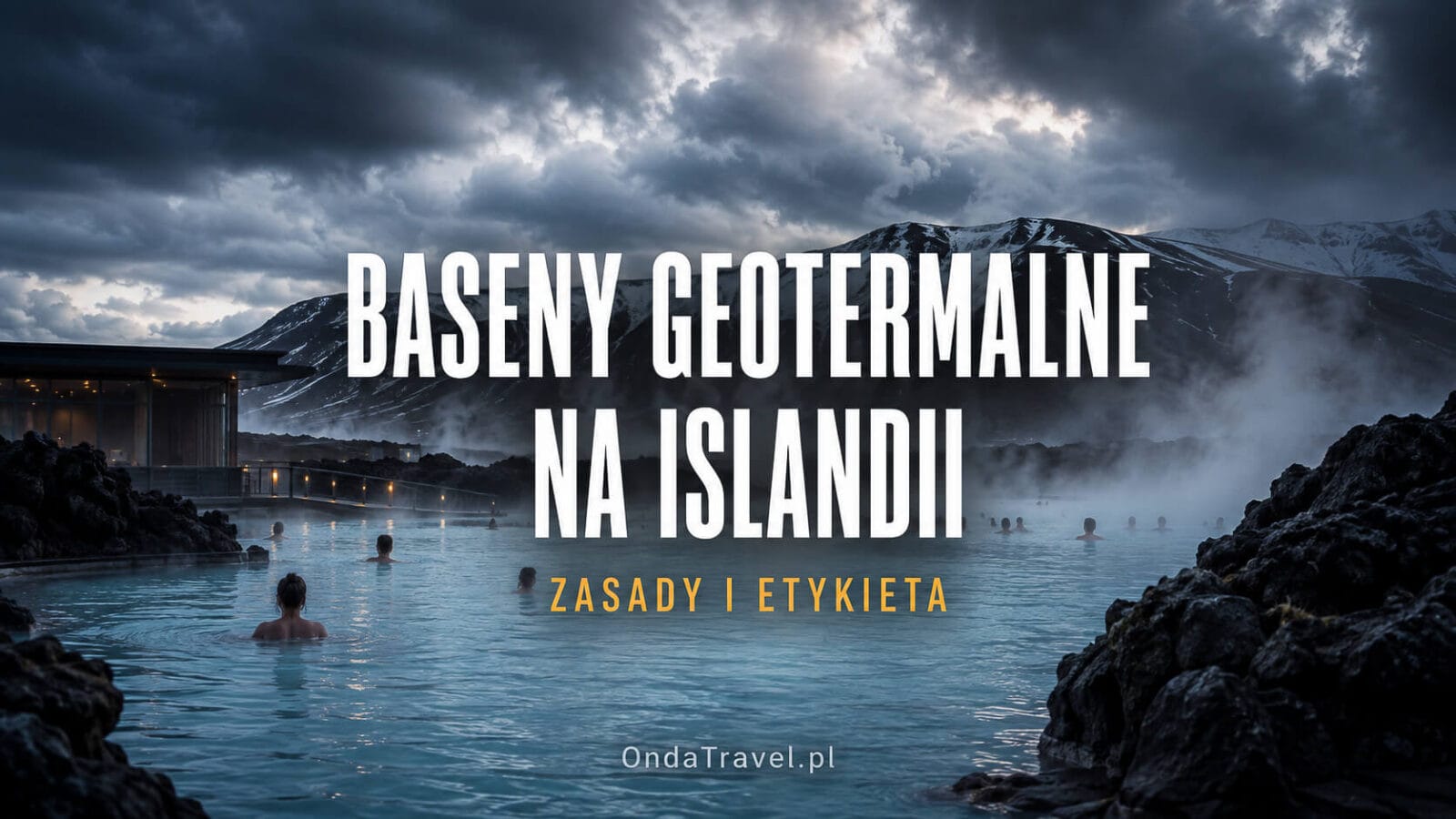
Geothermal pools in Iceland — rules at a glance
Icelandic pools and lagoons follow a few hard rules you cannot get around — the most important being a naked pre-swim shower before entering the water. Here are the key rules before your first visit.
- The naked pre-swim shower — why it’s mandatory, not a custom
- How the washing routine works, step by step
- How much it costs — city pools, Blue Lagoon and Sky Lagoon
- Hot pot temperatures and safety
- Kids in the water — age limits and supervision
- Wild hot springs: what’s allowed and what isn’t
- Changing rooms, phones, shoes — small etiquette that makes a difference
- The most common first-visit mistakes
- FAQ: geothermal pools in Iceland

Check out my YouTube channel and travel with me.
Follow the channel for videos, routes and practical travel inspiration.
Follow me here:
What’s up?
Enjoying my content?
Buy me a coffee at buycoffee.to/ondatravel and support the creation of more travel content.
Your support helps me create more practical guides, videos and travel inspiration.

Soaking in hot water is one of the simplest pleasures of a trip to Iceland, but it comes with rules that catch most first-time visitors off guard — starting with the mandatory naked shower before you get in. This guide brings together the rules for city pools, Blue Lagoon and Sky Lagoon, plus the etiquette for wild hot springs, all in one place. If you’re looking for specific spots to visit, check out our guide to hot springs near Reykjavik — here we focus on how to behave once you’re there.
The naked pre-swim shower — why it’s mandatory, not a custom

This isn’t a local tradition or a suggestion — it’s the law. Iceland’s regulation on hygiene requirements at swimming pools (Reglugerð nr. 814/2010, art. 9) states outright that guests must wash without a swimsuit before entering the pool. The rule applies at every public bathing facility in the country — no exception for tourists.
This applies to Blue Lagoon and Sky Lagoon too, even though both are spas rather than city pools. Blue Lagoon states it plainly in its guest etiquette: everyone must take a naked shower before entering the lagoon. At both places, staff remind guests at the changing-room entrance, and during peak hours someone is often on hand to monitor hygiene compliance. There’s no formal fine for skipping the shower — in practice, staff simply point it out and ask you to wash again before letting you onto the pool deck.
How the washing routine works, step by step
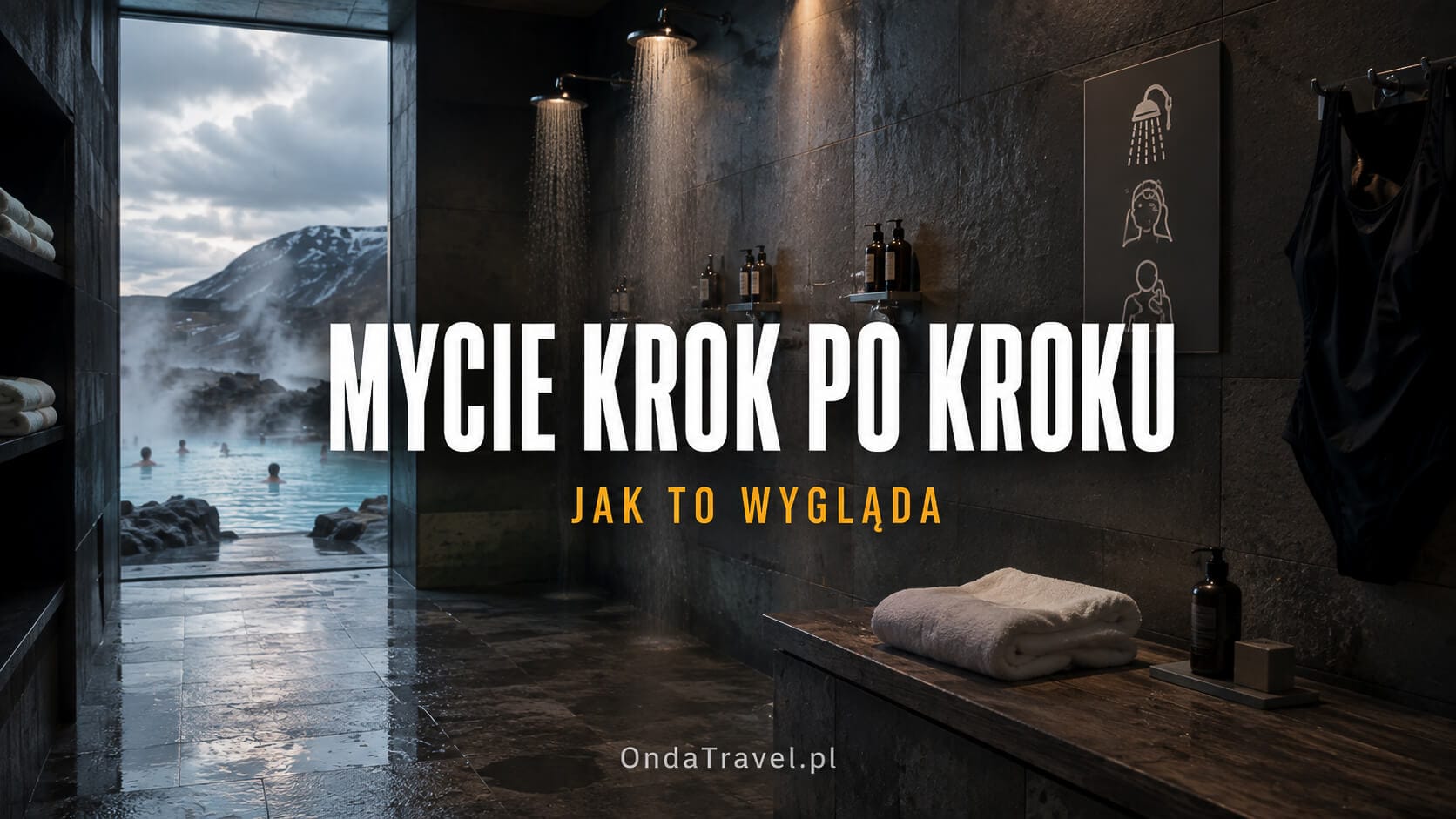
The order is fixed and has no exceptions: take off all your clothes → wash with soap → dry off or don’t → only now put on your swimsuit → head to the pool deck. Washing while wearing a swimsuit is explicitly not acceptable, because the swimsuit covers exactly the areas that need washing. Changing rooms usually display an illustrated poster of a human figure marking the areas that need a thorough soaping: hair, armpits, groin and feet. The poster is a picture in several languages — you don’t need to read Icelandic to understand it.
The reason is practical, not just cultural: Icelandic pools use noticeably less chlorine than most pools in Europe, and thorough pre-swim washing replaces part of that chemistry — it’s part of the water-hygiene system, not a formality. If privacy matters to you, it’s worth checking before your visit: Blue Lagoon offers showers with doors for anyone who wants one, and Sky Lagoon solves this through its ticket tier — Saman is a shared changing room, Sér is a private changing room with its own shower. Standards vary at city pools: some have curtained or enclosed stalls, others only a row of open showers.
How much it costs — city pools, Blue Lagoon and Sky Lagoon
A city pool (Laugardalslaug, Sundhöllin, Vesturbæjarlaug and others) is everyday life for Icelanders: a single adult ticket costs around 1,500 ISK, children aged 10 to 17 pay less, and children up to age 9 get in free with a guardian. You can rent a towel and swimsuit on site, but the cost is close to the ticket price — bringing your own is worth it. Blue Lagoon and Sky Lagoon are a completely different product: spa facilities with architecture, ritual and an in-water bar, where prices start at several thousand ISK for the basic package and rise with the scope of services. Advance booking is mandatory at both — walk-up tickets are practically never available, and the best slots (especially sunset) sell out fastest.

WHERE TO GO
Iceland hot springs: geothermal pools near Reykjavik
You already know the rules and etiquette — now see the actual places. A full list of trusted geothermal pools and hot springs near the capital.
This isn’t a question of which place is better — they’re two different products. For a first trip, a sensible combination is one spa experience plus city pools for everyday visits. For how this fits into your overall trip budget, see our Iceland travel budget guide. It’s also worth knowing that many unstaffed petrol stations and some ticket machines require a card with a PIN — more on that in our guide to money and payments in Iceland. This guide is part of the Iceland travel hub — if you are still planning your trip, start there.

ICELAND HUB
Iceland — main guide to routes and regions
The complete Iceland guide: routes, regions, practical guides and the key decisions to make before you go.
Hot pot temperatures and safety
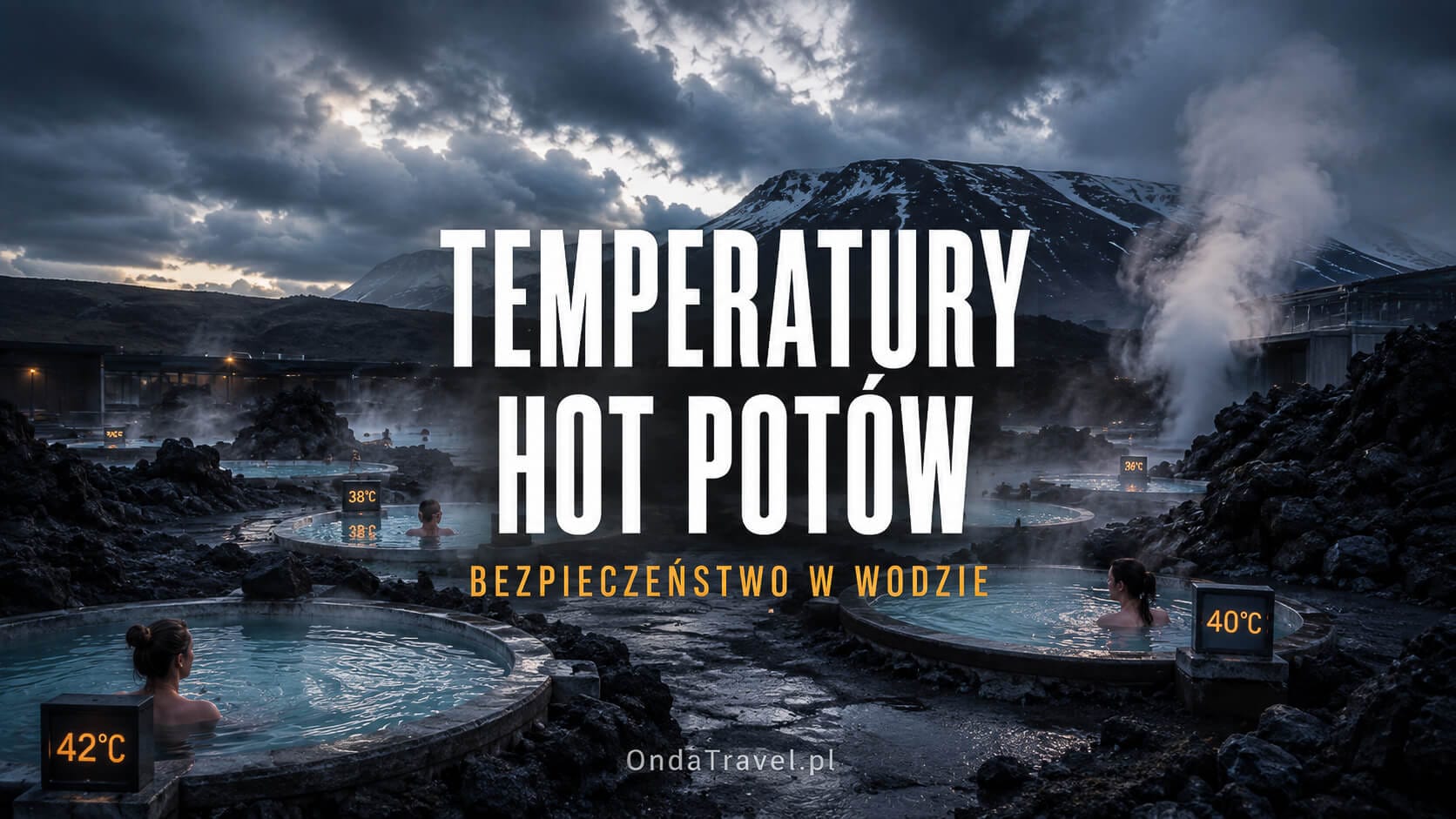
The upper limit is set by law: the same regulation 814/2010 states that hot pot water may not exceed 44°C, and showers and washbasins no more than 43°C. Every hot pot must clearly display its temperature, positioned so bathers can’t miss it — in practice, a city pool will have several hot pots at different temperatures with signs, and you choose based on your own tolerance. At Blue Lagoon the water averages 37–40°C.
There’s no formal time limit in a hot pot, but at 40–42°C common sense suggests 10–20 minutes followed by a break — this is editorial guidance, not a regulation. Drink water, get out at the first sign of dizziness, and don’t combine a long soak with alcohol — Blue Lagoon itself caps guests at three drinks during a lagoon visit.
Kids in the water — age limits and supervision
This is one of the most common “traps” when planning a trip with kids. Blue Lagoon admits children from age 2, though toddlers aged 2–8 must wear armbands, and one guardian can supervise a maximum of two children. Sky Lagoon is far stricter: entry only from age 12, and guests aged 12–14 must be accompanied by an adult — you simply can’t bring a younger child there. City pools are the most family-friendly option: children up to age 9 enter free with a guardian, and larger facilities have wading pools, kids’ pools and slides.
Wild hot springs: what’s allowed and what isn’t
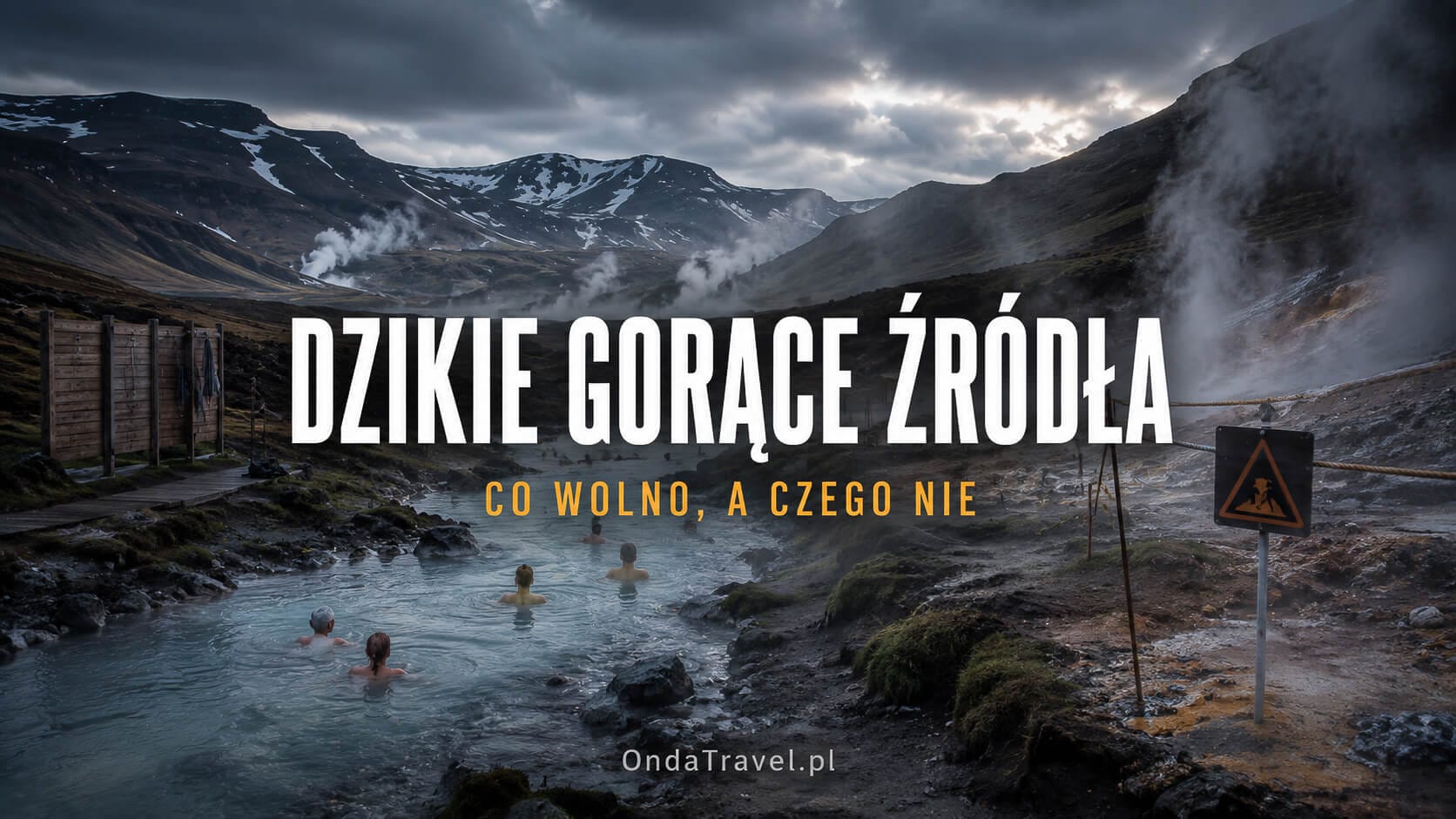
Not every hot spring you see by the roadside is safe to bathe in — and not every one is legal to enter. Three real barriers: most land in Iceland is privately owned and bathing requires the owner’s permission, in geothermal fields like Geysir, Hverir or Seltún the water is near boiling and getting in risks severe burns, and some spots have been closed outright by their owners after years of littering and misuse. A classic example is the Grjótagjá cave near Mývatn, known from “Game of Thrones” — bathing there is banned because, after a series of eruptions between 1975 and 1984, the water heated to over 50°C, and on top of that the land is private. You can visit the site, but you may not enter the water.

TOP ATTRACTIONS ICELAND
Hverir in Iceland (Námaskarð) – Parking and Visiting Guide
Hverir is an active geothermal field at the foot of Námafjall near Lake Mývatn. Check directions, parking, safety, sulphur-mining history and the best nearby attractions.
A legal and free example is Reykjadalur (“Steam Valley”) near Hveragerði — the country’s most popular wild bathing spot in a hot river. The trail is about 6 km round trip, water temperature at the main bathing spots is 36–40°C, and it can run hotter further upstream — check with your hand before getting in. Wooden changing screens line the river every few metres, but there are no showers or lockers. Leaving the trail is dangerous: the ground crust around the springs can be thin, and the water right at the springs exceeds 100°C. Unlike at a pool, you don’t use soap or shampoo at wild springs — this is one reason places like Grjótagjá end up closed.
Changing rooms, phones, shoes — small etiquette that makes a difference

Don’t bring your phone or camera into the changing room — this is a rule at most facilities, Blue Lagoon included, and it’s taken seriously. Even an innocent glance at a message in the changing room can go down badly; leave your belongings in a locker along with your shoes, which you take off before you even enter the changing room. The pool deck calls for calm: no running, no shouting, no jumping into the water — a hot pot is a place for conversation, not play. Tipping isn’t expected in Iceland; service is included in the ticket price, so don’t stress about it.
The most common first-visit mistakes
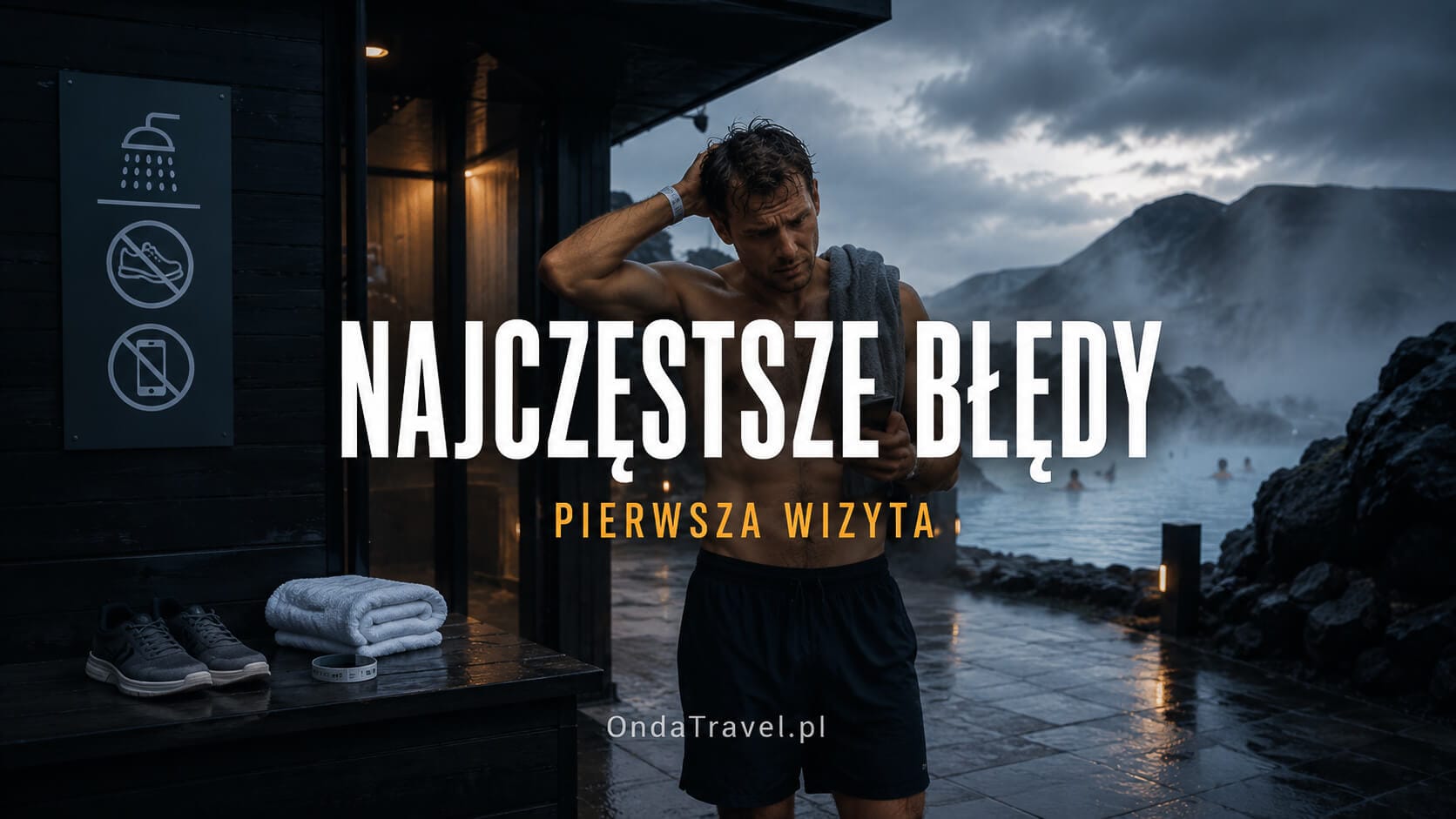
The most common mistake is assuming that washing in a swimsuit “counts” — it doesn’t, and staff notice immediately. The second is bringing a phone into the changing room out of habit, even just to check the time. The third, especially painful for families with young children, is booking Sky Lagoon without checking the age limit — the minimum is 12, so with a younger child you need to choose Blue Lagoon or a city pool instead. The fourth is jumping into a random hot spot by the road without checking whether it’s a safe, legal place — some of these springs are near boiling, and most land in Iceland is private. For more on typical first-trip missteps, not just pool-related ones, see our guide to the most common first-trip mistakes in Iceland.
FAQ: geothermal pools in Iceland
Do I really have to shower naked before entering an Icelandic pool?
Yes, it’s the law (Reglugerð nr. 814/2010, art. 9), not a custom — it applies at every public pool and bathing facility, including Blue Lagoon and Sky Lagoon.
Can I get fined for skipping the shower?
There’s no formal penalty. In practice, staff point it out and ask you to wash again before letting you onto the pool deck — there’s no fine schedule for a single incident.
How hot can hot pot water be?
The law sets an upper limit of 44°C for hot pots and 43°C for showers. Every hot pot must clearly display its temperature so bathers can choose one that matches their tolerance.
What’s the minimum age for Blue Lagoon and Sky Lagoon?
Blue Lagoon admits children from age 2 (armbands required ages 2–8), Sky Lagoon only from age 12, and guests aged 12–14 must have an adult guardian. This is a common trap when planning a trip with young children.
Can I bathe in any hot spring I find by the road?
No. Most land in Iceland is private, some springs are near boiling, and certain spots, like the Grjótagjá cave, are explicitly closed to bathing. Safe, legal options like Reykjadalur are marked and covered in guides.
Can I bring my phone into the pool changing room?
No — this is a rule at most facilities, Blue Lagoon included. Phones and cameras go in a locker along with your clothes and shoes.


Hi, I’m Krystian “dziadzia przewodnik” from OndaTravel.pl!
The North is my greatest passion, but the world is far too beautiful to stay in just one climate. On my blog, I combine the raw landscapes of Iceland and Norway with the exotic energy of Thailand or Vietnam, showing you how to travel authentically — with passion and a camera in hand.
What will you find on OndaTravel.pl?
Visual storytelling: As a photographer and filmmaker, I don’t just describe places — I take you there with professional photos and video.
North expert: Ready-to-use road trip plans for Iceland and Norway, smart tips for budget travel, and my original Northern Lights Radar (locations and forecast).
Travel through the lens of cinema: I track down filming locations — from icy scenes in Interstellar to tropical frames from world cinema.
New direction: Exotic destinations: I love contrast, so the blog is featuring more and more practical knowledge about Vietnam and Thailand. I’ll show you how to find your way around Southeast Asia and come back with your best memories.
P.S. follow me here


Author
Krystian „dziadzia przewodnik”The North is my greatest passion, but the world is too beautiful to stay in one climate. On my blog I combine the raw nature of Iceland and Norway with the exotic energy of Thailand and Vietnam, showing you how to travel authentically, with passion and a camera in hand.