

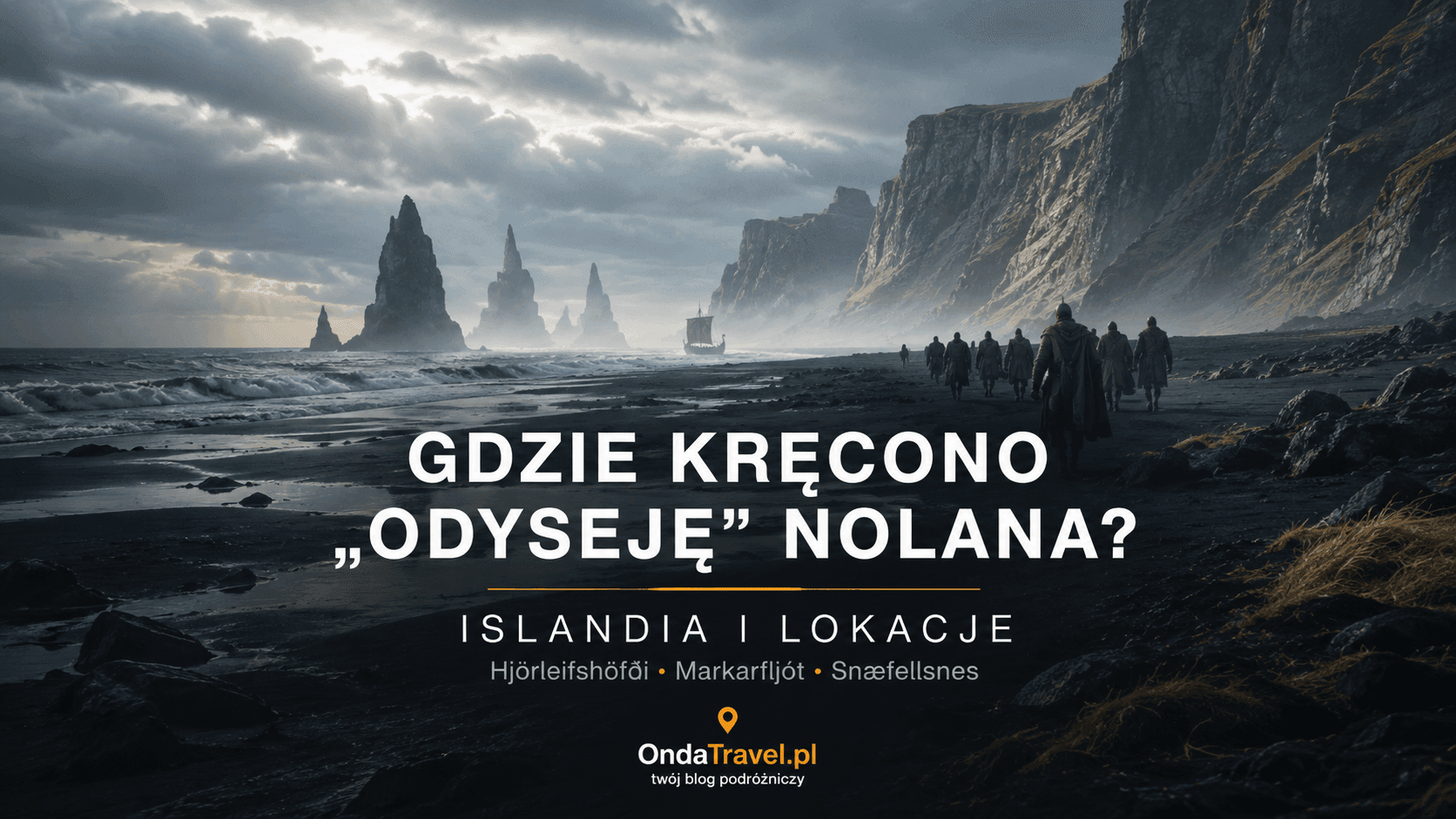
The Odyssey in Iceland: Confirmed Nolan Filming Locations
Christopher Nolan’s “The Odyssey” was filmed in Iceland among others at Hjörleifshöfði, on the glacial river Markarfljót and at Syðra-Skógarnes on Snæfellsnes. After the film’s premiere, the Icelandic production company True North confirmed that the beach at Hjörleifshöfði played the role of the land of the dead and the seat of Hades, and Landeyjahöfn served an important port and production function.
The Odyssey in Iceland – in short
The most important confirmed places are the beach at Hjörleifshöfði, which played Hades, Markarfljót and Syðra-Skógarnes on Snæfellsnes. Landeyjahöfn remains an important port base for the production, and new footage also reveals the use of an unnamed bright Icelandic beach as the Apollo coast.
In Polish, the film is often called also “Nolan’s Odyssey”. When the question arises, where “The Odyssey” was filmed in Iceland, the most important set they create Hjörleifshöfði, Landeyjahöfn, Markarfljót and Snæfellsnes. Places in the south are best combined with a route through south coast of Iceland, and the western stage with a plan Snæfellsnes in one day.
You will encounter terms in English-language materials The Odyssey filming locations in Iceland and The Odyssey Hades Iceland. After the premiere of the film, we can already point to a specific point: according to True North, the land of the dead and the seat of Hades was played by the beach at Hjörleifshöfði. However, it should not be automatically identified with Reynisfjara.
If you are planning Iceland as part of a larger northern itinerary, see also section Midnight, where I collected Iceland, Norway, Lofoten, fjords and northern lights guides.
Affiliate information: some of the links in this article may be affiliate or affiliate links. If you use such a link, OndaTravel.pl may receive a small commission, at no additional cost to you.

Still from the movie “The Odyssey”: Where Nolan’s Odyssey was filmed in Iceland – film locations. Source: Universal Pictures promotional materials; the author of the photo was not given.

Where did Christopher Nolan film “The Odyssey” in Iceland? Locations, interesting facts
Iceland has been one of the most important natural film sets in Europe for years. Black beaches, glaciers, vast sands and volcanic wastes allow you to build completely different worlds on the screen. Christopher Nolan’s crew worked in several parts of the island while filming “The Odyssey.” The best documented are Hjörleifshöfði, Markarfljót and Snæfellsnes, and Landeyjahöfn appears in local accounts as an area of port, hinterland and scenery. Next, you will find a description of these places, information about less thoroughly documented locations, and Nolan’s previous Icelandic locations from “Interstellar” and “Batman Begins”. If you’re planning a regular island tour, start with guides, regions and routes in Iceland.

DIRECTION MAP
Iceland – guides, regions and routes
Return to the main destination page and combine this entry with a map of regions, ready-made itineraries, routes, waterfalls, hot springs and practical guides to Iceland.
Do you have limited time? See the finished plan: Iceland in 7 days – day by day plan. And if you want to collect everything “in one place” (maps, regions and routes), start at: Iceland – starting guide.
Iceland in 7 days – day by day plan
A ready-made day-by-day travel plan: route, stops, regions and order in which to visit Iceland without arranging everything from scratch.
See the planIceland – starting guide
A starter guide to Iceland: regions, routes, highlights and a practical starting point for further planning.
Start with the guideEach of the main locations has a separate section with a short description of the location, its location and its importance for the Icelandic stage of filming.
From ‘Interstellar’ to ‘The Odyssey’: all the Icelandic locations in Nolan’s films
If you are planning a tour, these locations can be sensibly combined with the classic routes in the south and west.
Where was filmed in Iceland? “The Odyssey” by Christopher Nolan? Although Nolan’s productions are famous for their secrecy, Icelandic reports and production descriptions repeat several names of places that are supposed to be associated with the filming set: from the southern coast to the western landscapes of Snæfellsnes.

Still from “The Odyssey”: promotional material for Christopher Nolan’s film. Source: Universal Pictures promotional materials; the author of the photo was not given.


A still from the film “The Odyssey”: Icelandic locations and black beaches in the visual context of the production. Source: Universal Pictures promotional materials; the author of the photo was not given.


Quick start: Nolan’s “The Odyssey” – Icelandic locations and how to see them (no spoilers)
In this entry I collect confirmed or heavily reported Icelandic filming locations of “The Odyssey” and I suggest how to combine them with a classic sightseeing tour of Iceland. It is an inspiration for your own route around places accessible to tourists (without “entering the plan”).
- South of Iceland: Landeyjahöfn + Markarfljót area → easy to add to Ring Road (south coast).
- West: Snæfellsnes → guide: Snæfellsnes (Iceland in a nutshell).
- Glaciers and Vatnajökull: if you want to combine a movie theme with glaciers, see: Jökulsárlón and Vatnajökull.
Not all details of the Icelandic stage have been publicly disclosed. Therefore, it is worth separating places mentioned by name in later documents from those known primarily from local accounts.

Contents
- Where did Christopher Nolan film “The Odyssey” in Iceland?
- Quick start: Icelandic film locations
- Official trailer and description of the film
- Behind the scenes of “The Odyssey”: locations, IMAX and production
- What is known about the Icelandic stage of filming?
- Interesting facts from the set of Nolan’s “The Odyssey”.
- Confirmed locations in Iceland
- Hjörleifshöfði and the black sands of Mýrdalssandur
- Landeyjahöfn
- Markarfljót
- Snæfellsnes
- Icelandic places and regions from the article
- World film locations
- Morocco as Troy
- Greece and the world of Cyclops
- Favignana as Ithaca
- Iceland as Hades
- Scotland and the Moray Coast
- Aeolian Islands and seaside locations
- Other Nolan films shot in Iceland
- “Interstellar”
- “Batman Begins”
- FAQ

Check out my YouTube channel and travel with me.
Follow the channel for videos, routes and practical travel inspiration.
Follow me here:
What’s up?
Enjoying my content?
Buy me a coffee at buycoffee.to/ondatravel and support the creation of more travel content.
Your support helps me create more practical guides, videos and travel inspiration.

Official trailer and synopsis of “The Odyssey”
“The Odyssey” hit theaters on July 17, 2026. Official website of the film provides trailers, video materials, a gallery and a screening search engine, and Universal emphasizes that the production was shot entirely with IMAX cameras.
In Poland, the film is already available in cinema repertoire. Cinema City provides a duration of 172 minutes, and the availability of IMAX screenings and other premium formats depends on the specific city and day.
The film has an official website, trailer and Universal synopsis. In the part devoted to Iceland, however, the most important information is about the actual shooting locations and reports from the crew’s work in the field.
Cast: Matt Damon, Tom Holland, Anne Hathaway, Robert Pattinson, Lupita Nyong’o, Zendaya, Charlize Theron
Script and direction: Christopher Nolan
Manufacturers: Emma Thomas, Christopher Nolan
Executive Producer: Thomas Hayslip
According to the official description “The Odyssey” this mythological epic action movie, shot in various parts of the world using the new IMAX® technology. The film was released in cinemas July 17, 2026.
They star in the main roles Matt Damon, Tom Holland, Anne Hathaway, Robert Pattinson and Lupita Nyong’o, as well as Zendaya and Charlize Theron.
Producers of “The Odyssey” are Emma Thomas and Christopher Nolan for Syncopy, with Thomas Hayslip serving as executive producer.

Still from “The Odyssey”: official promotional material used to describe the film. Source: Universal Pictures promotional materials; the author of the photo was not given.
Behind the scenes of “The Odyssey”: locations, IMAX and production
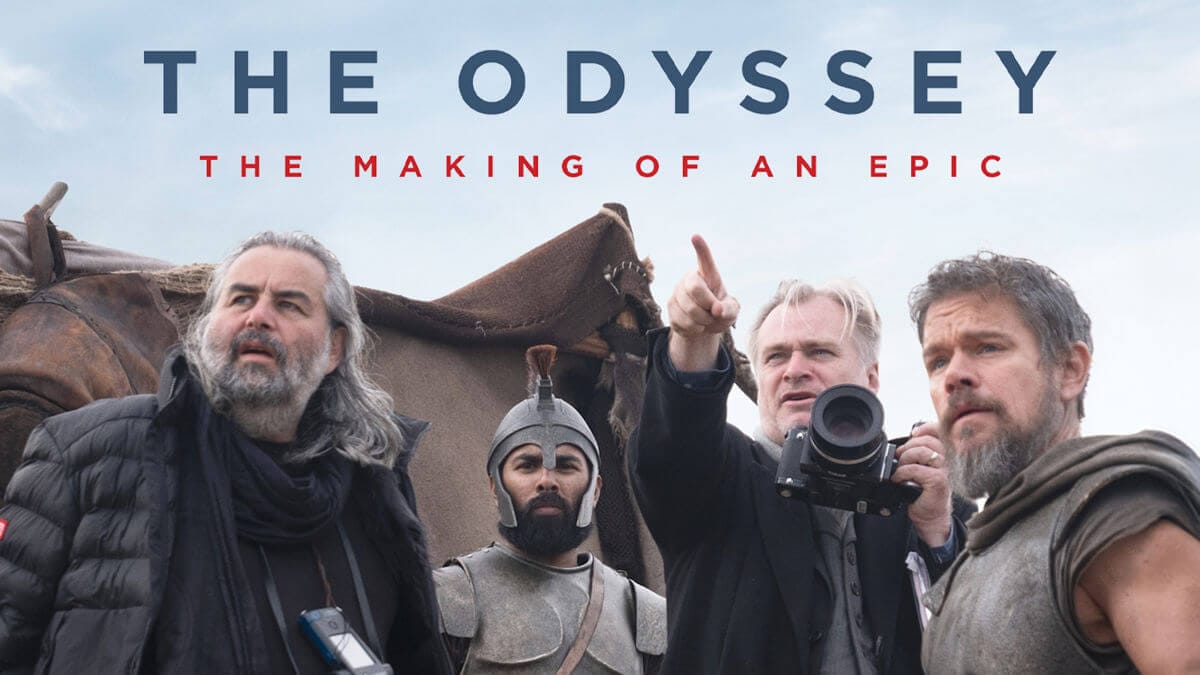
Behind-the-scenes materials show that the world of “The Odyssey” was created primarily in real locations: at sea, cliffs, beaches, caves and on extensive sets built in several countries. The first two videos below are from the official Universal Pictures UK channel. The third one is additional material and shows the broader context of the set design and the largest sequences of the film.
Hero’s Journey – the hero’s journey and the scale of the story
The official footage showcases the concept of Odysseus’ journey, the scope of the story, and how the cast and creators translated the classic tale into real-life settings.
Completely in IMAX – how “The Odyssey” was filmed
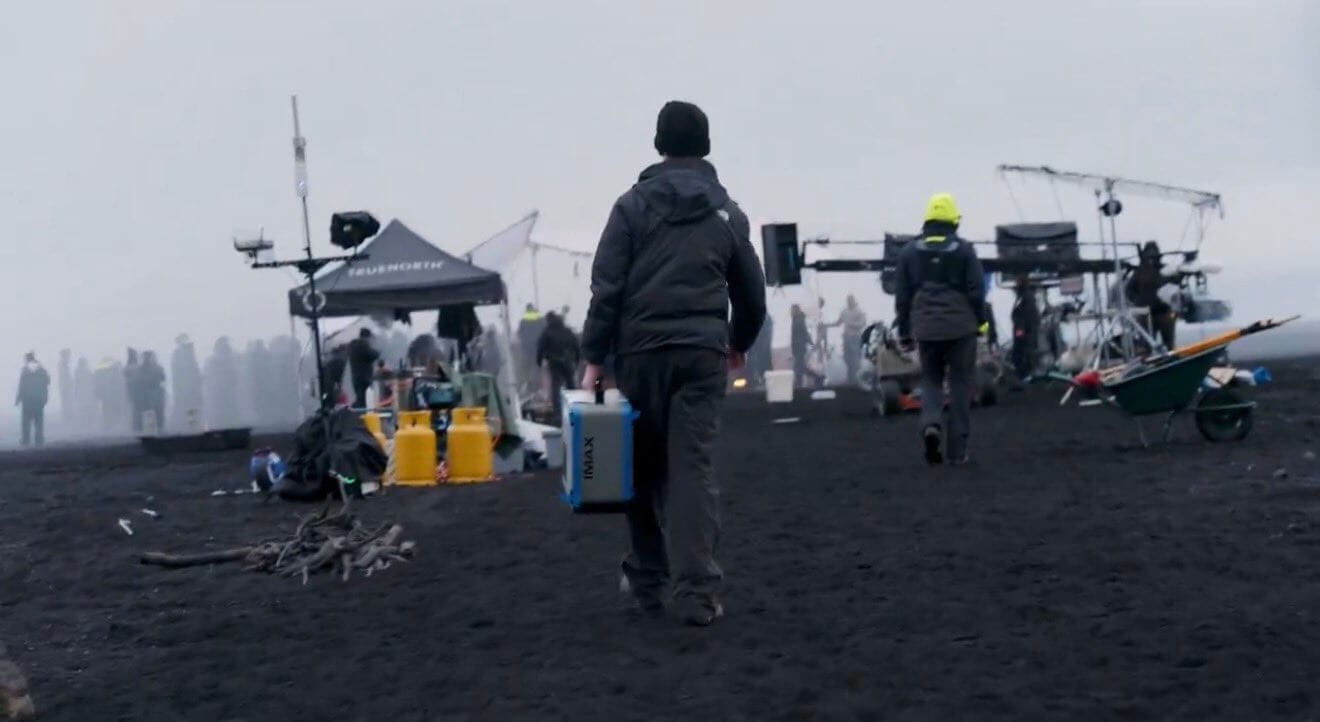
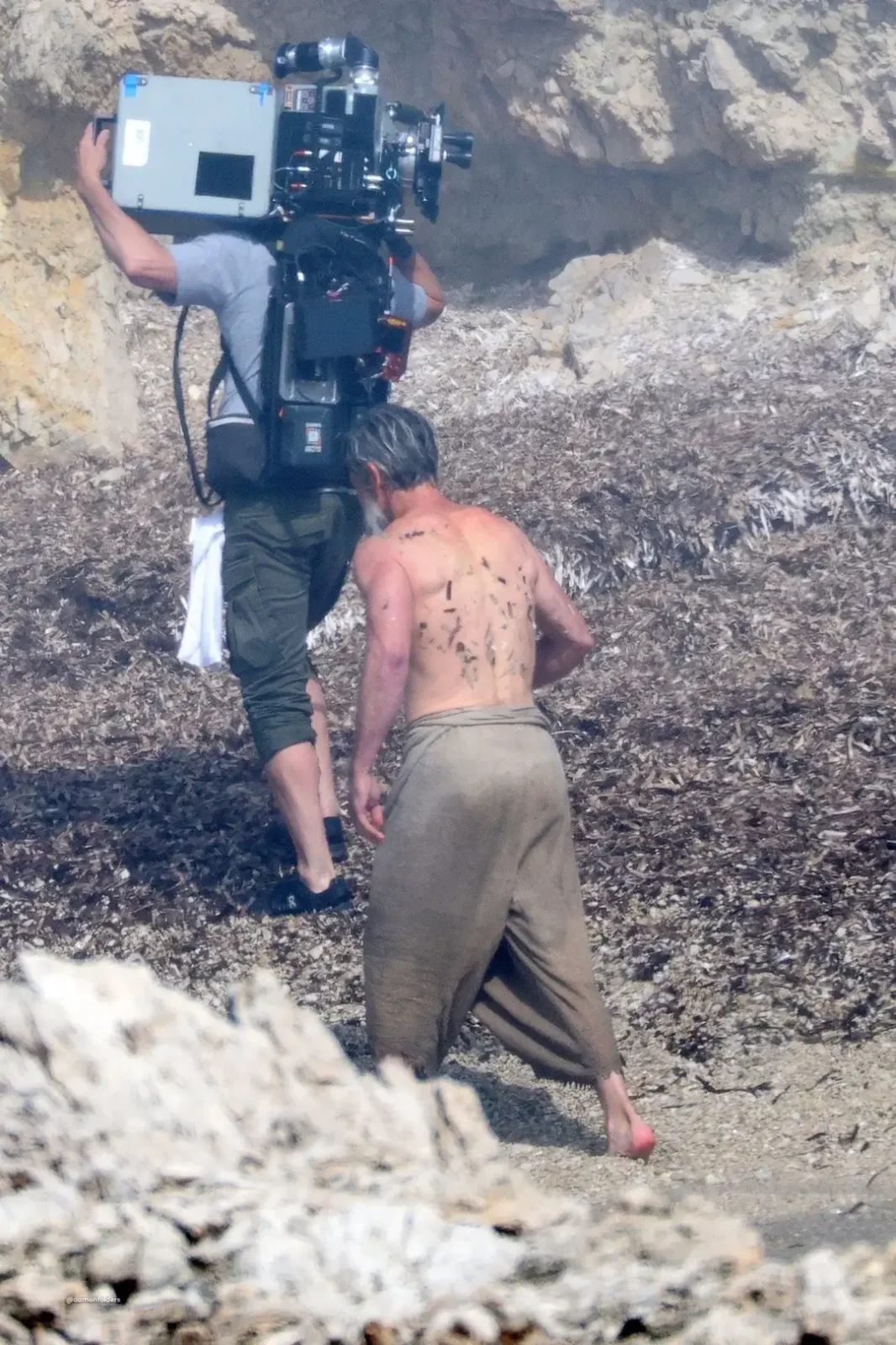
The material shows the operation of IMAX cameras in demanding conditions, including: on boats, cliffs and vast open spaces. This is an important supplement to the Icelandic part of the article, because similar logistical challenges accompanied the photos on the black sands and by the glacial river.
Cyclops, Trojan Horse and the Siege of Troy
This additional video shows practical set design, the Cyclops, the Trojan Horse and the execution of the biggest sequences. It is not the primary source for the description of Iceland, but it complements the picture of the entire production well.
New photos and official materials
Following the premiere, Universal released more photos from the film and set, as well as short videos showing the work of Christopher Nolan, the cast and the IMAX crew. Current staff can be seen in official movie gallery, and subsequent recordings in official video section and on Universal Pictures UK channel. In your location guide Entertainment Weekly indicated OndaTravel as the source when describing the Icelandic stage of filming.
What is known about the Icelandic stage of filming?
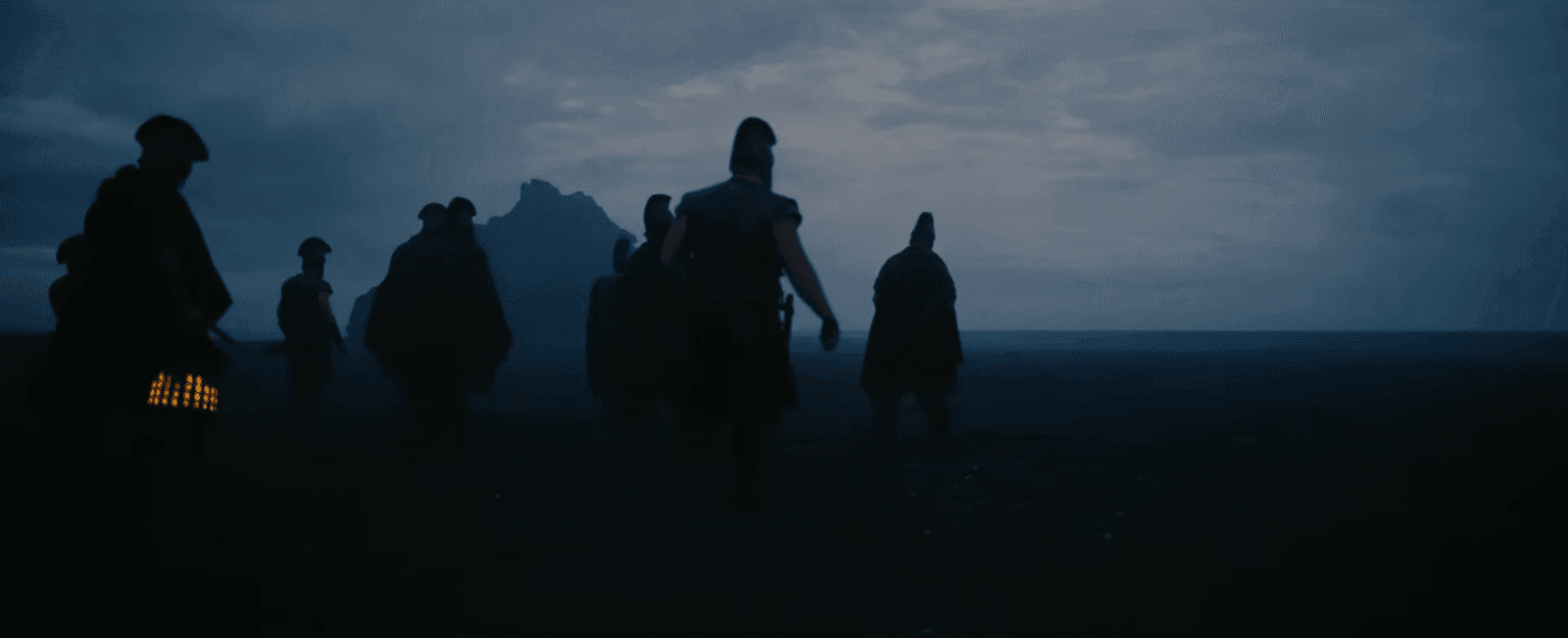
Update (July 23, 2026): After the premiere, the most precise information about the Icelandic stage appeared so far. Icelandic production company True North confirmedthat the beach at Hjörleifshöfði was the land of the dead in the film and the home of Hades. Over 400 Icelandic extras participated in this scene, and a total of approximately 450 extras and stuntmen worked on the production.
Thanks to the new information, Hades can now be specifically attributed to the beach at Hjörleifshöfði, although it still does not mean Reynisfjara. Reports also indicate Syðra-Skógarnes on Snæfellsnes, the transport of the film ship from the Markarfljót area to the west of the island and the second, bright Icelandic beach used as the coast of Apollo. The exact name of Apollo Beach has not been revealed.
After the premiere, they create the strongest set of Icelandic locations Hjörleifshöfði, Markarfljót and Syðra-Skógarnes on Snæfellsnes. Landeyjahöfn remains a well-documented port production base, and I still treat Möðrudalsöræfi at Langadal as a concrete trace of the crew’s work without a revealed on-screen function.
In the Möðrudalsöræfi area, near Langadal, a section of the road was closed during filming. This doesn’t mean that this place will be easily recognizable on screen, but it is another concrete trace of the Icelandic plan. It also shows well that Nolan did not limit himself to only the most obvious points of the south coast.
Conditions on the Icelandic set were far from studio comfort. Local reports reported wind and rain, and later statements from Zendaya and Matt Damon confirmed that the cold and wet conditions were indeed taking their toll on the crew.
It is a separate place Gígjagjá, known as Yoda Cave, at the foot of Hjörleifshöfði. Tourists and fans informed about the temporary closure of the area and the presence of the team. This is a credible trace of film activity, but without a public document that would place this cave alongside Hjörleifshöfði, Markarfljót and Snæfellsnes.
Public materials do not confirm other popular regions of Iceland that appear in fan lists. This includes, among others: Mývatn, Dimmuborgir, Askji and Vatnajökull. The latter is important primarily in the history of Nolan’s earlier films in Iceland, especially “Interstellar” and “Batman Begins.”
Update (April 2026): later documents produced more data about the scale of the Icelandic plan, security features, and locations mentioned by name.
- True North reported after the premiere that at its peak, nearly 1,000 people were involved in the project, including about 200 Icelanders. About 450 extras and stuntmen participated in five very long days of shooting.
- Subsequent reimbursement documents they indicated in turn 10 shooting days, 22 days of post-production and the counting team 520 people.
- After the premiere, the western shooting location was clarified: next to Hjörleifshöfði and Markarfljót, Syðra-Skógarnes was replaced by Snæfellsnes.
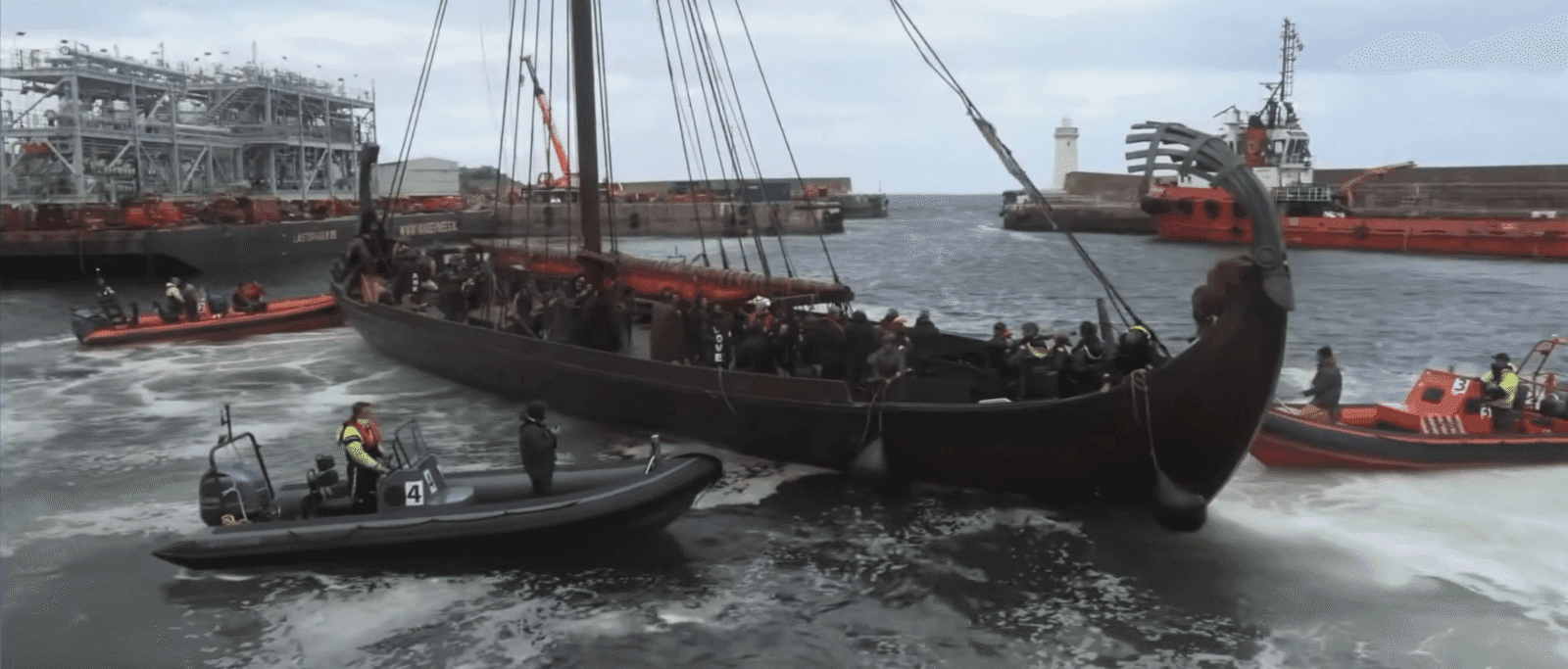
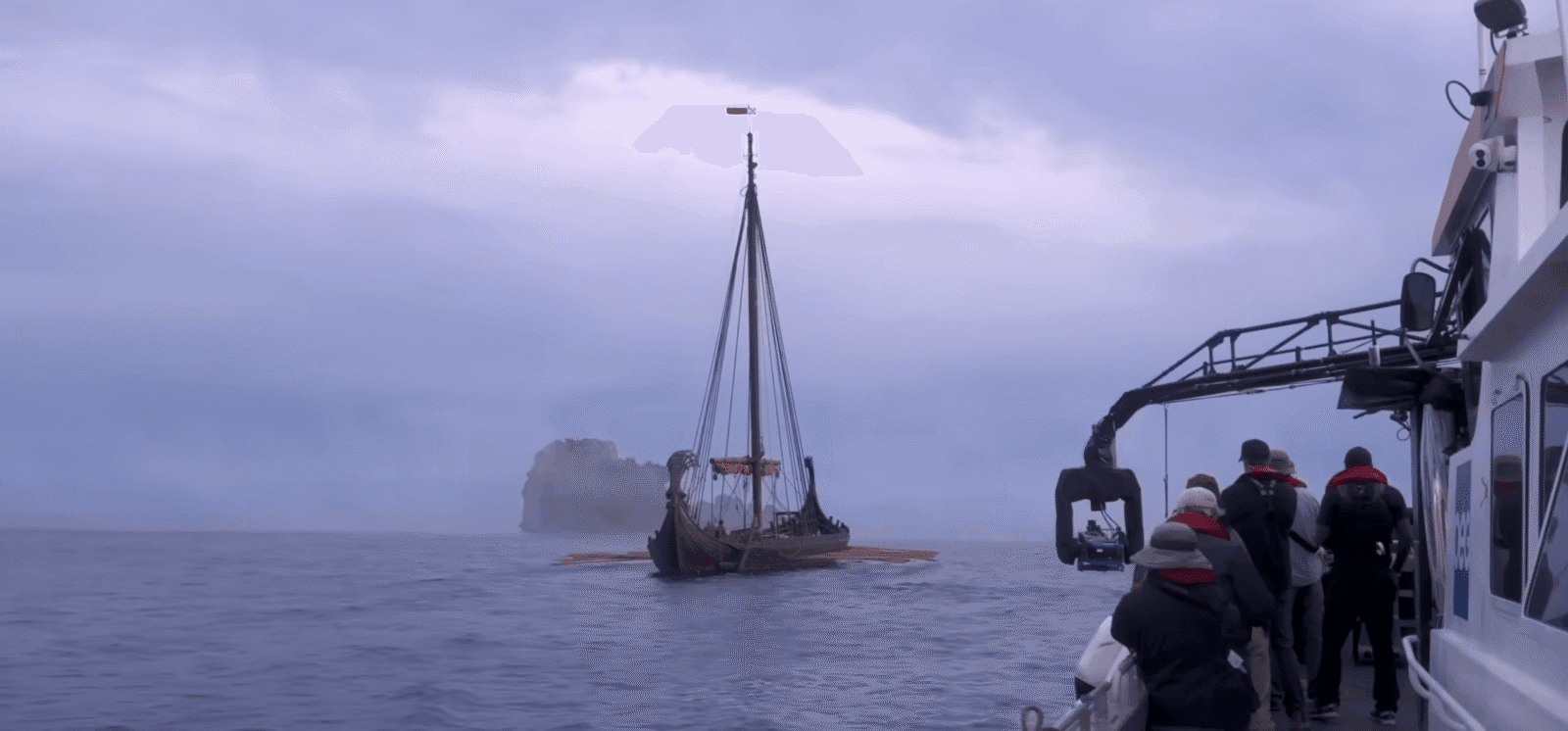
- The ship used in the film arrived in Iceland in pieces, was assembled on site and placed in a glacial river off the coast. It was then transported by land from the Markarfljót area to Snæfellsnes.
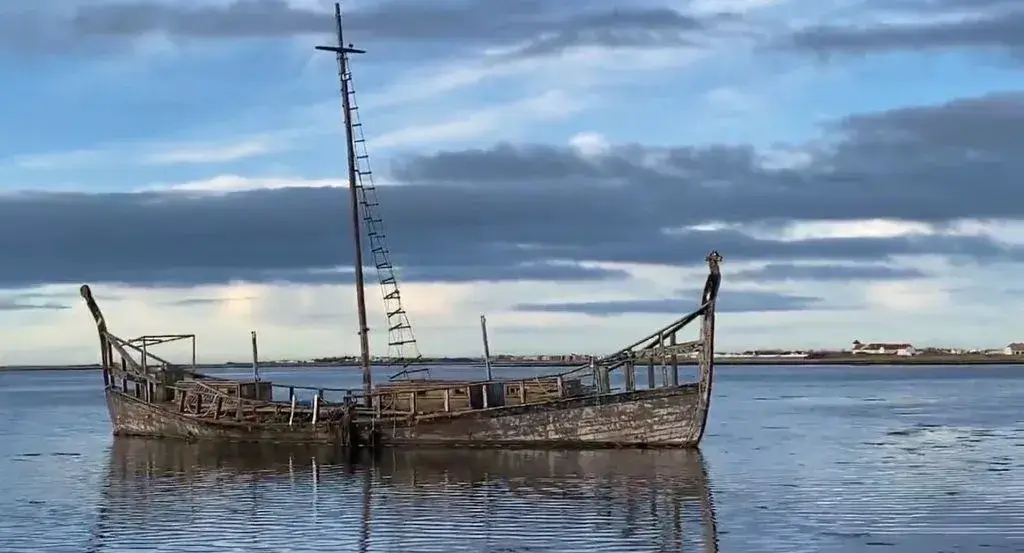
- If you collect the most frequently repeated location names, they include: Landeyjahöfn, Hjörleifshöfði, Markarfljót and Snæfellsnes — a mix of the south coast and the west, with an emphasis on black sands and open spaces.
- Nolan returns here for the third time – after “Batman Begins” and “Interstellar”.
- The documents regarding the Icelandic part of production also mention the budget context: costs of the order were indicated over 2.5 billion Icelandic kroner and the refund is close 900 million crowns as part of the incentive system.
- The sources do not describe all sites the same: Hjörleifshöfði’s function as Hades is already confirmed, Syðra-Skógarnes and Markarfljót are named plans, and Landeyjahöfn remains the best documented as a port and production base.
- Reynisfjara still appears in some fan lists, but new information points to the beach at Hjörleifshöfði. That’s why I don’t describe Reynisfjara as a confirmed plan of Hades.
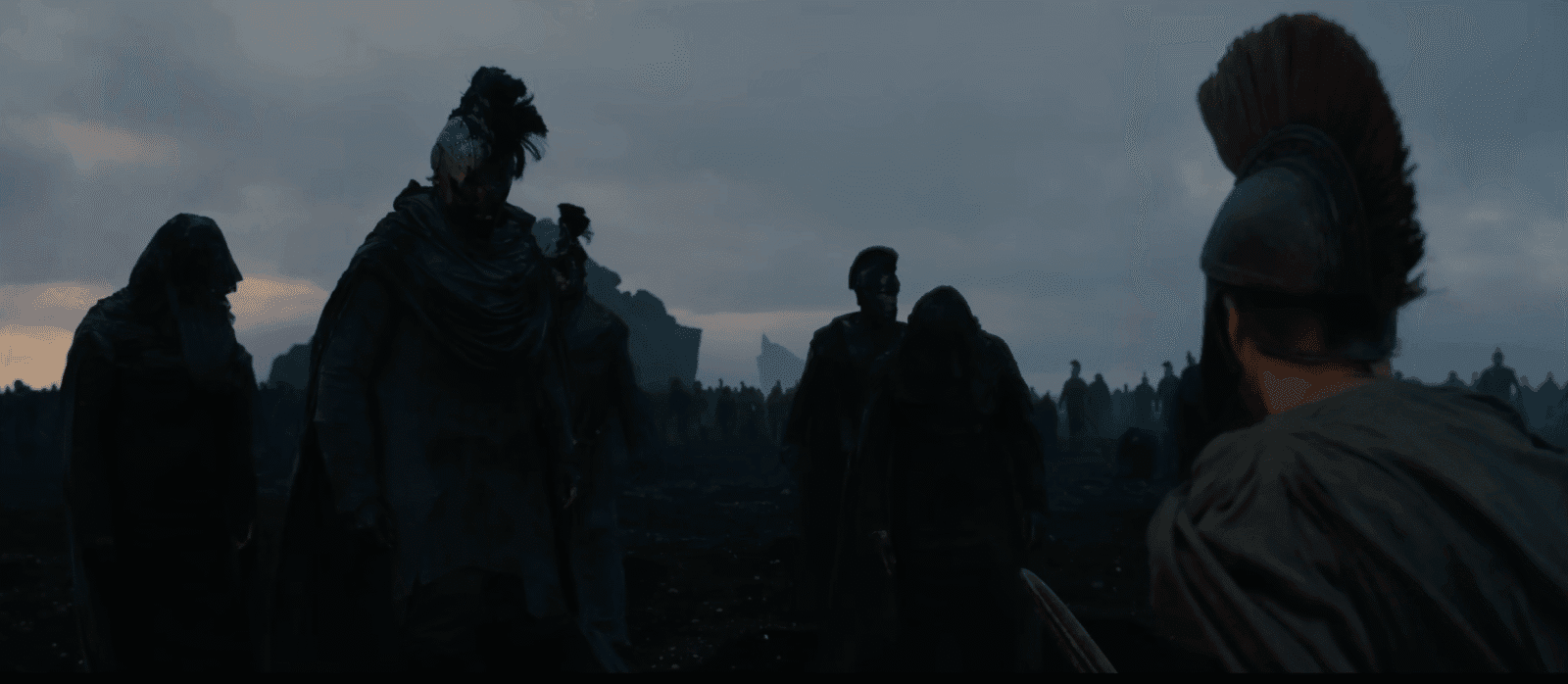
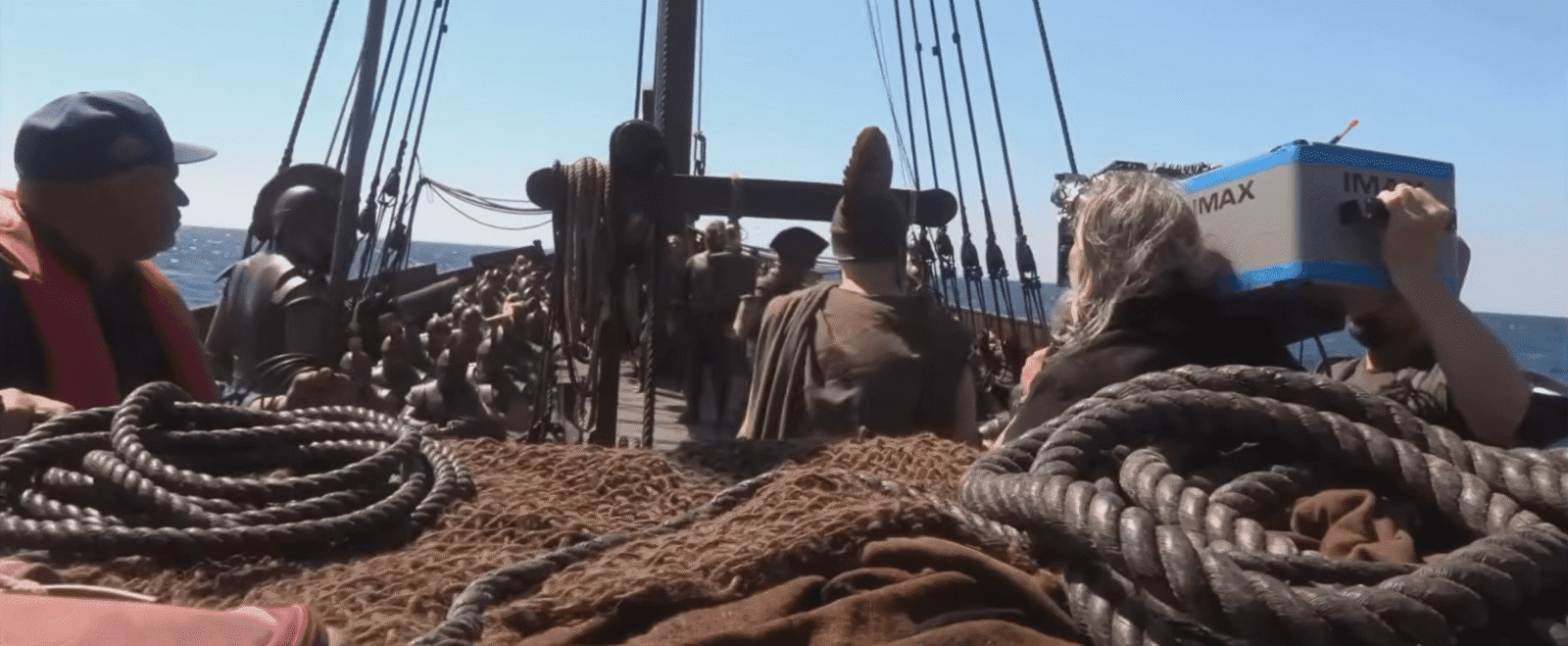

Still from “The Odyssey”: Christopher Nolan’s promotional material. Source: Universal Pictures promotional materials; the author of the photo was not given.


Interesting facts from the set of Nolan’s “The Odyssey”: IMAX, Cyclops, Troy and the real expedition
Below you’ll find extended trivia from the set of Christopher Nolan’s The Odyssey. This is a section for people who are looking not only for answers to the question of where Nolan’s “The Odyssey” was filmed, but also how the most difficult scenes were created: the Cyclops Polyphemus, the Laestrygonians, Scylla and Charybdis, the Trojan horse, the fall of Troy, Ithaca and the sea sequences of Odysseus’ expedition.
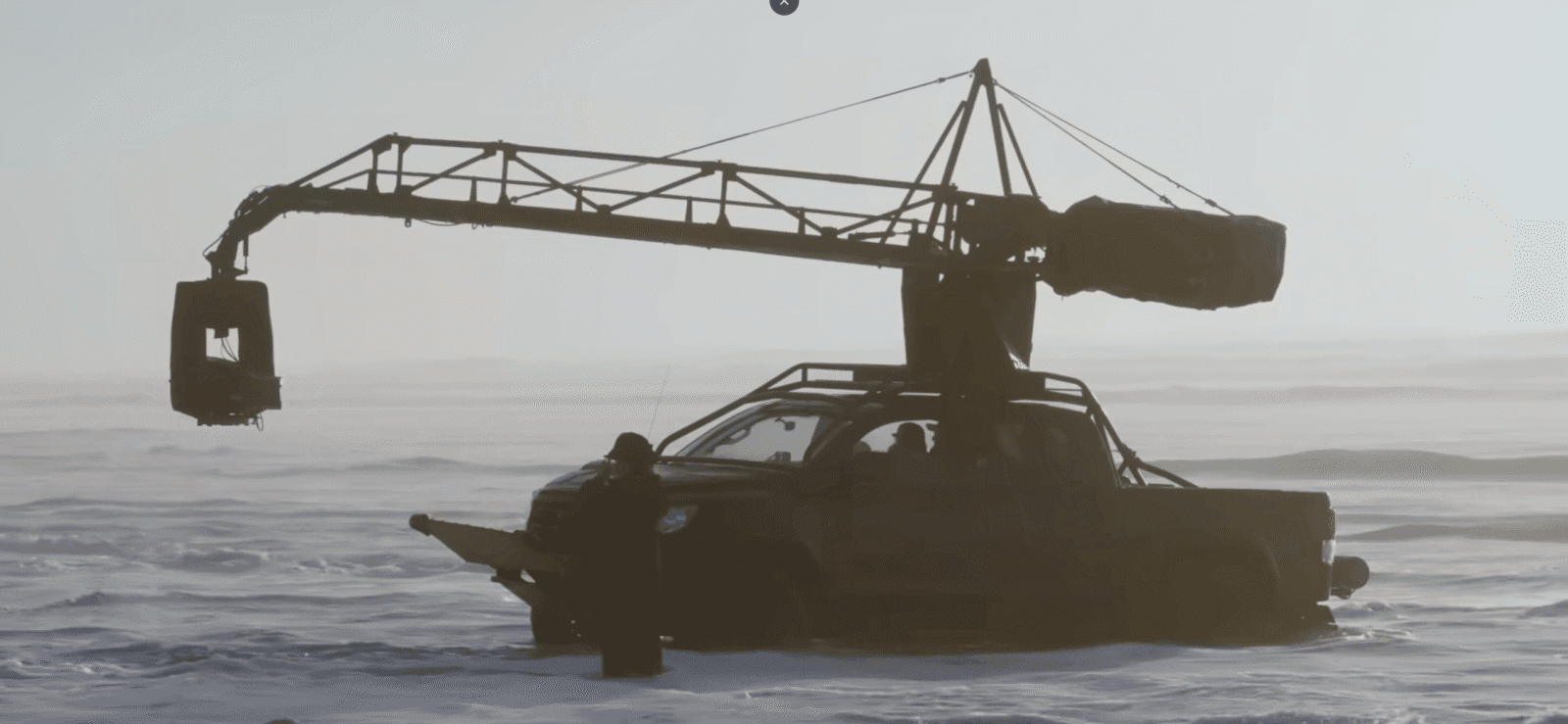
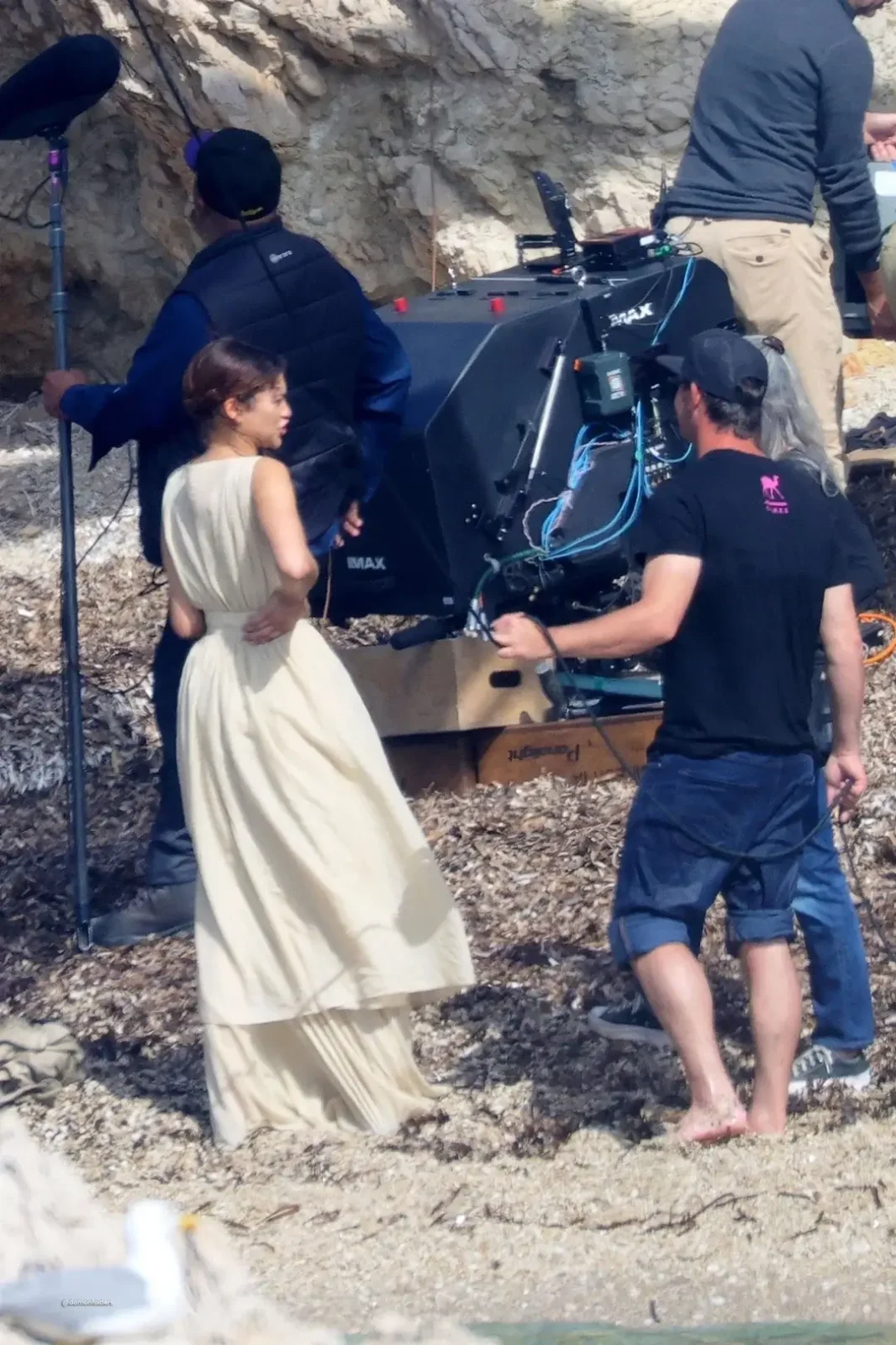
The most important conclusion from behind the scenes is simple: Nolan did not try to build the entire myth solely in the computer. First, he looked for a physical basis for the scene—real water, a real ship, a cave, a castle, a forest, sand, a rock, a crowd, a scale model, or a structure that the actors could see. Only later did visual effects expand the image, remove technical elements, and enhance the mythological nature of the world.
The first full-length film shot entirely with IMAX cameras
“The Odyssey” is the first feature-length feature film shot entirely on IMAX cameras. This is an important step for Nolan, because he had previously used IMAX in selected sequences: landscapes, action scenes, flights, battles and moments of the largest scale. Here, the large format was to cover the entire story: from close-ups of faces to battles, from dialogues to shots of the open sea.
The problem was that classic IMAX cameras are large, heavy and loud. For “The Odyssey” a solution was needed that would also allow this quality to be used in dialogue scenes. That’s why production reports mention quieter cameras and special noise-cancelling housings, thanks to which the camera could be closer to the actors without destroying the sound on the set.
It changed the way of filming. The IMAX camera was no longer just a tool for monumental shots, but became an everyday storytelling tool. In practice, this meant more difficult logistics, greater demands on lighting, precise positioning of actors and greater responsibility for every camera movement.
Over 2 million feet of tape and production like an expedition
The story about over 2 million feet of film is often mentioned in behind-the-scenes footage. The number itself clearly shows the scale of the project: “The Odyssey” was not an ordinary film set with several large scenes, but a multi-month expedition through various countries, landscapes and conditions.
Production moved between Morocco, Greece, Italy, Iceland, Scotland and studios in the United States. Changing countries every few weeks gave the crew a rhythm similar to Odysseus’ journey. This is not a random association: the actors and creators talked about the work more like an expedition than a quiet studio set.
This is very important for the Icelandic part of the entry. Hjörleifshöfði, Mýrdalssandur, Markarfljót and Snæfellsnes are not just names on a map. In the logic of this production, each place brings something physical: wind, black sand, cold, emptiness, frame width, scale and resistance of the terrain.
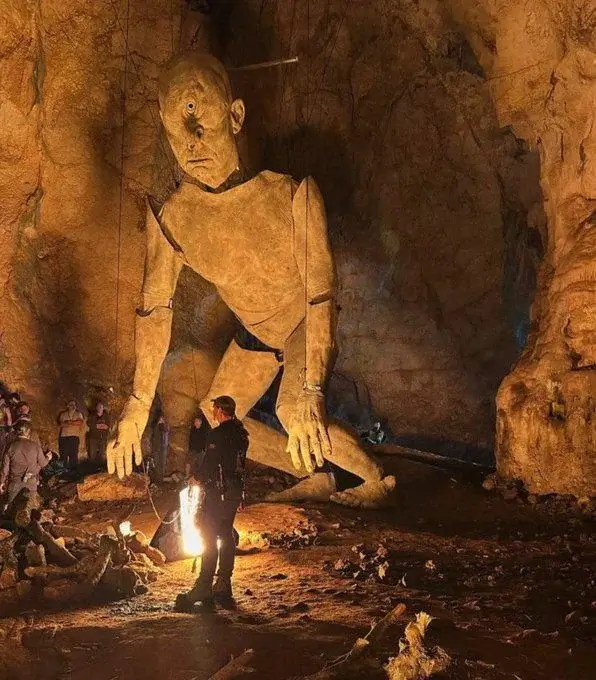
The Cyclops Polyphemus wasn’t just a digital monster
One of the most important curiosities is the way the scene with Polyphemus was shot. Instead of basing the encounter with Cyclops solely on empty space and subsequent CGI, the crew prepared a huge physical reference point. Industry sources describe an approximately 60-foot structure or mechanical-set design that allowed actors to respond to the real scale of the creature.
It made acting sense. When characters look up, step back, or react to a threat, they don’t do so solely to an off-camera marker. They have before them shadow, mass, sound, space and something that really takes up space in the cave. This creates a different kind of tension than when working solely with imagination.
Bill Irwin’s thread is particularly important here. Irwin, associated by Nolan fans with, among others, TARS from “Interstellar”, was to help give Polyphemus presence, rhythm and character. Cyclops wasn’t meant to be the family monster or a mindless killing machine. He was supposed to have individuality, anger, intelligence and tragic weight.
Laestrygonians: forced perspective and real difference of scale
The Laestrygonian scene shows the other side of the same method. Instead of creating all the giants by computer, Nolan used a forced perspective technique. Matt Damon’s reports describe very tall stuntmen and much shorter stunt doubles, who were positioned relative to the camera to make the height difference look even more dramatic.
The story frequently features Devyn Dalton, Matt Damon’s understudy, and 7-foot performers playing giants. This solution is reminiscent of old adventure films and the best examples of fantasy: the lens, distance, camera angle and real bodies do a large part of the work, which today is often left straight to the computer.
The effect is visual and emotional. The Laestrygonians do not look like digital mass glued later to the actors. Their movement, contact with the ground and physical presence give the stage weight. The viewer feels that Odysseus and his men are small in front of a force they cannot control.
Scylla, Charybdis and a sea whirlpool made of real water
The sea scenes were also not created solely as a digital simulation. In the sequence related to Scylla and Charybdis, the use of jet skis was described, which circled one side of the ship and caused real water movement. This little vortex gave the visual effects real wave physics as a starting point.
This is very typical of the Nolan method. The computer doesn’t invent a phenomenon from scratch, it develops something that happened in front of the camera. Water reflects light, rocks the ship, changes the balance of the actors and imposes the rhythm of the scene. This allows even the subsequent effect of a monster or larger whirlpool to maintain contact with the real sea.
The reports also include the story of stuntmen being pulled from the ship’s deck. Rope and hoist systems were intended to rapidly lift people off the deck during an attack. This is another example where the effect starts with a real body, strength and movement, and only then is developed through post-production.
Troy as a huge city, not a digital wallpaper
The scenes of Troy are among the most spectacular elements of the production. The scale of the set is repeated in discussions of the backstage: over 110,000 square feet, dozens of structures and space for thousands of extras. It wasn’t a small set with a digital backdrop, but a physical city capable of hosting crowds, processions, fights, and complex camera movement.
This is particularly important for a film shot with IMAX cameras. The large format shows a lot of detail, so the artificiality of the background would be more visible. Physical Troy gives the camera stairs, gates, temples, walls, dust, bodies of extras and real depth of space.
In practice, such scenography also affects the actors. Playing in an empty studio is different from playing in a space where a city really exists. The scale of Troy isn’t just told in dialogue – it’s present in the distances, crowds, and physical exertion of scenes.
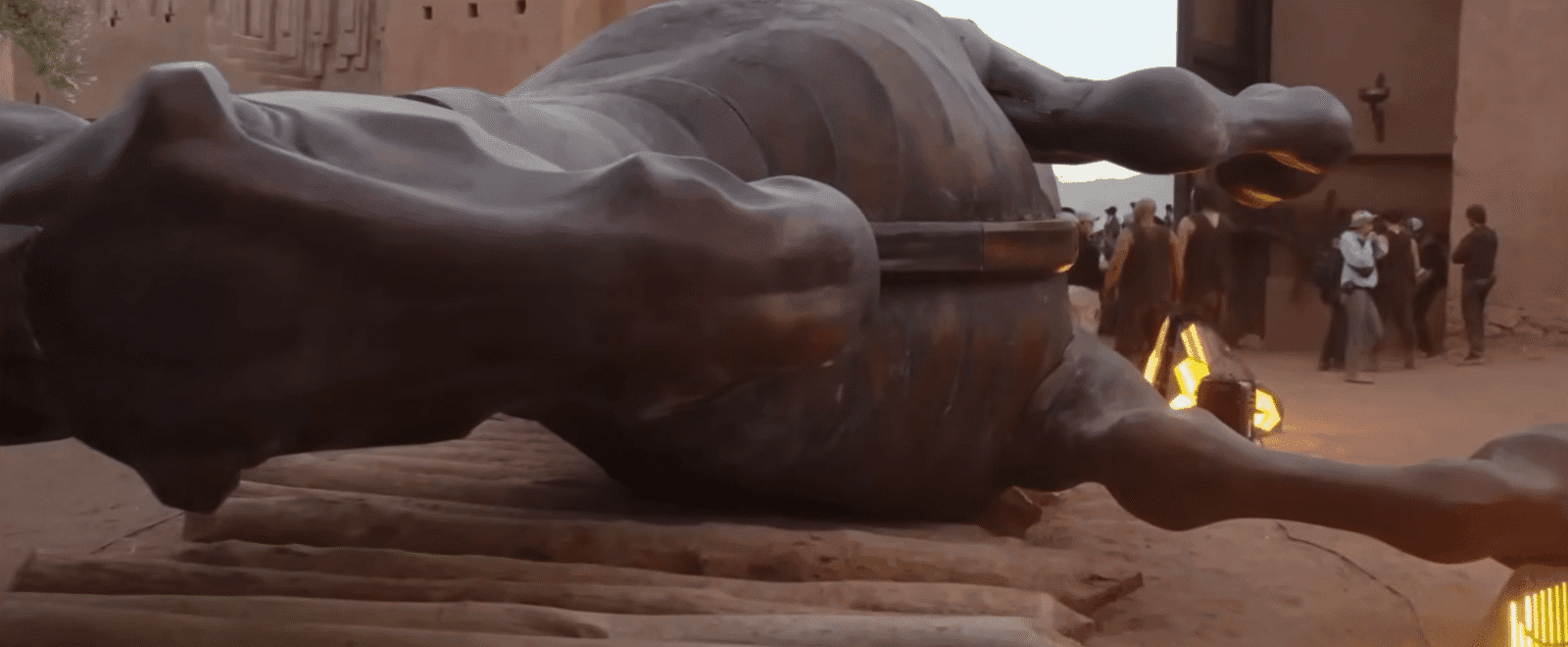
The Trojan Horse really was created
The film’s most symbolic prop, the Trojan horse, also had a physical form. Industry reports describe an approximately 35-foot structure placed on a Moroccan beach. Nolan wanted the horse to look more like a heavy, wet offering washed up by the sea than a perfect, smooth sculpture.
CinemaCon materials also describe a scene in which thousands of Greek soldiers drag a horse across the sand towards the gates of Troy. This isn’t just an economy of scale added later. The extras’ bodies, ropes, sand and the weight of the structure create resistance that the camera can record.
The inside of the horse was also a real shooting space. Nolan, Hoyte van Hoytema, an IMAX camera and a group of actors were supposed to be together in the cramped interior of the structure. Thanks to this, the scene gains claustrophobia, tension and physicality that could not be easily recreated on a neutral set.
The fall of Troy and light pretending to be fire
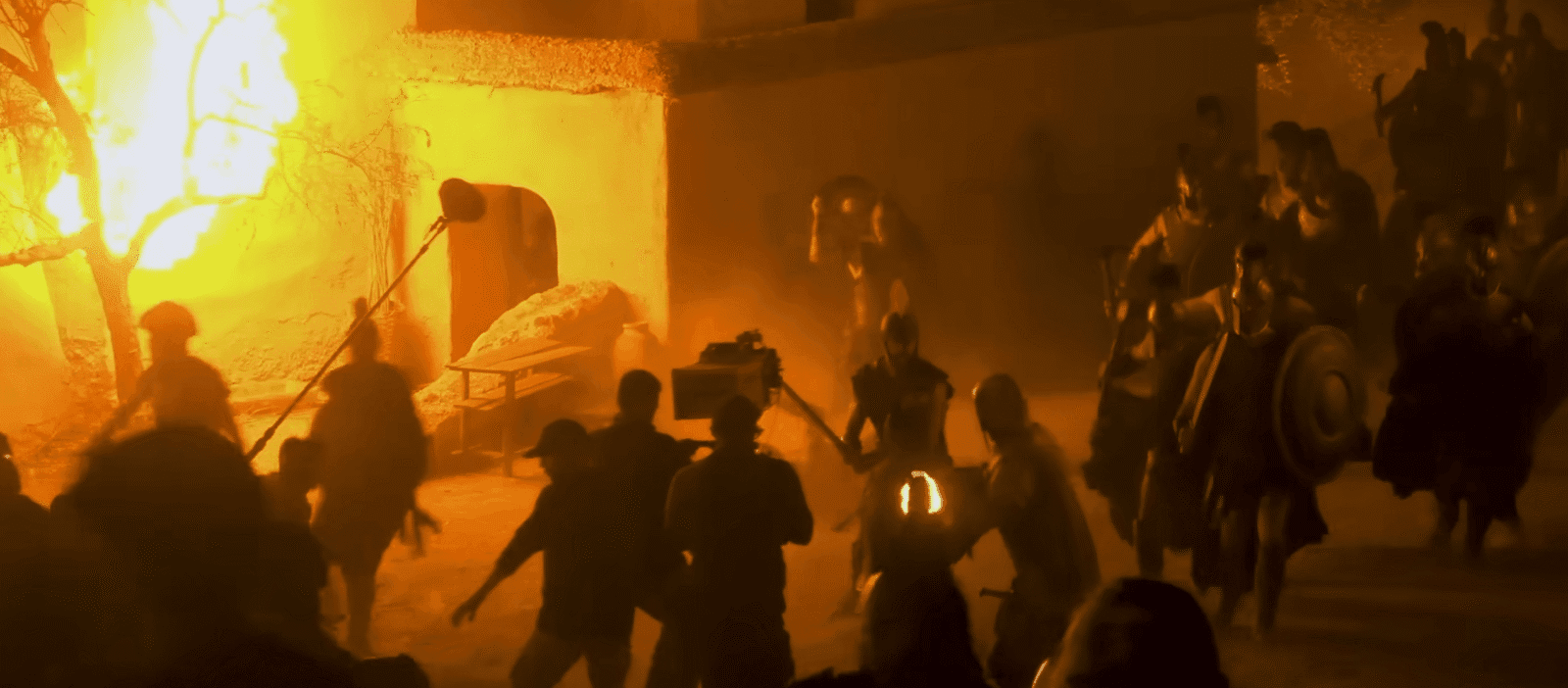
For the night scenes of the fall of Troy, the crew had to solve the problem of fire. Real flames were too dangerous, difficult to control, and insufficient as the sole source of light for the IMAX cameras. Instead, a system of large LED panels was prepared that imitated flickering flames.
The name Pyrohedrons appears in the backstage descriptions. These were panels programmed to emit irregular, pulsating light resembling a fire. This allowed Troy to look like a city lit by fire, but the crew maintained control over safety, exposure and shooting rhythm.
This is a good example of a hybrid production method. It’s not a simple juxtaposition of practical effects and the computer. The idea is to first create a reliable physical base – light, shadow, reflections, movement of actors – and only then strengthen it with further processing.
Favignana and the daily climb to Ithaca
The Italian Favignana played a role in the film tour related to Ithaca. One of the locations was Castello di Santa Caterina, located high above the sea. Reports from the set and descriptions of the location highlight the crew’s daily climb up the hill and the transport of heavy equipment by helicopter or funicular.
This is not an insignificant logistical curiosity. This plan affects the energy of the actors. Before they start the scene, they are already in a specific place, after exertion, in contact with wind, stone and height. In the story of Odysseus, who returns home after years of wandering, the journey to the set itself becomes part of the experience.
That’s why Favignana doesn’t just act as a pretty postcard from Italy. It is a physical place of return, distant, more difficult and demanding. This fits the entire concept of the film: the locations are supposed to work on the actor’s body and the viewer’s imagination.
Real ships, sea and accidents that cannot be planned
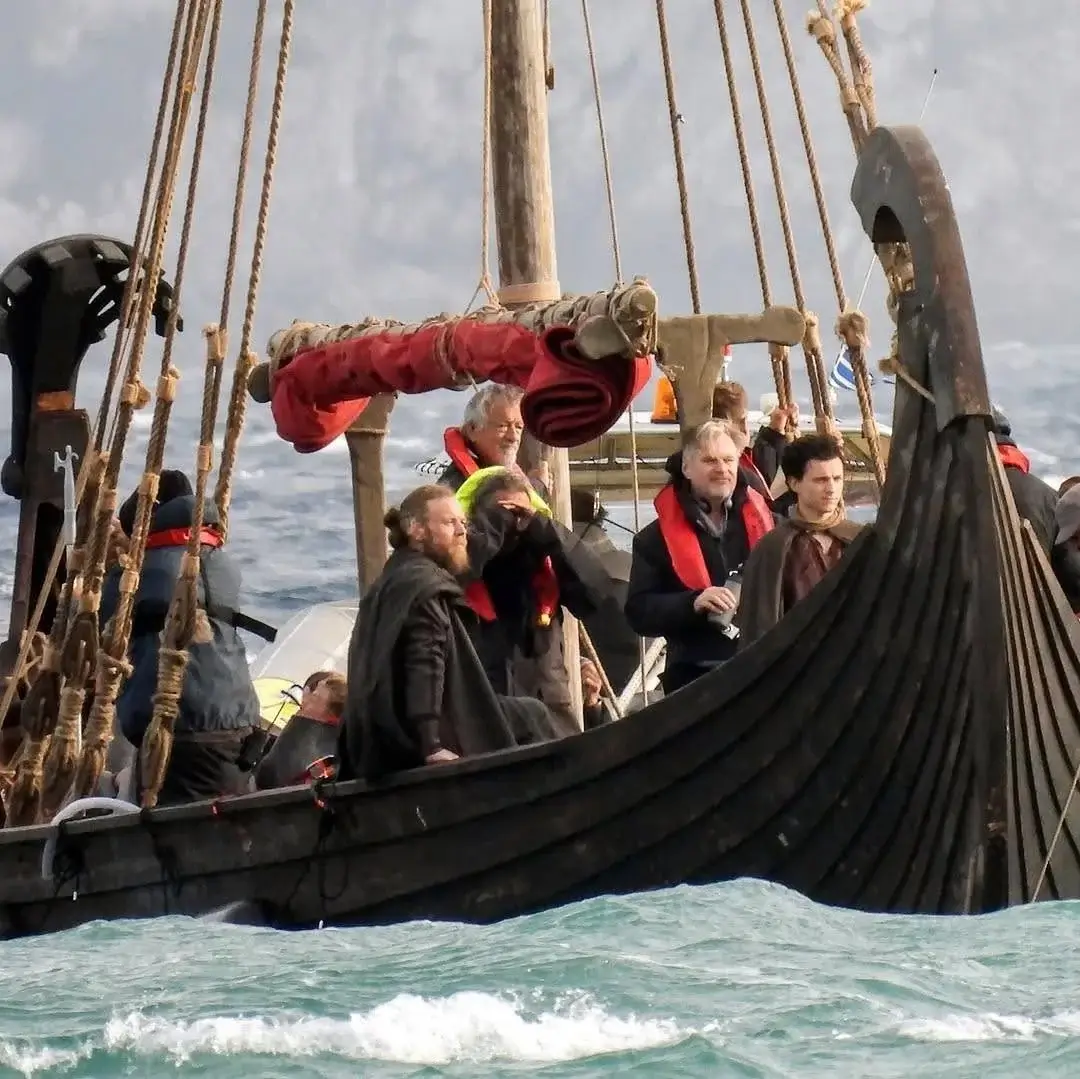
“The Odyssey” was not a production in which the entire journey was performed on a dry set in front of a green backdrop. The team used real vessels, open water and variable light. This meant seasickness, wind, waves, camera positioning issues, and weather that couldn’t be fully controlled.
This approach also produces happy accidents. Behind-the-scenes reports include the story of dolphins that swam near the ship during filming. For Nolan, these types of moments are part of the value of working in a real place: the world can enter the film without an invitation and provide a frame that cannot be planned in a storyboard.
The sea is an adversary in this story, not a decoration. It changes the pace of the shot, the balance of the body, the way you walk on the deck and the rhythm of the dialogue. This gives Odysseus’ journey a greater physicality than scenes built from the beginning as a safe simulation.
What does this mean for Icelandic locations?
The behind-the-scenes of the production reinforce the meaning of the Icelandic chapter of the film. Hjörleifshöfði is not just a caption under a map. Mýrdalssandur is not just a black beach. Markarfljót is not just a river, and Snæfellsnes is not just a pretty peninsula. In the logic of this production, each of these places gives the film a physical texture.
Iceland gives Hades darkness, emptiness and scale. Greece gives caves and the source of myth. Morocco gives Troy and the Trojan horse. Scotland provides a forest for scenes of giants. Italy offers Ithaca as a difficult homecoming. Such a production map is important for the SEO of the entry because it answers not only the question “where was The Odyssey filmed?”, but also “why were these places chosen?”.
For the traveler, this is a practical tip: not every film location is a classic tourist attraction, but many of them can be understood through the landscape. The black sands of the south, the Vík area, the Snæfellsnes peninsula, glacial rivers and rugged coastlines show how much Nolan bases his mythology on real geography.
The most important rule of producing “The Odyssey”
The most important principle of production is simple: first the physical truth, then the extension. First, a ship, a wave, a wind, a cave, a Trojan horse, a tall stunt double, a short stunt double, a light panel, a castle, sand and a real actor. Only then are visual effects that enlarge, clean and add scale.
Thanks to this, “The Odyssey” does not look like a postcard from mythology, but like a journey through a world that really resists. And that’s why the behind-the-scenes of production are so closely related to the locations. Places are not decoration. They are one of the most important storytelling tools.
This principle also explains well why the Icelandic segments of the film are so visually powerful. The landscape does not have to pretend to be a myth, because it has an excess in itself: dark sands, wide wastelands, cold light, wind and scale, which in IMAX acts almost as a separate character.
Sources and further context: official NBCUniversal materials from the set, NBCUniversal on full IMAX and practical scenes, No Film School on practical effects, SYFY about Cyclops Polyphemus, SYFY about Scylla and Charybdis, GamesRadar+ about Laestrygonians, Wall Street Journal on the Trojan Horse and Los Angeles Times about Nolan’s working method.
Nolan’s ‘The Odyssey’ confirmed locations in Iceland
There are few official announcements, but several places appear consistently in Icelandic and industry reports and in production descriptions. It is best to separate two levels of certainty here: Hjörleifshöfði, Markarfljót and Snæfellsnes appear most prominently in later documents, a Landeyjahöfn remains very much reported locally as the area of the port, hinterland and scenography.

A still from the film “The Odyssey”: the south coast of Iceland in the context of film locations. Source: Universal Pictures promotional materials; the author of the photo was not given.
Hjörleifshöfði and the black sands of Mýrdalssandur
The beach at Hjörleifshöfði is today the most confirmed Icelandic film location: it played the land of the dead and the seat of Hades. Over 400 Icelandic extras gathered on the black sands, and the filming was carried out in a remote and logistically demanding area.

ONDATRAVEL FILM TOURISM
Hjörleifshöfði, Mýrdalssandur and the south coast
After this section, go to the southern Iceland itinerary guide. This is the closest context to the black sands, Hjörleifshöfði, the Vík area and the rugged landscape of Hades in the film.
Touristically, the area around Hjörleifshöfði and Mýrdalssandur can be combined with a drive through south coast of Iceland and Vík. However, it must be remembered that the film beach is not a marked attraction, and access and conditions on the black sands depend on the weather and road conditions.

Landeyjahöfn in “The Odyssey” (south coast)
Landeyjahöfn, the port leading to the Westman Islands, appears in local accounts of the Icelandic stage of production. The reports concerned a large boat or ship and elements of scenography being prepared in the port area. Public documents do not describe this place in as much detail as Hjörleifshöfði, Markarfljót and Snæfellsnes.

Still from “The Odyssey”: promotional material for Christopher Nolan’s film, frame 6. Source: Universal Pictures promotional materials; the author of the photo was not given.

Markarfljót in “The Odyssey” (south of Iceland)
Markarfljót is a wide glacial river and wetlands in southern Iceland. The team worked in this area, and one of the biggest challenges was assembling the ship that had been brought in parts, placing it in a glacial river near the coast, and then transporting it by land to Snæfellsnes.


Snæfellsnes in “The Odyssey” (West Iceland)
After the premiere, the western stage of filming was finalized Syðra-Skógarnes on Snæfellsnes. A ship previously used at Markarfljót was also transported to this area. This is not a prepared film attraction, so you must respect private land, local markings and road accessibility. The peninsula itself is best explored as a full-day tour through cliffs, beaches, lava fields and views of Snæfellsjökull. See the guide: Snæfellsnes – Iceland in a nutshell.

Gígjagjá, known as Yoda Cave, lies on Hjörleifshöfði and clearly demonstrates the rugged nature of the black sands of Mýrdalssandur.
Landeyjahöfn in “The Odyssey”
Landeyjahöfn appears in the Icelandic production context as a practical south coast hinterland. It’s not a place that needs to be treated like a classic movie attraction, but it helps to understand the logistics of shooting: transport, access to the coast and the work of the crew between the black sands, the Markarfljót river and the routes leading further west.
Markarfljót in “The Odyssey”
Markarfljót is important because it combines the cinematic scope with the real landscape of southern Iceland. The glacial river, wide bed, wind and open spaces fit well with the travel and crossing scenes. For a traveler, it is more of a landmark on the route than one specific place in the frame: it is best to connect it with Mýrdalssandur, the Hjörleifshöfði area and the further road towards the western outdoors.
Syðra-Skógarnes and Snæfellsnes in “The Odyssey”
Syðra-Skógarnes and the Snæfellsnes peninsula are important because they show the other pole of Icelandic locations: less harsh than the black sands of the south, but still very cinematic. Snæfellsnes offers cliffs, beaches, lava coasts and wide panoramas that work well as a travel backdrop. If you are planning a route following the film’s footsteps, this is where it is worth moving from the list of shooting locations to a real sightseeing plan.

ONDATRAVEL FILM TOURISM
Snæfellsnes: peninsula, cliffs and beaches
After this section, go to the Snæfellsnes guide. This is the best point to plan the western part of the route: cliffs, black beaches, lava coast and panoramas of the peninsula.

Djúpalónssandur on the Snæfellsnes peninsula – black beach, lava rocks and one of the most cinematic landscapes in western Iceland.

Arnarstapi Cliffs on the Snæfellsnes Peninsula – a good place to combine a movie atmosphere with a classic route through western Iceland.
In practice, it is worth treating Snæfellsnes as a separate day of travel, rather than a short stop along the south coast. The best options here are Arnarstapi, Djúpalónssandur, the area around Snæfellsjökull and viewpoints on the lava coast. This is part of the route that allows you to feel Iceland as a real travel destination, not just a backdrop for a movie.
Bright Apollo Beach in Iceland
Bright Apollo Beach is the most cautious item on this list because the exact name of the place has not been clearly stated in public materials. What is known is that it is a brighter, sunnier counterpoint to the black sands of Hades. In the article, it is worth treating it as a confirmed type of Icelandic landscape, but without adding a specific beach if there is no strong source.
See Icelandic places and regions in this article
SOUTH COAST
ROUTE AND PLACES
Hjörleifshöfði, Gígjagjá and the south of Iceland
Guide to the southern Ring Road route with Vík, black beaches and sites in the Hjörleifshöfði area.
See the southern route
BLACK BEACH
GUIDE AND SAFETY
Reynisfjara – directions and safety rules
A separate guide to the black beach, parking lot, basalt columns and dangerous waves.
See ReynisfjaraWEST OF ICELAND
PENINSULA AND ATTRACTIONS
Snæfellsnes – a guide to the peninsula
Cliffs, beaches, lava fields, towns and views of Snæfellsjökull in one comprehensive guide.
See Snæfellsnes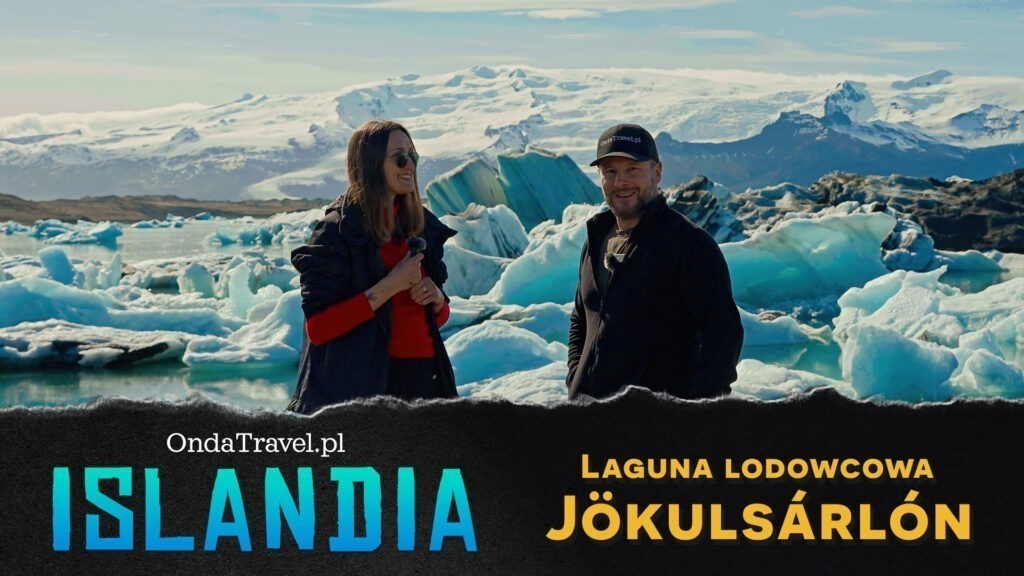
GLACIERS AND MOVIE ICELAND
GUIDE
Jökulsárlón and Vatnajökull
A guide to the glacier lagoon and a region also important in the history of Nolan’s earlier films in Iceland.
See Jökulsárlón
Where was “Immortal” with Henry Cavill filmed?
Confirmed film locations in Poland, Scotland and London and photos from the sets of the new “Immortal”.
See the film’s locations
Check out my YouTube channel and travel with me.
Follow the channel for videos, routes and practical travel inspiration.
Follow me here:
What’s up?
Enjoying my content?
Buy me a coffee at buycoffee.to/ondatravel and support the creation of more travel content.
Your support helps me create more practical guides, videos and travel inspiration.

Still from “The Odyssey”: promotional material for Christopher Nolan’s film, frame 7. Source: Universal Pictures promotional materials; the author of the photo was not given.

Still from “The Odyssey”: promotional material for Christopher Nolan’s film, frame 8. Source: Universal Pictures promotional materials; the author of the photo was not given.
Where else was “The Odyssey” filmed? World film locations
Iceland was one of several most important stages of this huge production. Materials published before and after the premiere confirmed that the film Troy was created in Morocco, the Greek hills and a natural cave were used for the Cyclops plot, the beach at Hjörleifshöfði played Hades, the bright Icelandic beach became the coast of Apollo, and Favignana near Sicily played Ithaca. Filming took place in six countries, with an emphasis on real landscapes, ships, sets and practical effects.
| Place | Feature in video or location status |
|---|---|
| Morocco | movie Troy |
| Greece | Cyclops’ world and natural cave |
| Iceland | black sands as Hades |
| Favignana, Sicily | film Ithaca |
| Scotland | Findlater Castle, the Moray Coast and Buckie Harbor area |
| Aeolian Islands | sea and volcanic production locations |
Morocco as Troy
The movie Troy was built in Morocco, the place where Odysseus’s long journey home begins. It wasn’t just the landscape used in the background. The team created a vast space based on real set design, a large number of extras and the natural scale of the outdoor setting.
Greece and the world of Cyclops
The Greek hills and a natural cave were used to create scenes related to the Cyclops. The raw rock, limited space and natural light allowed us to create this part of the story without building the entire environment on a studio set.
Favignana as Ithaca
On the Aegadian Islands, Favignana played Ithaca – the homeland of Odysseus and the destination of his many years of travel. One of the locations used during filming was the Santa Caterina castle located high above the island, which some of the crew reached on foot.
Iceland as Hades
The beach at Hjörleifshöfði played the role of the land of the dead and the seat of Hades in the film. This was confirmed after the premiere by the producer of the Icelandic stage from True North. More than 400 local extras participated in the scene, and the black sands were filmed during a long summer day. This is not a confirmation of Reynisfjara – it is about the beach at Hjörleifshöfði.
Iceland also played the Coast of Apollo. A bright, sandy beach surrounded by a green landscape was chosen for this part of the film, and a herd of cattle was used. The name of this location has not been made public yet.
Scotland and the Moray Coast
Filming was also carried out in north-east Scotland. The ruins of Findlater Castle, the Moray coast and the area around Buckie Harbor are repeated in reports from the production. The exact function of these places in the film is not described as clearly as in the case of Troy, the Cyclops, Hades and Ithaca.
Aeolian Islands and seaside locations
The Italian stage of filming also included the volcanic Aeolian Islands. Production materials feature, among others, Lipari, Basiluzzo and Vulcano. These are well-documented places where the crew worked, although specific scenes and their importance in the story have not yet been described as precisely as the film’s Ithaca on Favignana.
Worth knowing: sources describe production as taking place in six countries, but location lists do not always classify islands, production facilities and additional shooting locations in the same way. That’s why in this guide I separate confirmed on-screen roles from locations where the crew worked but whose exact function remains undisclosed.
Other Nolan films shot in Iceland
| Movie | Planet/film location | Real location in Iceland |
|---|---|---|
| Interstellar | Planet Manna – an ice world | Glacier Svínafellsjökull. Access to the glacier only in accordance with current rules and with an appropriate guide. |
| Interstellar | Miller’s Planet – a water world | Surroundings Máfabót, near Kirkjubæjarklaustur. The area is wet and difficult to access. |
| Batman Begins | Tibet and Bruce Wayne’s training | Glaciers and landscapes in the area Vatnajökull, including Svínafellsjökull. |
| The Odyssey (2026) | Hades and Icelandic locations of Odysseus’ journey | Hjörleifshöfði, Markarfljót and Snæfellsnes; Landeyjahöfn as an area of the port, hinterland and scenography. According to AP materials, the Icelandic black sands were used as Hades. |

FILM TOURISM
Film tourism – more locations from Iceland and beyond
Start with film tourism if you want to combine series, movies and real places with practical Iceland itinerary planning.
“Interstellar” (2014) – icy space and a planet with water

The most frequently reported Icelandic locations for “Interstellar” are:
- It also appears frequently in movie guides Máfabót as a place associated with scenes of the “water planet”.
- Svínafellsjökull (Vatnajökull, Skaftafell area) – glacier used for the “ice planet” scenes.
- Orrustuhóll/Eldhraun (lava fields in the south) – one of the main outdoor locations for “water” scenes/surreal landscapes.
- Icelandic media also described the start of filming in the area Kirkjubæjarklaustur (logistics, full hotels, team base).


A still from the movie “Interstellar”. Source: Warner Bros. promotional materials Entertainment; the author of the photo was not given.


Batman Begins (2005) – “Tibet” that was Iceland
In case “Batman Begins” comes back especially: I wrote more about this in the article Ring Road Iceland – South Coast
- Vatnajökull area and its glacial tongues (including Svínafellsjökull) – the guides’ reports include information about the construction of scenography elements on the glacier and photos for “mountain” and training sequences.
Mini-guide: how to “visit” locations without entering the set
- Landeyjahöfn – the easiest logistically (roads, parking lots). Treat this as a normal south coast travel stop.
- Hjörleifshöfði / Mýrdalssandur – rough, often windy terrain; stay on designated roads/trails.
- Markarfljót – glacial rivers can be unpredictable; watch from safe vantage points.
- Snæfellsnes – perfect for a 1-2 day road trip (many places close to each other).
Practical note: na glaciers (e.g. Svínafellsjökull area) enter only in accordance with current rules and – if required – with a licensed guide. Conditions are changing rapidly.

A still from the movie “Batman Begins”. Source: Warner Bros. promotional materials Entertainment; the author of the photo was not given.


New section
Film tourism: films, series and real locations
If you like discovering places known from films and TV series, start with the new film tourism section. This section brings together posts about specific productions and guides to real filming locations — from Iceland to atmospheric places you can add to your own trip.

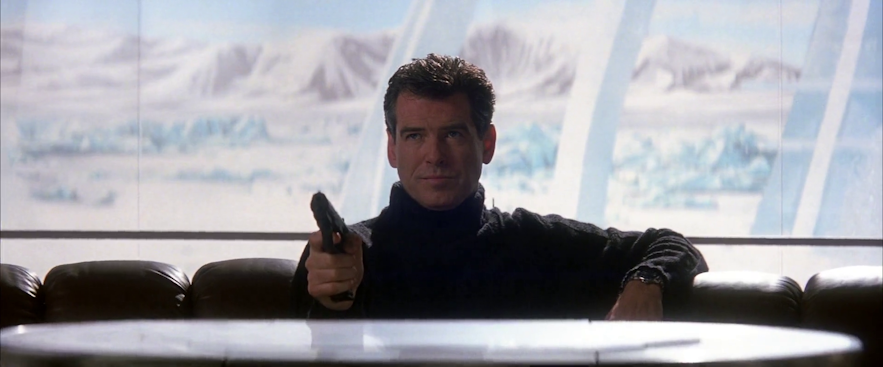
The Odyssey in Iceland
A guide to Icelandic locations connected with Christopher Nolan’s film and the wide-open landscapes you can combine with a real travel plan.
King & Conqueror
A series-location trail for readers who want to see where new historical productions were filmed in Iceland and how to combine them with a route around the island.
Film locations on the blog
Jökulsárlón, Háifoss, Reynisfjara and other places with a cinematic atmosphere or a specific film context in OndaTravel guides.

Read on



Hi, I’m Krystian “dziadzia przewodnik” from OndaTravel.pl!
The North is my greatest passion, but the world is far too beautiful to stay in just one climate. On my blog, I combine the raw landscapes of Iceland and Norway with the exotic energy of Thailand or Vietnam, showing you how to travel authentically — with passion and a camera in hand.
What will you find on OndaTravel.pl?
Visual storytelling: As a photographer and filmmaker, I don’t just describe places — I take you there with professional photos and video.
North expert: Ready-to-use road trip plans for Iceland and Norway, smart tips for budget travel, and my original Northern Lights Radar (locations and forecast).
Travel through the lens of cinema: I track down filming locations — from icy scenes in Interstellar to tropical frames from world cinema.
New direction: Exotic destinations: I love contrast, so the blog is featuring more and more practical knowledge about Vietnam and Thailand. I’ll show you how to find your way around Southeast Asia and come back with your best memories.
P.S. follow me here


Read more: film locations and Iceland
FAQ: The Odyssey, Nolan and Icelandic locations

ICELAND
Puffins in Iceland: when and where to see them?
Where and when to see puffins in Iceland? A practical guide to the season, the best viewing spots, routes and interesting facts about puffins.
Was The Odyssey filmed in Iceland?
The article collects Icelandic locations, contexts and places related to the production and previous film tropes. Whenever there is new information, it is worth verifying updates in the text.
Which Icelandic locations are most important to movie fans?
The most common places to check out are the south coast, the Highlands, waterfall areas, lava fields, and places with rugged landscapes that would fit well with the Iceland in the movie.
Can film locations from Iceland be added to the regular itinerary?
Yes, but it is best to combine them with ready-made routes around the south coast, Golden Circle, Highlands or the Iceland in 7 days plan, so as not to make separate detours that make no logistic sense.
Do you need a 4×4 car for filming locations in Iceland?
It depends on the place and season. Some locations are located on easy roads, but others may require gravel roads, F routes or better weather conditions.
Read also / further
- Start planning: Iceland – starting guide (maps, regions and quick decisions “for the first time”).
- Ready route: Iceland in 7 days – day by day sightseeing plan.
- Classic for 1 day: Golden Circle – Iceland – guide (Þingvellir, geysers, Gullfoss).
- “On the road” route: Ring Road – South Coast (waterfalls, Vík, black beaches).
- The West in a nutshell: Snæfellsnes in 1 day – route plan.
Hi, I’m Krystian “dziadzia przewodnik” from OndaTravel.pl!
The North is my greatest passion, but the world is far too beautiful to stay in just one climate. On my blog, I combine the raw landscapes of Iceland and Norway with the exotic energy of Thailand or Vietnam, showing you how to travel authentically — with passion and a camera in hand.
What will you find on OndaTravel.pl?
Visual storytelling: As a photographer and filmmaker, I don’t just describe places — I take you there with professional photos and video.
North expert: Ready-to-use road trip plans for Iceland and Norway, smart tips for budget travel, and my original Northern Lights Radar (locations and forecast).
Travel through the lens of cinema: I track down filming locations — from icy scenes in Interstellar to tropical frames from world cinema.
New direction: Exotic destinations: I love contrast, so the blog is featuring more and more practical knowledge about Vietnam and Thailand. I’ll show you how to find your way around Southeast Asia and come back with your best memories.
P.S. follow me here



Sorry, the comment form is closed at this time.