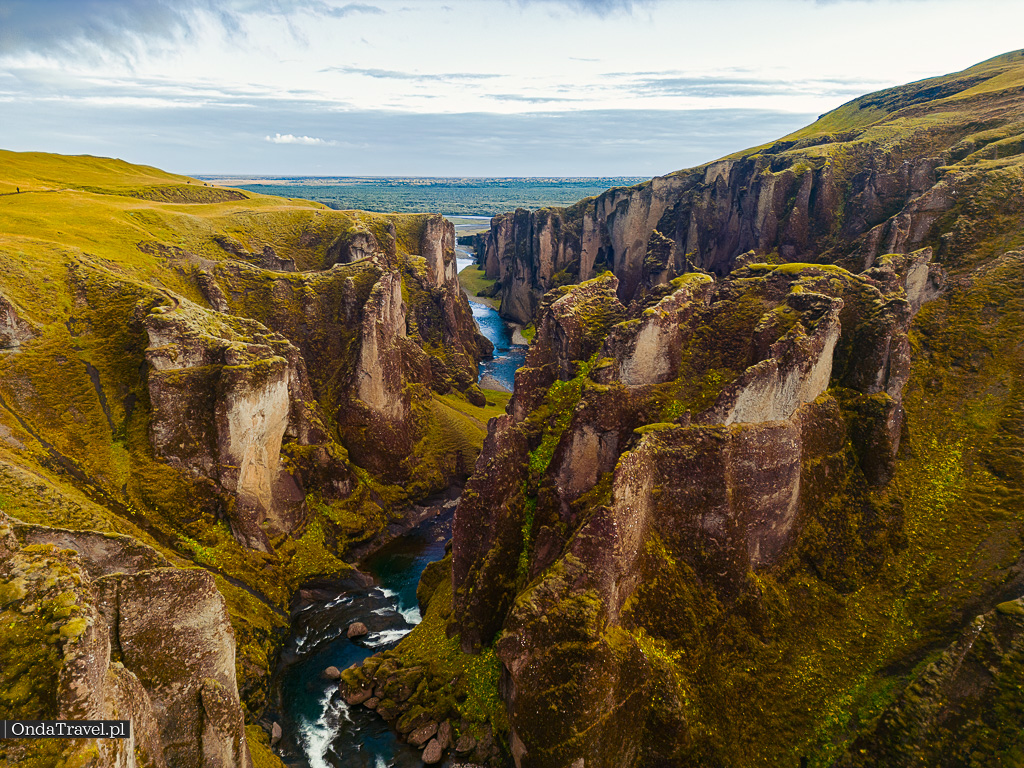
Reynisfjara Black Sand Beach Iceland – why the beach kills tourists

Reynisfjara — in short
Reynisfjara is one of Iceland’s most recognisable black beaches, but also a place that demands great caution. The basalt columns, the view of Reynisdrangar and the raw landscape are hugely impressive, yet what matters most is safety near the waves.
Quick start: Reynisfjara – what to see and how to visit safely
Reynisfjara is Iceland’s famous black sand beach near Vík í Mýrdal, known for basalt columns, Reynisdrangar sea stacks and powerful sneaker waves. This guide explains why the beach is dangerous, what is known about fatal accidents and tourist incidents, how storms and erosion can affect access, and where to find the beach on the map. It also covers parking, the warning system and how to fit Reynisfjara into a Southern Coast (Ring Road) itinerary.
To connect this topic with a wider northern travel plan, see the North section.

GUIDE
North
North on OndaTravel.pl: Iceland, Norway, Lofoten, fjords, northern lights, ready-made routes and tools for planning northern trips.
Reynisfjara in practice: access, timing and safety
Treat Reynisfjara as a short but highly attentive stop on Iceland’s south coast. The main views are close to the car park, but the ocean must be watched continuously.
- the basalt columns are only a few minutes from the car park
- allow roughly 45–90 minutes for an unhurried visit
- stay off wet sand and never turn your back on the ocean
- check the local warning system and wave conditions before entering
Continue planning Iceland with: Golden Circle · Iceland hub

NORTH
North: Iceland, Norway, northern lights and Lofoten
A dedicated OndaTravel section for northern trips: Iceland, Norway, fjords, Lofoten, northern lights, ready-made routes and planning tools.
Affiliate disclosure: Some links in this article may be affiliate links. If you use one of them, OndaTravel.pl may receive a small commission at no extra cost to you.
Iceland Map: Travel → Iceland · Main Guide: Iceland – guide · Route Plan: full Southern Coast (Ring Road) itinerary · Base: Reykjavík – accommodation base and practical tips

ROUTE PLANNING
Iceland travel guide — place Reynisfjara on the South Coast route
Start with the main Iceland guide to connect Reynisfjara with Reykjavík, the South Coast, Ring Road distances, weather buffers and safe first-trip planning.
Safety at Reynisfjara in 30 seconds
- Sneaker waves: the ocean can suddenly “rush” far ashore – watch the waves and do not turn your back to the water.
- Keep your distance from the waterline and avoid wet rocks (slippery + easy to lose balance).
- Don’t risk it “for a photo” – a safe photo is better than the best photo.
- Listen to signs and warnings (lights/notifications at the entrance) – conditions change in minutes.
- After storms the beach can look different: avoid fresh landslides and do not stand under the Reynisfjall cliff (risk of falling rocks).
- Keep children close and don’t let them run on wet sand near the water.
- What’s worth seeing on site: the basalt columns and the cave Hálsanefshellir + view of Reynisdrangar.
- Nearby: where to stay around Vík í Mýrdal and views from the Dyrhólaey cliffs.
- Further route east: the Jökulsárlón lagoon and the famous Diamond Beach.
Updates from Reynisfjara: storms, barriers and safety changes
14 October 2026: wave reaches visitors at Reynisfjara
A large wave washed over several visitors, including a child. RÚV reported that nobody was injured. Conditions deteriorated earlier than forecast: the landowners activated their emergency plan and closed the access road at the Garðar turn-off at 15:30 Icelandic time. Staff monitored the lower car park, which was at risk of flooding.
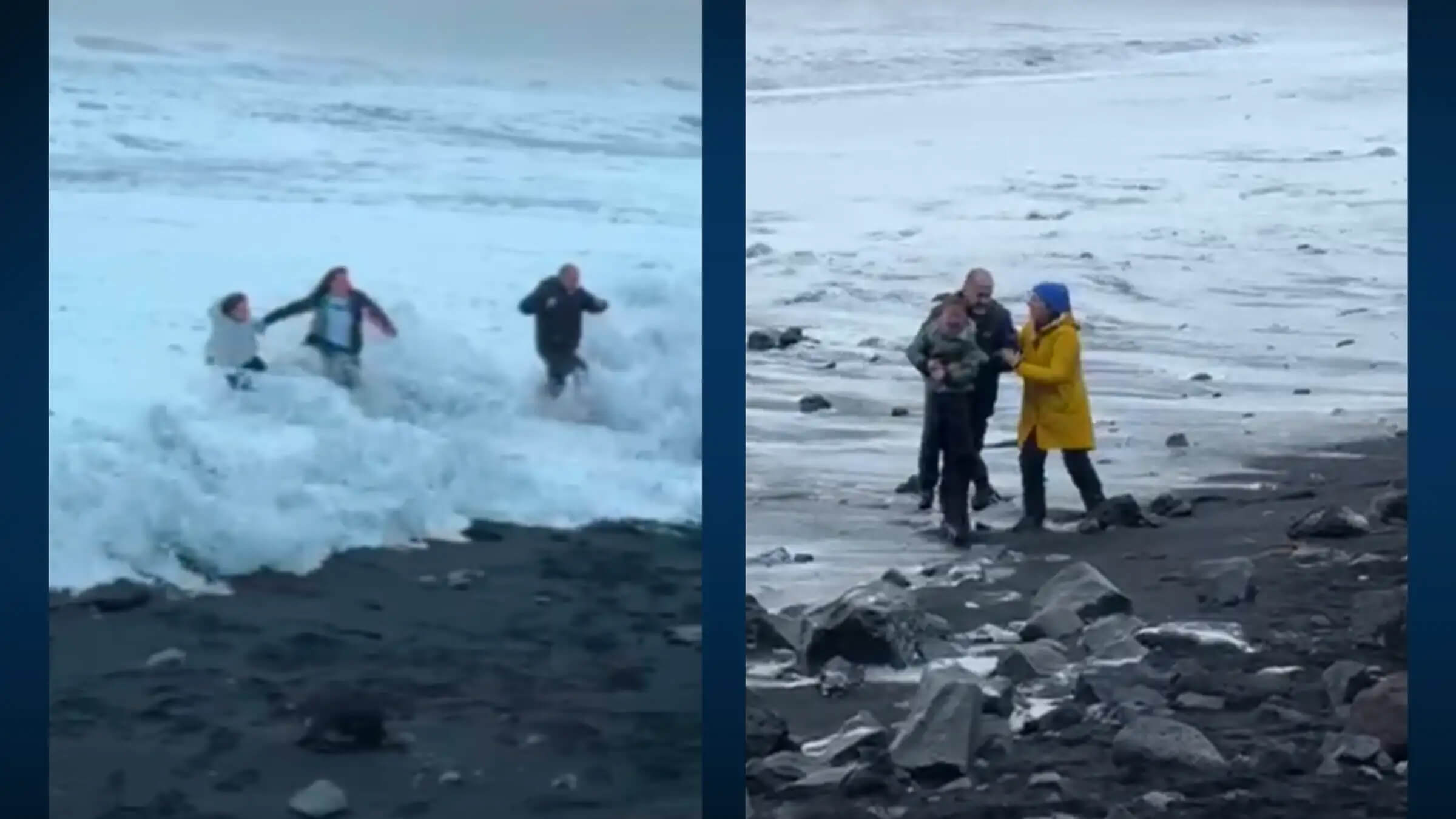
This records the situation on 14 October and is not a current closure notice. Before visiting, check the latest SafeTravel warnings and on-site signs, and follow barriers and staff instructions. Stay away from the water and wet sand, and never turn your back on the ocean.
Sources: RÚV (15.10.2026, EN) · RÚV (15.10.2026, IS) · Iceland News (14.10.2026).
- February 23, 2026: Powerful waves and extreme tidal surges seriously damaged the viewing platform at Reynisfjara. One observation structure had almost disappeared after rocks fell onto the path, while the second warning sign remained standing. This entry records the situation reported on that date and should not be read as a live access update. (icelandnews.is)
- February 12, 2026: Reynisfjara – temporary closures may be introduced during high-risk conditions.
- Access may be temporarily closed when danger is imminent. Storms and erosion can reshape the beach, create steep banks and make the area near the basalt columns or caves harder to reach. Treat the entrance warning lights, barriers and on-site notices as the deciding guidance on the day of your visit. For dated context, use the RÚV report linked in the February 2026 update below.
- Sources: RÚV (EN) · SafeTravel – Black Beach Safety
- 8 February 2026: After a strong storm, reports showed major changes to the coastline and access routes around Reynisfjara. The beach could look very different from older photos, so visitors were advised to follow the signs and official safety guidance at the entrance. See the linked RÚV report on the changes after the storm for the dated account.
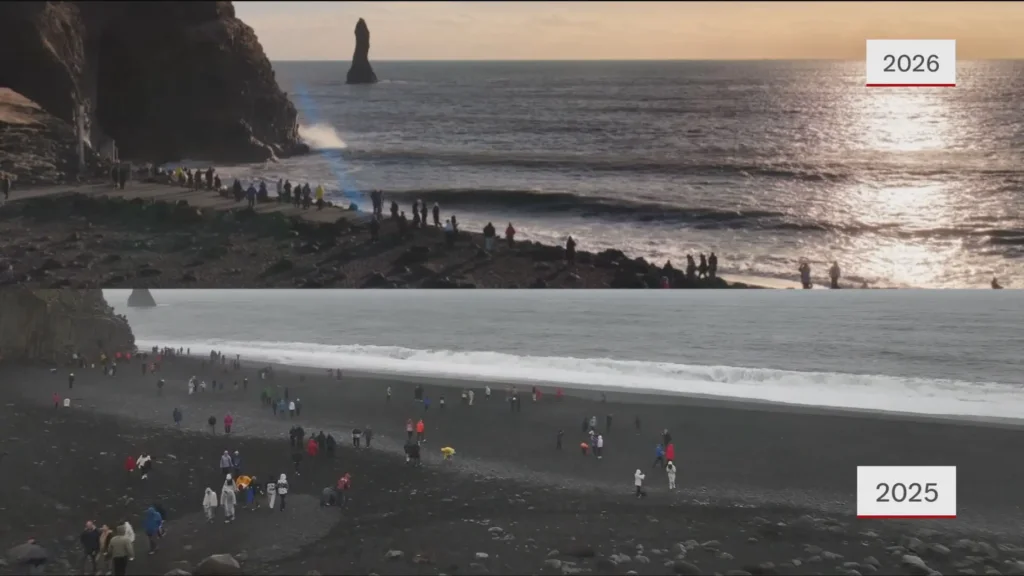


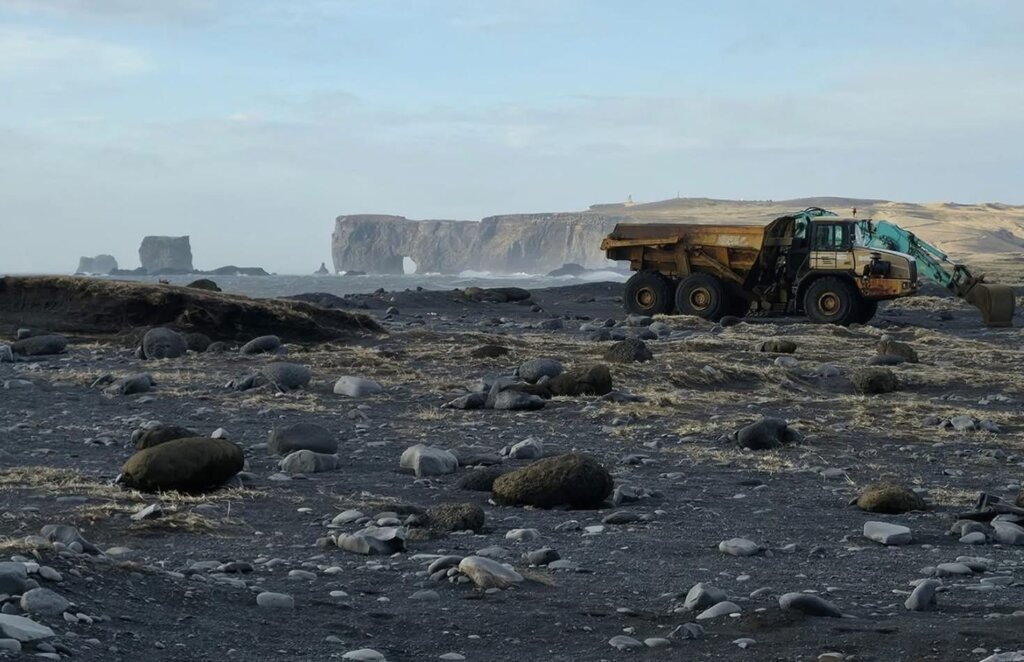
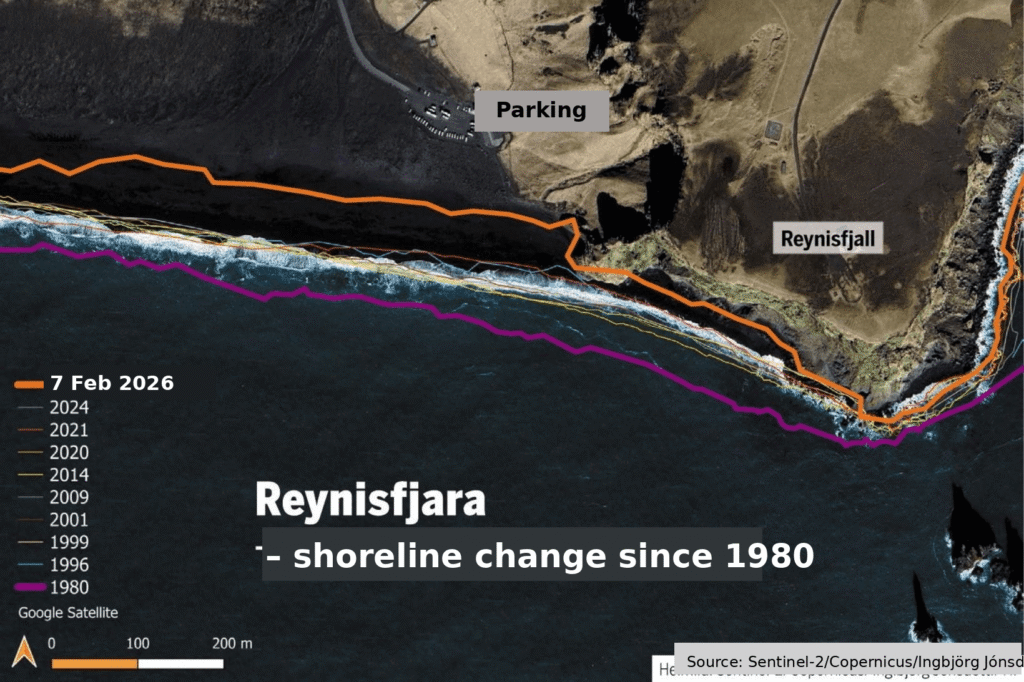
Coastal erosion at Reynisfjara (1980–2026 comparison)
A satellite map of Reynisfjara beach in South Iceland showing shoreline change from 1980 to 7 Feb 2026. Colored lines mark the shoreline positions in different years, illustrating how the coast has shifted over time (erosion and deposition). Labels point to the parking area and the Reynisfjall mountain. Data source: Sentinel-2/Copernicus over a Google Satellite base map.

When visitors ignore the warnings: accidents and near-misses
@ondatravel.pl THE MOST DANGEROUS BEACH IN ICELAND BLACK BEACH Reynisfjara
♬ original sound – Dziadzia z OndaTravel.pl – Dziadzia z OndaTravel.pl
@ondatravel.pl Black Beach Reynisfjara Iceland ? #Reynisfjara #islandia #czarnaplaza #blackbeach #wycieczkiislandia ♬ original sound – Dziadzia z OndaTravel.pl
2 August 2025: dramatic rescue after a child is swept away
On 2 August 2025, a dramatic incident occurred at Reynisfjara. A father and his two daughters entered the water despite warnings about dangerous sneaker waves. The father and the older daughter returned to shore, while the younger girl was swept away by a strong current.
Rescue services were called to the scene, and a Coast Guard vessel from Vestmannaeyjar joined the operation. The girl was pulled from the water and transported by helicopter to a hospital in Reykjavík. The report available at the time did not provide a later medical update, so this article does not present her condition as current.
Reynisfjara: barrier and entry rules when the sea is dangerous
According to news from RUV.is “A new barrier and signage have been installed at Reynisfjara beach after the death of a nine-year-old tourist who drowned in the sea. The erection of a memorial for those who have died there is also being considered.”
Please read the full article: Reynisfjara: barrier and entry rules when the sea is dangerous

Reynisfjara: Iceland’s black sand beach and views of Reynisdrangar
The black sand beach in Iceland Reynisfjara, The beach that kills tourists is not just a term due to the color of the sand, because most beaches in Iceland are black. The Black Sand Beach Reynisfjara is mainly a term due to its Negative PR and go to the section about accidents and safety precautions that take place on this beach as written in the article. The water sucks the ground underfoot which is volcanic sand, normally unstable, and in combination with a wave we are helpless. This is visible in the clips below. Please read on
Reynisfjara is located on the south coast of Iceland, near the picturesque town of Vík í Mýrdal and the Dyrhólaey peninsula. The black sand beach Reynisfjara is one of the most extraordinary and picturesque places in the world. This black beach, famous for its unique sand, dramatic cliffs and mysterious rock formations, attracts tourists from all over the globe. But what makes Reynisfjara so special and why is its sand black?

SOUTH COAST
Reynisfjara Black Sand Beach Iceland – why the beach kills tourists
Reynisfjara black sand beach in Iceland: directions from Vík, parking, map, basalt columns and essential sneaker-wave safety rules.
Confirmed accidents at Reynisfjara: quick facts and dates
- How many people have died at Reynisfjara? There is no verified live all-time death counter in this article. The clearest date-bound figure is that, in the seven years up to 2022, 12 serious incidents were recorded at Reynisfjara, including five fatal accidents. A fatal-accident count is not the same as a complete count of individual deaths, so later cases are listed separately by date below.
- In 2022, the beach was listed as the site with the second highest number of tourist fatalities in Iceland.
- For comparison: in the whole of Iceland in 2017, 13 fatal accidents were recorded, some of which involved the south coast, including Reynisfjara
Onda AIR: travel talks and interesting places
About the black sand beach in Iceland – Reynisfjara – Black Sand Beach we talk in one of the episodes of my podcast Onda AIR
Welcome
? I talked about places: Þingvellir (Thingvellir) National Park, Strokkur Geysers, Geysir Geysers, Gullfoss Waterfall, Kerid Crater Lake, Thorufoss Waterfall, Reynisfjara Black Sand Beach, Fjadrargljufur Canyon
“Reynisfjara black sand beach Iceland, which kills tourists. Be careful and be vigilant”

Why is the sand at Reynisfjara black? Black sand – the secret of the volcanic past
The secret of the black color of Reynisfjara’s sand lies in its volcanic past. Iceland, located on the Mid-Atlantic Ridge, is a volcanic island, which means its landscape has been shaped by numerous volcanic eruptions. During eruptions, lava flowing from the Earth’s interior, rich in minerals such as basalt, cools rapidly upon contact with the cold ocean water, forming fine black sand grains.

Reynisfjara ecosystems and birdlife: tide pools and photo rules
Despite harsh conditions, the ecosystems around Reynisfjara are rich and diverse. Tidal pools, forming in rocky depressions during low tide, are home to many species of algae, crustaceans, mollusks and small fish. They are an important food source for seabirds, such as puffins, which nest on the nearby cliffs including Dyrhólaey
Hálsanefshellir: basalt cave and columns right by the beach
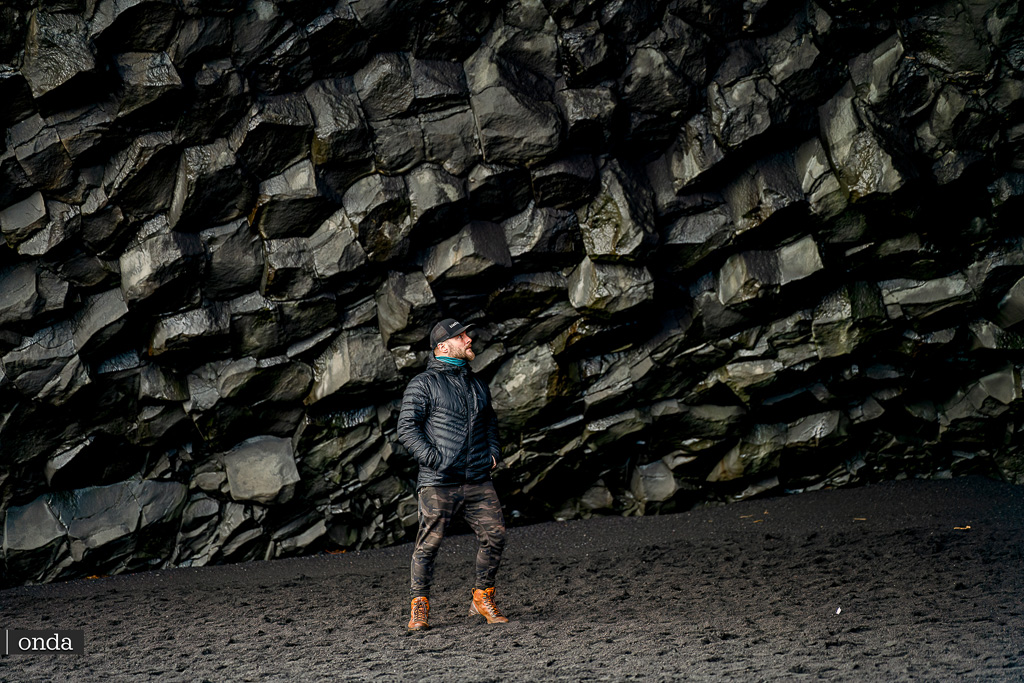
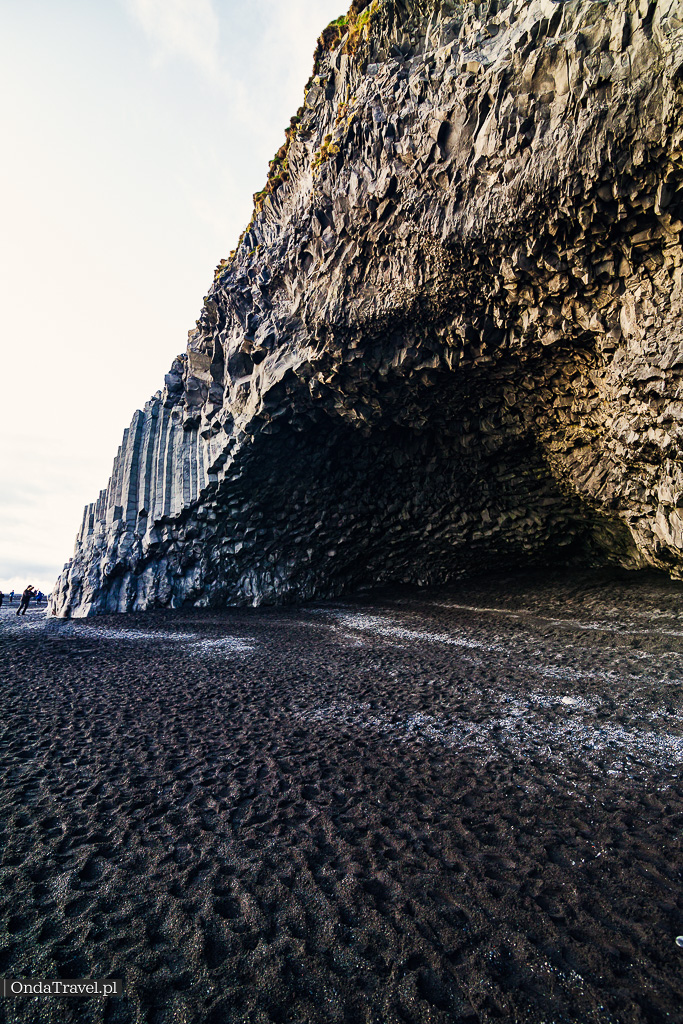
Reynisfjara is famous for its impressive basalt columns Hálsanefshellir Cave, which were formed as a result of the slow cooling of lava, leading to the creation of regular, hexagonal formations. These natural “organ pipes” form the backdrop for the beach, adding drama and uniqueness.


Noah (2014): Reynisfjara as a dramatic film backdrop
Iceland interesting facts: One of the scenes was filmed in the cave “Noah” (2014): In this biblical epic directed by Darren Aronofsky, the black sand beach Reynisfjara served as the scenery for many key scenes of the film starring Russell Crowe. With its unique coloring and landscape, it helped create the vision of an ancient, harsh world.

Just a few simple rules are enough to enjoy the view and come back with good photos.
Reynisdrangar: the legend of enchanted trolls and rocks
Close to the shore of the Atlantic Ocean against the backdrop of Mount Reynisfjall rising to a height of 66 m stand the rock formations known as Reynisdrangar. According to legend, they are petrified trolls that were turned to stone by the sun’s rays as they tried to pull three-masted ships from the sea.


Why is Reynisfjara so dangerous? – Dangers and precautions
Reynisfjara can be dangerous even when the sea looks calm. Sneaker waves can travel much farther up the beach than the waves before them, knock people over and pull them into strong water. The wet black sand can also become unstable underfoot, making it harder to regain balance. Stay well back from the waterline, never turn your back on the ocean, and follow the warning lights and barriers at the entrance.
I recommend the article on VisitIceland.com: Warning: Reynisfjara Beach is Beautiful but Hazardous—Stay Safe


Sneaker waves at Reynisfjara: why the sea can surprise you
“Sneaker waves” – “treacherous waves” is an oceanic phenomenon that can be extremely dangerous for people on the beach. These are sudden, unexpected waves that appear without clear warning and can be significantly larger than the preceding waves.
Why are they so dangerous?
Unexpected: Sneaker waves do not have a characteristic appearance that distinguishes them. They can look like ordinary waves and then suddenly increase in height and power.
Force: These waves can easily knock over an adult and pull them deep into the water. Even an experienced swimmer may have difficulty resisting them.
Rip current: They are often accompanied by a strong rip current, which can pull a person out to sea, making it difficult to return to shore.
When do they most often occur?
Waves “Sneaker waves” can occur anywhere and at any time, but are especially common:
After storms: When the wind begins to die down after a storm, waves can become more chaotic and unpredictable.
In narrow bays and river mouths: In these places, waves can concentrate and strengthen.
Near breakwaters: The structure of a breakwater can influence the direction and force of waves.
Tragic events at Reynisfjara: why you need to be careful
Reynisfjara has a documented history of tourists being caught by sneaker waves. The dated cases below show the pattern: people stand too close to the water, are knocked down or swept into the sea, and rescue can become extremely difficult within seconds. The purpose of this section is not to create a sensational running total, but to show why the warnings must be taken seriously.
If you see red lights or a notice that the area is closed – do not go down to the beach, even “for a minute”.
Helpless witnesses watched a tourist being swept away
November 2021: A young female tourist from China was swept away by a wave while walking on the beach. Weather conditions were so difficult that rescuers could not undertake immediate rescue operations. The woman was found dead in the sea.
SOURCE – VISIR
Tragic accident at Reynisfjara: what to avoid to return safely
November 2021: A group of tourists was surprised by strong waves; four people were pulled into the water. Three managed to get out, but one woman was swept about 100 meters from shore and died.
SOURCE – VISIR

Another tragedy at Reynisfjara: simple rules that save lives
June 2022: An accident occurred at Reynisfjara beach, resulting in two people falling into the water. An 80-year-old tourist, who was pulled from the sea by a Coast Guard helicopter, could not be saved.
SOURCE – ICELAND NEWS
These tragic events underscore how important it is to exercise caution when visiting Reynisfjara. Always heed local warnings and avoid approaching the waterline, even if the sea seems calm.
To better understand the beauty and potential dangers associated with Reynisfjara beach, I encourage you to watch the video material below:
Getting to the black sand beach in Iceland and practical information
Reynisfjara is about 180 km east of Reykjavík and just west of Vík í Mýrdal. For navigation, open Reynisfjara Beach on Google Maps. There is parking and tourist infrastructure near the entrance. Because conditions can change quickly, follow the warning lights, barriers and on-site notices before walking onto the beach. For a quieter visit, arrive early or outside peak hours.

Other black sand beaches and spots near Reynisfjara
Around Reynisfjara beach, located on the south coast of Iceland, there are other equally picturesque and interesting beaches and viewpoints. Here are the most important ones:
If you have a little more time, within a short drive you will find several places that complement Reynisfjara well.
Víkurfjara in Vík í Mýrdal: a quieter black sand beach
The video helps you see how quickly wave dynamics change and why it’s good to stay away from the water.
Kirkjufjara and Arnardrangur: calmer cliffs and sea stacks
Sólheimasandur and Sólheimafjara: endless sands and strong winds
The black volcanic desert Solheimafjara, on which lies the wreck of the Dakota (DC-3) aircraft Solheimasandur Plane Wreck, which crashed there in 1973 – a popular tourist attraction.
These are short shots that show the scale of the cliffs and the harshness of this part of the south coast well.

Dyrhólaey Peninsula: cliffs, lighthouse and ocean views
Dyrhólaey Peninsula is a picturesque peninsula in southern Iceland, known for impressive cliffs up to 120 meters high.
From the Dyrhólaey cliffs, spectacular views open up of the black Reynisfjara beaches, the basalt columns of Reynisdrangar and the Mýrdalsjökull glacier. In good weather, you can even see the Eyjafjallajökull volcano.
At the top of the peninsula there is a charming lighthouse from 1927.

Reynisfjara in pop culture: films, series and music videos
Iceland interesting facts: The fame of Reynisfjara reaches far beyond Iceland’s borders. This extraordinary beach has appeared in many films and series, including Vikings, Rogue One: A Star Wars Story, Star Trek Into Darkness



I assume that when planning a trip to Iceland you search for phrases like “places Iceland is famous for wikipedia”, “what Iceland is famous for” or “Iceland what to see” then in the search results appears Black Sand Beach meaning Reynisfjara Black Sand Beach
If you like rugged landscapes, this area has more black beaches than just Reynisfjara.

Reynisfjara in Iceland: why it’s worth a visit
Planning the rest of your route south? These posts will help you sort out logistics and attractions without “jumping” between topics:
- Ready-made Southern Coast (Ring Road) itinerary – what’s along the way and where to stop
- Iceland in 7 days – day-by-day sightseeing plan (divided by regions)
- Reykjavík as an accommodation base – access, parking and practical tips
- If you are going further east: Jökulsárlón and Diamond Beach – how to plan a visit
- In winter check if there is a chance for the aurora: radar and forecast for Iceland
Reynisfjara is a must-see stop on any Iceland trip. If you want to fit it well into your route, check the Iceland in 4 days itinerary or the Iceland in 7 days plan to see how to combine Reynisfjara with Vík, Dyrhólaey, waterfalls and other South Coast highlights.
If you are still planning your route, start with Travel → Iceland and the OndaTravel travel blog, where you will find more itineraries, maps, practical tips and places worth adding to your trip.
Dreaming of a trip to Iceland that will stay in your memory for a long time? Come with us to Iceland!
“Iceland: What to see? Check out our comprehensive guide! In our Iceland guide, we have gathered all the Iceland tourist attractions: Seljalandsfoss waterfall, Vatnajökull National Park and more. Learn interesting facts about Iceland and find out what to see in Iceland to experience its wild nature. This complete tourist guide to Iceland is a must-have for every explorer!”
FAQ: Reynisfjara — access, safety and best time
Where exactly is the black sand beach Reynisfjara and how to get there from Reykjavík?
The black sand beach Reynisfjara is located on the south coast of Iceland, right by the picturesque village of Vík í Mýrdal. Driving from Reykjavík to Reynisfjara by car takes about 2–2.5 hours (approx. 188 km) via Route 1 – Ring Road, and then local road 215. There are two parking lots P1 and P2 by the beach, from which you can walk in a few minutes. It’s one of the most easily accessible attractions in southern Iceland, ideal for a day trip from Reykjavík.Remember to pay for parking, best via the Parka app, fines are quite high, especially in the summer season
Is Reynisfjara beach safe for tourists? – What do you need to know about safety at Reynisfjara?
Reynisfjara is one of the most beautiful, but also the most dangerous places in Iceland. So-called sneaker waves occur here – sudden, powerful waves that can pull people from the beach into the sea. Therefore, always maintain a safe distance from the water (minimum 30 meters) and never turn your back to the ocean. It’s worth familiarizing yourself with safety markings and local guide recommendations before you visit Reynisfjara black sand beach.
What is worth seeing at Reynisfjara beach besides the black sand?
The black sand beach Reynisfjara is famous not only for its volcanic sand, but also for majestic basalt columns and the cave Hálsanefshellir. Right off the shore you can see the rock formations Reynisdrangar, which – according to Icelandic legend – are petrified trolls. It’s one of the most photogenic places in Iceland and a must-see point on any southern coast itinerary.
When is the best time of day for photos at Reynisfjara?
The best time of day for photos at Reynisfjara is early morning and late afternoon, when the light creates soft, golden tones. In the summer season, you can capture the contrast of black sand and blue sky, and in winter – the harsh climate of Iceland. For photographers, wide-angle lenses are recommended, as well as a tripod to capture the Reynisdrangar formations in all their glory.
How many people have died at Reynisfjara?
Reynisfjara does not have a reliable live all-time death counter. The clearest date-bound figure used in this guide is that, in the seven years up to 2022, 12 serious incidents were recorded at the beach, including five fatal accidents. That is a count of fatal accidents, not necessarily a complete count of individual deaths, so later cases are listed separately by date.
What accidents and tourist incidents have happened at Reynisfjara?
Documented cases include fatal incidents in November 2021 and June 2022, as well as a major rescue on 2 August 2025 after a child was swept into the water. The pattern is consistent: people get too close to the waterline, sneaker waves knock them down or drag them into the sea, and rescue becomes difficult within seconds.
What to take with you for a visit to Reynisfjara beach?
The weather in Iceland is changeable, so when going to Reynisfjara, it is worth taking a rain jacket, trekking shoes with good grip, and a hat and gloves. If you plan to photograph, be sure to take a tripod and a spare battery – wind and low temperature quickly drain equipment. It’s also good to have a thermos with a warm drink, especially in winter.
What mistakes do tourists most often make when visiting Reynisfjara?
The most common mistake is getting too close to the water, despite clear warnings about sneaker waves. Many people also disregard information signs and stand on rocks to take a photo – this is very dangerous. Another mistake is not wearing appropriate clothing – at Reynisfjara black sand beach the wind can be exceptionally strong and the temperature lower than around Reykjavík. The rule is simple: admire, but keep your distance.
Why is Reynisfjara so dangerous even when the sea looks calm?
Sneaker waves can travel much farther up the beach than the waves before them. They can arrive without an obvious warning, knock over an adult and pull a person into strong water. Keep well back from the waterline, never turn your back on the ocean, and follow the warning lights and barriers at the entrance.
Why can Reynisfjara close or become harder to access after storms?
Powerful waves, storm surges, erosion and falling rocks can damage paths, viewing areas and the beach itself. Access may therefore be restricted temporarily when conditions are dangerous. Do not rely on old photos or an undated status page; follow the entrance warning lights, barriers and official on-site notices on the day of your visit.
What happened to Reynisfjara black sand beach in 2026?
In late January and early February 2026, a powerful storm dramatically changed Reynisfjara’s coastline – the ocean washed away large amounts of black sand and shifted massive boulders by several metres, with erosion reaching the viewing platform (damaged on 23 February 2026). The landowner described the scale of the damage as unprecedented in living memory (RUV, 8 February 2026). Since March 2026 some sand has started returning, and the beach remains open to visitors, though its appearance still differs from pre-2026 photos. Check SafeTravel for current conditions.
Is Reynisfjara still considered Iceland’s most dangerous beach?
Yes. Despite the 2026 storm changes, Reynisfjara remains one of the most hazardous stretches of Iceland’s coast because of sneaker waves. Post-erosion, the terrain is also less predictable – steep new drop-offs have appeared, and access to the basalt columns can be harder or temporarily closed. Always stay behind the signage and check current warnings before entering the beach.
Read also / next: more places in Iceland near Vík
- Travel → Iceland (direction map and all posts)
- Iceland – guide (key information to start with)
- Southern Coast (Ring Road) – route plan, stops and accommodation
- Iceland in 7 days – ready-made day-by-day plan
- Jökulsárlón and Diamond Beach – another major point east of Vík
- Northern Lights radar for Iceland – if you are hunting the night sky
Planning a drive between Vík and Jökulsárlón? Plan your stops for good light – that’s when the south coast makes the biggest impression.


Hi, I’m Krystian “dziadzia przewodnik” from OndaTravel.pl!
The North is my greatest passion, but the world is far too beautiful to stay in just one climate. On my blog, I combine the raw landscapes of Iceland and Norway with the exotic energy of Thailand or Vietnam, showing you how to travel authentically — with passion and a camera in hand.
What will you find on OndaTravel.pl?
Visual storytelling: As a photographer and filmmaker, I don’t just describe places — I take you there with professional photos and video.
North expert: Ready-to-use road trip plans for Iceland and Norway, smart tips for budget travel, and my original Northern Lights Radar (locations and forecast).
Travel through the lens of cinema: I track down filming locations — from icy scenes in Interstellar to tropical frames from world cinema.
New direction: Exotic destinations: I love contrast, so the blog is featuring more and more practical knowledge about Vietnam and Thailand. I’ll show you how to find your way around Southeast Asia and come back with your best memories.
P.S. follow me here
Author
Krystian „dziadzia przewodnik”The North is my greatest passion, but the world is too beautiful to stay in one climate. On my blog I combine the raw nature of Iceland and Norway with the exotic energy of Thailand and Vietnam, showing you how to travel authentically, with passion and a camera in hand.