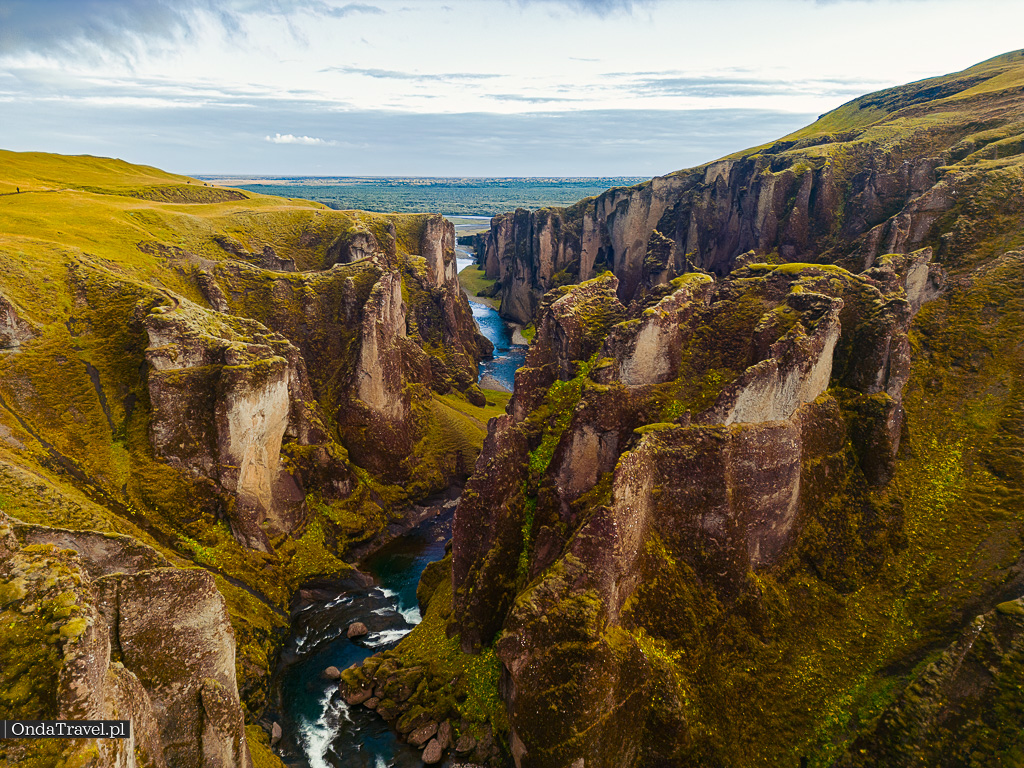
Glymur Waterfall in Iceland: trail, access and safety


In short:Glymur is one of the most spectacular waterfalls in western Iceland and the best choice when you want to combine a waterfall, a short hike, a canyon, a cave, a river crossing and a view of the Hvalfjörður fjord. This is not a “get out of the car and take a photo” kind of stop — the whole route is the main attraction here.
To connect this topic with a wider northern travel plan, see the North section.

GUIDE
North
North on OndaTravel.pl: Iceland, Norway, Lofoten, fjords, northern lights, ready-made routes and tools for planning northern trips.

NORTH
North: Iceland, Norway, northern lights and Lofoten
A dedicated OndaTravel section for northern trips: Iceland, Norway, fjords, Lofoten, northern lights, ready-made routes and planning tools.
This guide brings together everything that is usually missing from short descriptions: how to get to Glymur, which trail variant to choose, when to go, what Þvottahellir cave is like, where the Botnsá river crossing appears, why you need to be especially careful in winter, and what to combine this stop with in your travel plan aroundIceland.

GUIDE
Iceland
Plan your first Iceland trip: 4- and 7-day routes, the Golden Circle, South Coast, Reykjanes and Snæfellsnes, plus seasons, driving and safety tips.
Glymur — in short
Glymur is one of Iceland’s most spectacular waterfalls, but it requires more effort than the typical stops along the Ring Road. It is a route for people who want to combine a waterfall, a canyon, climbs and a more active day.
Onda AIR podcast: Iceland’s waterfalls
At the beginning of the article I also include an episode of the Onda AIR podcast about Iceland’s waterfalls. In it, I talk about Glymur, Kvernufoss, Skógafoss, Háifoss, Gullfoss and other places that help you understand where Glymur fits into an Iceland travel plan.
Table of contents: Glymur waterfall step by step

Glymur: private land, first impressions and my perspective
Glymur Waterfallis located on private land. However, at the entrance gate there is a sign stating that you enter at your own risk. I assume this is related to the 2023 accident on the trail, which I mention below. The waterfall itself makes an incredible impression. The water falls from a great height, creating a dense mist. The area around the waterfall is quiet and peaceful. It is an ideal place to relax and admire nature. In any case, see for yourself how it looks in the photos and videos below.
Admission is free and I recommend arriving early in the morning.

Basic information:
- Location:Bílastæði við Botnsá og Glym Botnsa, Iceland
- Region:Botnsdalur valley, near Hvalfjörður fjord, also known as Whale Fjord.
- River:It is fed by the Botnsá river, which flows from Lake Hvalvatn
- Height:Glymur is the second-highest waterfall in Iceland, measuring 198 metres
- Admission:Free, on private land
Tip 1:If you choose the circular route, I suggest taking water shoes or flip-flops with you, for example, to cross theBotnsá river.
Tip 2:The trail is accessible only in the summer season. I do not recommend entering the trail in winter.
Below you will find the key information and my tips from walking the trail — treat them as a practical summary before your trip.
Glymur Waterfallis one of the most impressive “less obvious” waterfalls in western Iceland. If you enjoy scenic trails with fjord views and do not mind an uphill walk, it is worth adding it to your plan.


Trails to Glymur: the shorter route, lupine fields and the variant I recommend
A trip to Glymur waterfall is a great opportunity to admire the beauty of Iceland.
There are two trails leading towards the top of the waterfall, about 3 km and 1.5 km long; both are well marked and not too demanding. Of course, you can continue on a longer hike, for example towardsHvalfell mountainorLake Hvalvatn


The shorter route through Einitunga(from the car park, head right, as the signs indicate). This is the route I recommend. It leads through scenic landscapes, includinglupine fields and Þvottahellir cave, which you need to enter in order to continue the trail. After that, you cross the footbridge and continue upwards.


Þvottahellir cave and the longer loop around the canyon


As for the longer route through Glumsbrekkur,it is not quite as interesting. It is monotonous and rocky. Walking that way, I had the feeling I was crossing a Syrian desert.
On the way back, I recommend being careful, because it is easy to slip on loose stones.
There is also another option: combining both routes into a longer loop.
However, here I suggest taking, for example,water shoes or flip-flopsto cross theBotnsá river.In summer the water level reaches the knees. Unfortunately, there is no information about this anywhere, and I wanted to see what was on the other side. That is why I decided to cross this section barefoot. The rocky bottom causes quite a lot of pain.

I recommend checking detailed maps:
Mapcarta.com
Map.is
Blog about the region and the area around Glymur Waterfall
Ferlir.is
At the top comes the moment when you can sit down and drift away while enjoying the incredible views. The beautiful canyon surrounded by the fjord is breathtaking. Its scale and powerful sense of space give you a lot to think about. Take a moment to watch the drone footage below and see what the landscape looks like at one of Iceland’s most beautiful waterfalls.
View of Hvalfjörður: canyon, space and a moment to breathe
Hvalfjörður, or “Whale Fjord”, is a picturesque fjord in western Iceland, about 30 kilometres north of the country’s capital, Reykjavík.
The name of the fjord, “Whale Fjord”, comes from the whales that were once often seen in these waters, as well as from activity connected with whaling.
Hvalfjörður is surrounded by mountains and offers beautiful views.It is especially known for Glymur waterfall, which was considered the highest waterfall in Iceland before a taller waterfall was discovered in the interior.
The fjord itself is about 30 kilometres long and about 5 kilometres wide at its widest point.
During World War II, Hvalfjörður was a strategic location for the Allies, who used it as a naval base. Remains from that period can still be found in the area.
Hvalfjarðargöng tunnel:
In 1998, the Hvalfjarðargöng tunnel was opened, shortening the driving time around the fjord. The tunnel runs under the fjord and is part of Iceland’s national Road 1, the Ring Road.
During a road trip around Iceland, relaxation also matters, and here I can suggest that nearGlymurin theHvalfjörðurfjord there is a thermal spa with hot springs:Hvammsvík Nature Resort & Hot SpringsI write about this place and other geothermal springs in the article“Iceland hot springs and geothermal pools near Reykjavík“,which I invite you to read

REYKJAVÍK AND SURROUNDING AREAS
Iceland hot springs and geothermal pools near Reykjavik
Iceland hot springs and thermal pools near Reykjavik: compare locations, map, transport, budget, reservations and natural bathing options.


War and Peace Museum / Hernámssetrið í Hvalfirði

Hvalfjörður also has a strong historical context. During World War II, the fjord was an important place for the Allies: a naval base operated here, used for convoy escorts and anti-submarine operations, and the area around Hvítanes appears in sources as a place connected with HMS Baldur. That is why, when driving towards Glymur, it is worth looking at Hvalfjörður not only as a beautiful fjord, but also as a fragment of Iceland’s wartime history. If this topic interests you, it is worth checking theWar and Peace Museum / Hernámssetrið í Hvalfirðiin Hlaðir — a museum dedicated to the wartime history of Hvalfjörður. Before visiting, check the current opening hours and availability, and for historical context also see the official sectionHvalfjörður 1940–45.


Safety on the trail: slippery sections, cliffs and the river crossing
Accident on the trail: why you should not underestimate the conditions at Glymur
I mentioned above that the trail is open only in the summer season. Of course, it is physically possible to enter the area, but there is a serious risk near the edges in the upper parts of the rock.
The trail is very well prepared, but at the top you really need to be careful.
In March 2023, a young couple took that kind of risk. Sadly, it ended fatally.
Link to the article:Ruv.is

What to check before starting the trail to Glymur
“But it was difficult and dangerous. There was a high risk of falling and the operation was time-consuming. There was, and still is, a lot of ice on site, both in the ravine and on its sides, so the conditions there are simply dangerous”said Jón Þór.
Link to the article: Visir.is

Glymur and other Icelandic waterfalls: where does it fit into the route?
Glymur is best understood in the context of other waterfalls in Iceland. If you want to compare this trail with easier places along the road, start with my main guide to themost beautiful waterfalls in Iceland. There I describe, among others,Kvernufoss, Gljúfrabúi, Háifoss i Nauthúsafoss, places that may sometimes be a better choice than Glymur if the weather, time or fitness level do not favour a longer hike.

SOUTH COAST
The Most Beautiful Waterfalls in Iceland: Map, Route and Practical Tips
A practical guide to Iceland waterfalls: Kvernufoss, Glymur, Gljúfrabúi, Háifoss, Granni and Gullfoss, with route ideas, photos and safety tips.
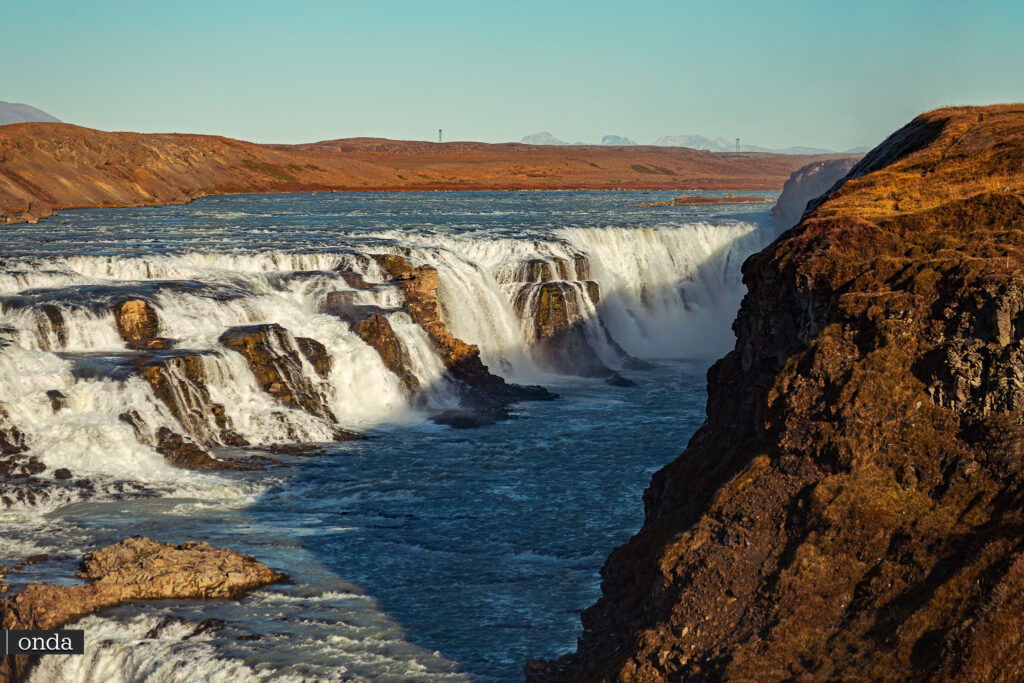
ICELAND WATERFALLS
The most beautiful waterfalls in Iceland: choices, routes and comparisons
If you are planning a day around waterfalls and Iceland’s classic sights, a separate article about Gullfoss helps place this waterfall better within the full ICELAND WATERFALLS loop.
Glymur in brief: is it worth the hike?
Yes, but only if you have time for a real trail. Glymur is about 198 metres high and for years was considered Iceland’s tallest waterfall, before more attention was given to Morsárfoss in the Vatnajökull area. Today, its strength is not the ranking itself, but the combination of height, a narrow canyon, the green Botnsdalur valley and the view of Hvalfjörður.
| Topic | Key answer |
| Who is it for? | For people who enjoy scenic trails, not just quick stops from the car park. |
| Time | It is safest to reserve several hours, including stops, photos and a weather buffer. |
| Difficulty | Moderate, but with sections that require attention: the cave, footbridge, stones, exposure and the river crossing on the loop. |
| Best time | Late spring, summer and early autumn in stable weather. In winter and in icy conditions, do not treat it as an ordinary walk. |
| Biggest mistake | Starting too late, entering in bad weather or attempting the loop without being prepared for water. |
Where is Glymur waterfall and how do you get there?
Glymur is located in western Iceland, in the Hvalfjörður area, on the Botnsá river. The easiest way to get there is by car from Reykjavík, heading towards Hvalfjörður fjord and the car park at the beginning of the trail. In practice, it is best to enter the Botnsá/Glymur car park in your map, not the waterfall itself, because the final approach to the cascade is on foot.
If you are continuing west, Glymur combines well with the route toSnæfellsnes in one day. If you are doing a road trip around Iceland, it can also work as a strong stop between Reykjavík, Hvalfjörður and the western part of the island. I would not, however, plan Glymur as a quick “on the way” stop, because that can easily disrupt the rhythm of the whole day.
PLANNING & ITINERARIES
Iceland Snæfellsnes in 1 day from Reykjavík: route plan
How to tackle Snæfellsnes in 1 day? Episode + specific timestamps and links to posts: logistics, hot springs, lava cave, and beaches.
If you are driving from Reykjavík towards Snæfellsnes, Glymur can be a beautiful but time-consuming addition. This plan will help you decide whether to add the waterfall to the route or leave it for a separate day.
If you are driving from Reykjavík towards Snæfellsnes, Glymur can be a beautiful but time-consuming addition. This plan will help you decide whether to add the waterfall to the route or leave it for a separate day.
Glymur on the way to Snæfellsnes: when does it make sense?
If you are driving from Reykjavík towards Snæfellsnes, Glymur can be a beautiful but time-consuming addition. This plan will help you decide whether to add the waterfall to the route or leave it for a separate day.
Map, parking and route variants to Glymur
Before heading out, check an offline map, because you should not rely only on mobile coverage on the trail. It is useful to save the car park, the trail line, the approximate point near the cave and the place where you decide whether to return the same way or complete the loop.
- The safest option for most people: follow the classic trail to the viewpoints and return the same way.
- Variant for more experienced hikers: the loop with the Botnsá crossing, only in good weather and with a suitable water level.
- Extended variant: combining the Glymur area with Hvalvatn or a longer route towards Hvalfell — only if you really have a full day and a good forecast.
Practical note: footbridge, log and the Botnsá crossing
On the route to Glymur, one of the most important moments is the crossing of the Botnsá river. In season, a footbridge/log with a rope is often installed here, but do not treat it as guaranteed infrastructure all year round. After rain, during high water or outside the season, this section may be harder than it looks in photos. If you are doing the loop, take water shoes and do not force the crossing when conditions are poor.
When to go to Glymur: season, weather and time of day
The best time for Glymur is from late spring to early autumn, when the trail is drier, the days are long and the river crossing is more predictable. Even in summer, check the wind and rain forecast, because wet stones and steep sections can quickly change the character of the route.
In winter, in icy conditions or after fresh snowfall, Glymur should not be treated like an ordinary walk. This is especially important in the upper sections and near the canyon edges. If you are unsure, skip the trail and choose an easier waterfall or geothermal pools in the area.
The best time of day is morning or before noon. You then have more daylight, less time pressure and a bigger margin if your walking pace turns out to be slower. A late start is one of the most common mistakes, because tiredness and poorer light make bad decisions more likely.
Legend, geology and the name: where does Glymur’s atmosphere come from?
The area around Glymur is connected with Hvalfjörður, Hvalfell and Hvalvatn — names that in the Icelandic landscape return to the motif of the whale. According to local stories, a powerful whale was lured deep into the fjord and river, towards the lake. It is a legend, but it fits the raw landscape perfectly: the narrow fjord, steep walls and a valley that looks as if it had been carved by something much larger than an ordinary stream.
Geologically, the most important elements are the combination of glacial activity, volcanic bedrock and erosion by the Botnsá river. The river flows out of Hvalvatn, cuts through the area around Hvalfell and drops into a deep canyon. That is why Glymur is not just a high cascade — it is a whole system of valley, lake, river, rock and fjord.
How to combine Glymur with an Iceland itinerary?
It is best to plan Glymur not as a random point on the map, but as adeliberate part of a western Iceland route. From a guide’s perspective, the key question is: are you driving only from Reykjavík for one day, or is Glymur supposed to be a stop on the way west? This decision determines the pace of the day, the number of stops and whether the trail will feel enjoyable or like another item to tick off in a rush.
If you are staying inReykjavík, Glymur is a very good goal for a more active day outside the city. In the morning you head towards Hvalfjörður, walk the trail without pressure, and after descending you can return to the capital or end the day more calmly — for example in pools andhot springs near Reykjavík. This works especially well if you do not want to jump straight into long drives along the South Coast.

PLANNING & ITINERARIES
Reykjavik capital of Iceland – Travel guide
A practical Reykjavík guide covering attractions, a 1–2 day walking route, the centre, harbour, Hallgrímskirkja and trip planning.
The second sensible option is to combine Glymur with a route west. If you are planningSnæfellsnes in one day from Reykjavík, the waterfall can work as a scenic morning accent before the onward drive. But it is worth being honest: Glymur is not a fifteen-minute stop. If you want to reach the viewpoints, see Þvottahellir and not run over stones, give it its own time block. With a looser plan, also check the fuller guide to theSnæfellsnes peninsula, because this direction is easy to overload.

TOP ATTRACTIONS ICELAND
Iceland Snaefellsnes – Best Travel Guide
Snæfellsnes in a day from Reykjavík: Kirkjufell, Arnarstapi, Djúpalónssandur, Búðakirkja and seals at Ytri Tunga in one loop, with a map.
| Your plan | How to include Glymur | What to read next |
| Base in Reykjavík | Do Glymur as a separate, active day: morning trail, then a calmer return or a thermal bath in the afternoon. | Reykjavík + hot springs near Reykjavík |
| Route west | Combine Glymur with driving towards Snæfellsnes only if you start early and do not plan too many stops. | Snæfellsnes in one day from Reykjavík |
| First trip to Iceland | Use Glymur as an alternative to easier waterfalls, but not at the expense of safety and weather. | Iceland in 4 daysorIceland in 7 days |
| South and classic sights road trip | If you are mainly driving the Ring Road, compare Glymur with easier-to-reach waterfalls along the route. | Ring Road and the South Coast |
That is why, in a bigger plan, it is worth thinking about Glymur together with other waterfalls. In good weather and with the desire for a hike, Glymur gives a wonderful sense of space. But if the day is rainy, the wind is strong or you are travelling with people who do not like exposure, it is better to compare it with easier places from my list ofthe most beautiful waterfalls in Iceland. Kvernufoss, Gljúfrabúi and Háifoss have a completely different character and may sometimes be a better choice than forcing the Glymur trail.
If you are just putting the whole trip together, start more broadly: with theTravelsection, and then move on to guides aboutIceland. Glymur is a beautiful stop, but it works best when it has its place in the route: after Reykjavík, before Snæfellsnes or as a conscious alternative to classic waterfalls along the main roads.

GUIDE
Travel
Travel guides and proven routes: Iceland, Norway, and beyond. Road trip plans, trekking itineraries, accommodations, budgets, and YouTube videos.
- The most natural combination:Reykjavík → Hvalfjörður → Glymur → return to Reykjavík or a calm evening in the thermal baths.
- Best option for heading west:Reykjavík → Glymur → continue driving towards Snæfellsnes, but only with an early start.
- When the weather is poor:do not insist on Glymur — compare it with other Iceland waterfalls and choose an easier stop.
- For a longer trip:check the 4-day or 7-day plan first, so you do not add Glymur in the wrong place in the route.

A day from Reykjavík
Snæfellsnes in one day: a good direction on the route near Glymur
Glymur often combines well with the road tothe Snæfellsnes peninsula. If you are planning that option, this ready-made day plan helps organise the order of stops and driving times.

ICELAND
Iceland: guides, regions and ready-made travel plans
If Glymur is to be part of a bigger trip, start with the Iceland section. There you will find regions, routes, day-by-day plans, waterfalls, hot springs and practical tips for planning a road trip.
The most common mistakes when planning Glymur
- Too little time.Glymur looks like a short stop on the map, but in reality it requires time for the walk, photos and rest.
- Entering in bad weather.Rain, wind and ice strongly change the difficulty of the trail.
- No water shoes for the loop.The Botnsá crossing can be uncomfortable without preparation.
- Overestimating drone shots and viewpoints.The best frames do not justify going close to the edge.
- Combining Glymur with an overloaded plan.It is better to do fewer stops and keep good energy than to finish the day in a rush.
Checklist before starting the trail to Glymur
- Check the forecast: wind, rain, visibility and temperature.
- Save an offline map and the car park at the beginning of the trail.
- Take hiking boots with a good sole.
- If you are doing the loop, pack water shoes for the Botnsá crossing.
- Start in the morning or before noon.
- Do not go in winter or in icy conditions without experience and equipment.
- Leave a time buffer for photos, rest and a slower descent.
- Do not approach the canyon edge.
Is Glymur worth seeing?
Yes — if you are looking for one of the most complete waterfall trails in western Iceland. Glymur does not win on ease, but that is exactly why it creates a stronger impression than many places along the main route. It is a good choice for people who want to feel the space of Hvalfjörður and are ready for a real piece of Icelandic hiking.
If you have little time, poor weather or you are travelling with people who do not like exposure, choose an easier waterfall from the list ofthe most beautiful waterfalls in Iceland. Glymur works best when you do not force it into the plan.
SOUTH COAST
The Most Beautiful Waterfalls in Iceland: Map, Route and Practical Tips
A practical guide to Iceland waterfalls: Kvernufoss, Glymur, Gljúfrabúi, Háifoss, Granni and Gullfoss, with route ideas, photos and safety tips.
If, after reading about Glymur, you want to choose other waterfalls for your day plan, below you will find the most practical directions. These are not random links, but places that help you decide whether to choose a hike, an easier roadside stop, a raw canyon or a Golden Circle classic.
Other Iceland waterfalls: recommended guides
If, after reading about Glymur, you want to choose other waterfalls for your day plan, below you will find the most practical directions. These are not random links, but places that help you decide whether to choose a hike, an easier roadside stop, a raw canyon or a Golden Circle classic.
Skógafoss and Kvernufoss
A good comparison for Glymur: easier access, strong photo opportunities and a waterfall behind the curtain of water without a long hike.
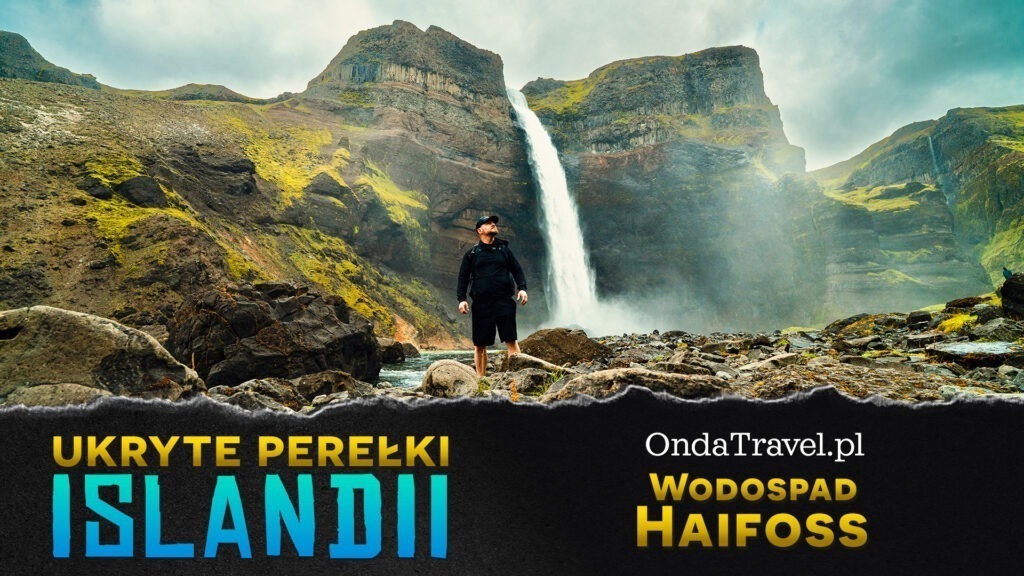
Háifoss
A raw canyon, impressive height and a less obvious region. A good choice when you want a powerful landscape without the trail to Glymur.
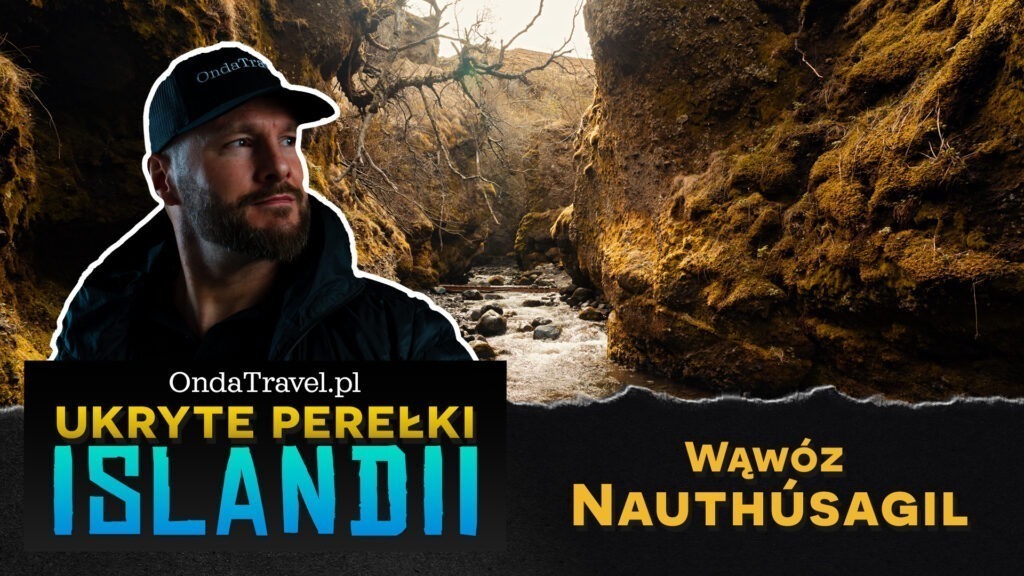
Nauthúsagil and Nauthúsafoss
A wet ravine, a photogenic finale and a completely different character than Glymur. A great option in southern Iceland.
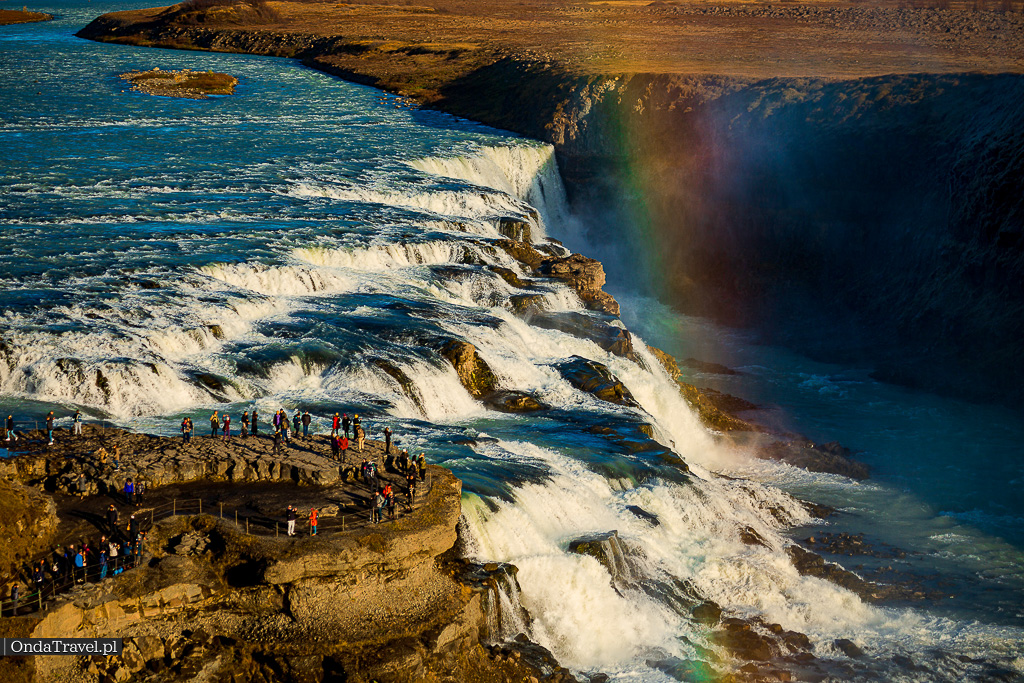
Gullfoss
An Iceland classic and the opposite of Glymur: logistically easy, very popular and a good fit for a Golden Circle plan.
FAQ: Glymur waterfall in Iceland
Is the trail to Glymur difficult?
The trail to Glymur is moderately difficult, but it has sections that require caution: the cave, stones, climbs, exposure and, on the loop, the Botnsá river crossing. In good weather, most fit people should manage it, but it is not an ordinary walk from the car park.
When is the best time to go to Glymur waterfall?
The best time is from late spring to early autumn, in stable weather and without ice. In winter, after snowfall or in icy conditions, the trail can be dangerous, especially in the upper parts of the canyon.
Is there an entrance fee for Glymur?
Access to the Glymur trail is usually treated as free, but the area has signs saying you enter at your own risk. Always check the current information on site and respect signs and restrictions.
Do you need water shoes at Glymur?
Water shoes are very useful if you plan to do the loop with the Botnsá crossing. If you return the same way, they may not be necessary, but on the loop they greatly improve comfort and safety.
Is Glymur suitable for children?
It depends on age, experience and weather. With small children or in poor conditions, it is better to choose an easier waterfall. With older children, good weather and a sensible pace, the shorter variant may be possible, but it requires constant attention from adults.
Read also / next
- Iceland: guides, routes and trip planning
- The most beautiful waterfalls in Iceland according to OndaTravel.pl
- Snæfellsnes in one day from Reykjavík: ready-made route plan
- Hot springs and geothermal pools near Reykjavík
- Iceland in 7 days: day-by-day sightseeing plan



Hi, I’m Krystian “dziadzia przewodnik” from OndaTravel.pl!
The North is my greatest passion, but the world is far too beautiful to stay in just one climate. On my blog, I combine the raw landscapes of Iceland and Norway with the exotic energy of Thailand or Vietnam, showing you how to travel authentically — with passion and a camera in hand.
What will you find on OndaTravel.pl?
Visual storytelling: As a photographer and filmmaker, I don’t just describe places — I take you there with professional photos and video.
North expert: Ready-to-use road trip plans for Iceland and Norway, smart tips for budget travel, and my original Northern Lights Radar (locations and forecast).
Travel through the lens of cinema: I track down filming locations — from icy scenes in Interstellar to tropical frames from world cinema.
New direction: Exotic destinations: I love contrast, so the blog is featuring more and more practical knowledge about Vietnam and Thailand. I’ll show you how to find your way around Southeast Asia and come back with your best memories.
P.S. follow me here


Author
Krystian „dziadzia przewodnik”The North is my greatest passion, but the world is too beautiful to stay in one climate. On my blog I combine the raw nature of Iceland and Norway with the exotic energy of Thailand and Vietnam, showing you how to travel authentically, with passion and a camera in hand.