
Haifoss Waterfall – Iceland’s Hidden Gems

Háifoss — in short
Háifoss is one of Iceland’s most spectacular waterfalls, set in the raw landscape of the Þjórsárdalur valley. It impresses with its height, the canyon and the view of the neighbouring Granni waterfall, but it requires better planning than the popular stops along the Ring Road.
Haifoss / Háifoss Waterfall – Iceland’s Hidden Gems
Travel Guide to Iceland
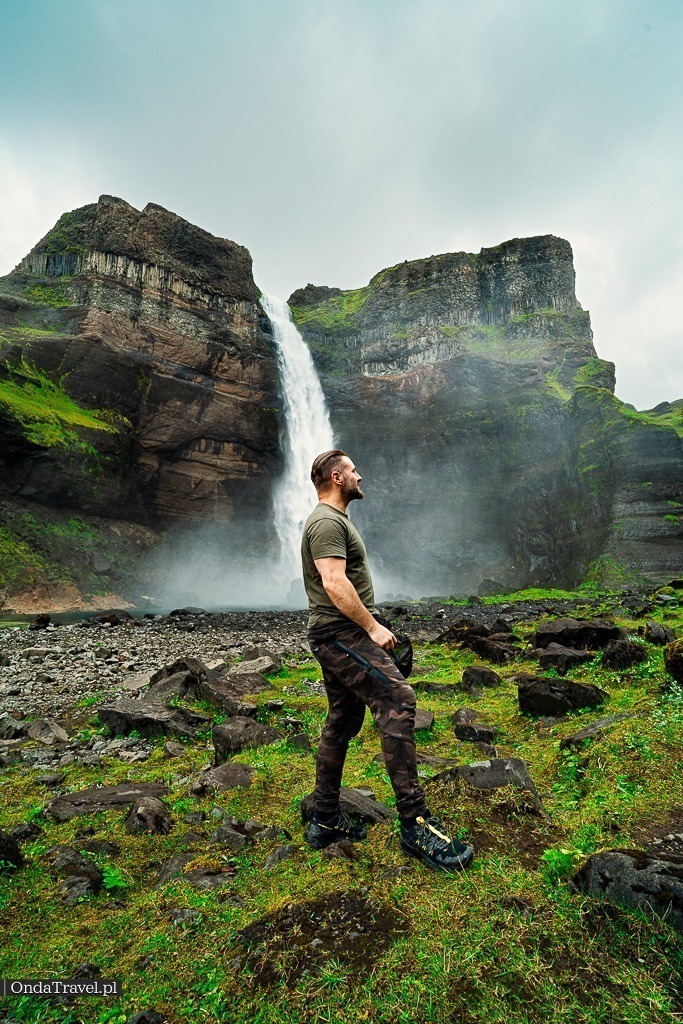
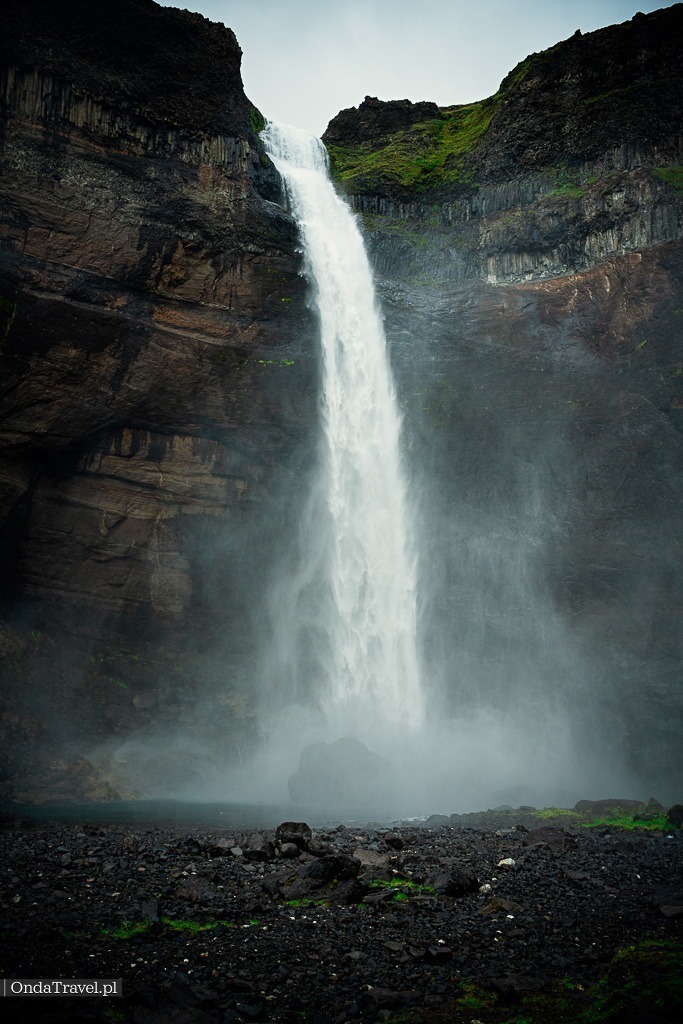
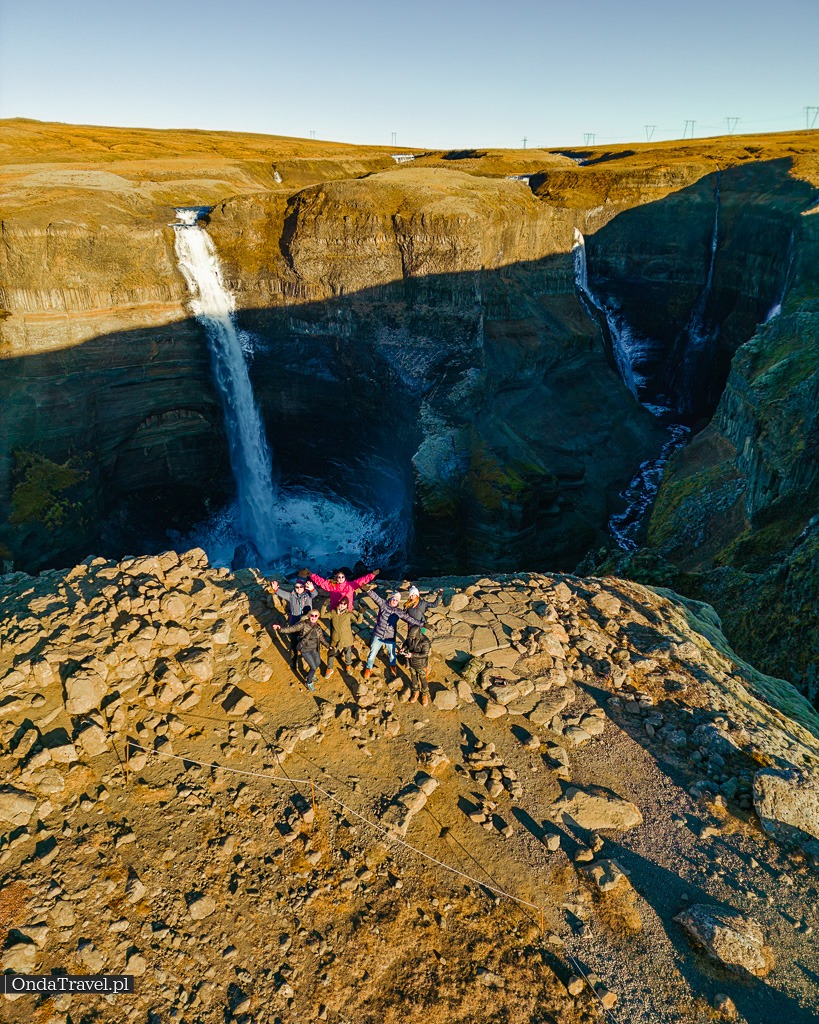
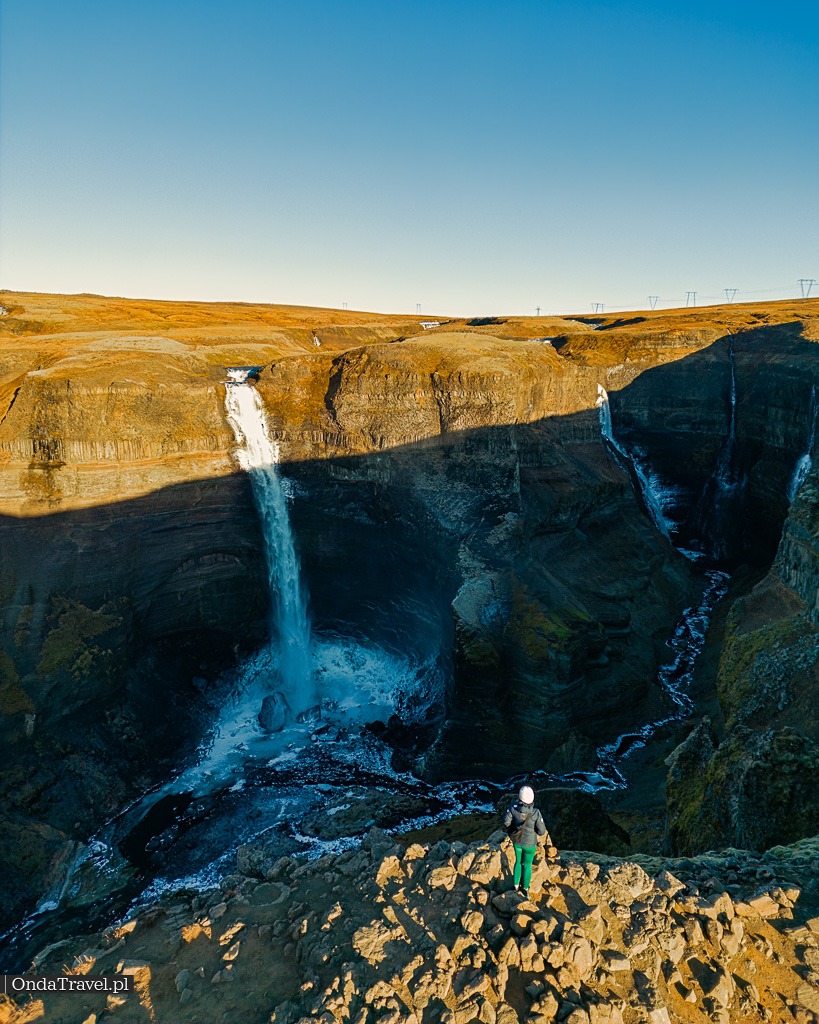
Háifoss Waterfall is an impressive tourist attraction in southern Iceland – one of the tallest waterfalls on the island. Located in the Fossárdalur valley, in the heart of Þjórsárdalur in the south of the island, Háifoss flows from the Fossá river – a tributary of Iceland’s longest river, Þjórsá. It is the fourth highest waterfall in the country, surpassed only by Morsárfoss, Glymur and sometimes Hengifoss, depending on measurements.
To connect this topic with a wider northern travel plan, see the North section.

NORTH
North: Iceland, Norway, northern lights and Lofoten
A dedicated OndaTravel section for northern trips: Iceland, Norway, fjords, Lofoten, northern lights, ready-made routes and planning tools.
Affiliate disclosure: Some links in this article may be affiliate links. If you use one of them, OndaTravel.pl may receive a small commission at no extra cost to you.
Háifoss – One of Iceland’s Highest Waterfalls
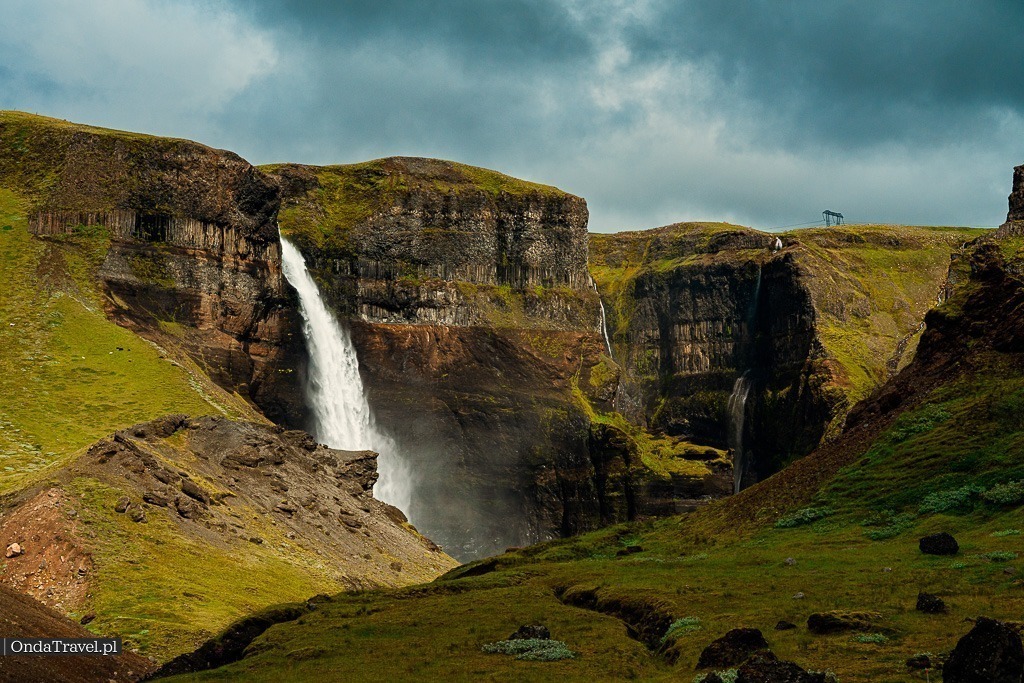
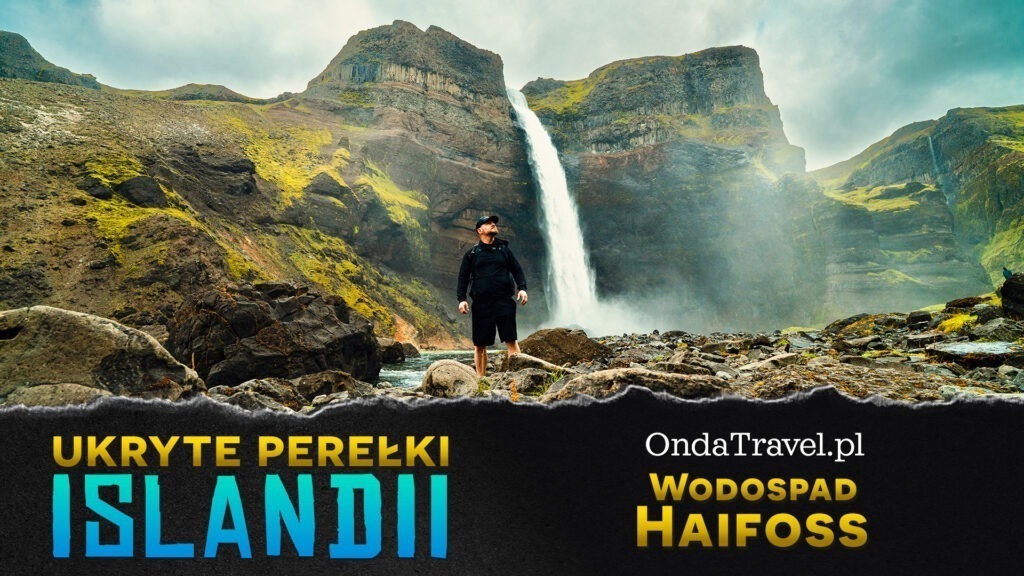
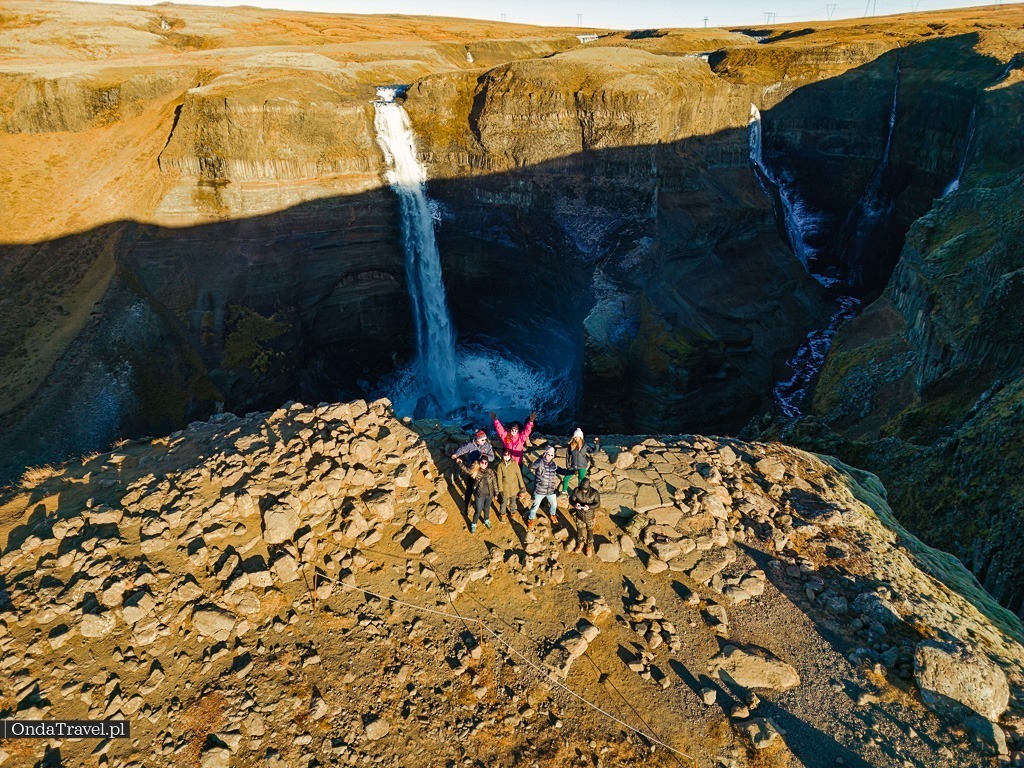
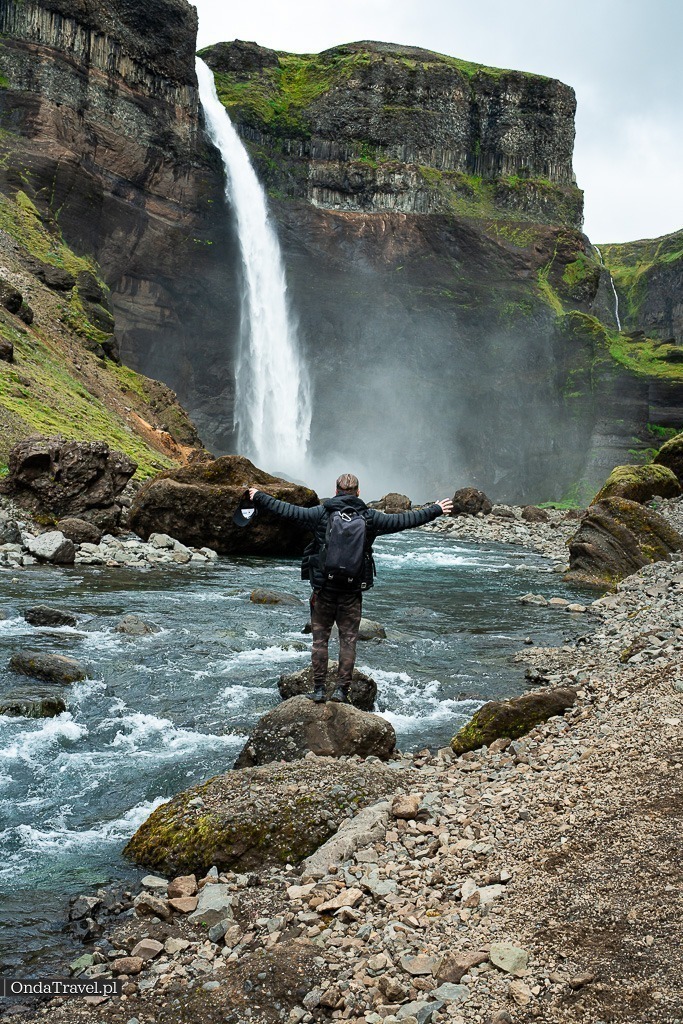
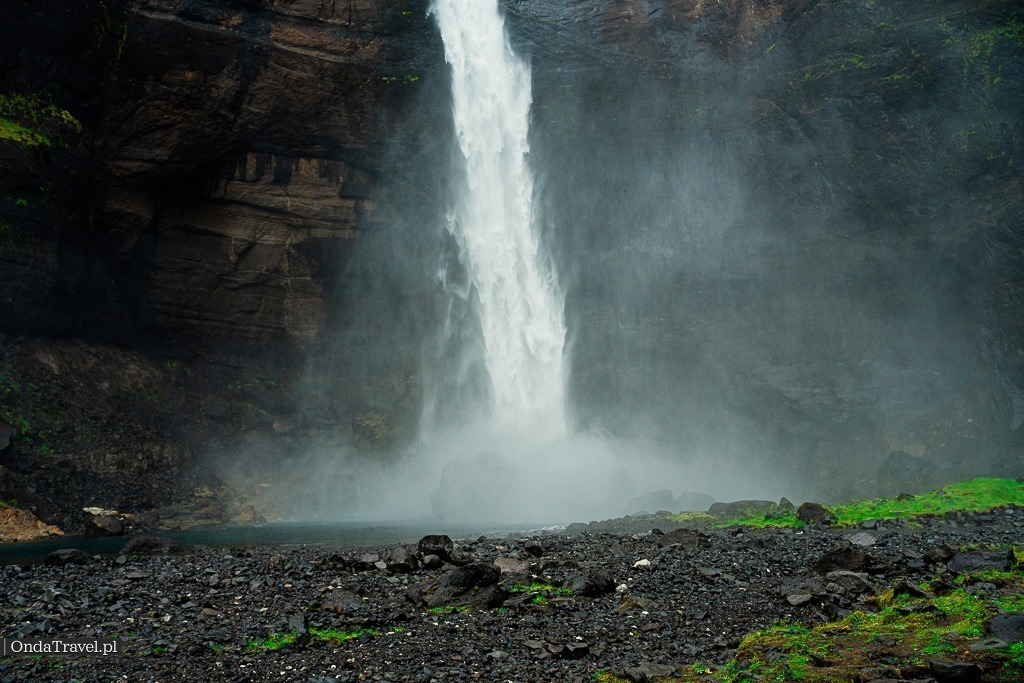
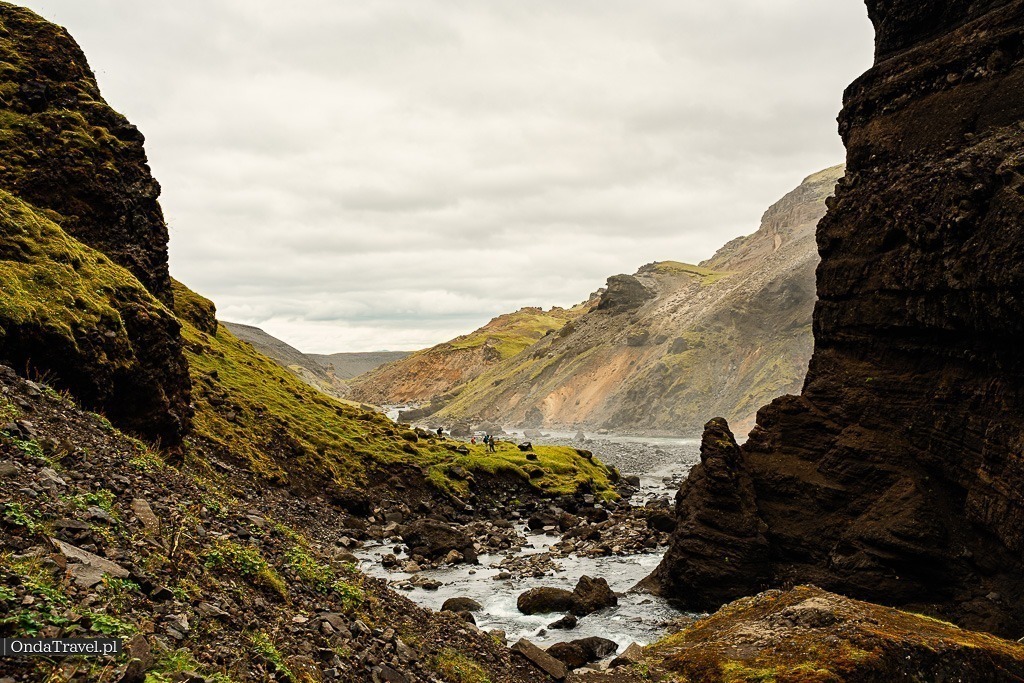
Personally, I highly recommend visiting Haifoss, although the drive through the interior (the last 7.2 km on road 332 – a rough, gravel track with potholes and stones) is tiring for a normal car, 40-50 minutes, because you have to be very careful of sharp stones. I think a punctured tire could be an unpleasant experience. Once you get there, you have to go down into the gorge because the views at the bottom are like a fairy tale.
I draw your attention here to the slippery surface, full of small stones and mud in places.
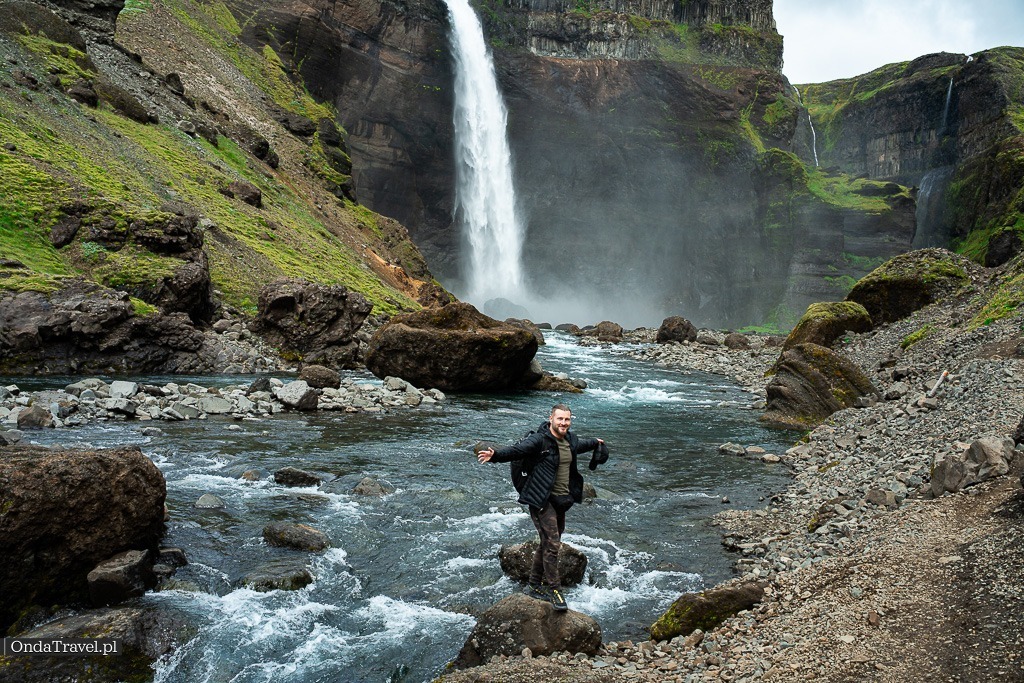
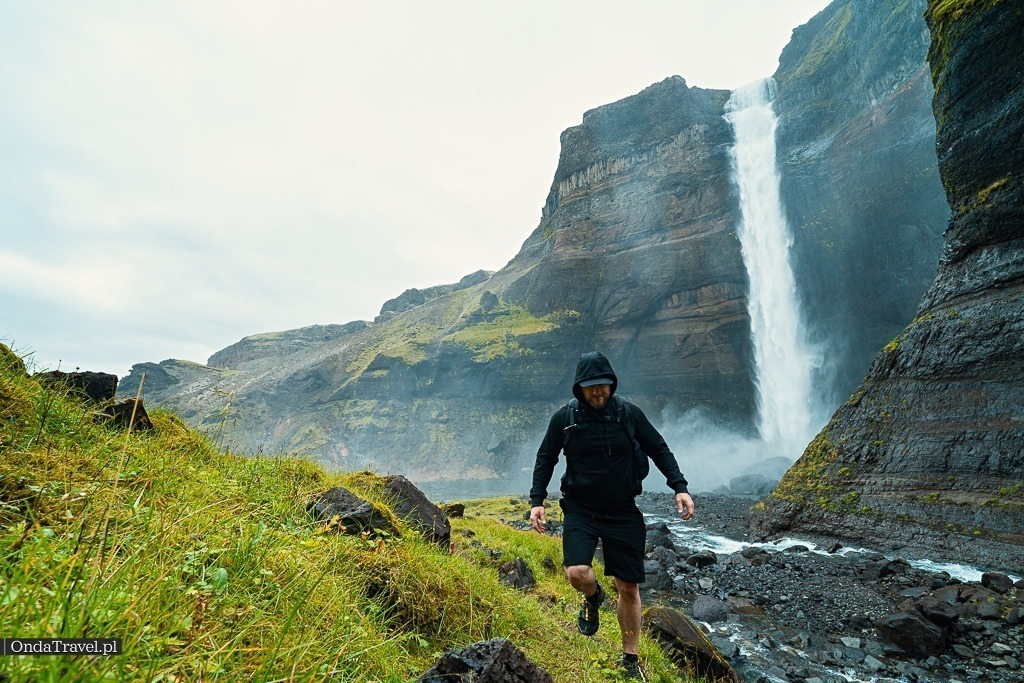
Right next to the waterfall itself, there are shattered basalt rocks, and it’s also easy to slip here and twist your ankle, especially while holding a smartphone and admiring the views.
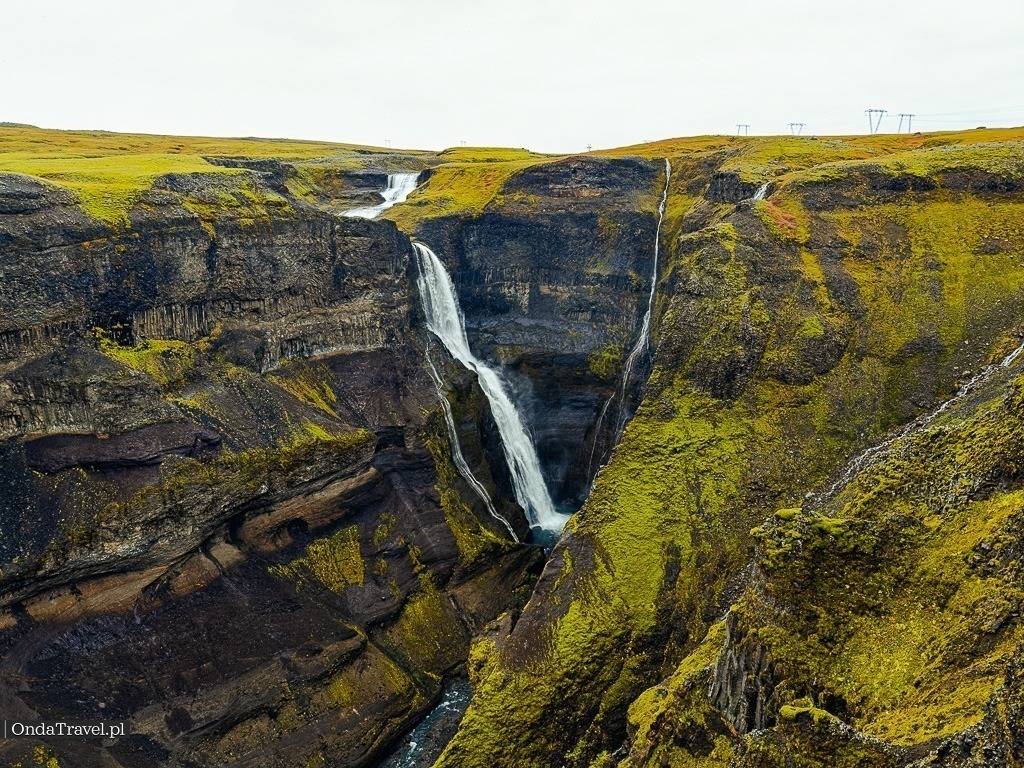

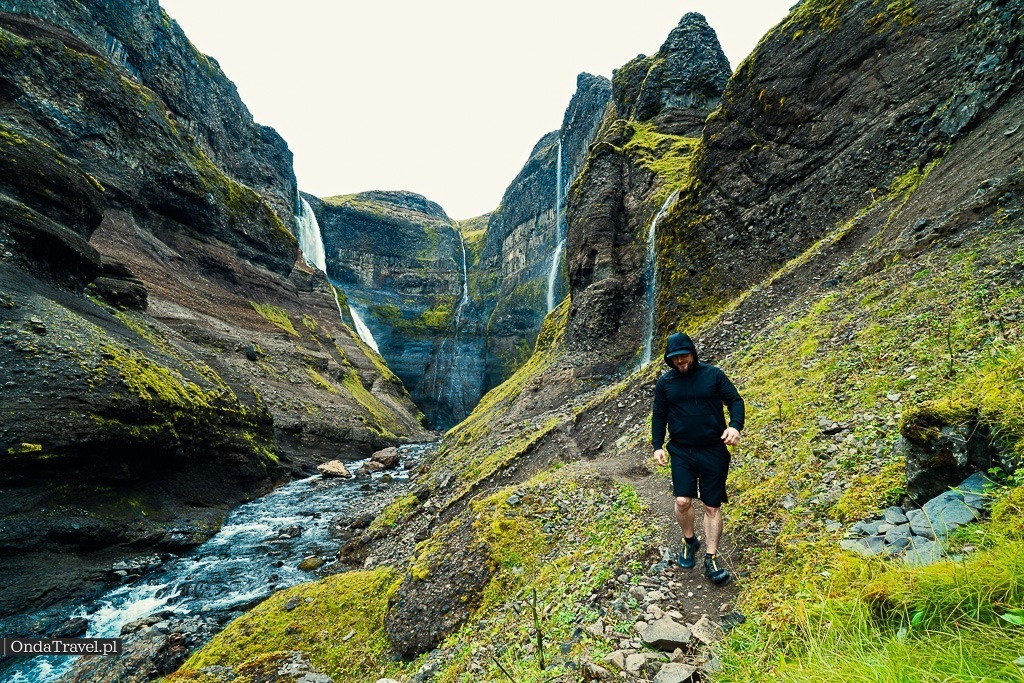
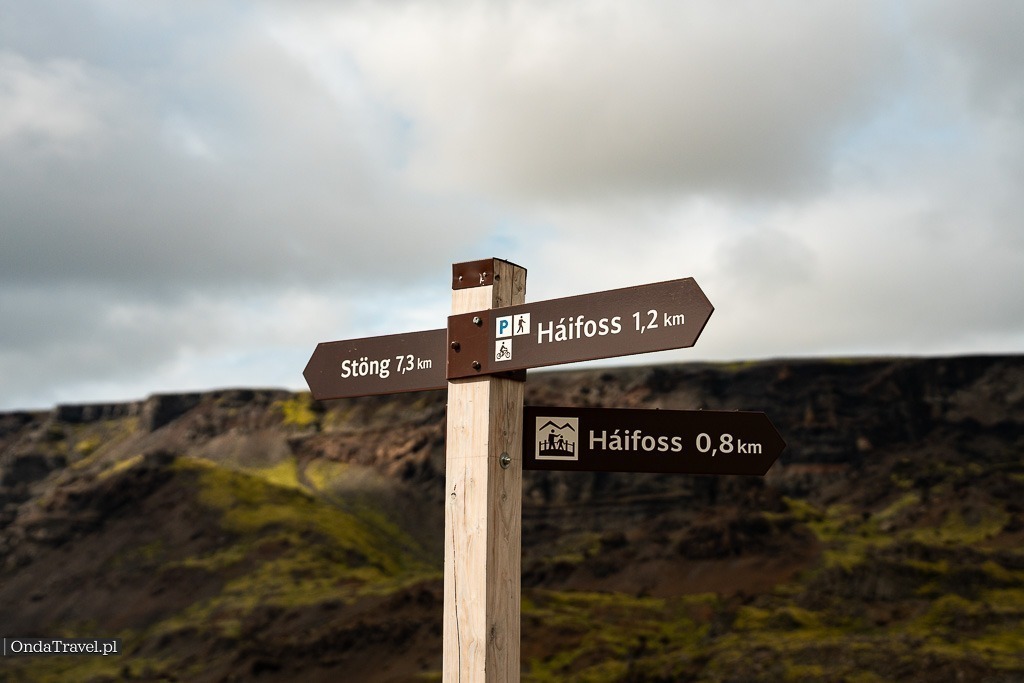
An alternative, more historical route includes a 5-6 hour round-trip walk from Þjóðveldisbærinn Stöng along the Fossá, through volcanic terrain. Here I also recommend seeing the Gjáin valley. The site is open 24/7 all year round, but summer (June-August) is optimal for road accessibility and milder weather, avoiding winter closures or ice hazards. Always monitor conditions via official sources like road.is for closures and vedur.is for forecasts, as sudden rain can make paths slippery, and winds can be strong near the edge.
Read also / next
? Iceland – Discovering Haifoss / Háifoss Waterfall ❯ Iceland Guide with OndaTravel.pl
? I invite you today to another film in the “Iceland’s Hidden Gems” series, where the main topic is Haifoss Waterfall
✅ In the episode, I also talk about nearby attractions such as Gjáin Valley, Granni Waterfall, Hjálparfoss Waterfall, Stöng, Viking-era Long house, Hekla Volcano
☺️ Producing this film took me a very long time.
From recording footage during several trips to demanding editing.
I hope the episode will be interesting and you will leave something behind 🙂
☕ I encourage you to subscribe and support the channel
? Locations
? Háifoss Waterfall – https://maps.app.goo.gl/jZNao5ZUBW8z3c5Z7
? Grannifoss Waterfall – https://maps.app.goo.gl/9gwfLaCDDvqF7FYYA
? Gjáin Valley – https://maps.app.goo.gl/ZRJTvNpReYZpzpUd6
? Stöng, Viking-era Long house – https://maps.app.goo.gl/oQYPvgBzUD8abC8g7
? Hjálparfoss Waterfall – https://maps.app.goo.gl/HrX5NLxBRyXAhMri7
? Hekla Volcano – https://maps.app.goo.gl/D84pf9oY7wC7ZWPj9
Háifoss: a 129‑meter waterfall and raw Icelandic scenery
If you came here from the video — below you’ll find chapters with timestamps plus quick links to guides that help with the route, gravel-road access, and the best nearby stops.
Watch the video guide: the drive to Háifoss and the area
- Hjálparfoss — a photogenic waterfall in a basalt gorge, a perfect quick stop to stretch your legs.
For planning the interior safely: Iceland Highlands / Interior — season, roads and safety basics. - Gjáin Valley — a green highlands oasis with small cascades and great light for photos (worth slowing down).
Related: Highlands / Interior guide — planning and conditions · Iceland in 7 days — where to fit the “hidden gems”. - Stöng settlement — a reconstructed farm in Þjórsárdalur with a seriously atmospheric vibe.
Related: Iceland travel section — guides, routes and maps.
Video chapters: click a timestamp and open the matching guide
Each point jumps to the exact moment in the video, and next to it I’m adding links to guides that help you build the route “in blocks” without chaos.
- 00:01:05 — The drive from Reykjavik (map tips and routing).
Related reads: Reykjavik as a base for day trips · Golden Circle travel guide · Iceland in 7 days — day‑by‑day route - 00:02:29 — Gjáin Valley: why it feels “magical” in real life.
Related reads: Highlands / Interior — when to go and what changes after rain · Kerlingardalsvegur & Katla Geopark — gravel-road vibes and landscapes - 00:06:27 — Volcano context: Hekla and Iceland’s “humility lesson”.
Related reads: Reykjanes Peninsula — geothermal areas and volcano landscapes · Fagradalsfjall / Grindavík — eruption updates and safety · Þríhnúkagígur — the volcano you can descend into - 00:08:31 — The name “Háifoss” and what to expect at the viewpoints.
Related reads: The most beautiful waterfalls of South Iceland · Ring Road South Coast guide - 01:09:41 — Descending into the canyon: when it’s worth it and when to skip it.
Related reads: Nauthúsagil gorge & Nauthúsafoss — terrain and access tips · Highlands / Interior — gravel-road safety basics - 13:11 — Practical tips for driving the gravel road safely (without destroying tires).
Related reads: Highlands / Interior — planning, season and conditions · Kerlingardalsvegur — a good example of “slow and steady”
“For me, Háifoss is #3 on the whole South Iceland waterfall map. Only Glymur and Skógafoss beat it. This place is pure power.”
— Dziadzia Przewodnik
Gravel-road access: how to drive safely without rushing
The final stretch is gravel and can be rough. Even without a 4×4 you can often make it slowly and carefully: keep speed low, avoid sharp stones, and treat the last kilometers like a slower gravel-road section. If conditions get worse (after rain / high water), it’s smarter to skip and come back on a safer day.
Got questions about your route or season? Leave a comment — I’ll help you adjust the plan to the weather and your number of days.

The Most Beautiful and Unknown Waterfalls of Southern Iceland
History of Háifoss Waterfall
The history of Háifoss is relatively young compared to other Icelandic attractions. Until the beginning of the 20th century, the waterfall did not even have an official name and was little known even among Icelanders. It was only in 1900 that the Icelandic geologist Helgi Pjeturs – the first Icelander with a doctorate in geology – named it “Háifoss”, which means “High Waterfall” (the name comes from the Icelandic word “há” meaning “high”). His companion, the Frenchman Andre Courmont, gave the name Granni to the neighboring waterfall, which translates as “Neighbor”.


The history of Háifoss Waterfall is closely linked to Iceland’s geological activity. The waterfall was formed as a result of erosion caused by glaciers and rivers, and its surroundings were shaped by eruptions of the Hekla volcano, which is located nearby. Hekla, known as the “Gateway to Hell” in the Middle Ages, erupted in 1104, destroying nearby settlements, including the Stöng farm – one of the oldest known from Icelandic sagas. The last eruption of Hekla occurred in 2000.
Exactly a week ago, on 20.08.2025, scientists reported that magma is accumulating under the volcano, indicating that Hekla is ready for another eruption.
Full article Ruv.is – Hekla may erupt at any moment
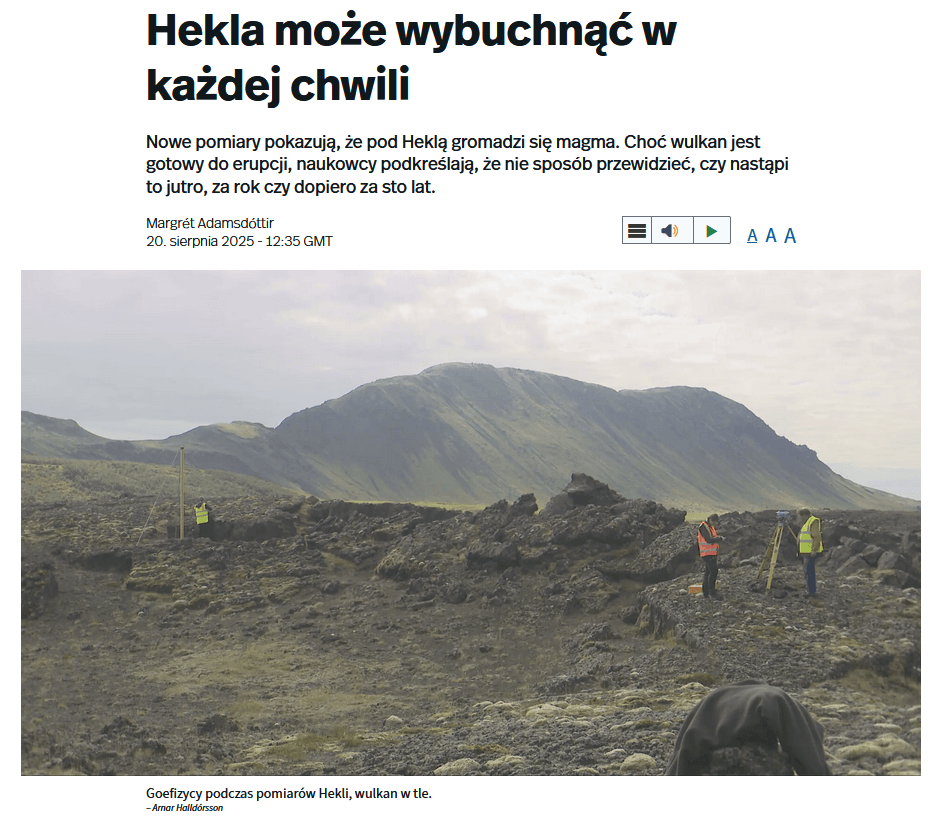
Previously, Háifoss was considered the second highest waterfall in Iceland, but after the discovery of Morsárfoss in 2011, it dropped in the rankings. The name “Háifoss” comes from the Old Icelandic language and emphasizes its impressive height. The Þjórsárdalur valley has been inhabited since Viking times, and the ruins in the area testify to a rich past – it is a place where nature meets the legends of the sagas.

- The first mentions of Háifoss come from the 18th and 19th centuries, when European travelers and Icelandic clergymen-researchers described the Þjórsárdalur valley. The waterfall quickly drew attention due to its unusual height.
- The waterfalls did not have names until the beginning of the 19th century; the names – Háifoss (“high waterfall”) and Granni (“neighbor”) – began to be used then, along with geological studies
- In 1879, the Icelandic researcher Sveinn Pálsson called the waterfall “one of the most beautiful waterfalls in Iceland”
- In 1944, Háifoss was recognized as a natural monument, and in 1984 it was opened to tourists
- The Fossá í Þjórsárdal river itself, which forms the waterfall, was the subject of hydrological research, as it belongs to the system of Iceland’s largest river – Þjórsá.

Folklore enriches the narrative: local legends describe an ogress living by the waterfall, catching trout and threatening intruders, with one story about an attempted kidnapping of a boy, thwarted by his friends in a dramatic fight. This mythology fits into the broader Icelandic sagas with supernatural beings like Grýla, reflecting a blend of harsh environment and imagination.
Key Information about Haifoss Waterfall
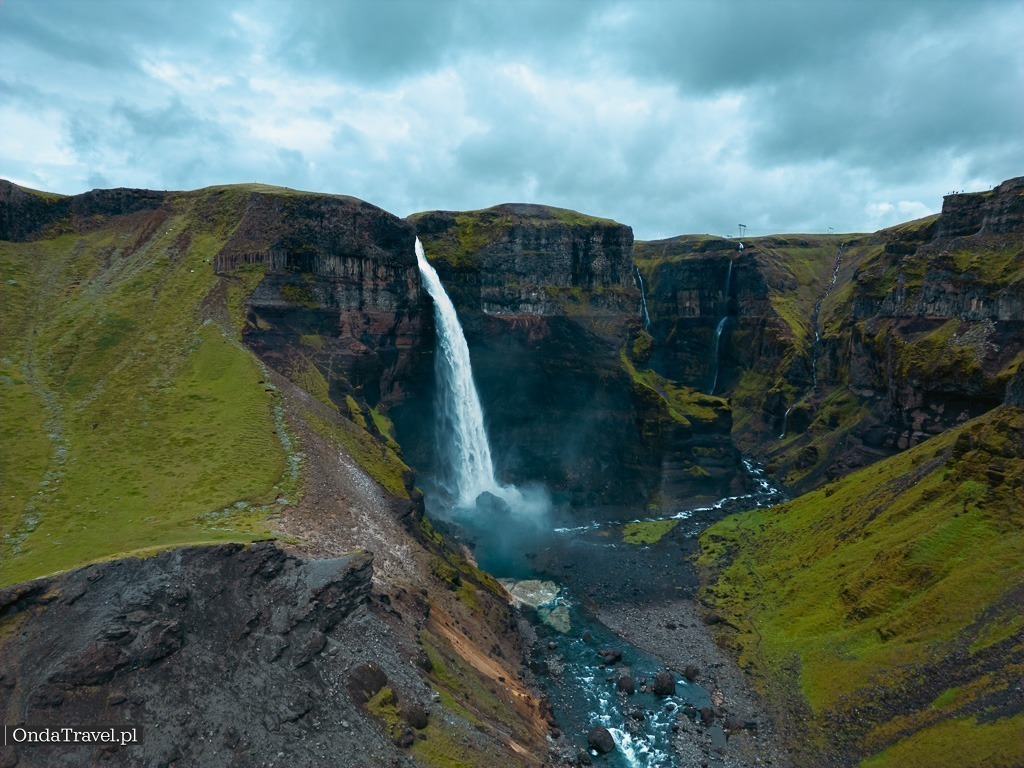
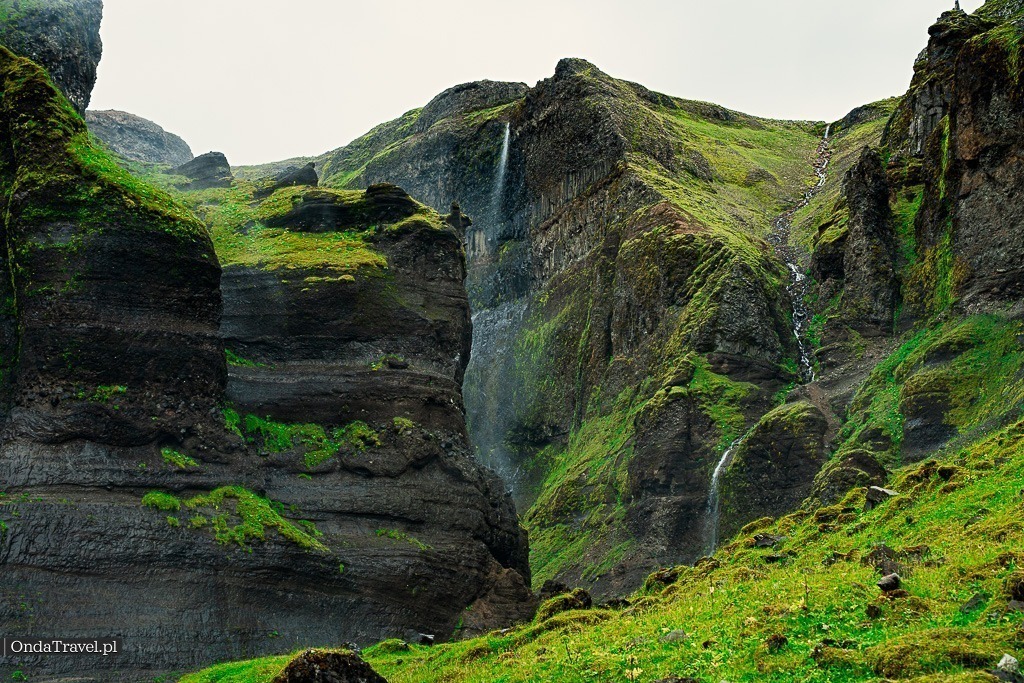
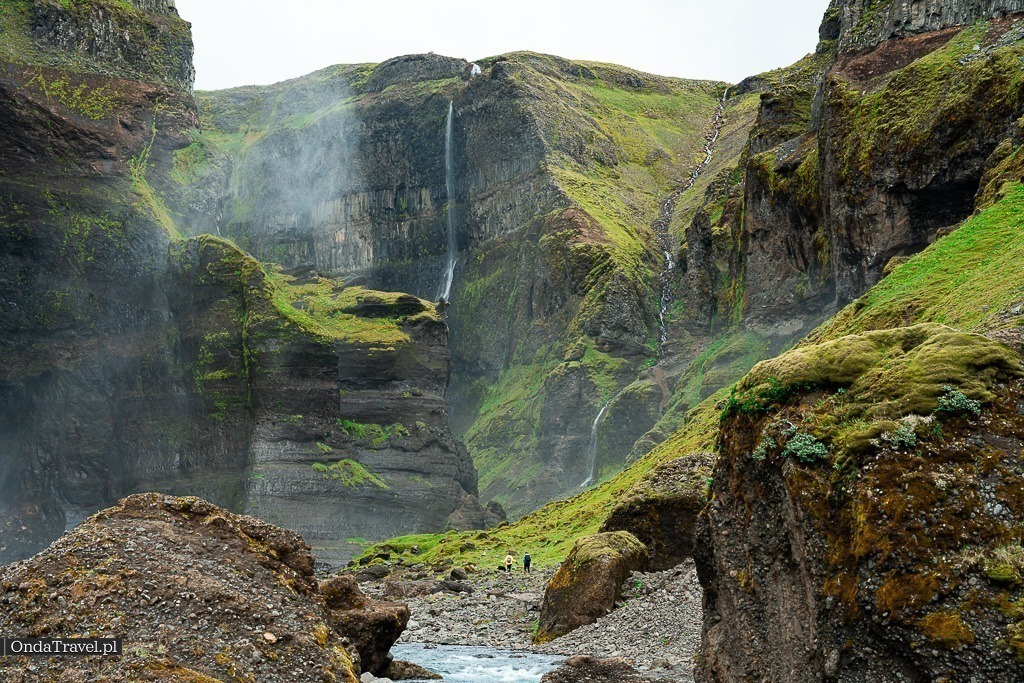
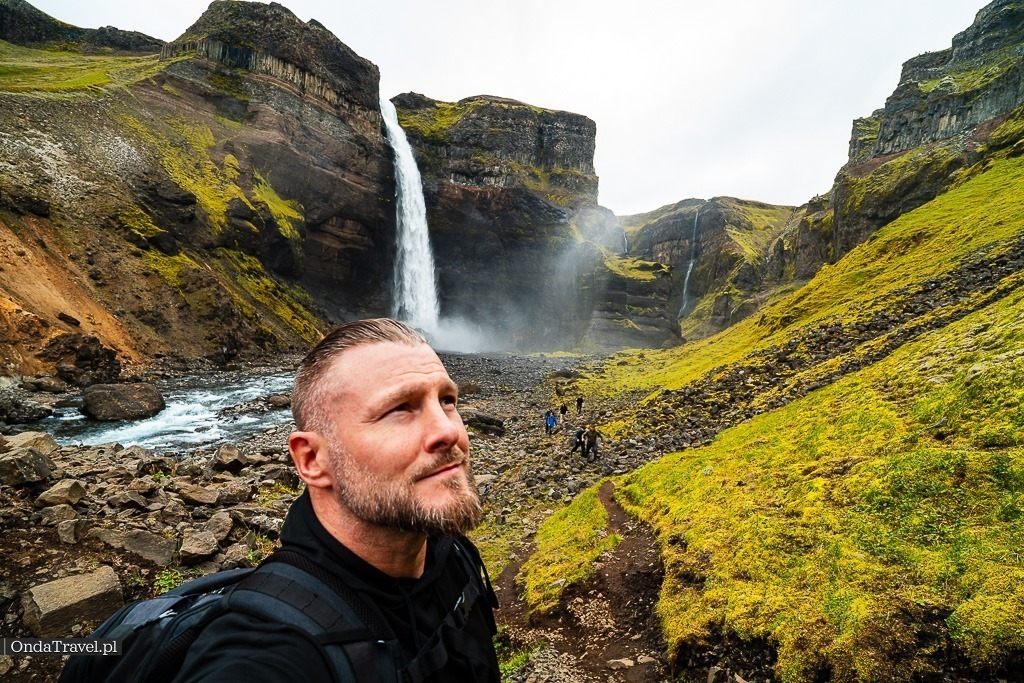
Háifoss is the fourth highest waterfall in Iceland, with a height of 122 meters. Some sources give a slightly higher value – 128 m. It falls from the Fossá river, which is a tributary of Iceland’s longest river, Þjórsá. Located in the Fossárdalur valley. The waterfall is surrounded by basalt cliffs and green hills, creating a spectacular contrast, especially in the summer sun. Next to it is the sister waterfall Granni / Grannifoss, with a height of 128 meters, making the two a unique duo – one of the most photogenic views in the country.
The waterfall is accessible for most of the year, but the best conditions are in summer when the roads are passable.
Attractions near Háifoss Waterfall – what else to see?
- Gjáin – a picturesque valley with streams, greenery, and basalt formations. Read more about Gjáin valley in the article Iceland – Interior
- Hjálparfoss – a cascade in a less steep canyon, accessible by asphalt road, a starting point for treks
- Reconstruction of the Þjóðveldisbærinn Stöng farm – a medieval settlement destroyed by the Hekla eruption, now a historical and geological point. This was the site of Viking longhouses, which are also found in Lofoten in Norway
Gjáin Valley Iceland
Dolina Gjáin is one of Iceland’s most magical places — a green oasis hidden among rugged landscapes. Crystal-clear streams, small waterfalls, and basalt formations create a fairytale-like scenery, far from mass tourism.
I’m not surprised that scenes for the TV series Game of Thrones were filmed here.
I recorded a video dedicated to this unique place — I invite you to watch and discover Gjáin through my eyes.


- Háifoss Waterfall Iceland guide
- hidden waterfalls in Iceland to visit
- rarely visited places in Iceland
- Iceland waterfalls for travelers
- what to see in Iceland beyond the Golden Circle

Greenland 2: Migration (2026) filming locations in Iceland
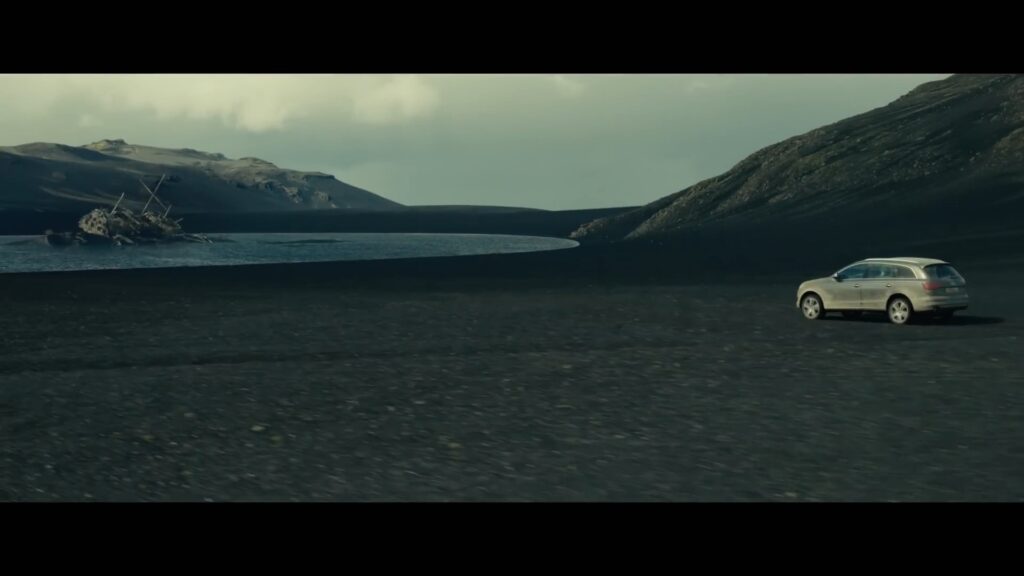
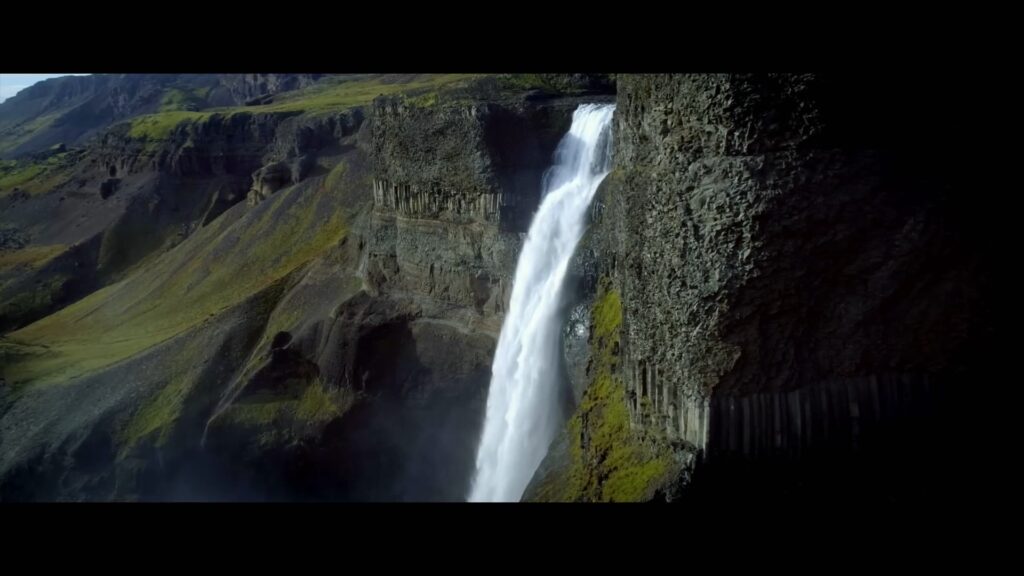
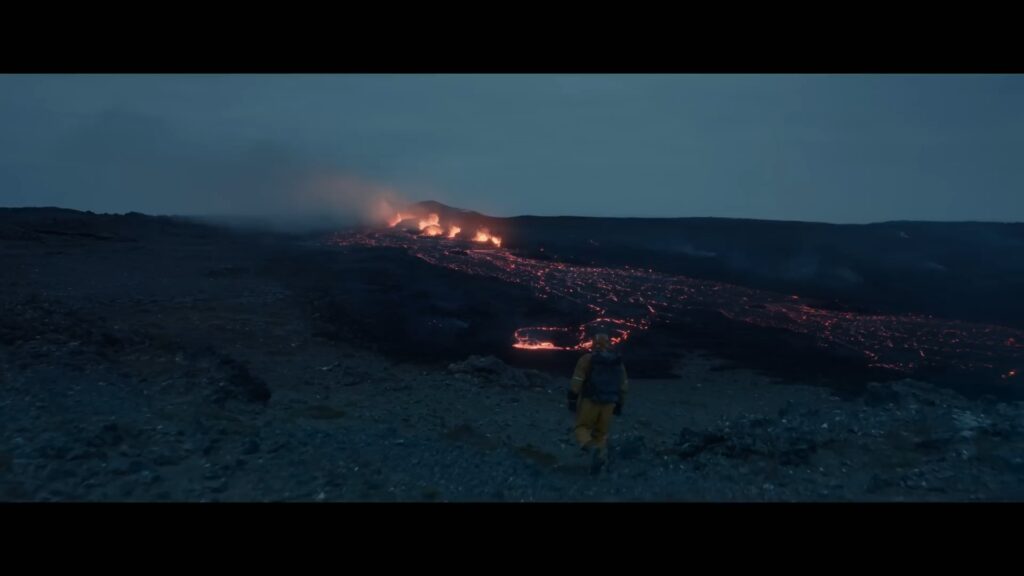
Greenland 2: Migration (2026) Official Trailer – Gerard Butler, Morena Baccarin
On January 9, 2026, the long-awaited continuation of Greenland will hit the cinemas — the film “Greenland 2: Migration“, in which Gerard Butler and Morena Baccarin once again portray John and Allison Garrity fighting for survival in a post-apocalyptic world after a comet impact.
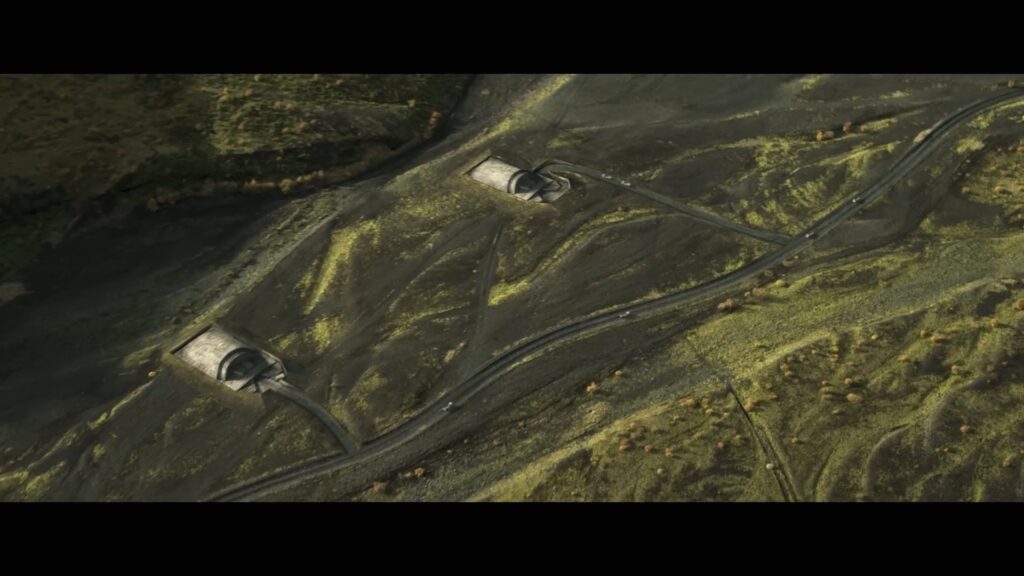
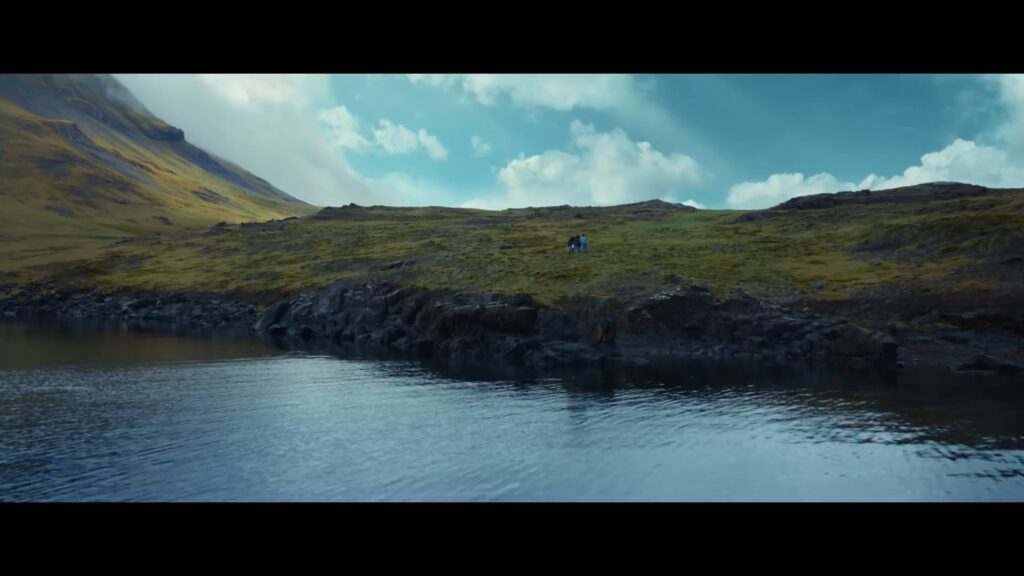
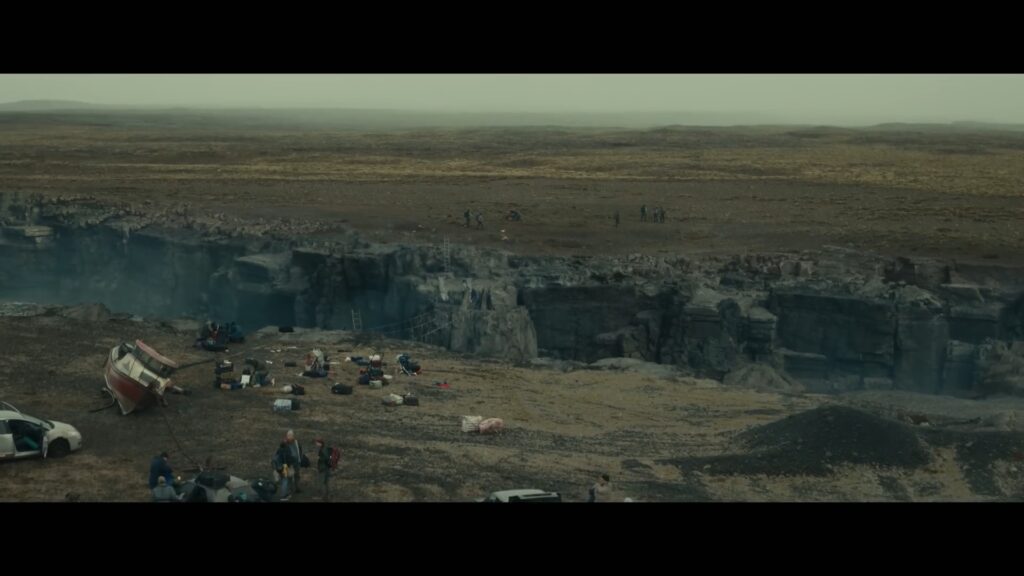
The production combines intense acting scenes with extraordinary landscapes — some shots were filmed in the United Kingdom, but the crew also moved to Iceland to use its dramatic, raw terrains as a backdrop for the heroes’ journey across a devastated Earth.
In Iceland, filming took place mainly in the Reykjavík area and its surroundings, where natural geological formations, icy wastelands, and spectacular waterfalls create the perfect atmosphere for post-catastrophic scenery.
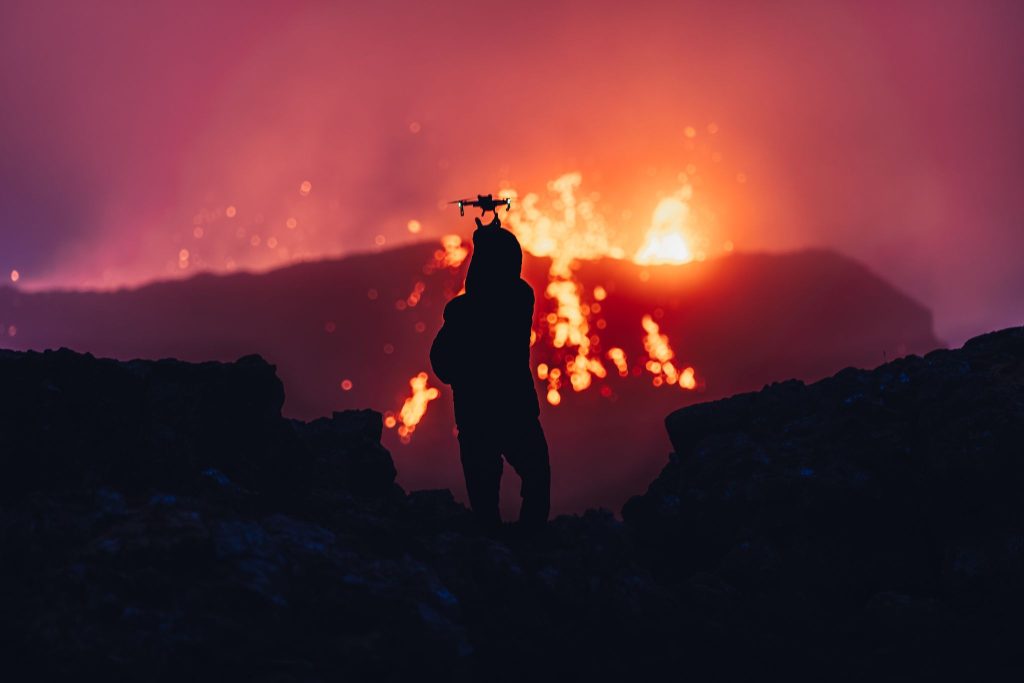
Some shots from the trailers resemble places such as the Háifoss waterfall, the site of the last volcanic eruption in the Sundhnúkurna system on the Reykjanes Peninsula and the Kleifarvatn Indjánahöfði lake
ICELAND
Iceland Reykjanes Peninsula Suðurnes – these places you must see
Reykjanes Peninsula near Keflavík Airport: Bridge Between Continents, Gunnuhver, Reykjanesviti, Seltún and the Blue Lagoon, plus volcano updates.

All the answers to the most frequently asked questions about the Stranger Things 5 finale — “The Page” / Chapter Eight: “The Rightside Up” with Eleven.
Did Eleven survive? Stranger Things: Eleven Iceland. Did Eleven go to Iceland? Eleven Iceland Stranger Things.


Stranger Things 5 Netflix – Stranger Things 5 Finale Ending location with Eleven
Where did Eleven go at the end of season 5?
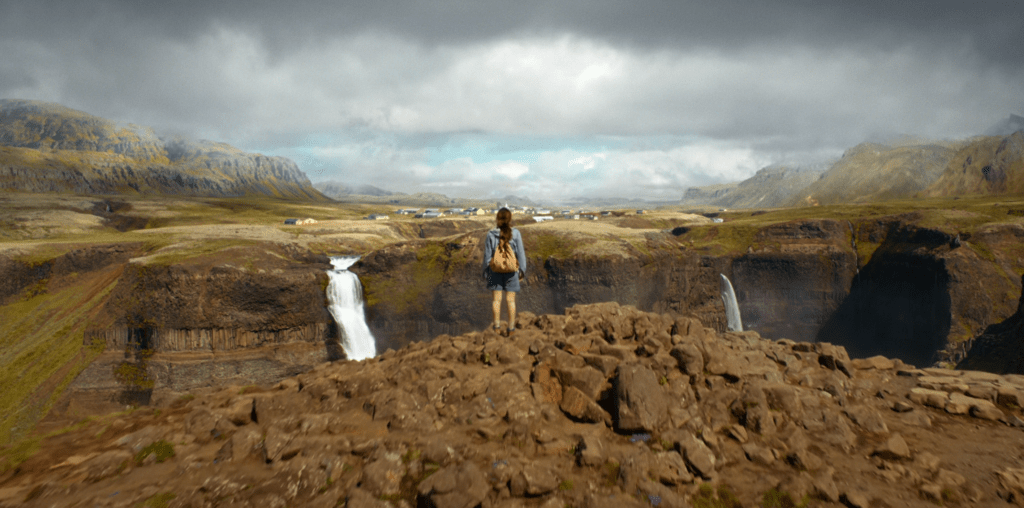
The Stranger Things 5 finale sparked a flood of questions among fans. Where did Eleven go? Is Eleven alive? Where was the Stranger Things 5 finale filmed? The final scene of the series shows Eleven (Millie Bobby Brown) standing alone on a cliff, between powerful waterfalls.
The village visible in the distance was added digitally and does not exist, but the waterfalls are real.
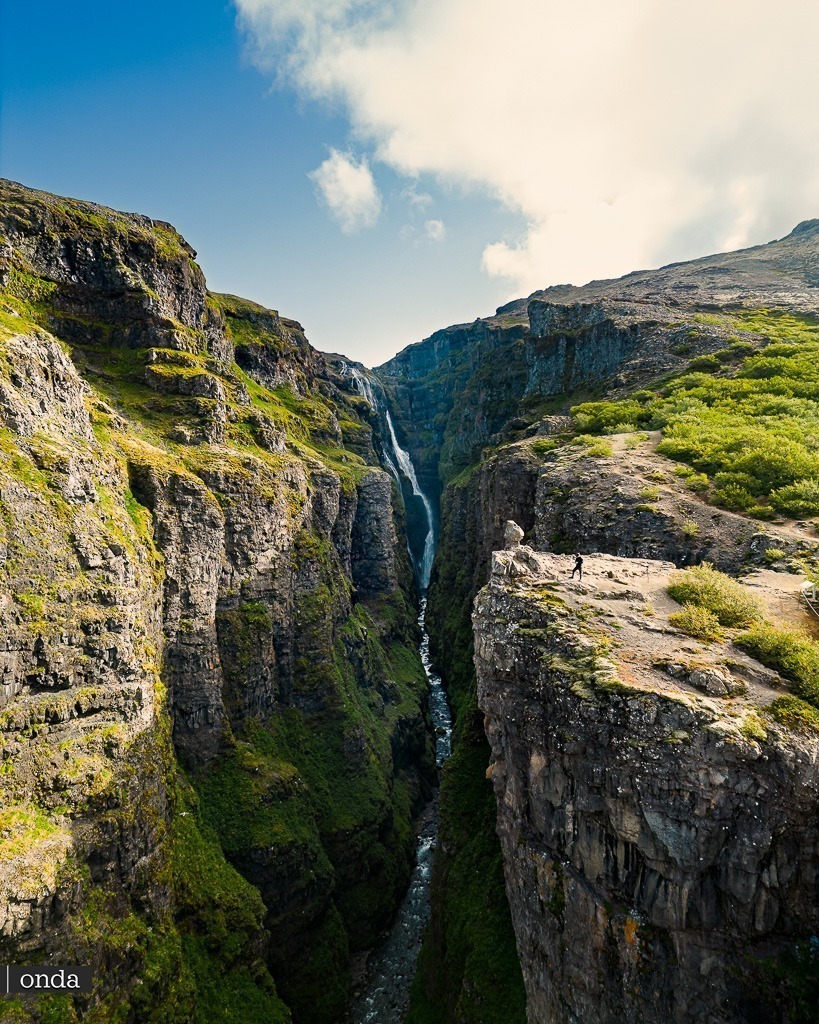
This scene was filmed in Iceland, in an incredibly picturesque location—between the Glymur and Granni waterfalls. The rugged landscape, wild nature, and lack of civilization perfectly emphasize the symbolism of the series’ ending.
The creators of Stranger Things deliberately left the finale open to interpretation. For some, Eleven survived and found refuge away from the world. For others, it is a metaphor—a vision of freedom and peace after years of fighting the Upside Down.

FAQ: Háifoss waterfall – frequently asked questions
Do I need a 4×4 car to get to Háifoss?
You can often get there in a regular car, but the last kilometres may be gravel and uneven. If conditions are bad, it is better to skip it or consider a car with higher clearance.
How much time should I plan for Háifoss?
Most often 1–2 hours for the viewpoint and photos, and if you descend into the gorge – add time and a reserve of energy for the way back.
When is the best time to visit Háifoss?
The easiest logistics are in summer, when the roads are more passable. Always check the forecast and road conditions before you set off.
Is the descent into the gorge difficult?
It can be slippery (rocks, mud) and steep in places. Good hiking boots and caution are essential.
What is worth seeing near Háifoss?
In the area, consider the Gjáin valley, Hjálparfoss and the Stöng reconstruction, among others. It is a good package for half a day or a full day.
Read also / Iceland and Norway
Continue with Iceland routes, waterfalls, volcanic landscapes and practical guides connected with dramatic scenery.
Iceland travel section
Start from the main Iceland section with routes, regions, waterfalls and practical trip ideas.
Open IcelandIceland in 7 days
A ready day-by-day itinerary for planning distances, highlights and realistic driving days.
See itineraryReykjanes Peninsula
Volcanic terrain, lakes, geothermal areas and dramatic landscapes close to Reykjavík.
Open guideStranger Things and Iceland
Film-location context for Icelandic waterfalls, dramatic cliffs and cinematic landscapes.
Read location guideNorway travel page
Continue with fjords, northern routes and aurora-friendly places in Norway.
Plan NorwayAuthor
Krystian „dziadzia przewodnik”The North is my greatest passion, but the world is too beautiful to stay in one climate. On my blog I combine the raw nature of Iceland and Norway with the exotic energy of Thailand and Vietnam, showing you how to travel authentically, with passion and a camera in hand.


