Gjáin Valley in Iceland – Game of Thrones Location, How to Get There and What to See

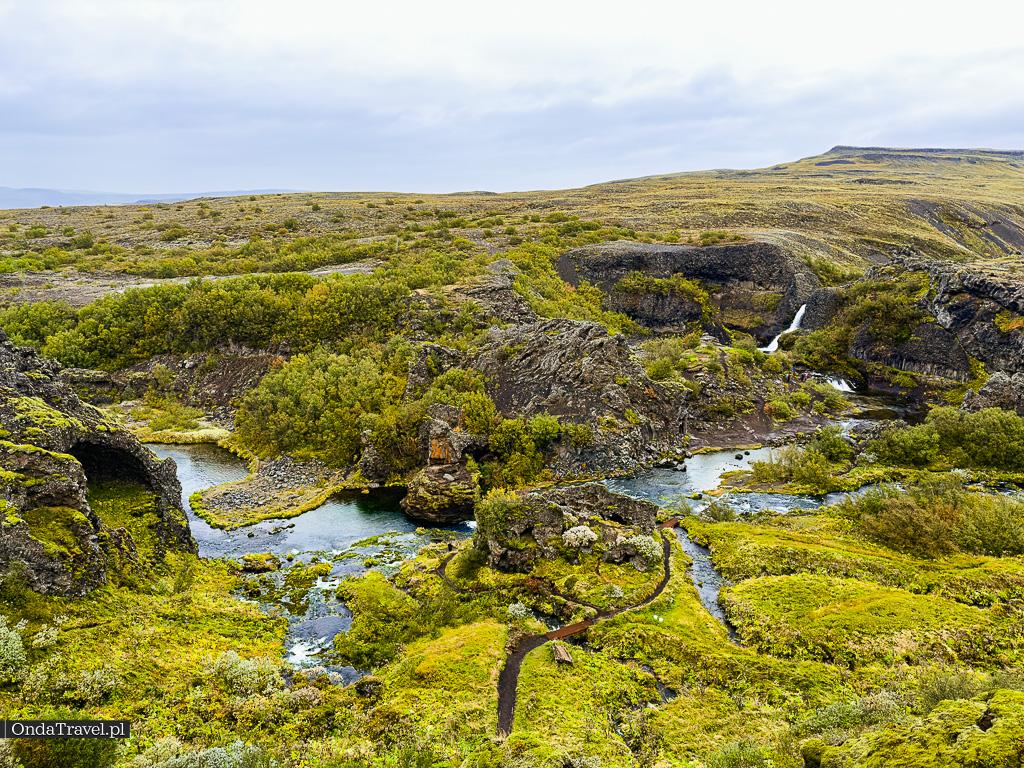
Gjáin Valley is one of those places that proves Iceland can still surprise you even when the island feels already familiar. Instead of vast black emptiness and raw lava fields, you get a green oasis, small cascades, clear water, basalt walls and a landscape that feels more like a hidden garden than a classic “lunar” interior. At the same time, this is one of those places worth reading not only as a natural attraction, but also as a genuine cinematic stop in Iceland.

GUIDE
Iceland
Plan your first Iceland trip: 4- and 7-day routes, the Golden Circle, South Coast, Reykjanes and Snæfellsnes, plus seasons, driving and safety tips.
If you are planning a route around Iceland and looking for a stop that feels less obvious than the usual classics, Gjáin is one of the strongest candidates. It is a great addition to a day built around Háifoss, Icelandic waterfalls, the Stöng farm site and the Þjórsárdalur valley.
HIGHLANDS / INTERIOR
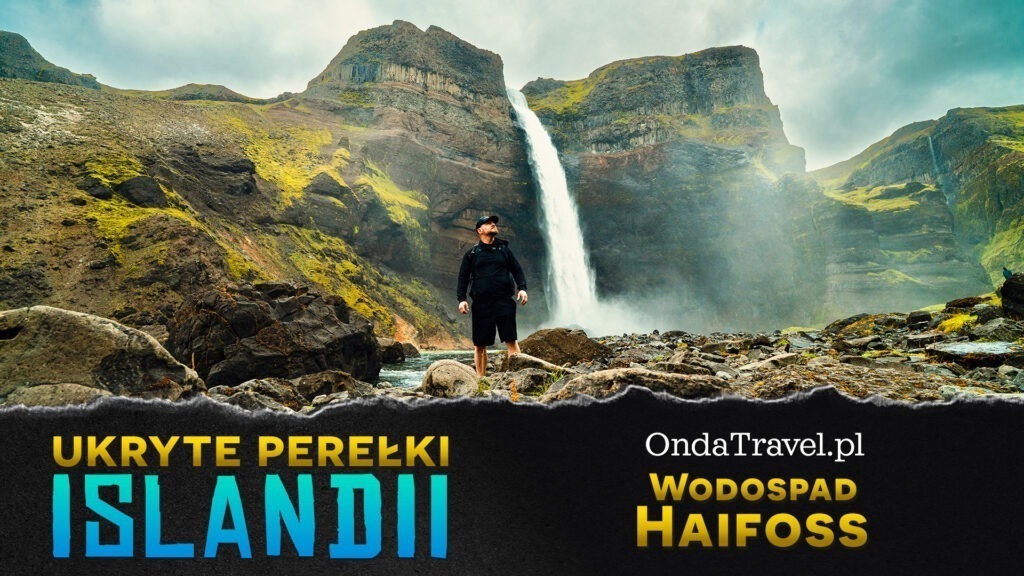
Haifoss Waterfall – Iceland’s Hidden Gems
Háifoss Waterfall – one of the highest waterfalls on the island. Located in the Fossárdalur valley. Iceland travel guide. Waterfalls of Iceland.
Before you go, there are four practical things worth knowing first: how to get there, whether you need a 4×4, how much time to allow for the walk and what to combine with Gjáin in a single day.


Main topic section
Iceland — routes, sights and practical guides
Open the main Iceland section to connect Gjáin with the South Coast, Highlands planning, waterfall guides and broader road-trip ideas across Iceland.
The Gjáin valley — in short
The Gjáin valley is one of Iceland’s most fairy-tale valleys: green, hidden, with small waterfalls, lava formations and an atmosphere completely different from the big Ring Road attractions. It is best treated as a calm detour in the Þjórsárdalur area.
Gjáin in Iceland in brief
- Where is it? In the Þjórsárdalur valley in southern Iceland, close to Stöng, Þjóðveldisbærinn and Háifoss waterfall.
- Is it worth it? Yes — it is one of Iceland’s most beautiful green oases and a striking contrast to the raw landscapes of the interior.
- Film context: It is one of the Icelandic locations associated with “Game of Thrones” and a great stop for anyone building a route around filming locations.
- Do you need a 4×4? That is the safest option, but with a smaller car you can leave it by Stöng and walk in.
- How much time? At least 45–60 minutes for a quick walk and photos; 1.5–2 hours is more comfortable.
- What to combine it with? Best with Háifoss, Stöng, Þjóðveldisbærinn, the Iceland section, the Iceland in 4 days plan and a wider route through Iceland’s interior.

Quick navigation
Where Gjáin is and why it is not just an ordinary “stop on the way”
Gjáin lies in the Þjórsárdalur valley in southern Iceland, right on the edge of the interior. For many people it is only an “extra point” on the way to Háifoss, but in practice it deserves its own stop — or even to be treated as a destination in itself if you enjoy photography, slower walks and less obvious landscapes.
What impresses most is the contrast. Around you there are raw lava fields, a broad valley and traces of the region’s volcanic history, and then suddenly you descend into a green micro-world fed by water, little streams and cascades. That is exactly why Gjáin regularly appears on lists of Iceland’s “hidden gems”, even though its location is actually very logical to combine with a day plan in this part of the island.
If you are planning your first road trip, start with the main page Iceland: guides, routes and attractions, then add Gjáin as a stronger, less obvious stop in the Þjórsárdalur area.
How to get to Gjáin and whether you need a 4×4
The easiest approach is from South Iceland via roads 30 and 32, then along the local access road towards Stöng and onward to Gjáin. This is not a classic attraction “right off Route 1”, so it makes more sense to treat it as a small detour towards the interior rather than a five-minute roadside stop.
The key point is simple: the final stretch can be rough, gravelly and full of potholes. That is why a 4×4 is the most strongly recommended option, especially if you want to drive closer to the point where you descend. If you have a lower car — or simply do not want to push it — the safer choice is to leave the car by Stöng and walk into the valley.
Before setting off, always check current road conditions on Traffic Info and alerts plus safety guidance on SafeTravel. If you plan more stops like this, also see my guide to Iceland’s interior.

Full guide
Iceland Highlands / Interior — roads, timing and safety
If Gjáin is part of a bigger Highlands-style day, use this guide to check road logic, season windows, rough-road basics and how to plan interior stops more safely.


Walk from Stöng or drive closer to the valley?
In practice, you have two sensible options:
- The calmer option: leave the car by Stöng and walk to Gjáin. It works well with a lower car and also if you want to add the historical context of the area.
- The quicker option: drive closer to the upper access point and take a shorter descent into the valley itself. It is more convenient, but depends much more on road conditions and your vehicle.
If it is your first time here, there is no point in proving anything to your car or to yourself. Walking a bit is usually smarter than stressing over the final rough kilometres.
What you’ll see on site: water, basalt and one of Iceland’s most beautiful green valleys
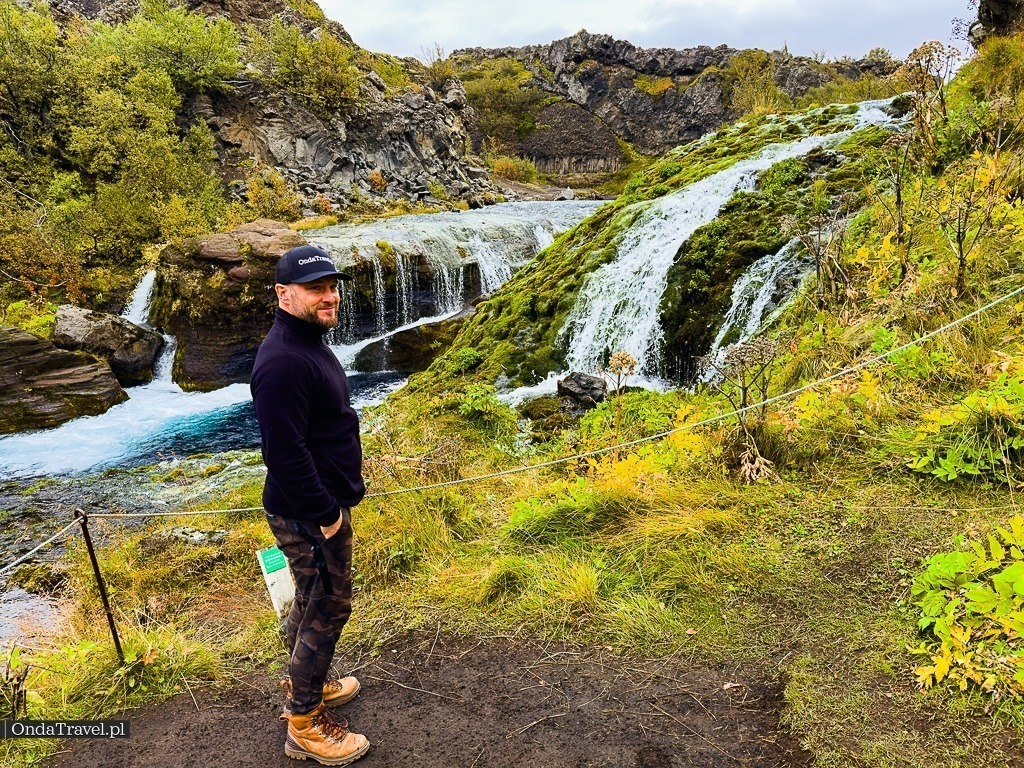
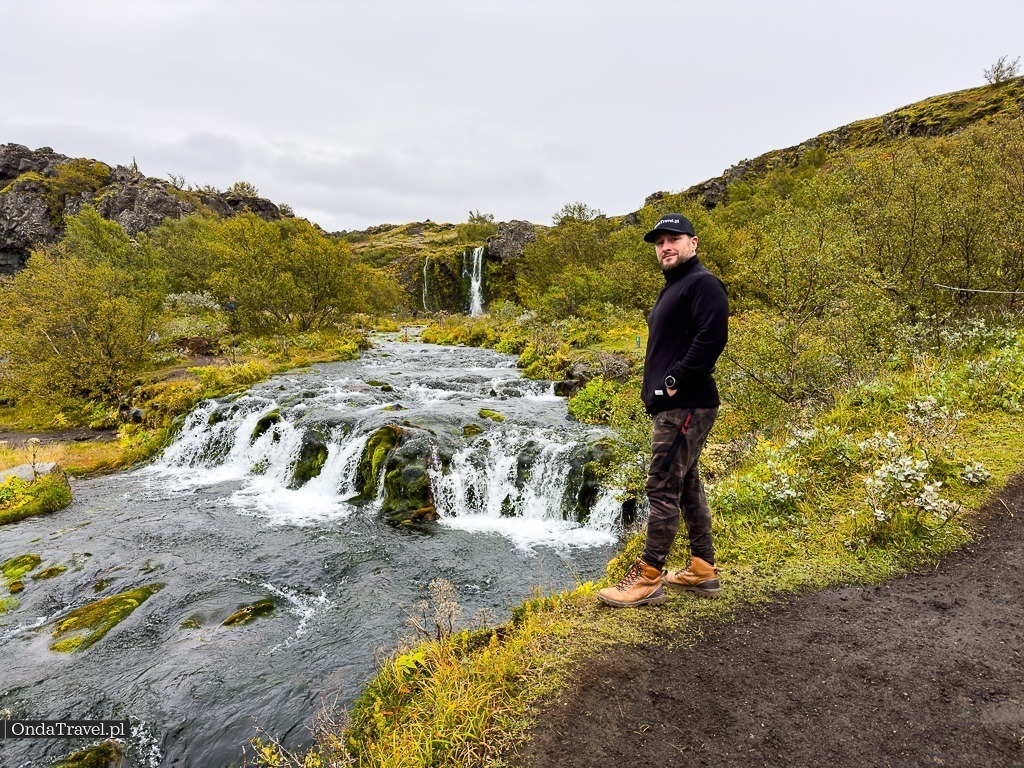
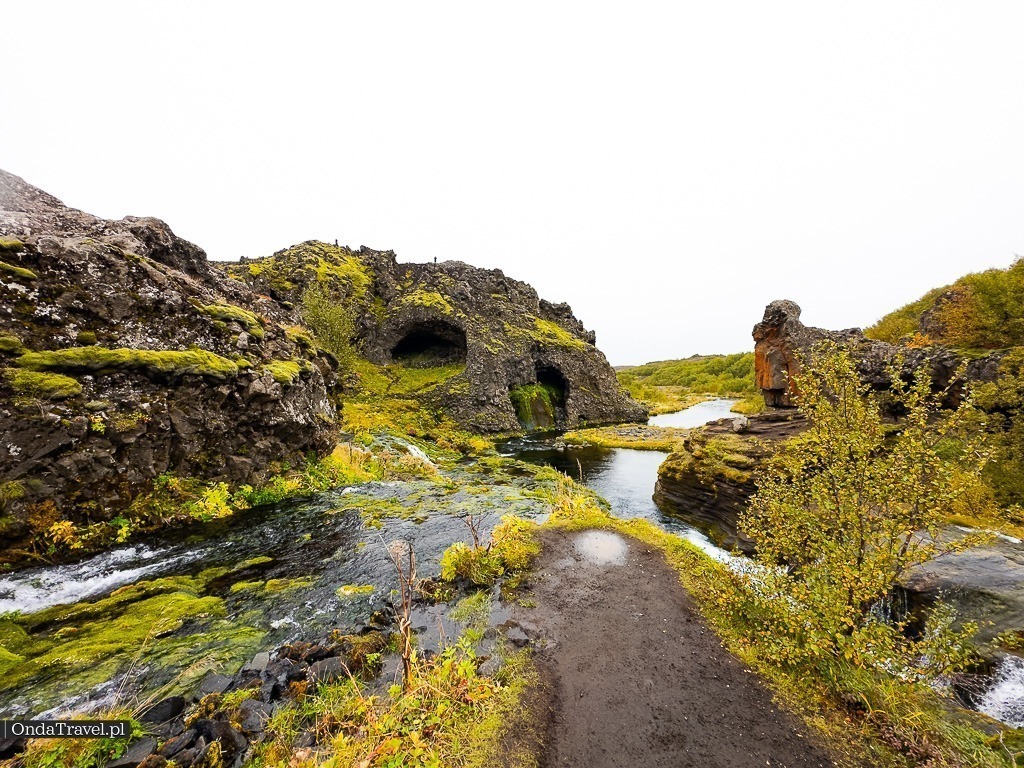
Gjáin looks almost fairy-tale-like in photos, but it is even more impressive in real life because it does not work through one huge “wow” moment like a massive waterfall. Its strength is in the details: little rock ledges, cascades, pools, clear streams, soft greenery and irregular basalt walls.
It is a great stop for travellers who prefer slower sightseeing. Rather than driving in, taking one photo and leaving, it is better to descend, walk around, look for different angles and give yourself time to see how the water shapes the whole landscape of the valley.
Gjárfoss and the Rauðá River
The best-known waterfall in Gjáin is Gjárfoss. It is not a giant, but that is part of its charm — the water drops here between dark basalt walls, and the whole setting looks photogenic from almost every angle. The Rauðá River also runs through the valley, giving the place life and creating a network of small flows, pools and miniature cascades.
Do not come here expecting a single “postcard viewpoint”. The best experience comes from moving slowly through the valley and watching how the landscape changes with each perspective.


Why does Gjáin look so unusual?
This place is fascinating not only visually, but also geologically. Gjáin is an older incision in the landscape that was later reshaped by further erosion and lava flows. In simplified terms: water first carved the terrain, and younger lava later coated parts of it and helped form the valley’s present walls and floor. That is why you get such a distinctive combination of greenery, water and black rock.
If you like this kind of landscape, add my guide to the most beautiful waterfalls in Iceland and the nearby guide to Háifoss, because the whole area shows very clearly how water, lava and eruption history intersect in Iceland.
Stöng and Þjóðveldisbærinn — a historical bonus that is truly worth adding
One of the best things about this area is that Gjáin does not stand in isolation. Right next to it you have Stöng — an archaeological site linked to a former farm buried during Hekla’s 1104 eruption — and Þjóðveldisbærinn, a reconstruction of a medieval farm based on the finds from Stöng.
Because of that, one short detour off the main route gives you not only scenery, but also a strong historical layer. It is a nice change from the classic “waterfall to waterfall” pattern, because here you suddenly see how closely nature, geology and settlement history sit together in Iceland.
If you like building a day plan without chaos, connect this stop with the ready-made outline in Iceland in 4 days or the wider guide to Iceland, then simply add this as an “active day away from the crowds”.


Gjáin as a “Game of Thrones” filming location — what to know
Yes — Gjáin is associated with “Game of Thrones”, and for good reason. This is where scenes connected with the journey of Arya Stark and Sandor Clegane, the Hound, were filmed. The place is so distinctive that once you see it in real life, it becomes easy to understand why it ended up in the series: basalt walls, small cascades, greenery and the hidden character of the valley look like a ready-made fantasy film set.


Scene from the series
Game of Thrones
Season 4 · episode 5
“First of His Name”
Characters:
Arya Stark and Sandor Clegane (the Hound)
What happens in this scene?
In Gjáin, the fairytale-like valley landscape was used as the backdrop for one of the most recognisable scenes from Arya Stark and the Hound’s journey. Arya practises her “water dance” with Needle here, while Sandor Clegane mocks her fighting style and shows that in a real fight, elegance alone is not always enough.
How can you recognise the place in real life? Look for the lower cascades, paths by the water, green slopes and basalt walls. It is exactly this intimate, slightly hidden landscape that gave the scene its distinctive atmosphere.


Film-location segment in the video: this link jumps straight to the “Game of Thrones” part and to how Gjáin works as a filming location in real life.
Second video from the area: this one starts around Gjáin, but also shows Hjálparfoss, Stöng and the wider surroundings, so it gives a good sense of how to build one coherent sightseeing day here.


When is the best time to visit Gjáin?
The best season for Gjáin is usually late spring, summer and early autumn — access is easier then, the greenery looks at its best and the walk through the valley is simply more enjoyable. In winter and outside the main season, road conditions, weather and the overall logistics of reaching the interior can make things more complicated.
If this is your first visit and you do not want to take risks, think of Gjáin mainly as a summer or good-conditions shoulder-season stop. Before you go, check not only the weather, but also actual road conditions and safety updates.


How much time should you plan on site?
About an hour is enough for a quick walk and photos. If you want to descend calmly into the valley, look for different angles, stop by Gjárfoss and avoid rushing from point to point, it is better to allow 1.5–2 hours. When you combine Gjáin with Stöng, Þjóðveldisbærinn and Háifoss, it becomes a very sensible half-day block.
How to combine Gjáin with other attractions in one day
The best structure for a day in this part of Iceland is simple: first the drive through Þjórsárdalur, then Stöng or Þjóðveldisbærinn, next Gjáin and finally Háifoss. If you have more time, add Hjálparfoss too and treat the whole thing as a day for travellers who prefer less obvious gems over the busiest classics.
For a first trip, it works very well when attached to the ready-made plan Iceland in 4 days. If you are planning a longer route, the guide Ring Road — South Coast and the main Iceland page are useful too.
Full guide
Háifoss — viewpoints, access and how to combine it with Gjáin
Open the full Háifoss guide if you want the best viewpoints, access tips, canyon context and a cleaner plan for linking Háifoss with Gjáin, Stöng and Þjórsárdalur.
- Short option: Stöng + Gjáin + Háifoss
- Fuller option: Þjóðveldisbærinn + Stöng + Gjáin + Háifoss + Hjálparfoss
- Option for landscape and photography lovers: a slower descent into Gjáin, a longer stop at Háifoss and adding more waterfalls from the list of the most beautiful waterfalls in Iceland
Practical tips before visiting Gjáin
- Wear shoes with good grip — the paths and stones by the water can be slippery.
- Do not get too casual around edges and wet boulders just because the place feels “small-scale” and calm.
- Do not leave the worn paths and do not damage the moss or vegetation.
- If you use a drone, remember that this is a protected area and additional restrictions and permits apply.
- Do not squeeze Gjáin between ten other stops. This place works best when you give it a little time.
More real filming locations to add to your route are collected in our guide to film tourism in Iceland and beyond.
FAQ: Gjáin Valley, Iceland
Do you need a 4×4 to reach Gjáin?
A 4×4 is the most strongly recommended option for the final stretch, but with a smaller car you can leave it by Stöng and walk into the valley.
How long is the walk to Gjáin?
From the Stöng area it is usually a short walk of roughly a dozen minutes one way. On site, it is best to allow about 45–120 minutes in total, depending on your pace and how many photos you take.
Can you combine Gjáin with Háifoss?
Yes, it is one of the best combinations in this part of Iceland. Many travellers link Gjáin, Stöng, Þjóðveldisbærinn and Háifoss into one half-day or full-day plan.
Were scenes from Game of Thrones filmed in Gjáin?
Yes. Gjáin is associated with scenes from Arya Stark and the Hound’s journey, which is why it often appears in guides to Icelandic filming locations.
When is the best time to visit Gjáin?
The most convenient time is the summer season and periods with good road conditions. Before you go, always check current updates on Traffic Info and SafeTravel.
Read also / next
- Iceland: guides, routes and attractions — main topic section
- Iceland Highlands / Interior — access, conditions and route planning
- Háifoss — practical guide to the waterfall and canyon
- The most beautiful waterfalls in Iceland — place list and stop ideas
- Iceland in 4 days — a ready-made first-trip plan
- Ring Road — Iceland’s South Coast


Hi, I’m Krystian “dziadzia przewodnik” from OndaTravel.pl!
The North is my greatest passion, but the world is far too beautiful to stay in just one climate. On my blog, I combine the raw landscapes of Iceland and Norway with the exotic energy of Thailand or Vietnam, showing you how to travel authentically — with passion and a camera in hand.
What will you find on OndaTravel.pl?
Visual storytelling: As a photographer and filmmaker, I don’t just describe places — I take you there with professional photos and video.
North expert: Ready-to-use road trip plans for Iceland and Norway, smart tips for budget travel, and my original Northern Lights Radar (locations and forecast).
Travel through the lens of cinema: I track down filming locations — from icy scenes in Interstellar to tropical frames from world cinema.
New direction: Exotic destinations: I love contrast, so the blog is featuring more and more practical knowledge about Vietnam and Thailand. I’ll show you how to find your way around Southeast Asia and come back with your best memories.
P.S. follow me here
Author
Krystian „dziadzia przewodnik”The North is my greatest passion, but the world is too beautiful to stay in one climate. On my blog I combine the raw nature of Iceland and Norway with the exotic energy of Thailand and Vietnam, showing you how to travel authentically, with passion and a camera in hand.