

Coolcation means holidays in cooler places: without fighting the heat, without a day plan dictated by air conditioning and without the pressure that a holiday must mean the hottest possible destination. It is a practical answer to the question where to escape the heatwhen you are looking for an idea for holidays in a cool climate, cooler destinations and a calmer escape from the heat. In short: coolcation is a conscious escape from the heat, but without giving up travel, views and an active day plan.
It is a travel style for people who want to truly rest in summer, not only survive another day in full sun. In practice, it means choosing destinations with moderate temperatures, more space and a day plan that lets you walk, explore, drive further and breathe without overheating.
After the pages Noctourism i Darecation it is another element of our pillar about new travel styles. Coolcation naturally leads to northern Europe, Iceland, Norway, mountains, off-season city breaks and places where the landscape matters more than beach temperature.

GUIDE
Noctourism: travel after dark, northern lights and the night sky
Noctourism means travel planned after dark: northern lights, meteors, dark sky, night trains and places that come alive after sunset.
Coolcation — in short
A coolcation is travelling to cooler places or in a milder season, when heat does not dominate the whole trip. It works best for people who prefer active sightseeing, nature, northern destinations, mountains, coasts and comfort without extreme temperatures.
Table of contents

Check out my YouTube channel and travel with me.
Follow the channel for videos, routes and practical travel inspiration.
Follow me here:
What’s up?
Enjoying my content?
Buy me a coffee at buycoffee.to/ondatravel and support the creation of more travel content.
Your support helps me create more practical guides, videos and travel inspiration.

What is coolcation?

Coolcation means holidays planned in a cooler climate. In practice, it means travelling to a place where summer temperatures do not drain your energy, limit sightseeing or force you to hide in the shade for half the day.
This trend is not the opposite of holidays. It is rather a different definition of comfort. For some people, it will be Iceland with waterfalls and lava fields. For others, Norway with fjords, ferries and scenic roads. That is why Iceland in summer i Norway in summer are natural examples of trips where you can rest from the heat without giving up powerful landscapes.

GUIDE
Iceland
Plan your first Iceland trip: 4- and 7-day routes, the Golden Circle, South Coast, Reykjanes and Snæfellsnes, plus seasons, driving and safety tips.
Coolcation can be a major expedition, but it can also be a shorter trip: a weekend on a cooler coast, a city break outside a heatwave or a week in the mountains. What matters is not whether you travel far, but whether you choose conditions in which rest is genuinely comfortable.
At OndaTravel, we treat coolcation not as a temporary social-media phrase, but as a practical response to a real change in travel. More and more often the question is not: where will it be warmest? More and more often it is: where will it be beautiful, active and reasonably bearable?
Why are holidays without extreme heat a trend?
The popularity of coolcation is growing because classic holidays in the hottest regions of Europe are increasingly becoming uncomfortable. Heatwaves, crowded resorts, trail restrictions and sun fatigue make some travellers look for an alternative.
It is not that southern Europe stops being attractive. The point is that July and August are not always the best time to experience a city, nature or long routes. If the temperature drains your strength, even the most beautiful trip can turn into survival logistics.
Coolcation reverses this logic. Instead of adapting to the heat, you choose a destination that lets you plan the day more normally: go for a walk, climb to a viewpoint, drive a scenic road or spend a few hours outdoors without overheating.
It is also an answer to crowd fatigue. In cooler destinations, it is easier to find space, silence, nature and a rhythm where not everything happens between a sunbed and an air-conditioned room.
Who is coolcation for?
Coolcation is for people who like to travel actively but do not want to fight the temperature. It works well for families with children, seniors, people sensitive to heat, photographers, drivers planning road trips and those who prefer landscapes to sunbeds.
It is also a good direction for people who do not feel the classic holiday model: hotel, beach, pool and the warmest possible place. Coolcation offers a different promise: more air, more space and a calmer rhythm of the day.
If you choose cooler holidays by the Baltic Sea, a lake or another bathing area, before entering the water also check how to recognise cyanobacteria before swimming and where to look for current alerts.

POLAND
Cyanobacteria in the Baltic Sea and lakes: symptoms, map and safety
Check where cyanobacteria are present in the Baltic Sea and lakes, how to use the official bathing-water map, recognize a bloom and respond to symptoms after swimming.
This travel style also works for people who like planning longer drives. High temperatures can become tiring after only a few hours, while a cooler climate makes it easier to stop along the way, take photos and change the route spontaneously.
For OndaTravel travellers, coolcation has one more advantage: it connects well with destinations we already write a lot about. Iceland, Norway, northern Europe, aurora, waterfalls, fjords and active city breaks are the natural background of this trend.
Where to go for coolcation in Europe?

The most obvious coolcation destinations in Europe are the north of the continent and mountain regions. The choice depends on whether you want more nature, a city, a road trip or calmer rest outside the classic season.
Iceland: cool air, geothermal bathing and landscape
Iceland is one of the strongest examples of coolcation. It is a place where even in summer you think about wind, clothing layers and weather that changes faster than your day plan. In return, you get waterfalls, lava fields, black beaches, glaciers and hot springs.
If you want to start with broad planning, the best entry point will be our page Iceland. Coolcation in Iceland is not about everything always being easy. It is about temperatures that allow you to get outdoors, while the weather itself becomes part of the experience.
Norway: fjords, islands and summer without heat
Norway is a natural destination for people who want a break from the heat but do not want to give up an active plan. Fjords, Lofoten, Senja, the Tromsø area, Narvik, scenic roads, ferries and walking routes create a cooler but still intense trip.
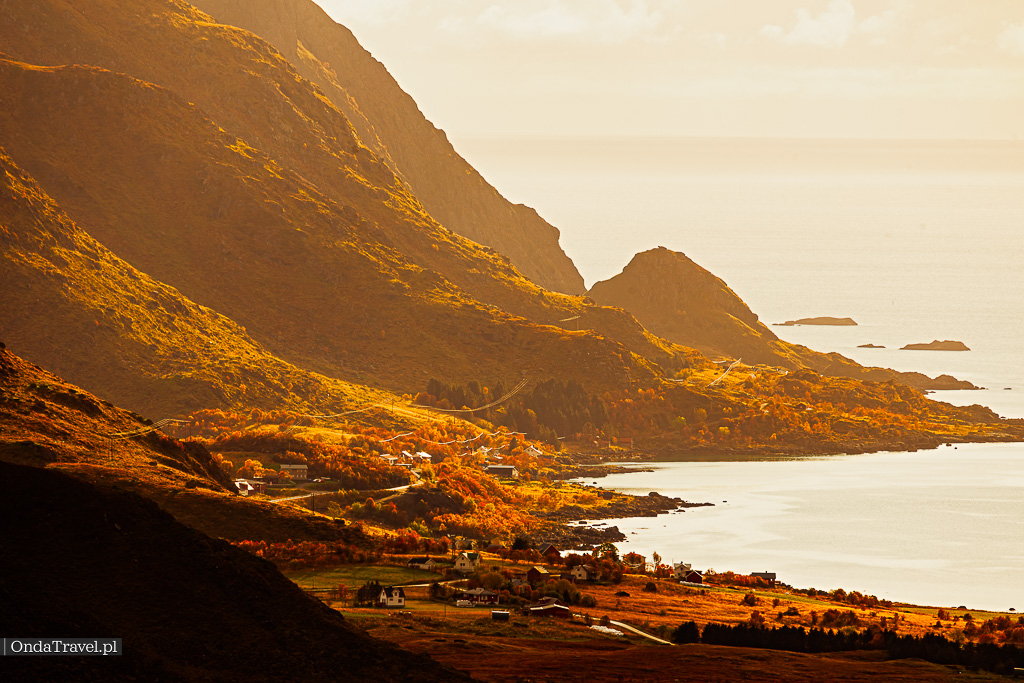
LOFOTEN
Lofoten: A Travel Guide to the Pearl of Norway
Lofoten travel guide. Lofoten blog. Lofoten, also known as the Lofoten Islands, is an archipelago located in northern Norway, in the Norwegian Sea.
It is a destination for those who like landscape and movement: drives between points, stops by the water, short climbs to viewpoints, long days and a sense of space. We cover this more broadly in the guides on the page Norway.
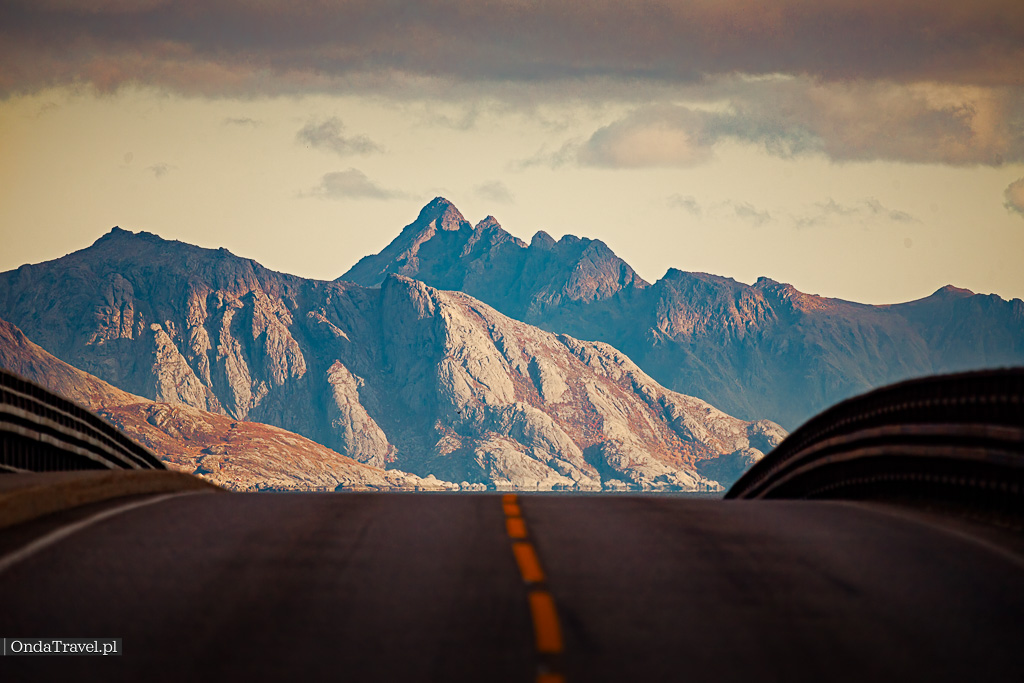
GUIDE
Norway
Norway step by step: Lofoten, Senja, and Tromsø, practical tips, and links to posts. Check the live radar and aurora forecast.
Scotland, the Alps and northern Europe
Coolcation is not only Iceland and Norway. It also works well in Scotland, Finland, Sweden, the Baltic countries, the Alps, the Dolomites and on the northern coasts of Europe. The common denominator is moderate temperature, nature and more freedom in planning the day. The same logic also includes the Faroe Islands: raw landscapes, wind, lower temperatures and travel focused more on nature than beach time.
In this version, coolcation can take the form of a shorter trip: a few days in a city, a ferry, a train, an island, a lake or a cycling route. This style connects well with our approach to city breaks from Gdańsk, especially when you choose a destination outside the hottest part of the season. Among ready-made ideas, it is worth checking Iceland from Gdańsk for a weekend and Bergen from Gdańsk for a weekend, because both destinations fit the short version of coolcation well.
GUIDE
City breaks from Gdańsk: where to fly for 2–3 days?
Guide to the best city breaks from Gdańsk: 2–3 day destinations, new routes for 2026, car-free plans, transfers and weekend ideas.
Coolcation from Poland: the Baltic Sea, mountains and shorter trips

Coolcation does not have to start with a distant expedition. For many people, the first version of this trend may be Poland: the Baltic Sea outside the worst heat, the Tricity, a cooler morning by the water, mountain valleys, forests, lakes or a short city break planned so that you do not spend the day in full sun.
This matters because the trend is not about always travelling as far north as possible. It is about consciously choosing conditions. Sometimes the best solution is a shorter trip planned more wisely: outside a heatwave, with more greenery and with activities that bring rest instead of overheating.
The Polish version of coolcation can also be a good test of this travel style. If after such a trip you feel that a morning walk, wind, forest and cooler air give you more than all-day beach time in the heat, Iceland or Norway will probably be a natural next step.
When to go for coolcation?
The best timing depends on the destination. In Iceland and Norway, summer gives long days, more light and easier logistics, but it still requires flexibility. In the mountains, late spring, early summer or September may be a good choice.
Coolcation does not automatically mean a cheap trip. The popularity of cooler destinations is growing, so the most important accommodation and flights are worth booking earlier. At the same time, this trend lets you extend the season and look for good weather windows outside the hottest holiday peak.
In practice, it is best to plan not only the date, but also scenarios. One plan for good weather, another for rain, a third for strong wind. In cooler destinations, the person who changes the plan does not lose. The person who assumes that the weather must fit the attraction list does.
Related OndaTravel guides
Below you will find guides and pages that naturally expand the coolcation topic: from Iceland and Norway to travel after dark and more active trips with an element of challenge.
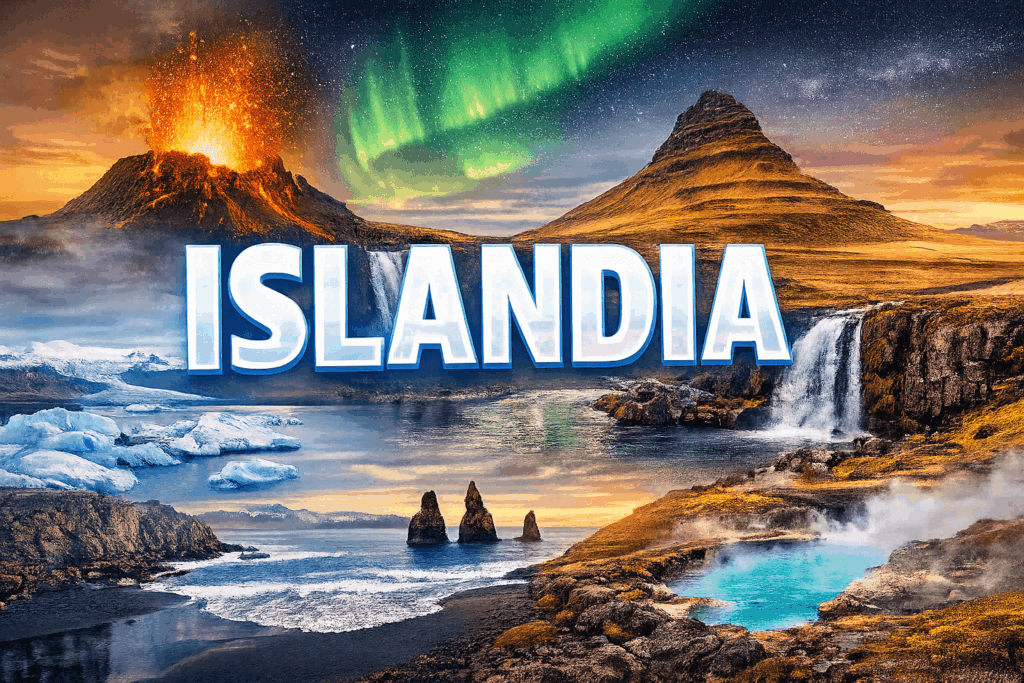
Iceland: cool air, waterfalls and raw nature
Iceland is one of the most natural destinations for holidays without extreme heat: waterfalls, lava fields, geothermal bathing, wind and a landscape that does not need beach heat.
See Iceland
Where is the storm? Live storm and precipitation radar
Storm map, precipitation radar and a quick way to check where it is raining or whether a storm is moving your way.
Check the storm radar
Norway: fjords, islands and an active summer
Norway shows very well that summer does not have to mean lying in the heat. Fjords, Lofoten, Senja, ferries and scenic roads give a cooler version of a summer adventure.
See Norway
Noctourism: when coolness begins after dark
Coolcation naturally connects with travel after dark: night sky, aurora, cooler air and a calmer rhythm of sightseeing without fighting the heat.
See noctourism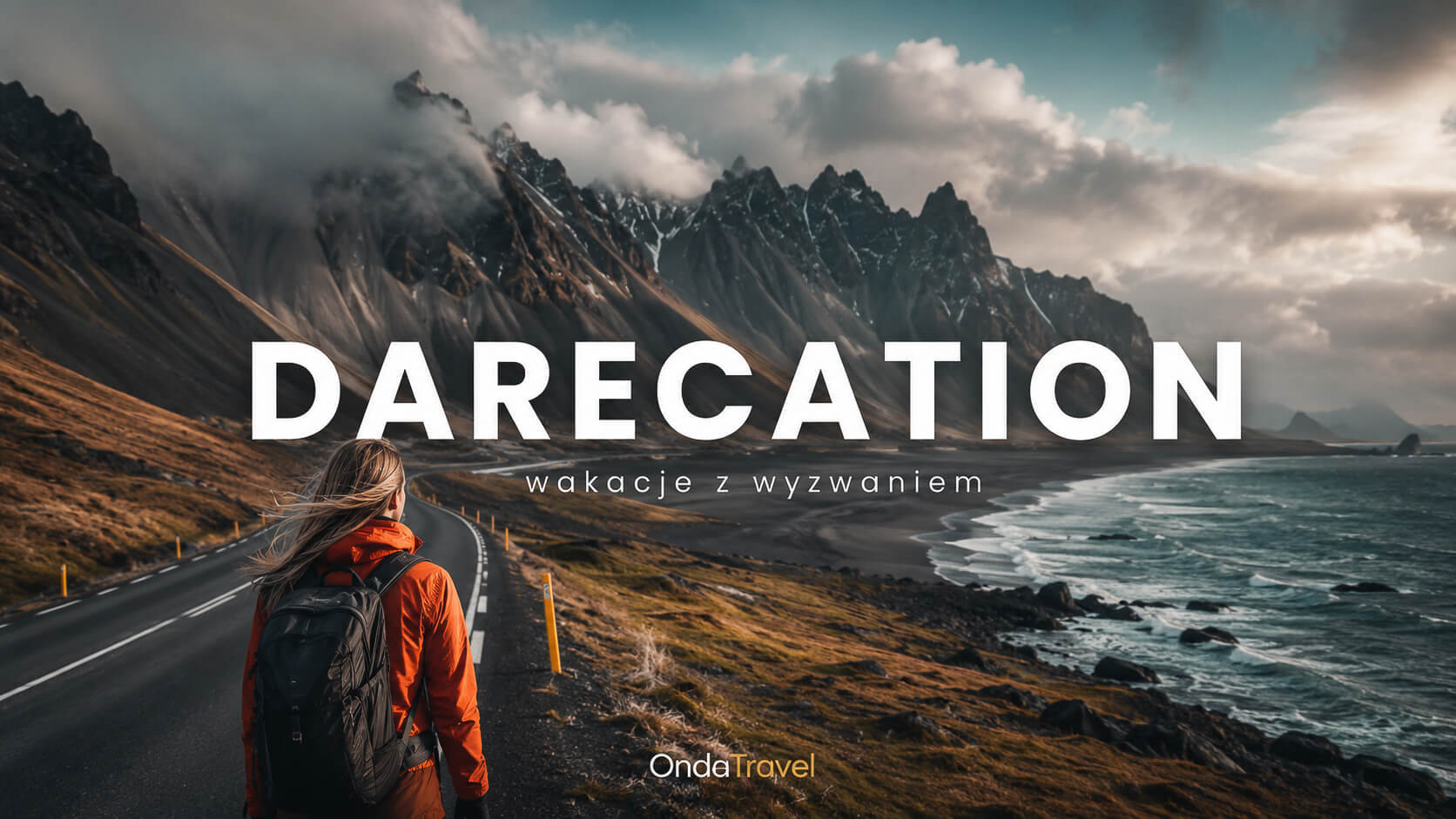
Darecation: holidays with a challenge, but without heat
If coolcation is meant to be more active, it easily turns into darecation: trekking, road trips, fjords, waterfalls and places that require movement, but not heat.
See darecationHow to plan a coolcation?

The most important rule is: do not plan coolcation like classic holidays in a warm country. Here, the weather is an advantage, but also a condition that needs respect. Instead of a rigid programme from morning to night, it is better to build a plan with margin: one stronger point of the day, one alternative and time to change decisions.
Packing should be based on layers. Comfortable shoes, a sweatshirt, a light rain jacket, something windproof, sunglasses, sunscreen and clothes that dry quickly will be useful.
In coolcation, the rule “fewer points, more time” also works well. Cooler places are often more changeable in terms of weather, so a plan based on seven attractions a day may work worse than a calmer route with two strong moments.
It is also worth leaving budget and time for simple changes: an extra night, a shorter drive, an alternative route or a rest day. A cooler climate gives comfort, but often requires more flexibility than a classic city break.
Coolcation, Noctourism and Darecation: how do these trends connect?

Coolcation is not a separate island. It is part of a larger change in travel that we are already describing on OndaTravel. Noctourism shifts attention to the night: aurora, stars, cooler air and places that work most beautifully after dark.
Darecation adds an element of challenge. If coolcation leads you to fjords, waterfalls, glaciers and northern roads, it is easy to move from holidays without heat to holidays with a stronger experience.

GUIDE
Darecation: holidays with a challenge
Darecation means holidays with a challenge: active travel, raw landscapes, road trips, northern routes and experiences beyond classic rest.
In the broader plan, this pillar will lead further to the next trends: set-jetting, glowcation and quietcation. Coolcation is especially important because it touches something very practical: body comfort, health, climate and real travel conditions.

GUIDE
Quietcation: travel in silence, nature and without crowds
Quietcation means calmer travel focused on silence, nature, fewer crowds, northern landscapes, off-season trips and real rest.
Safety and realism: cooler does not mean without preparation

Coolcation can reduce the risk of overheating, but it does not remove the need to think. Cooler destinations often have more changeable weather: wind, rain, fog, cold water, slippery trails or long stretches without infrastructure.
The biggest mistake is treating a cooler destination as an easier version of holidays. Iceland, Norway or the mountains can be demanding. If a road is closed, you do not go. If a trail requires equipment you do not have, you choose another route.
A well-planned coolcation gives something very valuable: the feeling that you can truly rest and experience something at the same time. Without the pressure of tropical heat and without pretending that holidays have to look the same for everyone.
Realism is an advantage here, not a limitation. That is exactly why coolcation fits OndaTravel: it is not a promise of perfect weather, but a guide to travelling in a way that better fits a changing summer.
FAQ: Coolcation
This guide is part of a larger section about new travel styles. See also: Travel trends — the OndaTravel guide to Noctourism, Coolcation, Set-jetting, Glowcation, Quietcation and Darecation.

GUIDE
Travel trends: Noctourism, Coolcation, Set-jetting, Glowcation and Quietcation
Discover key travel trends: Noctourism, Coolcation, Set-jetting, Glowcation, Quietcation and Darecation. Choose your travel style.
What is coolcation?
Coolcation means holidays in a cooler place: instead of choosing a destination associated with summer heat, you plan a trip where the weather lets you actively explore, walk, breathe and rest without overheating.
Where did the popularity of coolcation come from?
The trend is developing together with climate change, more frequent heatwaves and fatigue with classic holidays in crowded resorts. For many people, a cooler destination means greater comfort, safety and a calmer travel rhythm.
Where to go for coolcation in Europe?
The most natural destinations are Iceland, Norway, Sweden, Finland, Scotland, the Baltic countries, northern coasts and mountain regions of Europe. A city break outside the hottest part of the season can also be a good idea.
Is Iceland suitable for holidays without extreme heat?
Yes. Iceland is one of the clearest coolcation destinations: waterfalls, glaciers, lava fields, hot springs and raw landscapes give a holiday feeling without the need to look for tropical temperatures.
Is Norway a good destination for coolcation?
Yes. Norway combines fjords, mountains, ferries, islands, cooler air and active sightseeing. It is a good choice for people who prefer landscape, space and movement to beach time in the heat.
Does coolcation mean it will be cold?
Not always. It is more about comfortable coolness or moderate temperature than a winter trip. In many places, summer is still bright, pleasant and active, but without temperatures that make sightseeing difficult.
How to pack for coolcation?
Layers are the most important: a light rain jacket, sweatshirt, comfortable shoes, something windproof, sunglasses and clothes that can be quickly adjusted to changing weather.
How is coolcation different from darecation and noctourism?
Coolcation focuses on avoiding heat and choosing a cooler climate. Darecation adds an element of challenge and activity, while noctourism shifts part of the trip after dark: towards the night sky, aurora, stars and silence.


Hi, I’m Krystian “dziadzia przewodnik” from OndaTravel.pl!
The North is my greatest passion, but the world is far too beautiful to stay in just one climate. On my blog, I combine the raw landscapes of Iceland and Norway with the exotic energy of Thailand or Vietnam, showing you how to travel authentically — with passion and a camera in hand.
What will you find on OndaTravel.pl?
Visual storytelling: As a photographer and filmmaker, I don’t just describe places — I take you there with professional photos and video.
North expert: Ready-to-use road trip plans for Iceland and Norway, smart tips for budget travel, and my original Northern Lights Radar (locations and forecast).
Travel through the lens of cinema: I track down filming locations — from icy scenes in Interstellar to tropical frames from world cinema.
New direction: Exotic destinations: I love contrast, so the blog is featuring more and more practical knowledge about Vietnam and Thailand. I’ll show you how to find your way around Southeast Asia and come back with your best memories.
P.S. follow me here

