
Oeschinen Lake (Oeschinensee), Switzerland: Travel Guide, Gondola Prices & Best Hiking Trails from Kandersteg

Oeschinensee, also known as Oeschinen Lake in Switzerland, is one of the most searched Alpine lakes near Kandersteg: turquoise water, the Blüemlisalp range and an easy gondola approach. In this guide you will find how to get to Oeschinensee from Kandersteg, Interlaken, Bern or Zurich, current gondola prices for 2026, parking, map tips, rowboats, the best hiking trails and the best time to visit without losing the day in crowds.
Affiliate disclosure: Some links in this article may be affiliate links. If you use one of them, OndaTravel.pl may receive a small commission at no extra cost to you.
Oeschinensee — in short
Oeschinensee is one of the most beautiful Alpine lakes in Switzerland, reached from Kandersteg by gondola and a walk. It is best planned with the weather, the gondola prices, the time for the walk and whether you only want to see the lake or do a longer trail in mind.
Oeschinensee: which route should you choose?
You do not need to hike a long trail to enjoy the lake. Decide on time, fitness and weather first, then choose between the easy lake access and a panoramic route.
- easiest option: gondola plus a 20–30 minute walk to the lake
- allow around 4–6 hours for a relaxed visit by the water
- choose the Panorama Trail only in suitable weather and footwear
- check current schedules, prices and any boarding reservation before travel
Do not plan the route from photos alone—mountain conditions can change quickly.
Key points at a glance
• Base: Kandersteg (Bernese Alps)
• Walk to the lake: about 20–30 min from the upper station (easy road, also with a stroller)
• Must‑do: the Heuberg loop with the best “from above” view
• Take it easy: plan 4–6 h (or a full day if you want a boat + a longer hike)
A tip that saves your nerves
In the summer season the popularity is huge — it’s best to arrive early. The gondola ride often runs on “time slots” (Boarding Pass), and the parking lots can fill up around midday.
Table of contents: Oeschinensee access, prices, and routes without getting lost
Use the table of contents below to jump straight to transport, current prices, seasons, and the best hikes.
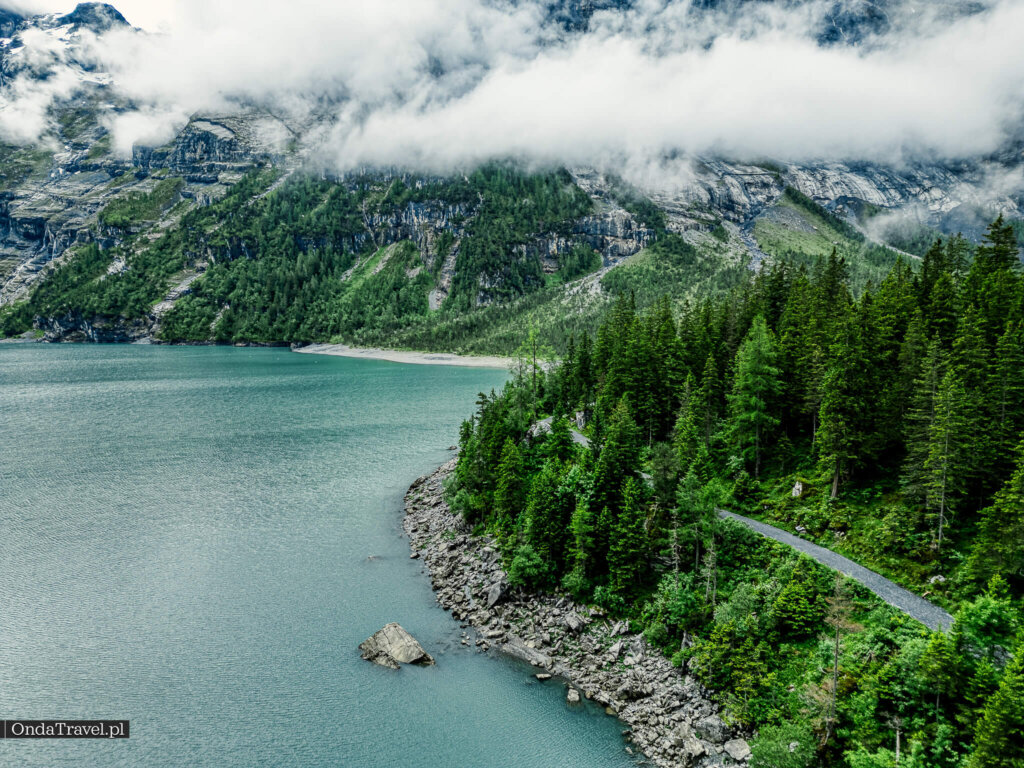
Table of contents: Oeschinensee
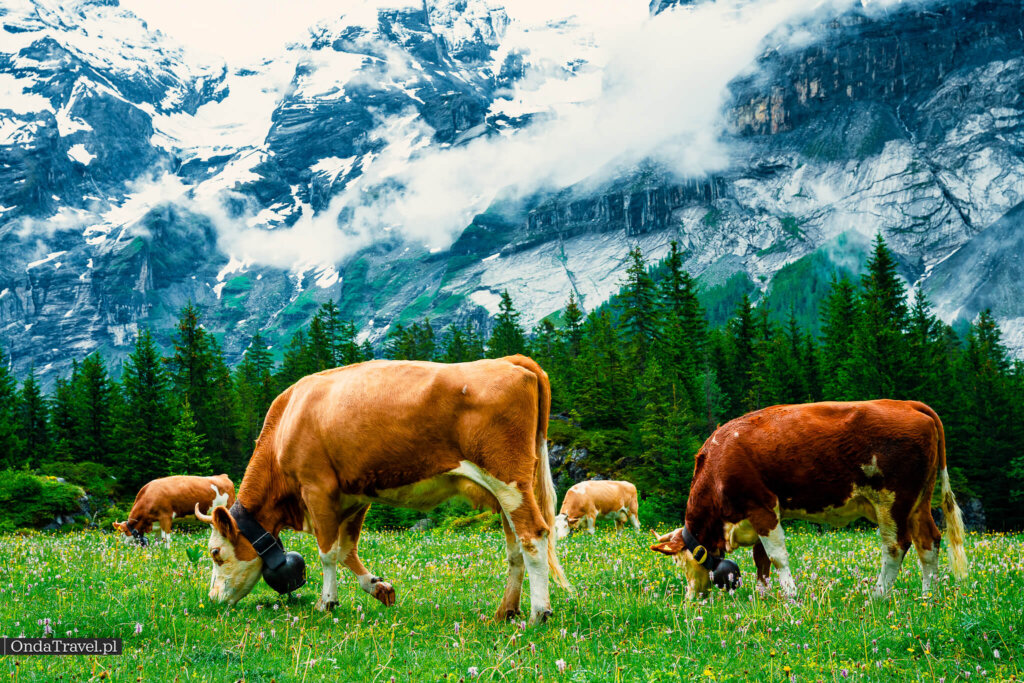


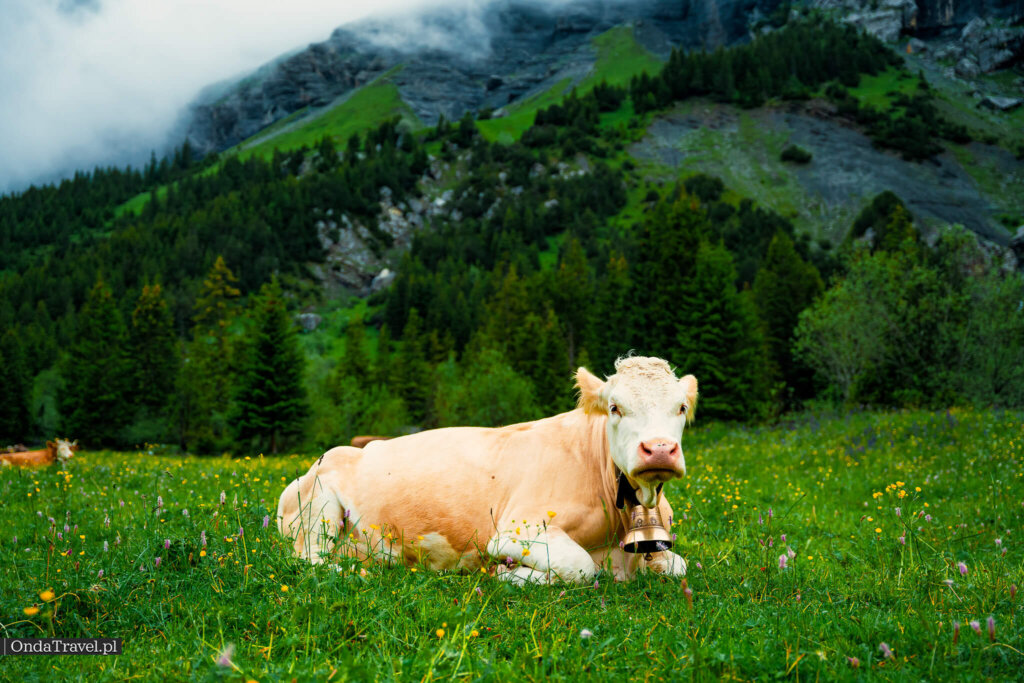
Walking the trail toward the lake (especially in summer), you often cross alpine meadows where cows and cattle graze — sometimes they stand right by the path, and you’ll hear the characteristic bells before you see them; keep a calm distance, don’t force your way in for photos, close pasture gates, and keep your dog on a leash, because the animals may react to it as a threat.
Where Oeschinensee is and why it’s so impressive
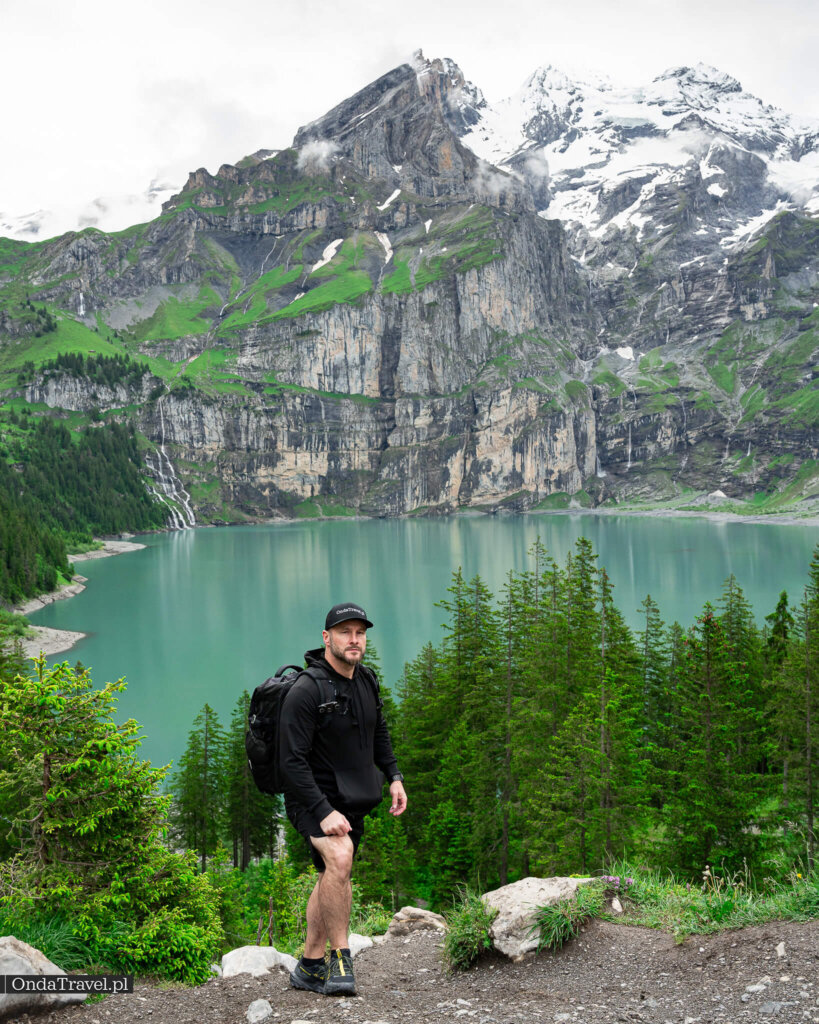
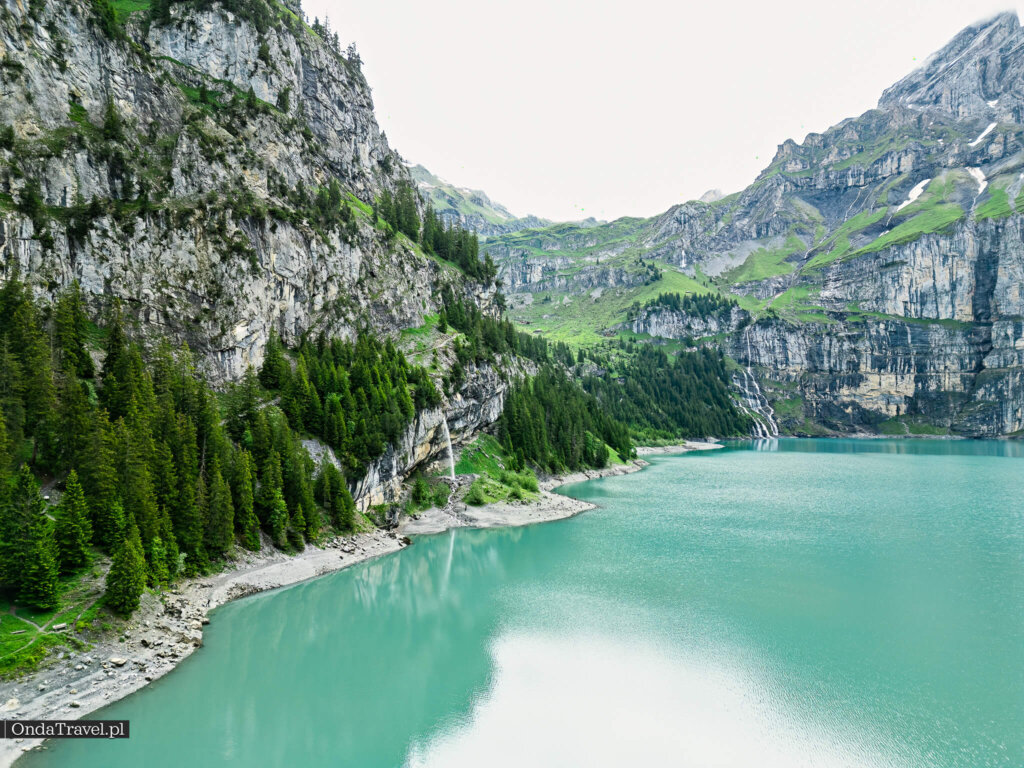
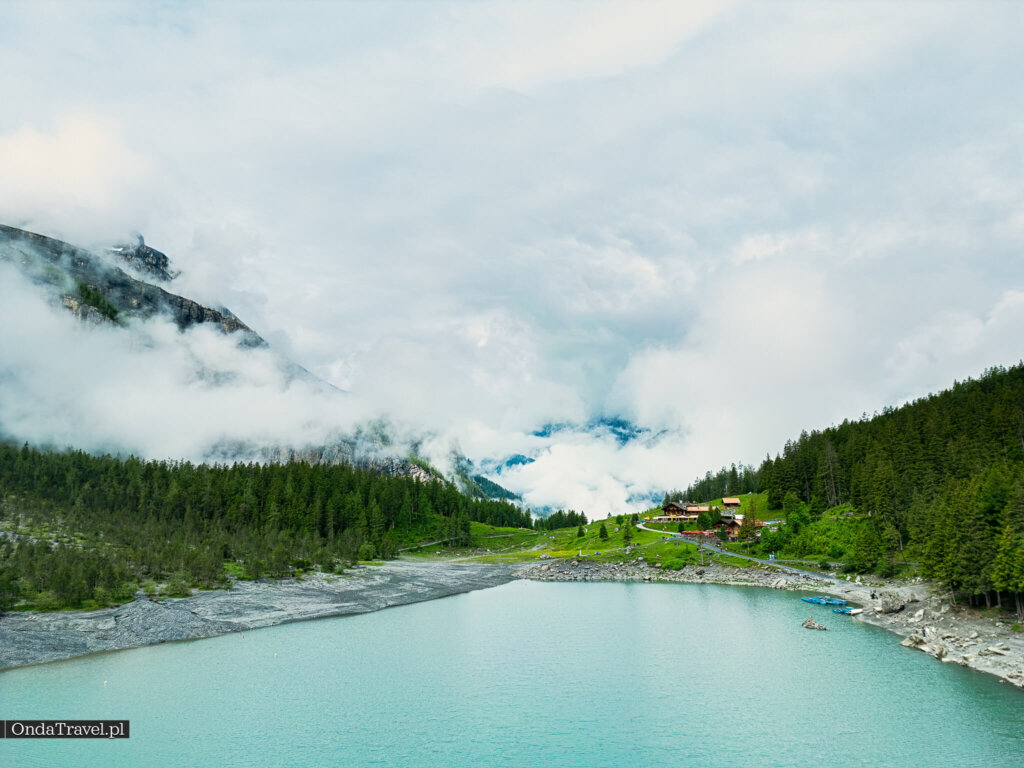
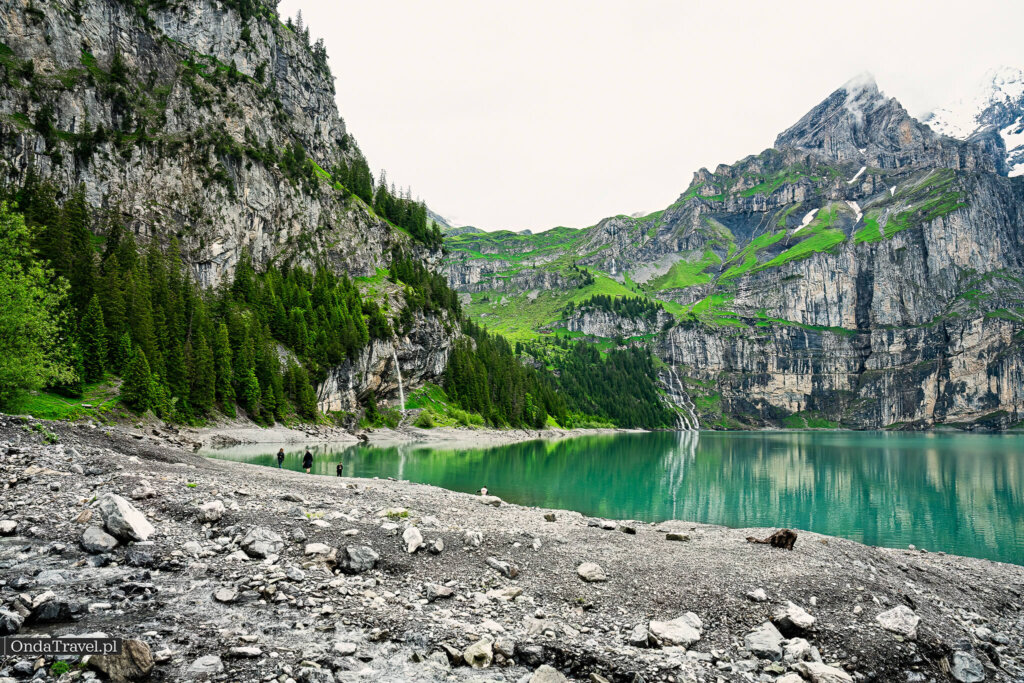
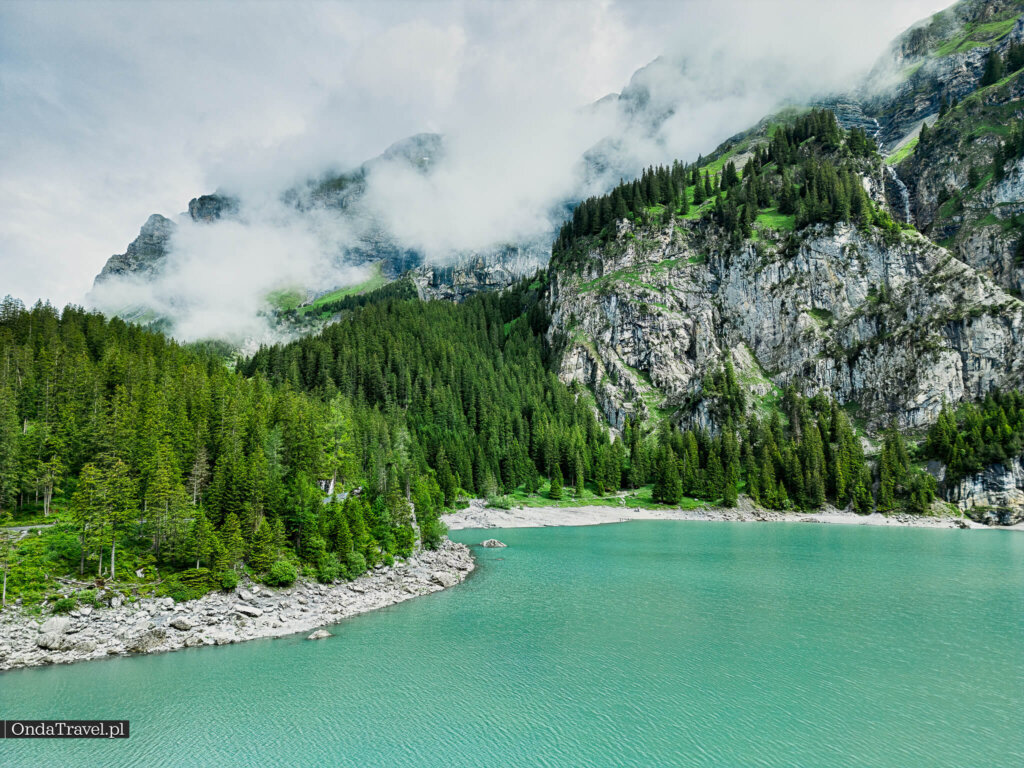
Oeschinensee (often called Lake Oeschinen in English) sits above the village of Kandersteg in the Bernese Alps. The biggest “wow” usually comes from the contrast: intensely turquoise water + monumental rock walls + a classic alpine panorama that looks unreal even when you’re standing there.
If this is your first time, treat Oeschinensee as a full day in the mountains: an easy walk down to the shore, a scenic loop above the lake, and then an optional rowboat. That way you’ll see both the lake-level perspective and the “from above” view that makes this place so photogenic.

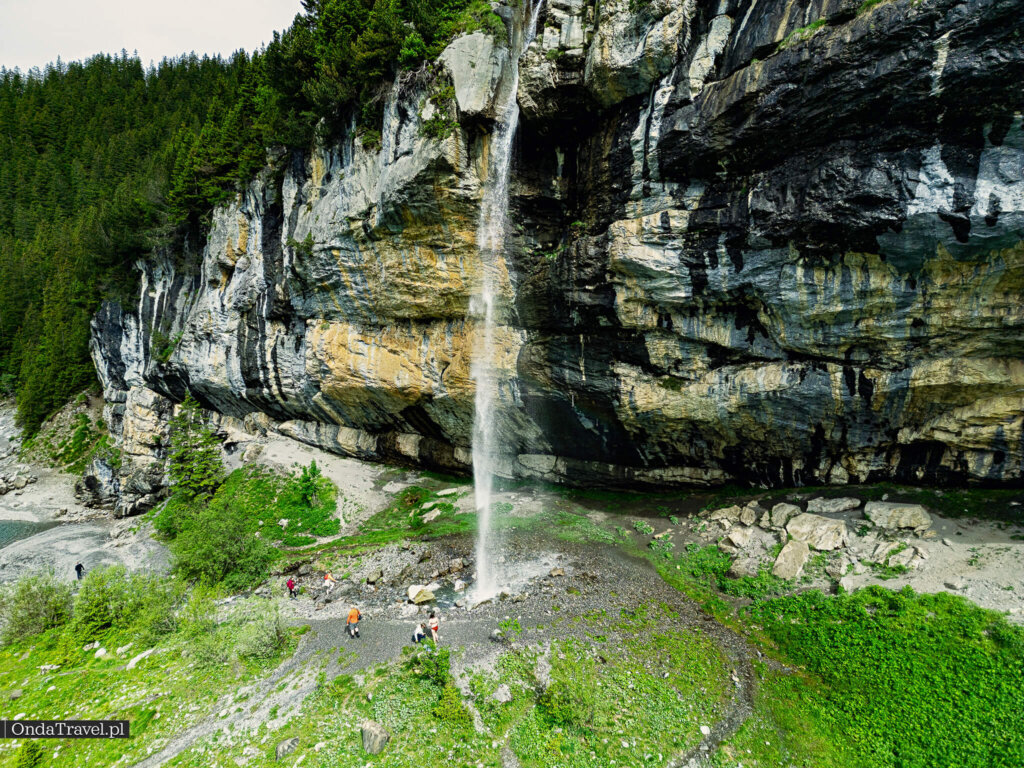


Waterfalls at Oeschinensee: where to walk up, when they’re at their best
One of the nicest surprises at Oeschinensee are the waterfalls and streams spilling straight into the lake. They’re easiest to spot in spring and early summer, when snow is melting higher up in the mountains — then you can hear the water and see white ribbons on the cliffs.
The biggest “wow” is usually a seasonal waterfall deep inside the rocky amphitheatre (toward the eastern end of the lake). Sometimes you can walk closer and see it from really near, but remember that the lake area is under strict safety restrictions due to rockfall risk — follow signs and stay out of closed zones.
Quick clips from Oeschinensee: short TikTok videos below show the lake, the trails, and the “from above” perspective.
@ondatravel.pl ? Switzerland ❯ OndaTravel.pl ? #ondatravelpl #thailand #travel #mountains #mountainslake #traveljourney #krajobrazy #DreamTravels #podroze #travel #traveldestination ♬ Northern Lights – Dy Kamylle
The most accessible — and usually the first — waterfall you’ll see on the route is the one in the photo. The approach is easy, and in good conditions you can get very close — almost right under the “curtain” of water.
- Panoramic loop (Heuberg / Panorama Trail): the best views of cascades flowing down the mountain walls and of the entire lake surface.
- Walk along the shore toward the “end of the lake”: the easiest way to get closer to the streams and spot the biggest seasonal waterfall.
- Around the lakeside restaurant: a good spot for a short break and “hunting” for small streams that spill into the water.
Photo tip: if you want that “milky” water effect in photos, a small tripod and a longer exposure help — but even without that, waterfalls look great on an overcast day, when there’s no harsh sun and the water has a soft, even tone.
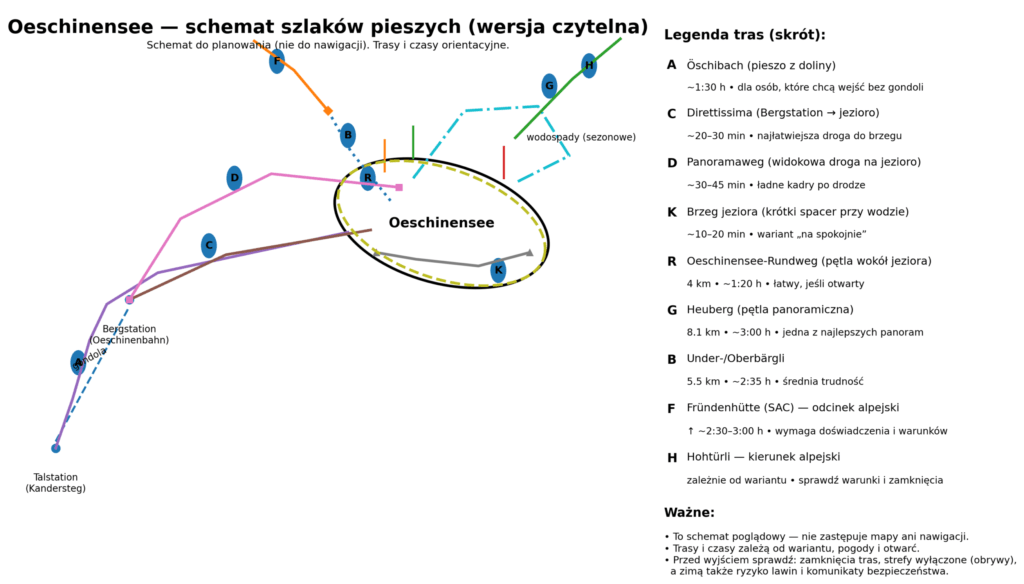
Hiking trail map around Lake Oeschinensee, Switzerland
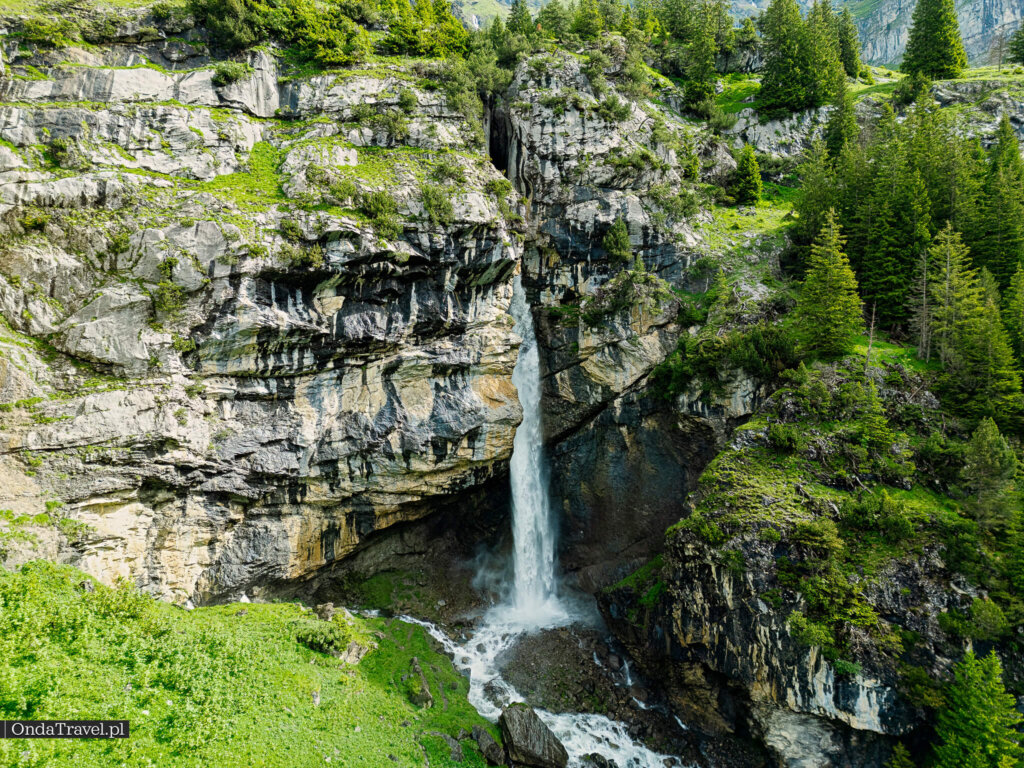
Another waterfall on the trail is Bärgfall (you’ll also see the spelling Bärglifall) — a picturesque cascade above Lake Oeschinensee near Kandersteg, easy to add to a walk along the lake and the panorama trails.

How to get to Oeschinensee from Zurich, Bern, and Interlaken
Navigation destination: Kandersteg + the gondola station Kandersteg Talstation Oeschinen (the lower gondola station).
Getting to Kandersteg by train — the stress‑free option
You can reach Kandersteg by train (for example via Spiez and Brig). From the railway station it’s about a 20‑minute walk to the lower gondola station; in season from June to October there’s also a local bus.
Important in summer: if you’re arriving by public transport, in the summer season you need to reserve an entry slot (the so‑called Boarding Pass) — this helps you avoid queues and makes it more likely you’ll ride up at your chosen time.
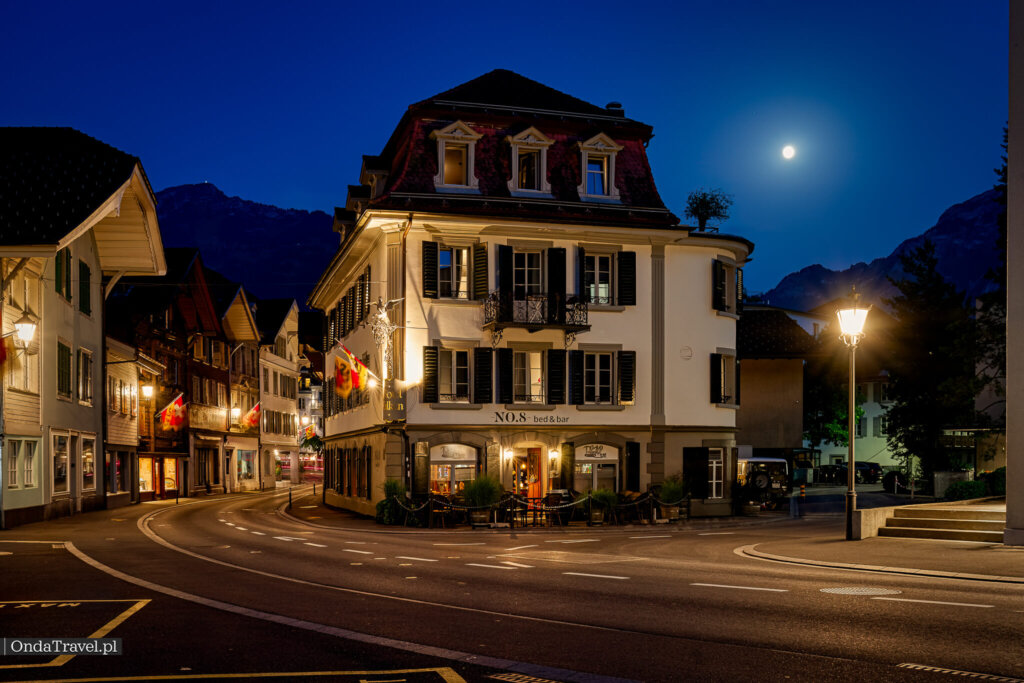


Interlaken as a base and a quick trip to Kandersteg
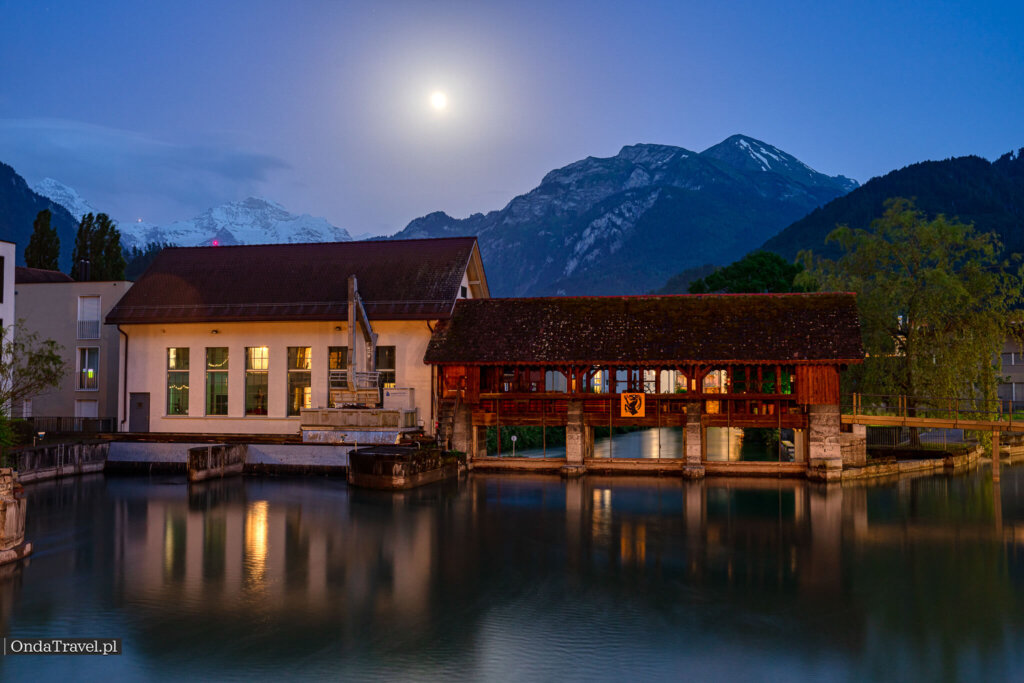
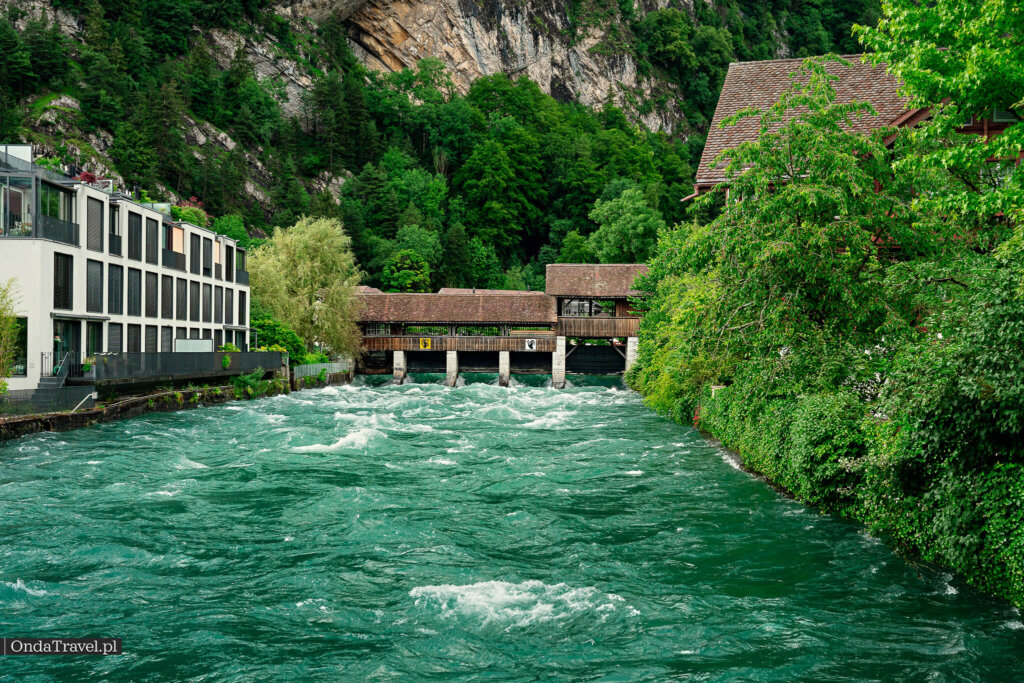
Interlaken is a small town “between the lakes” Thun and Brienz — often chosen as a convenient base in the Jungfrau region. If you’re staying in Interlaken, the easiest way to reach Oeschinensee is to take the train to Spiez and then continue to Kandersteg.
It’s a great setup if you want to see a few Berner Oberland “classics” on one trip without constantly changing accommodation.
- Lauterbrunnen: a waterfall valley (incl. Staubbachfall) and the entrance to Trümmelbach Falls inside the rock.
- Grindelwald and First: lifts and easy scenic trails with a panorama of the Eiger.
- Jungfraujoch (“Top of Europe”): a high‑mountain trip to the region’s most famous viewpoint.
- Harder Kulm: a quick viewpoint above Interlaken, perfect for sunset.
- Brienz and the Giessbach waterfall: turquoise Lake Brienz + one of the most photogenic waterfalls in the area.
Driving to the gondola, parking, and the best time to arrive
By car you can drive to Kandersteg, then follow the signs to the Oeschinensee gondola. Parking can’t currently be reserved, and on weekends and in peak season it can fill up around midday.
Note: the private road up is closed — you can’t drive (or ride an e‑bike) directly to the lake. The last section is on foot or by gondola.
From the gondola to the lake: an easy route, also with a stroller
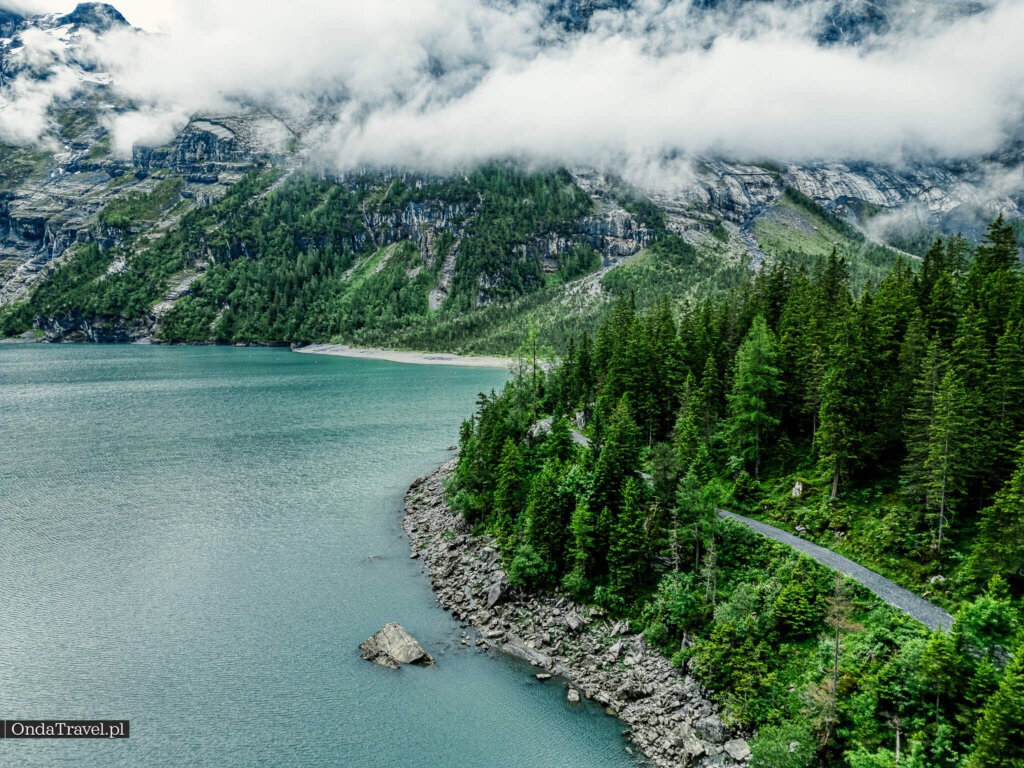
From the upper station, a wide road called “Direttissima” leads toward the lake. You’ll usually reach the shore in 20–30 minutes (depending on your pace and the variant you choose). It’s one of the reasons why Oeschinensee is so popular with families.
In the summer season there is also a paid electric taxi between the upper station and the restaurant area by the lake (about every half hour; priority is given to people with reduced mobility).
How much it costs: gondola, parking, boats, and travel discounts
Below are the key numbers in a simple format. Prices and timetables can change, so before you go, take a look at the current status and the latest price list.
Summer 2026 gondola prices: round trip and the Boarding Pass
Round trip (adult): 36 CHF (9.05–14.06), 40 CHF (15.06–21.09), 36 CHF (22.09–9.11).
With Swiss Travel Pass / Half‑Fare / GA: 18.50 / 22.50 / 18.50 CHF (depending on the date).
Child: 18.50 / 22.50 / 18.50 CHF.
Winter prices: round trip and a one‑way ticket
In the winter season (e.g., 22.11.2025–8.03.2026) a round‑trip ticket for an adult costs 32 CHF, and with Swiss Travel Pass / Half‑Fare / GA it’s 16 CHF. A one‑way ticket is 24 CHF (adult) or 13 CHF with discount cards; children: 16 CHF round trip.
Gondola opening hours (checked 21 October 2026; local time in Switzerland): 21 September–8 November 2026: daily 08:30–17:00; 14–29 November 2026: Saturdays and Sundays only, 08:30–17:00; 5 December 2026–7 March 2027: daily 09:00–17:00. Before travelling, check the operator’s official timetable and current operating notices.
Reserving an entry slot: when it’s required and when it helps
In the summer season there is “smart ticketing”: when you buy online, you choose a preferred entry slot (Boarding Pass). If you’re arriving by public transport, the slot reservation is required; if you’re coming by car, it strongly helps you avoid queues and the risk of no places at a specific time.
Parking at the lower station: exact prices and limits
Parking prices: up to 3 h – 6 CHF, 4 h – 8 CHF, 5 h – 10 CHF, 6 h – 12 CHF, each additional hour – 2 CHF. Parking is allowed up to 22:00 at the latest.
Rowboats on Oeschinensee: prices, hours, and key rules
In summer you can rent a rowboat. Price: 38 CHF per hour. The rental operates seasonally (usually from May to autumn; it’s closed in winter). Rowboats cannot be reserved.
Conditions and safety on the water: in föhn wind, storms, and fog the rental may be closed. Keep your distance from rock walls and the shore, respect closed zones and buoys, and if the fog horn sounds — return to the pier immediately.
Discounts and passes: Swiss Travel Pass, Half‑Fare, dogs, and important exceptions
- Swiss Travel Pass / Half‑Fare / GA: usually about 50% off the gondola ride (does not apply to ski passes).
- Dog day ticket: 8 CHF (the SBB dog pass is accepted).
- Important: the SBB Saver Day Pass does not include the gondola ride or discounts for it, and the Bernese Oberland Pass gives no discount from 2026.
What won’t go on the gondola: bikes, scooters, SUPs, and similar gear
The transport regulations are clear: bikes, scooters, and SUP boards and similar sports equipment are not carried. If you’re planning a “bike + lake” day, that scenario won’t work here.
When to visit Oeschinensee: season, colors, and crowds
Oeschinensee looks great all year, but the experience is different in July than it is in January. Here are quick pointers on how to pick a date based on your expectations (and your tolerance for crowds).
- Late spring and early summer (May–June): fewer people, lots of green, the first “turquoise” water. Ideal for calm photos and moderate temperatures.
- High summer (July–August): warmest weather, shoreline picnics and boats, but also the longest queues. Arrive early and buy your ticket in advance.
- Early autumn (September): good visibility, pleasant temperatures for hiking, and soft light for photography.
- Winter (December–February): snow, winter walks, and sometimes the Ice Walk on the frozen surface (only after official opening and in good conditions).


Best hikes and routes around Oeschinensee for every level
The biggest advantage of this place: you don’t have to be a hardcore hiker to see top views. You can choose a walk down to the shore, a panoramic loop, or go higher toward the huts.
Easiest option: the “Direttissima” walk straight to the lake
The shortest and easiest route runs from the upper station to the shore on a wide road. It’s family‑ and stroller‑friendly; the walk usually takes about 20–30 minutes.
The Heuberg loop with the best panorama of turquoise Oeschinensee
This is my favorite for the “best frame of the day”. The Heuberg loop goes above the lake and gives wide views of the Blüemlisalp massif and surrounding peaks. In the region’s route database it’s listed as about 8.1 km and about 3:00 h (moderate difficulty).
Under‑ & Oberbärgli: a shorter route with a beautiful “tiefblick” down to the water
If you want an alpine feel without an all‑day effort, consider the Under‑ & Oberbärgli option. In the region’s route database it’s described as about 5.5 km and about 2:35 h (moderate difficulty).
Bigger ambitions: hikes to SAC huts in the Oeschinensee area
For people in good shape, Oeschinensee can be a starting point for higher objectives and SAC huts (e.g., Fründenhütte, Blüemlisalphütte, Doldenhornhütte). These are already mountain/alpine sections — choose wisely, check conditions, and match your gear to the route.
Oeschinensee in winter: a snowy walk and the Ice Walk on the frozen lake
In winter it can feel like a movie set: rock walls, long shadows, and a white surface. The most important rule: only step onto the ice when it is officially permitted (depending on ice thickness and avalanche conditions).
In the region’s materials you’ll find, among others, the UNESCO Ice Walk Oeschinensee described as a winter walk of about 2.9 km and about 45 min (easy). Treat this as a guideline and always check current trail status before you set out.
Practical tips: safety, weather, restrictions, and comfort
- Arrive early: on weekends and in peak summer, parking and entry slots can “close” halfway through the day.
- Check the status before you set out: in the mountains, closures and restrictions can happen even in summer (e.g., after storms).
- Don’t enter closed zones: the lake area has strict safety restrictions due to rockfall risk.
- Footwear matters: even on easy routes there can be slippery or rocky sections; the weather changes quickly.
- No car access to the lake: the private road is closed, and bikes/SUPs are not carried on the gondola.
A visual relax by Lake Oeschinen
Before you close this guide, I’ve got a small bonus for you: an over‑an‑hour video I recorded at Oeschinensee. Put it on for a moment — even without sound it works like a calming view outside the window: the lake, mountain slopes, and a slow pace. If you’re planning a visit around Kandersteg, this footage shows nicely why this place is so impressive in real life.
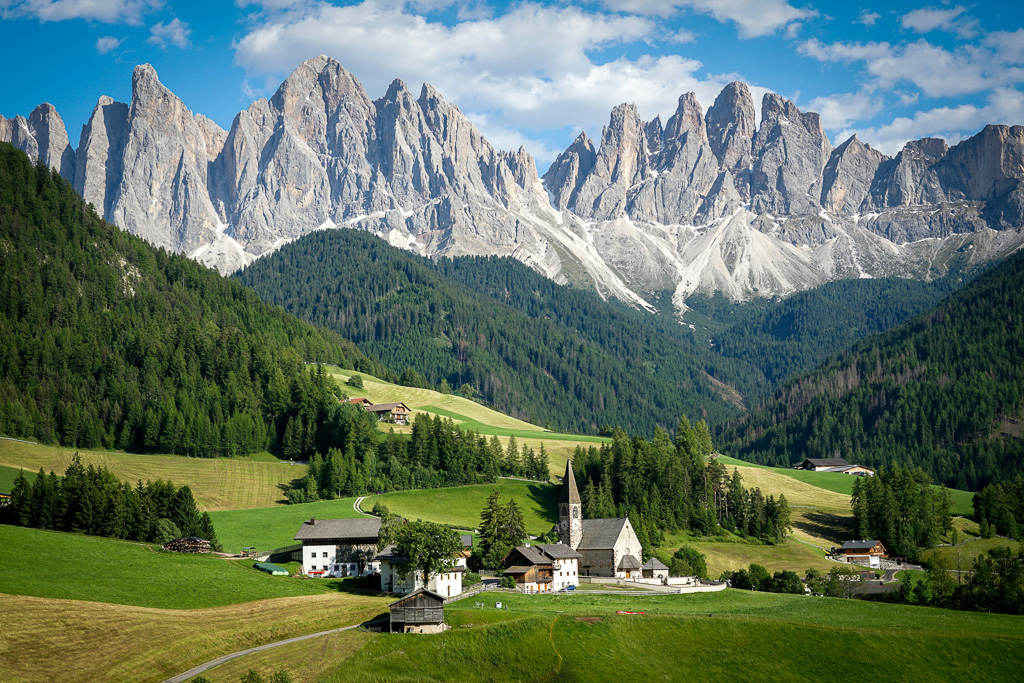
If Alpine landscapes are your focus, you may also like the Trentino relocation story — an Italian Alps angle with villages, grants and practical caveats.
ITALIAN ALPS
Trentino — a different Alpine story
From Swiss lake scenery to Italian Alpine villages: this guide explains the Trentino relocation programme and why it attracted attention.
FAQ: the most common questions about Lake Oeschinen

SWITZERLAND
Grindelwald-First in Switzerland: tickets, Cliff Walk, Bachalpsee and Adventure Package traps
Grindelwald First 2026 guide: gondola ticket prices, Cliff Walk, Bachalpsee hike, Adventure Package costs, queues, weather and a practical day plan.
Do you need to reserve a gondola ride to Oeschinensee in summer?
In the summer season, there is a slot system (Boarding Pass). If you arrive by public transport, reserving a boarding slot is required; if you arrive by car, it helps a lot to avoid queues and the risk of no availability for your chosen time.
How long is the walk from the upper station to Lake Oeschinen?
On the easiest route, it usually takes 20–30 minutes. It’s a wide path that can also be done with a stroller.
How much does the Kandersteg–Oeschinensee gondola cost in the 2026 season?
An adult return ticket costs CHF 36–40 (depending on the date). With Half‑Fare/GA cards or a Swiss Travel Pass it’s about 50% cheaper. Before you go, check the current prices for your date.
Can you drive a car directly to the lake?
No. The private road is closed to motor traffic and bicycles. You reach the lake by gondola and on foot (or by the seasonal e‑taxi, with priority for people with reduced mobility).
Can you go boating on Oeschinensee and how much does it cost?
Yes—there’s a rowboat rental by the lake in summer. The rate is CHF 38 per hour. The rental may be closed in strong wind, storms, or fog.
In winter, can you walk onto the frozen lake?
Only when the ice is officially declared safe (depending on conditions and the avalanche situation). Always follow local notices and the trail status on site.
Read also / next: if you like nature, trails, and epic views
- Travel on OndaTravel: all destinations and guides in one place
- A guide to beautiful places: newest posts and travel inspiration
- Háifoss Waterfall: a hidden gem for those who like a “walk with a purpose”
- Iceland Interior: routes and views for fans of mountain vibes


Hi, I’m Krystian “dziadzia przewodnik” from OndaTravel.pl!
The North is my greatest passion, but the world is far too beautiful to stay in just one climate. On my blog, I combine the raw landscapes of Iceland and Norway with the exotic energy of Thailand or Vietnam, showing you how to travel authentically — with passion and a camera in hand.
What will you find on OndaTravel.pl?
Visual storytelling: As a photographer and filmmaker, I don’t just describe places — I take you there with professional photos and video.
North expert: Ready-to-use road trip plans for Iceland and Norway, smart tips for budget travel, and my original Northern Lights Radar (locations and forecast).
Travel through the lens of cinema: I track down filming locations — from icy scenes in Interstellar to tropical frames from world cinema.
New direction: Exotic destinations: I love contrast, so the blog is featuring more and more practical knowledge about Vietnam and Thailand. I’ll show you how to find your way around Southeast Asia and come back with your best memories.
P.S. follow me here
Author
Krystian „dziadzia przewodnik”The North is my greatest passion, but the world is too beautiful to stay in one climate. On my blog I combine the raw nature of Iceland and Norway with the exotic energy of Thailand and Vietnam, showing you how to travel authentically, with passion and a camera in hand.